
Photos by Ralph Freso/GCU News
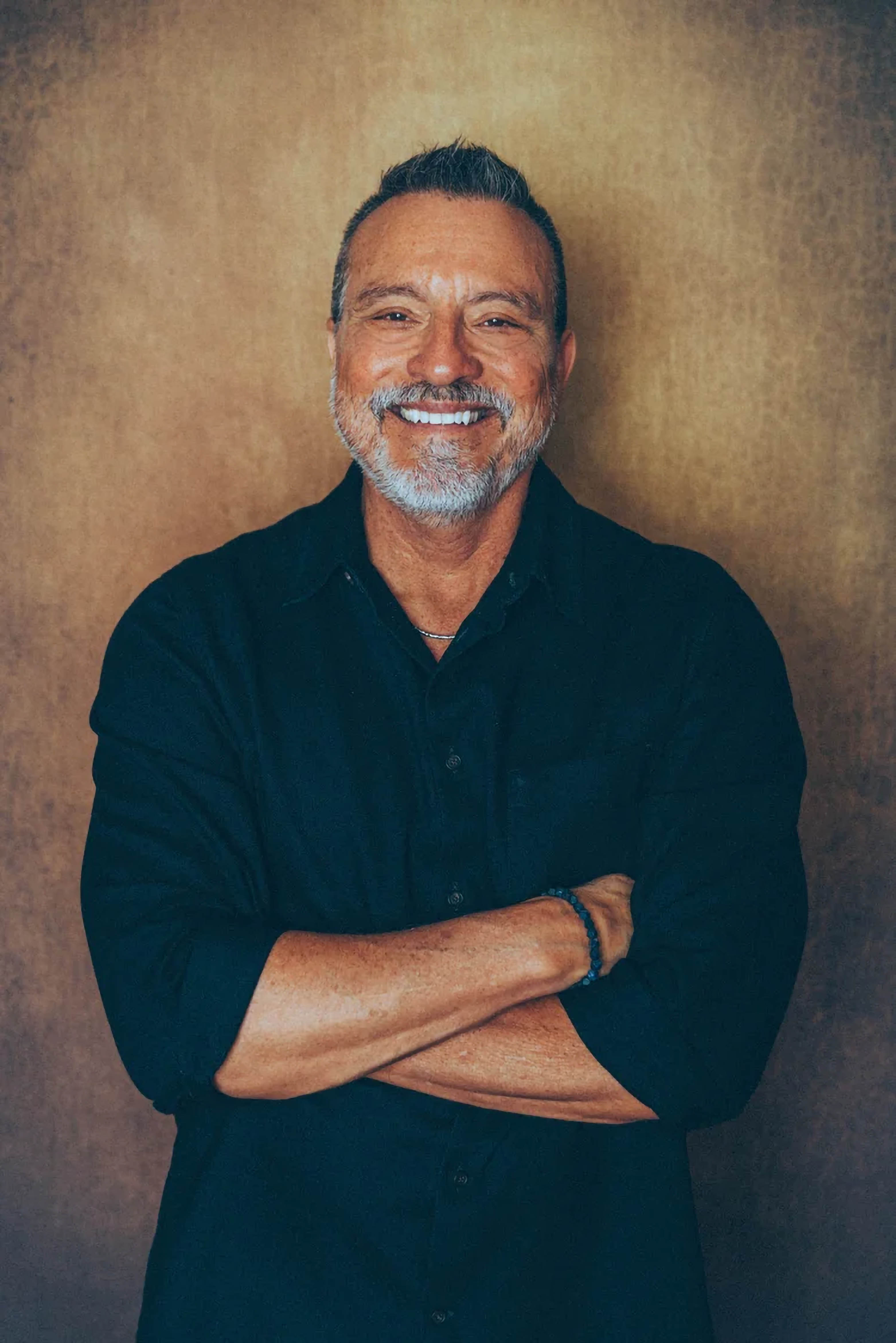
If Dr. Jon Valla had milled around his hometown of Hibbing, Minnesota, he might have ended up mining the rust-colored dirt of the Mesabi Iron Range.
Both sides of his family had a long history of farming, but his father – who broke away from farming to work in the massive open-pit iron mines that dominate the region – never wanted his son to follow him.
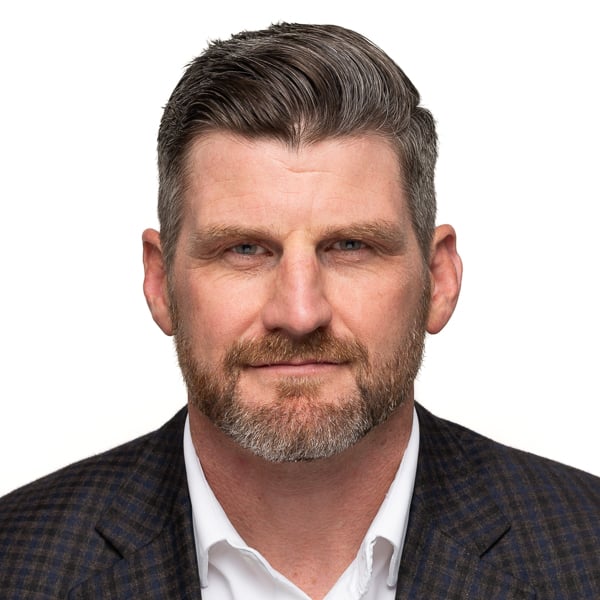
“My dad told me once that he had insisted to my mother that I would never work in the mines,” said Valla, new dean of Grand Canyon University’s College of Natural Sciences. "The path for my sister and me was always college."
He was busy answering emails in his Technology Building office, surrounded by historical neuroscience images of Golgi-stained synapses that hint at what field of science would take him far from Hibbing. “The only path presented to us was either college or the military to pay for college.”
So he and his sister began their undergraduate studies. They were the first in their extended family to do so.
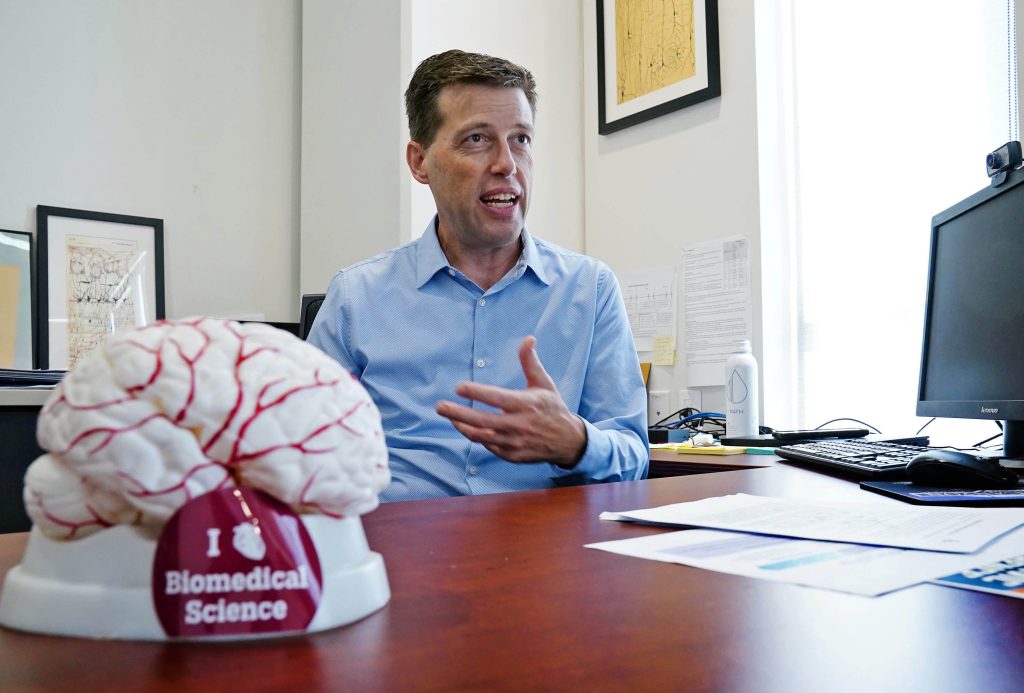
Valla planned to become a psychologist.
“Until I tried it,” he said. “I got an internship, and I couldn’t stand it."
Just like that, he barreled into his junior year with a gut-wrenching feeling of uncertainty.
But he was lucky enough to have faculty mentors at his alma mater, Minnesota State University in Mankato, who helped guide him to neuroscience.
“What I ended up immediately getting into was the neuroscientific understanding of learning and memory,” Valla said. “I was fascinated by how the brain is able to demonstrate plasticity and to learn. How do we physiologically learn things and remember them? That was fascinating to me.”
Valla took that fascination with him to graduate school.
Graduate students are already set on a path. But undergraduate students need that mentorship and guidance more. We can truly change their lives; we’re in the life-changing business here. … This undergraduate experience is so powerful to students that it can change the course of their lives, and we’re part of it.
Dr. Jon Valla
Dean of the College of Natural Sciences
“Because I was naïve – no one I knew had gone down this path in graduate school, and I was going into an area that none of my mentors understood – my first semester was nearly a disaster."
It didn’t turn out to be what he anticipated, although it was a program focused on learning and memory and how the brain accomplished those things.
Then two months into graduate school, his advisor, Francisco Gonzalez-Lima, attended a conference that profoundly impacted Valla's path.
The buzz at that conference surrounded a wave of new discoveries about an enzyme, cytochrome c oxidase, that plays a major role in cell energy production, especially in the brain. It was shown to be deficient in Alzheimer's disease.
“My advisor said, 'This is an area where we can make an impact,'" Valla said.
He became an Alzheimer’s researcher from then on.
After graduating with his doctorate in behavioral neuroscience from the University of Texas, Valla made his way to Arizona to work with the Arizona Alzheimer’s Consortium. Today, it is the nation’s leading model of statewide collaboration in Alzheimer’s disease research.
“Eric Reiman needed a new postdoctoral fellow to lead his specific research, which was very similar to what I was doing, so he recruited me to come out to Phoenix,” Valla said of Reiman, a trailblazer in Alzheimer’s research. “… I told him that I would come as long as I was able to learn the new techniques that I wanted to expand on in molecular biology and biochemistry, and he agreed.”
Valla eventually opened his own lab at the Barrow Neurological Institute, then moved in 2010 to health science graduate school Midwestern University in Glendale, Arizona, where he also taught biochemistry to medical and dental students.
But when the undergraduate students he brought with him to work in his lab started to graduate, it became increasingly difficult to replace them, and his opportunities to mentor students dwindled.
That’s when he learned something important about himself.
“I started to realize that that was my favorite part of my job – it wasn’t the research itself, but it was being able to teach these students about research and guide them and then also mentor them on their path itself, which usually wasn’t a research path.”
A heart for research
It’s what he has done since his predecessor, Dr. Mark Wooden, hired him to come to GCU 11 years ago as his assistant dean.
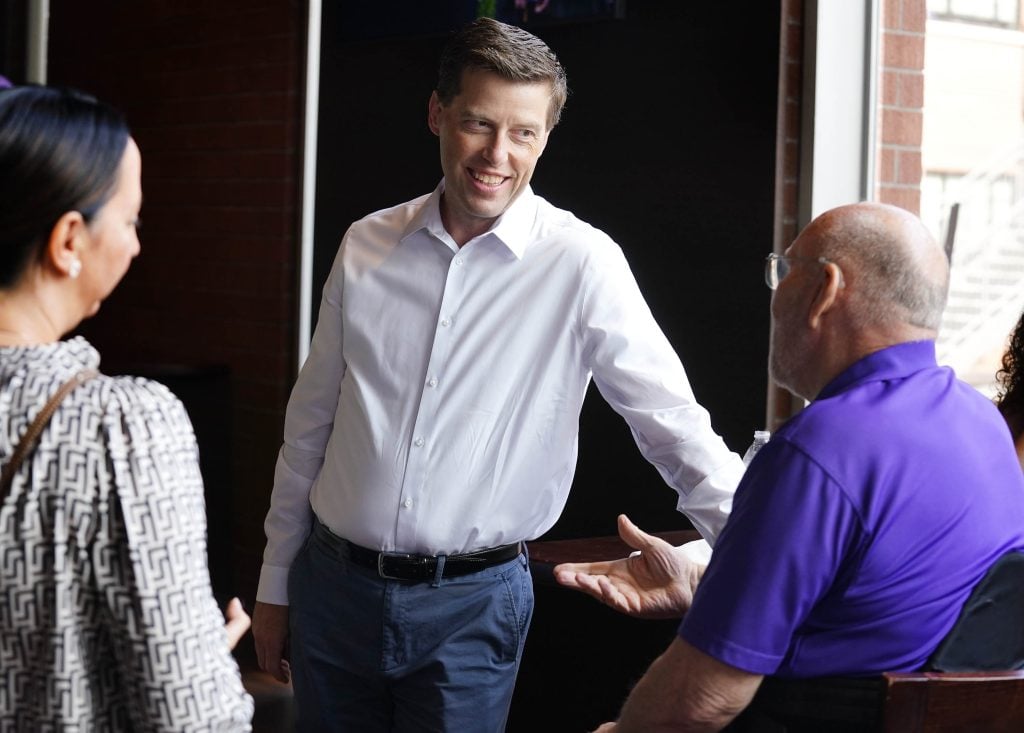
Valla has long been known as the go-to guy when it comes to the college’s undergraduate research program.
“Dr. Wooden immediately said that one of the things I would be challenged with if I took the job here was that we wanted to open an undergraduate research program.”
That program has since merged with the universitywide Canyon Emerging Scholars initiative, which includes more than 30 labs and groups, from the Antimicrobial Discovery Lab, in which student researchers investigate the antimicrobial properties of plant extracts, to the Canyon Neuroscience Group, which conducts studies in Alzheimer's and Parkinson's disease and pediatric brain cancer.
Valla said what he loves about GCU's research program is that the focus is on the undergraduates.
“Working with undergrads in particular is, frankly, so much more rewarding than working with graduate students, because graduate students are already set on a path. But undergraduate students need that mentorship and guidance more.
“We can truly change their lives; we’re in the life-changing business here. … This undergraduate experience is so powerful to students that it can change the course of their lives, and we’re part of it.”
Valla looks to his own story – how he was a first-generation college student from a small, iron-mining town who, fascinated by learning, memory and the human brain, became a research scientist.
He sees that happen all the time for students at GCU and “how effective GCU is in promoting social mobility,” he said.
The university has long reached out to the surrounding west Phoenix community to offer K-12 students tutoring, mentoring and scholarships. GCU is transforming their lives through education.
Pushing boundaries of science
He will continue transforming lives, alongside his faculty, as his college’s new dean – a role Wooden knew Valla is well prepared to do.
“Dr. Valla … he knows how we do things here. And the community feel within the college, he’ll maintain,” Wooden said.
Valla, whose faculty gathered earlier this week for its beginning-of-the-year fall conference, has a big job before him.
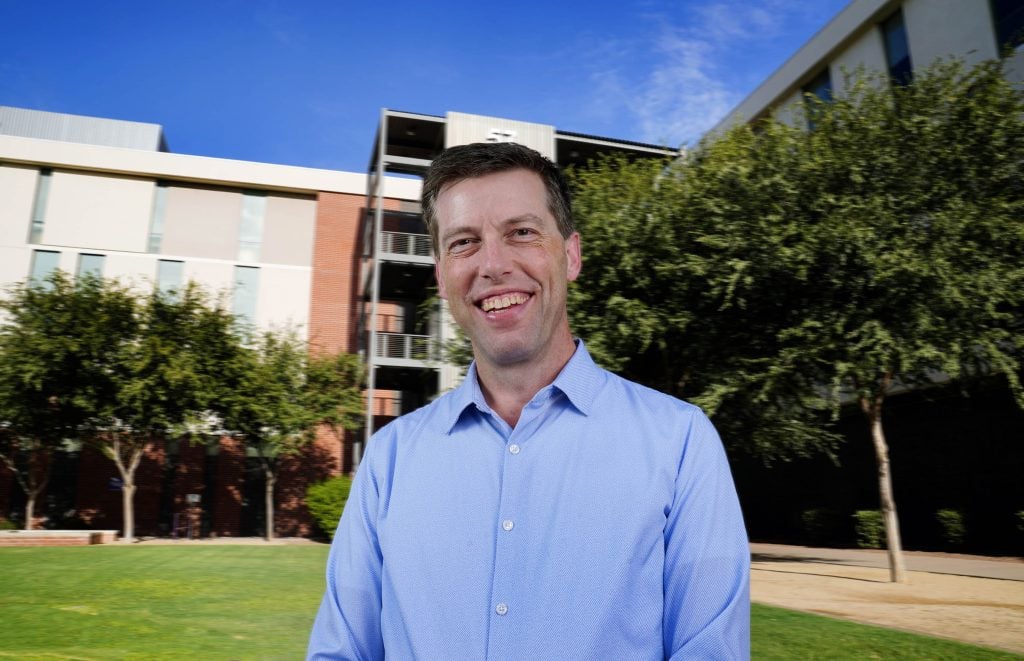
One of the College of Natural Sciences' biggest initiatives, he said, is to push the boundaries of traditional science education.
“Because our programs are doing so well and we’re seeing so much success with our graduates, our push now is to move a good number of our programs in the sciences online – expand the accessibility of science programs to students across the country, and do it in a way that’s going to make them just as successful as our ground students have been,” he said.
And that’s a challenge for the sciences, in which labs, hands-on learning and teamwork are so important.
The college has done that already for some classes, sending lab kits to the homes of online students so they can complete those labs.
Also, it’s important that students collaborate and do group work, and so the faculty is working through ways to make that possible for online students. They want to build the kind of strong community that’s needed to become, say, a doctor or a researcher or any other kind of scientist.
Beyond introducing more science classes online, Valla said, with the advent of artificial intelligence, “We have to adapt greatly to that.”
AI is already a major part of medicine, he said.
“Our students have to have AI training and need to get in front of that,” he said. It’s his charge – the college’s charge – to ready students to be successful in the jobs of the future. “Our whole team is rethinking science education.”
Manager of Internal Communications Lana Sweeten-Shults can be reached at [email protected].
***
Related content:
GCU News: Symposium shines a light on graduate research
GCU News: Projects on sea lions, mosquitoes, monarch butterflies make their mark