When it’s lunchtime for monarch butterfly caterpillars, it’s all about milkweed – the baby applesauce, let’s say, of the monarch butterfly world.
The perennial plant’s milky white sap is a crucial food source for monarch butterfly larvae.
Black Canyon Heritage Park, in Black Canyon City north of Phoenix, wants to be a fueling station for this species of butterfly, known for their long-distance, two-way flights. They travel up to 1,800 miles in a single migration, flitting from North America and southern Canada to their homes for the winter in coastal California and in the oyamel fir forests of central Mexico.
The park, where Grand Canyon University students this semester researched the best variety of milkweed for the monarch, is home to about 31 species of butterflies. It’s also a Monarch Waystation, a pit stop for butterflies on their journey. The park's gardens are packed with milkweed for larvae and nectar-rich flowers for adult monarch butterflies.
“Black Canyon Heritage Park didn’t have the data previously on the phenology, so we wanted to add that data ... so that they could be able to look at that and continue its establishment as a Monarch Waystation,” said Natalie Mabbitt, a GCU environmental science senior.
Research teammate Aiva Boykin had a connection to Phoenix’s Desert Botanical Garden, which recommended the team to Black Canyon Heritage Park. The students' study is called “Identifying the Life Cycles of Different Milkweed Species at Black Canyon Heritage Park to Assess How to Optimize Pollinator Activity.”
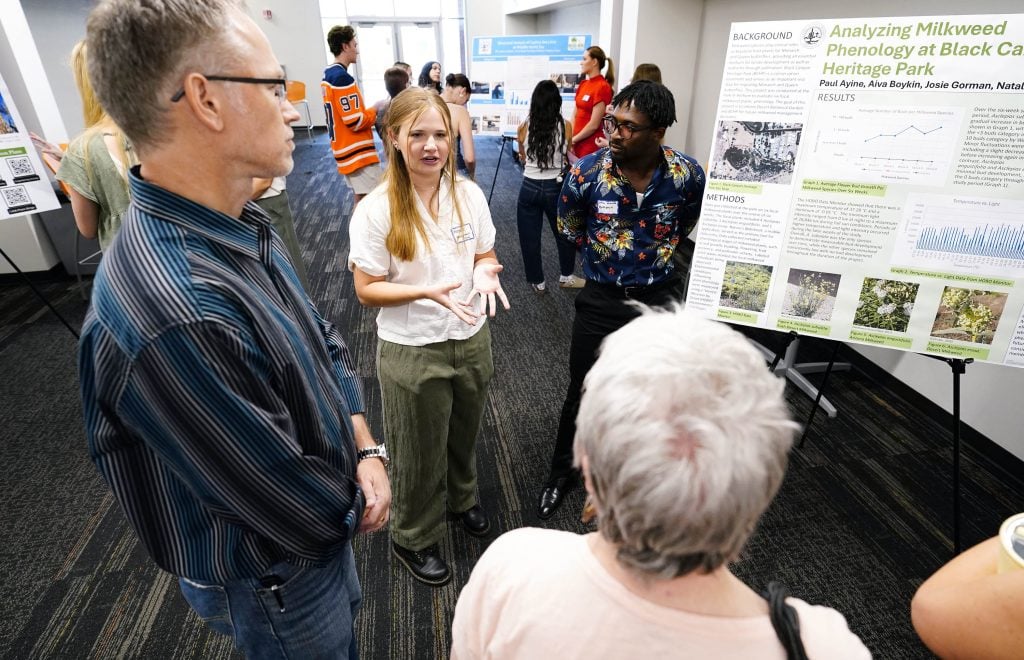
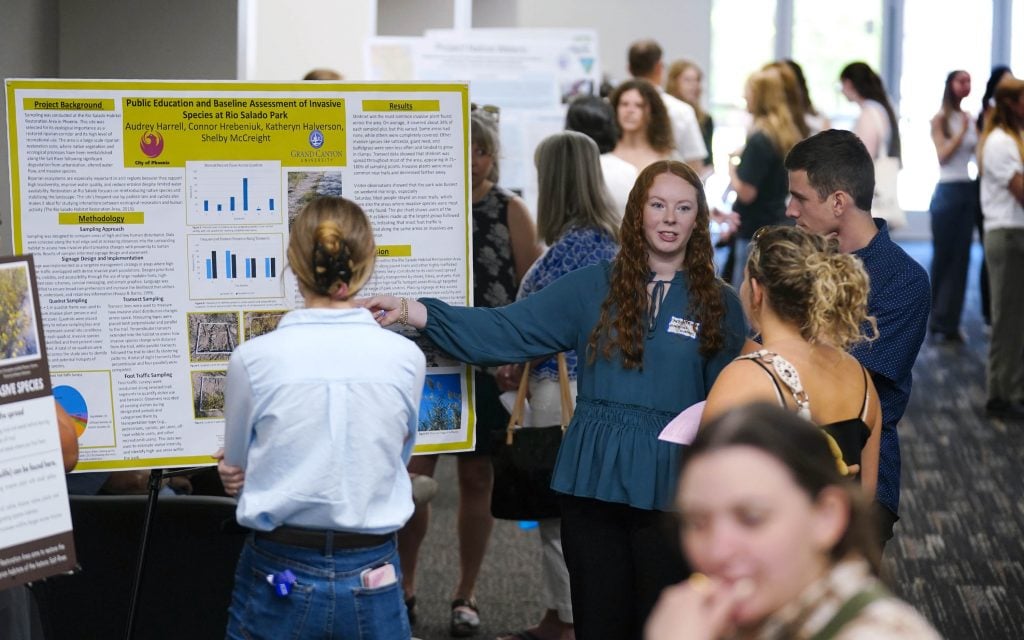
The team, which also included Paul Ayine and Josie Gorman, presented the results of their six-week study on Monday as part of the capstone showcase for the biological, environmental and molecular sciences in the university’s College of Natural Sciences.
They traveled to the park and evaluated the phenology – or seasonal and life cycle changes – of six species of milkweed plants to help Desert Botanical Garden and Black Canyon Heritage Park in their future milkweed management decisions.
What they found is Asclepias sublate did the best, with values rising from less than three buds in week one of the study to three to 10 buds by weeks four to six. Asclepias angustifolia and Asclepias erosa did not show any bud development. They remained in the zero buds category throughout the study period.
What Mabbitt loved about this project was, in the end, “just seeing all of our graphs come together." The individual data felt “disjointive” at first, but they told a story in the end.
“A lot of people don’t know about it and how important milkweeds are to their (the butterflies’) development,” Mabbitt said.
Sea lion behavior
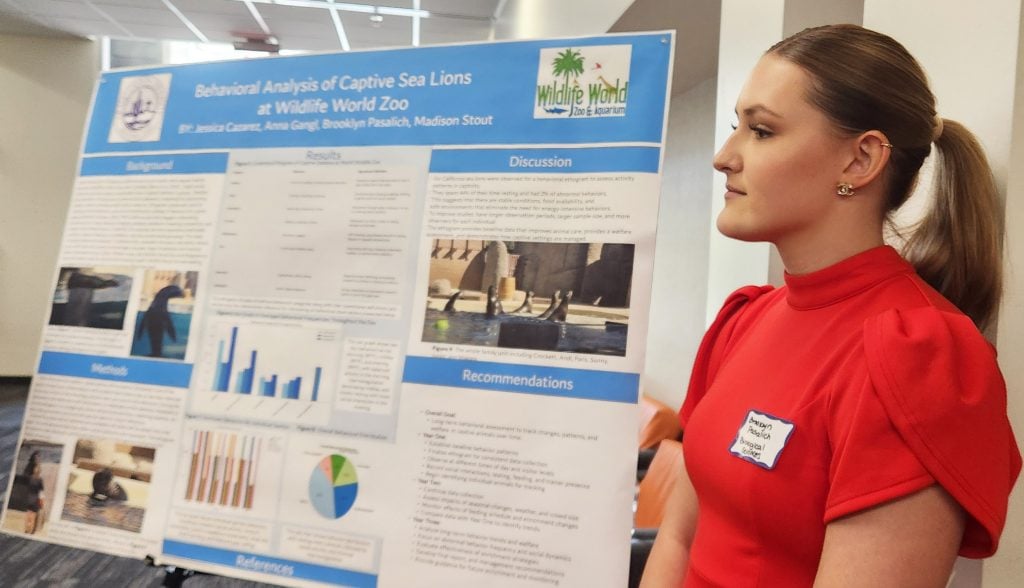
From butterflies to sea lions, another team at the showcase traveled to Wildlife World Zoo, Aquarium and Safari Park in Litchfield, Arizona, for their study, “Behavioral Analysis of Captive Sea Lions at Wildlife World Zoo.”
The zoo needed an ethogram, or animal behavior analysis, of six California sea lions.
These animals are highly social in the wild and engage in demanding activities, such as long-distance foraging, predator avoidance and breeding competition. Those behaviors don't happen in captivity.
So caretakers introduce naturalistic stimuli, such as wild-sourced scents, to encourage a broader range of behaviors to improve their welfare.
The GCU students spent three days looking for any abnormal behaviors.
The sea lions spent 44% of their time resting and 2% doing abnormal activities, suggesting stable conditions, food availability and a safe environment.
The team suggests a longer observation period and concluded their ethogram would serve best as a baseline.
“They wanted to know if there was anything they should do to make the sea lions’ life better,” said Anna Gangl, a biological sciences senior, who found it easy to say what she loved about this study: “Probably looking at sea lions all day.” Her dream is to work at a zoo and, ultimately, at an organization like the World Wildlife Fund.
Just over three days, Gangl got to know the personalities of the sea lions, like Junior. “He would sit there the whole time and strut,” said Gangl, whose teammates included Jessica Cazarez; Brooklyn Pasalich, a sea lion volunteer at the zoo who was the team’s connection to the wildlife facility; and Madison Stout.
Managing mosquitoes
Justin Loscher, president of the GCU Sport Fishing Club and an environmental and biological sciences senior, didn’t look into anything cute like butterflies or sea lions.
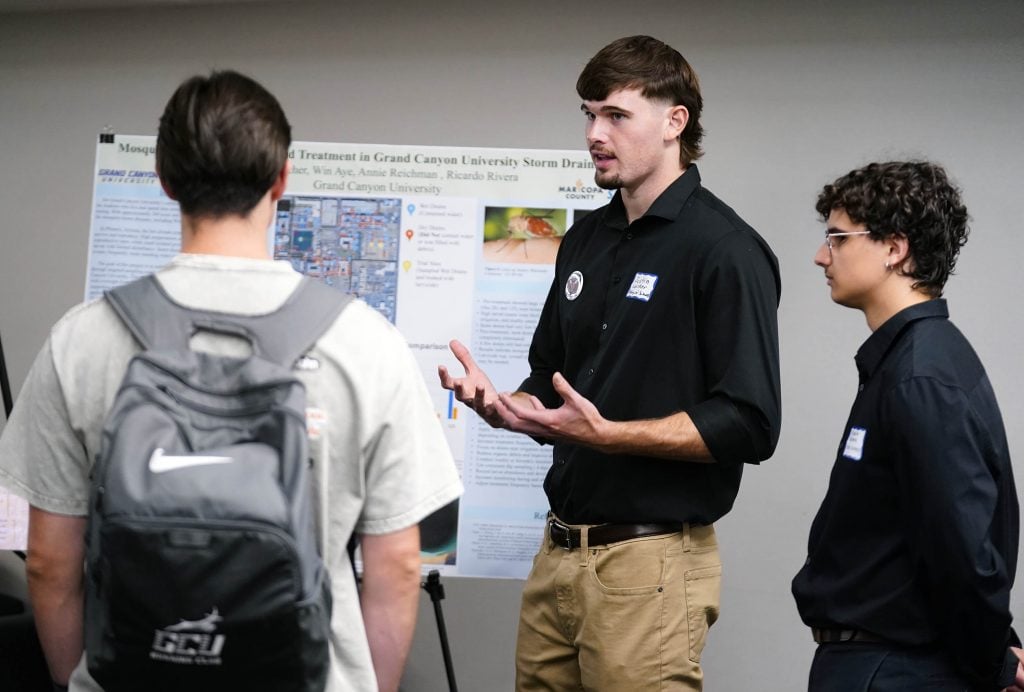
He and his team, which included Annie Reichman, Ricardo Rivera and Win Aye, delved into the mosquito population on campus in their study, “Mosquito Larval Sampling and Treatment in Grand Canyon University Storm Drains System.”
Loscher worked for a mosquito district in California, which gave him the idea for this study. He also spends a lot of time outdoors and would notice the mosquitoes hanging around.
Storm drains across campus, especially after monsoon events, retain standing water and serve as consistent breeding sites for mosquitoes. Also, the warm weather in Phoenix means more ideal conditions.
“We created the first-ever map of the drain system at GCU,” said Loscher.
The team selected 10 drains to look at and found anywhere from two to 20 mosquito larvae per dip. That showed an uneven distribution of larvae and that mosquito breeding is site-specific.
Loscher said the Maricopa County mosquito district doesn’t come to campus to spray, since this is a closed campus.
The group documented results after Sprague Pest Solutions came out to spray. Using field data and targeted treatments, the goal is to develop an effective and sustainable approach to mosquito management on campus.
“We want to keep the project going,” Loscher said.
Fish and the Lower Salt River
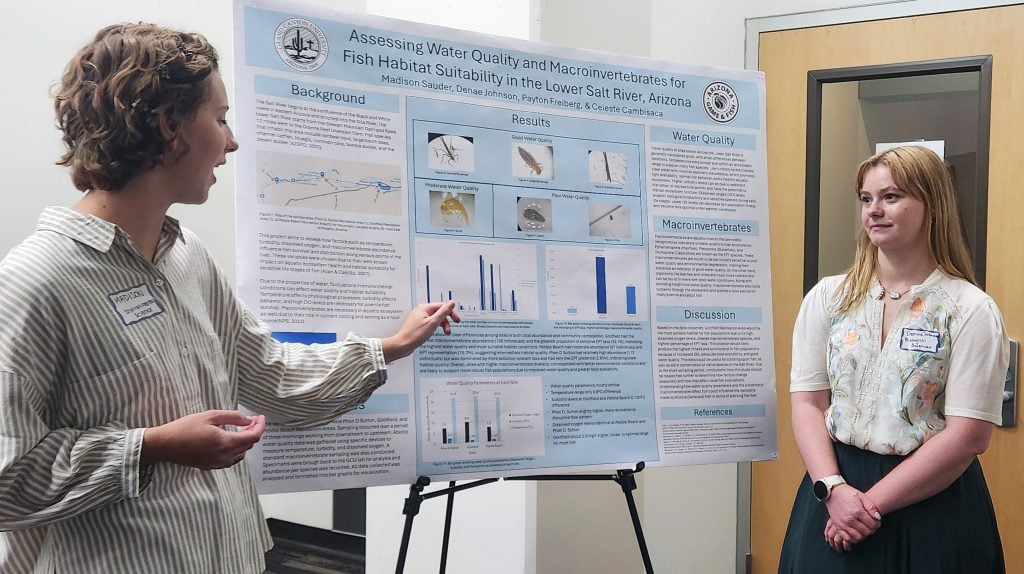
Other student researchers turned their attention from animals and pests to water quality, looking at the water quality on the Lower Salt River to see which spot along the river is most suitable for fish habitats.
The team analyzed water temperature, turbidity, dissolved oxygen and macroinvertebrate abundance, or aquatic insects, that are widely recognized as indicators of water quality (they're food for fish).
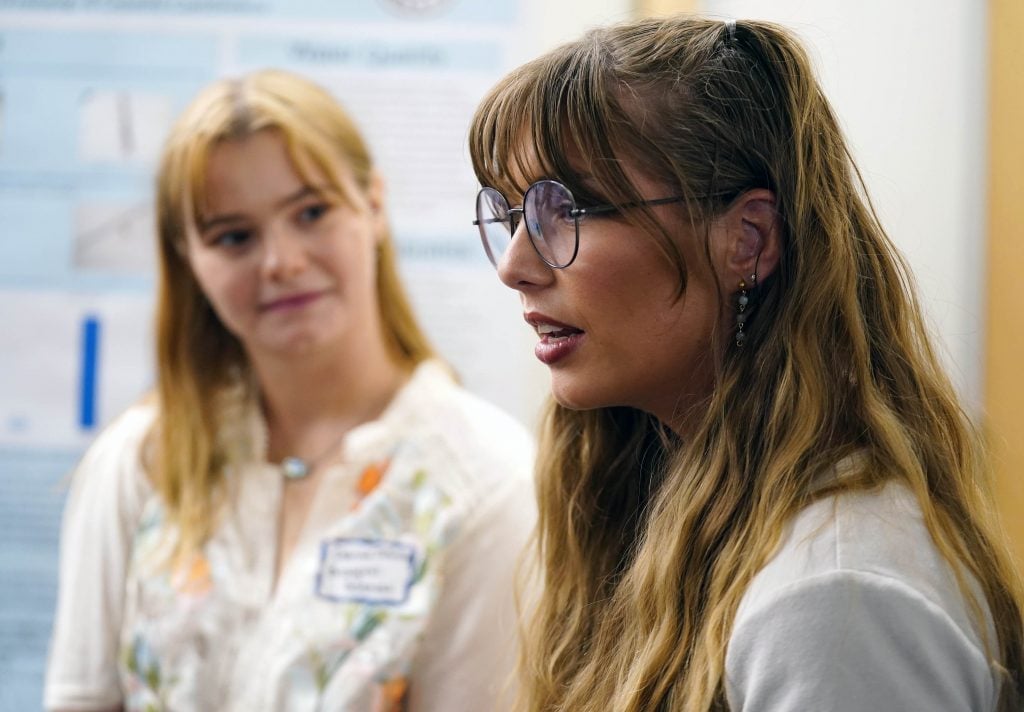
Students Madison Sauder, Payton Freiberg, Denae Johnson and Celeste Cambisaca traveled to the Lower Salt River three times in March, at the same time of day, to conduct the study at sampling sites. Based on their data, the Goldfield Recreation Area would be the most suitable habitat for fish population.
For Freiberg, who landed a job analyzing soil at a lab in Minnesota, said what she remembers most about the study is, “Probably seeing the different bugs. We were not expecting to see all of those bugs,” Freiberg said. “The first time we went, we didn’t wear waders, but the second time we needed waders. We were not expecting to find what we found.”
Added Sauder, “It was really just fun to be outside and actually get to do the field work that we talked about in all of our classes.”
Manager of Internal Communications Lana Sweeten-Shults can be reached at [email protected] or at 602-639-7901.
**
Related content:
GCU News: Where the Wild Horses Hang Out and Other Natural Sciences Projects
GCU News: Students, faculty test the quality of ADEQ partnership