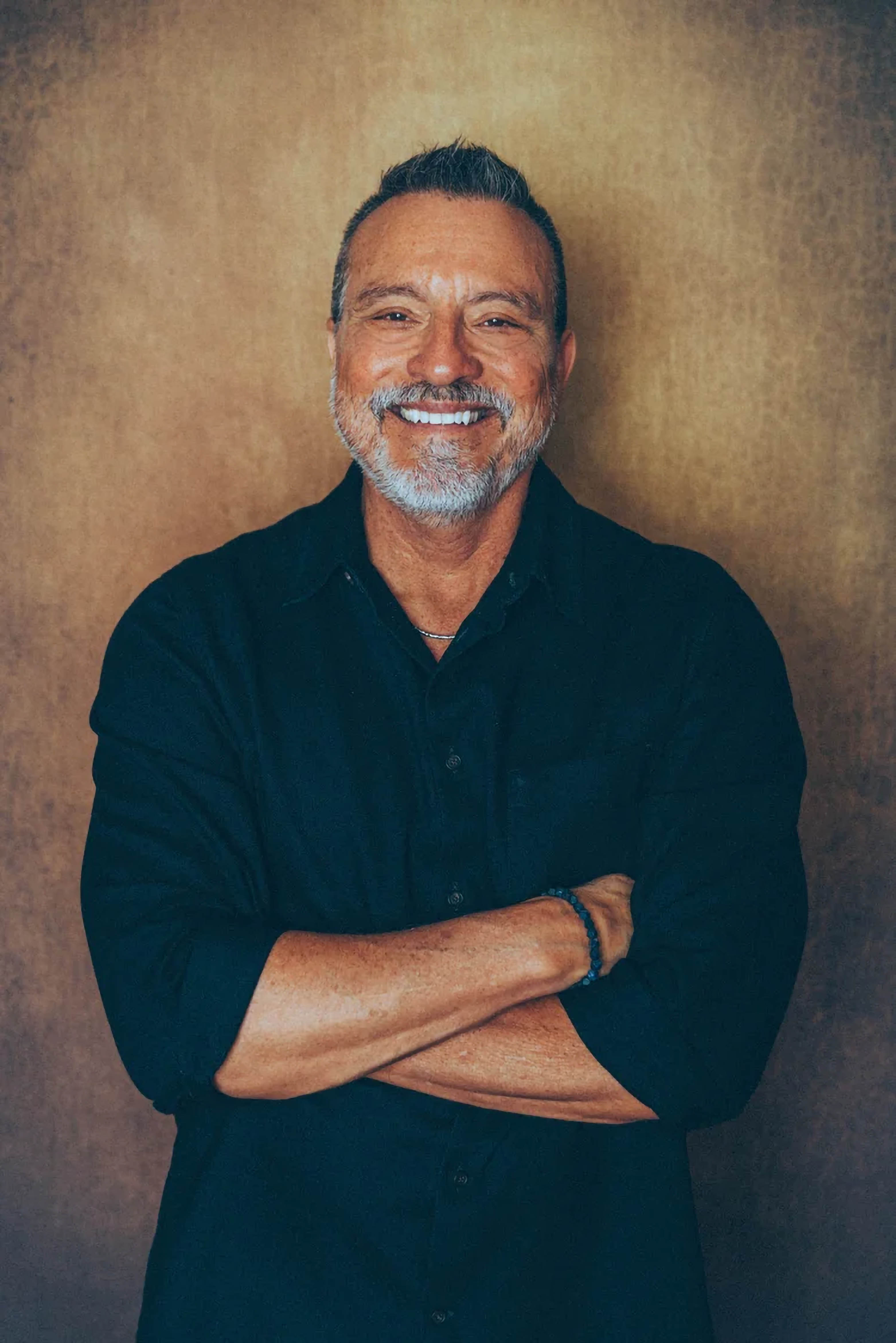
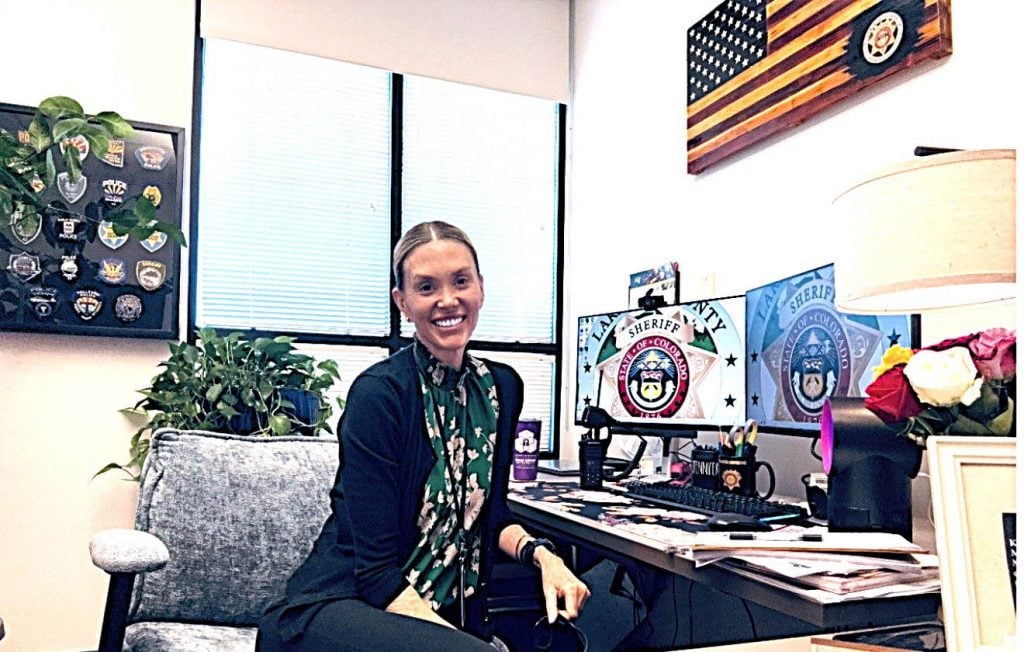
Jennifer-Ryan Schwartz knows the value of impact, based on 30 years of experience in public safety and helping those in urgent situations.
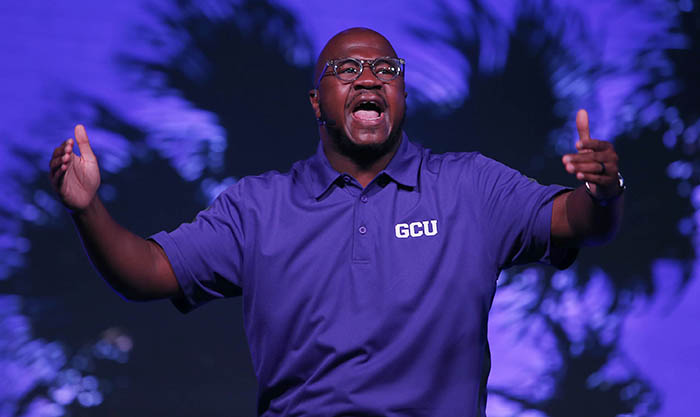
So when Dr. Kenneth Sherman, Grand Canyon University’s dissertation program chair, learned about her expertise, he thought her background and the research she would do for her doctorate would fit perfectly in an impact dissertation.
The College of Doctoral Studies recently implemented the impact approach, which is different from a traditional dissertation in that it tackles a real challenge the researcher has witnessed or experienced in their professional career. Rather than start in the library, the researcher starts in the field.
Schwartz did not hesitate when it came to switching her dissertation template.
“I was very attracted to it because the entire reason for my entering into this doctoral program was to make an impact on my area of work,” said Schwartz, executive director for the Larimer County Sheriff's Office in northern Colorado. “It allowed me to bridge my years of service – three decades in public safety – with this rigorous scholarly inquiry.”
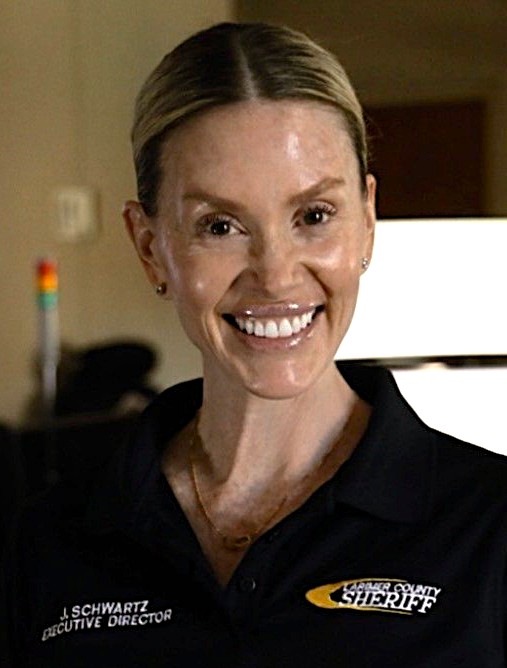
Earlier this month, Schwartz successfully defended her dissertation, “Systematic Development of Professional Resilience: Delphi Study of 911 Center Organizational Practices.”
She became one of the first graduates of the doctoral program at GCU to use the impact dissertation method. She is scheduled to receive her doctorate in performance psychology in October.
Schwartz, who already earned a law degree from the University of Arizona, sensed that Sherman would be inviting other doctoral learners to use the impact approach in their dissertations, with the intent of seeing the effects of using that method.
“Although very many of us are academics, we don't go to college to study how to be a calming leader in 911 (emergency calls). It's just not something that is possible,” Schwartz said. “We do find that a lot of people who end up working in 911 do so because they know somebody or (there's) some just very unique, serendipitous circumstance. They walk into this, and that is what happened to me.
“But in my defense, I said that this career of mine in 911 has saved my life more than once while I was busy saving other people's lives. I really feel like through the impact dissertation, I am truly giving back with full gratitude to the industry that has saved me and has allowed me to grow as a leader and a person and a public servant. It was really a meaningful application of the work that I've done for all of these 30 years.”
Schwartz left an indelible impression on College of Doctoral Studies leaders.
"Jennifer Schwartz's dissertation is exactly what we envisioned for the impact approach – rigorous, with clear solutions for her industry,” the college's assistant dean, Dr. Nicholas Markette, said. “We're proud that she is now equipped to replicate this process to address other issues she encounters."
Schwartz’s study examined the misalignment between organizational wellness programs and the natural resilience that 911 professionals display daily.

“For sworn staff, police officers, firefighters and crime scene technicians, I want this study to be repeated because we are at this really cool intersection in public safety where we have open minds to wellness," Schwartz said.
“I was looking for these expert participants in my study to say to me, through their own reflection, ‘Do you think we are doing it the right way? Are we setting this up for the next generation of those who will take these seats after we leave them?’
“And by and large, they said we're on track, but we're missing the mark. So let's get back on track here.”
The impact dissertation process included techniques, such as the five whys, in which the why question is asked five consecutive times to get to the root of a problem.
“You really drill down into the confrontation of your own assumptions, and I was building those assumptions over three decades in the field,” Schwartz said. “I discovered that some of my strongest convictions were based on my personal experience, and knowing that it would be, rather than evidence.
“But here I was providing that, and the impact dissertation asks you to approach this with humility. That makes you a better researcher. And at the end, it made me a better leader.”
The combination of 30 years of experience with an academic point of view resonates with a 911 group that Schwartz described as a “large industry, but a small community.”
Schwartz supervises 11 professional staff units that support agency operations and public safety services across the organization. She makes frequent presentations at conferences and training events nationwide on professional staff leadership, wellness, emotional labor and performance longevity.
“I am the only person who has served for 30 years, who has achieved the level of leadership that I have in my agency, who is still actively practicing the work, who has also earned a Ph.D., and that is very meaningful for the next generation of 911 and public safety.”
Schwartz delivered this message to those in the 911 field or seeking help in an emergency:
“Here's how I say it, and I would love for everybody in this world who does this work to understand that this is true.
“I never wish for anybody to be in a perilous situation, but the inevitability of the world is that you will be. Even though I do not wish that on you, I hope that if you have to call 911, that you get someone like me, because I'm equal to the task. I do a good job. I am a professional, and on your worst day, I am here to be the light – the flashlight to guide you through until you can get on the other side of this peril.
“It is my pleasure to be a part of someone's story.
“Those are the words that I want other 911 professionals to hear. It is a pleasure to become a part of someone's story on their most difficult day, and frankly, in some of their most celebratory moments as well, because I can't tell you the numbers of babies I've also delivered.”
Schwartz praised her college's leaders for their support and approaching her about switching to the impact dissertation. She also was aware that the impact format didn't mesh with the dissertations of fellow cohorts.
“That's OK. But for me, it was a powerful reflective practice component that just added more to what I was trying to achieve in a meaningful outcome for my area of work.
“And you know what? Here we are. It really did thread that all the way through to the end.”
GCU News senior writer Mark Gonzales can be reached at [email protected]
***
Related content:
GCU News: Doctoral graduate earns green light on traffic stop study
GCU News: Professor's mission: To push fellow learners across the finish line