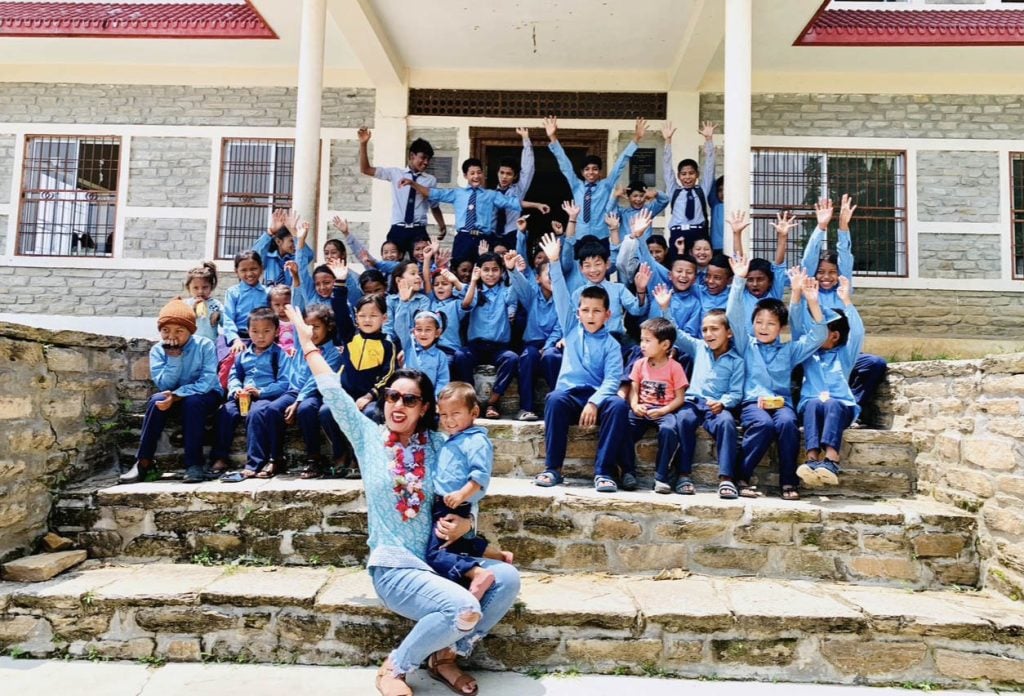
Grand Canyon University online professor Dr. Samridhi Shrestha and her sister were born in the rugged Trishuli region of Nepal, where her father, who served as the country’s joint secretary to the Ministry of Land Reform & Management, was posted for a time.
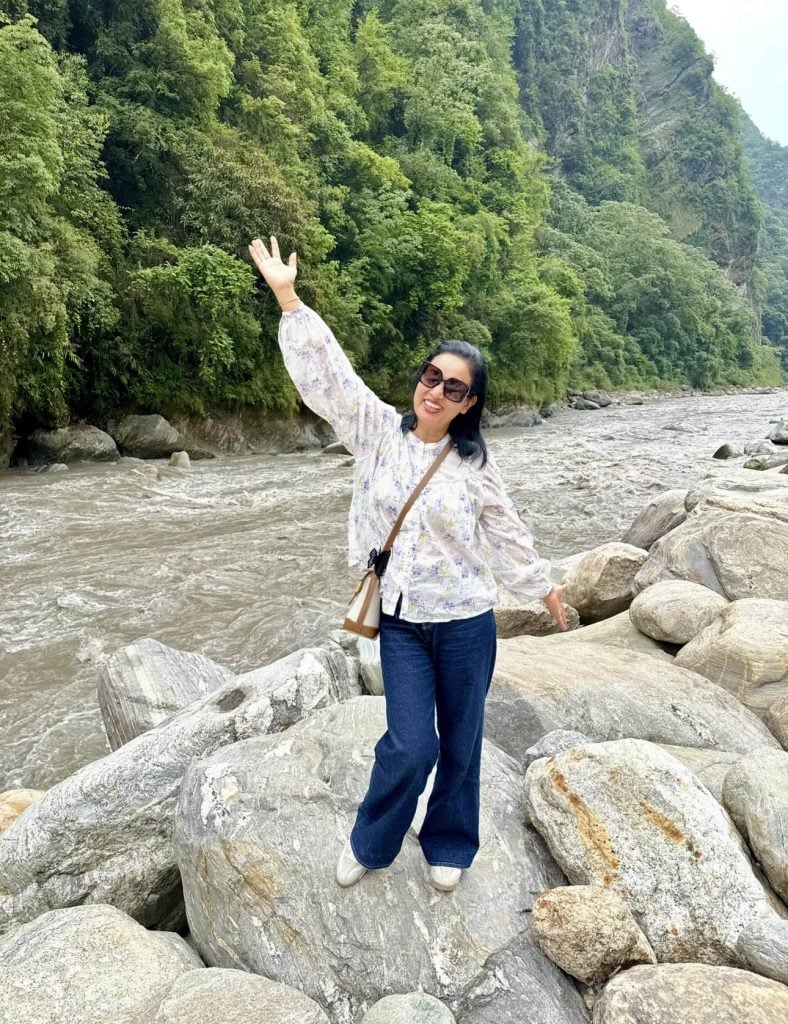
The powerful Trishuli River dominates the region, its name based on the Sanskrit word trishula, or trident. Legend says the Hindu god Shiva pushed his trident into the ground to make three water springs. The Himalayan waterway snakes through remote, mountainous districts in Nepal, such as Rasuwa, Nuwakot and Dhading. And the valley, historically, was a main walking and trading path between the Kathmandu Valley and Tibet.
It’s the area where a glacier collapse and landslide sent mud and water raging down the valley on Aug. 26, turning the river into a debris-filled, deadly torrent that swallowed whole villages.
The death toll sits at more than 1,300, and approximately 5,000 are still missing, according to figures reported Monday by the National Disaster Risk Reduction and Management Authority
And where Shrestha was born?
It was swept away in a flash.
“Where it happened, the main place, is my birthplace … When you know the whole city is gone, and when you want to go back to your birthplace but you see nothing, that’s the difficult part. That was making me more emotional,” said Shrestha, who has taught environmental science at GCU for 11 years.
When Shrestha first heard the news of the rush of flood water that ravaged her birthplace, she didn’t think much about it – at first.
“Nepal is a country where a lot of natural disasters happen,” she said, of the many floods and earthquakes. “ … So I didn’t really pay attention to that.”
Then her mother called, and she knew then that this was devastation beyond imagination, with 84,000 people affected, more than 32,000 of those children, according to the United Nations International Children’s Emergency Fund. And more than 41 motorable bridges have been destroyed between Rasuwa and Chitwan, reported the Nepal Department of Roads, separating those river communities from the main part of the country.
Luckily for Shrestha, her immediate family, which lives in the capital city of Kathmandu, were far from that devastation.
Yet, that hasn’t stopped her from wanting to help.
“Instantly, I was like, how can I help? Should I be there?”
So the avid volunteer – she crocheted 100 beanies for babies and donated them to Phoenix Children's Hospital last winter – is doing what she can from her home in the Phoenix area, some 8,100 miles away.
“I work at GCU, a Christian university, where we’re always reminded of the importance of giving and helping others whenever we can. For me, that message has always been about more than just giving, it’s about showing compassion and being there for people when they need it most," Shrestha said.
She touched base with her manager and director at GCU and thought the best way to help would be to set up an online fundraiser in hopes of raising $5,000 to send home.
She shared with fellow employees at GCU, “This is very personal to me. I want to do something.”
With all that destruction, she said, “I don’t know how I’m functioning.”
Shrestha was just home in Nepal in June, where she presented her research at the Sixth Conservation Asia Congress in Kathmandu.
She drew on research conducted across three protected areas in Nepal to highlight whether environmental education effectively influences people’s attitudes and behaviors toward conservation. Her presentation emphasized the need to assess the real-world impact of environmental education programs when it comes to long-term conservation.
But she also traveled outside of Kathmandu.
When she thought back to that trip over the summer, Shrestha realized, “I went through those roads,” that were part of the flash flooding.
The GCU College of Natural Sciences professor grew up in a family that appreciated nature – her father, Prem Pradhan (Shrestha) was a naturalist.
And it’s easy to hear Shrestha’s passion for conservation when she speaks of Nepal.
Her home country, she said, accounts for less than 0.1% of global greenhouse gas emissions. And the country has successfully increased its wild Bengal tiger population, nearly quadrupling its numbers since 2009.
“We’re a very environmentally conscious people,” she said, though she knows Nepal is a very small part of the world that feels the consequences of other parts of the world. She knows to make those big, sweeping changes, it takes the whole world to focus on environmental conservation.
Shrestha, who received the Nepal Bidhya Bhushan Padak literary award in 2018 for academic excellence, moved to the United States 20 years ago to pursue her doctorate in biology from Arizona State University, then landed a teaching job at GCU shortly after earning her doctoral degree.

“I thought, maybe I should do something here. I was lucky,” she said.
It’s where she has been ever since, while maintaining a strong connection to Nepal.
Since she teaches online, her classroom is the world, and she has taught students from Nepal who get excited to hear that’s where she’s from. She’s active with the Nepalis and Friends Association, Arizona, and she started two scholarships. One is the Prem Conservation Grant, in honor of her father, which supports young researchers in Nepal in the conservation field. The other is Prem Shobha, which supports underprivileged students from rural parts of Nepal.
Now she hopes to do what she can to help after this devastating natural disaster.
“Even a modest contribution can help … every dollar makes a huge difference,” she said, and it shows solidarity with Nepal during a difficult time.
“My heart is there, my mind, heart, everything is there.”
Manager of Internal Communications Lana Sweeten-Shults can be reached at [email protected].
***
Donate here.
***
Related content, GCU environmental science:
GCU News: Class outside? Students, state biologists are game
GCU News: Environmental, conservation projects unearthed at showcase
GCU News: Students, faculty test the water of ADEQ partnership