
EDITOR'S NOTE: This story is part of GCU's history page. All the stories can be found here:
GCU History Page | The GCU story | Grand 'Construction' University | A campus culture like no other | GCU timeline | Then and now | Did you know…? | Brian Mueller and the 'Phoenix 50' | Pioneering online education | Rise of athletics | The next 75 years
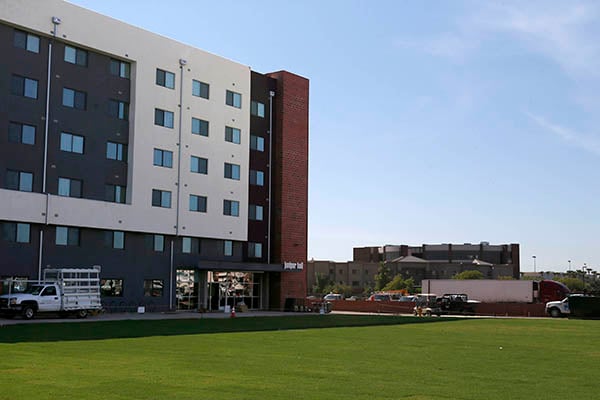
When students step onto the sun-drenched GCU campus for the first time, the 70-foot palm trees stretching toward the Sonoran Desert sky above them, the contemporary apartment suites to welcome them, and the sophisticated labs, new classrooms and walkway of eateries to greet them, they might think they’ve stepped into paradise.
They might not think the university could build — or offer — anything more.
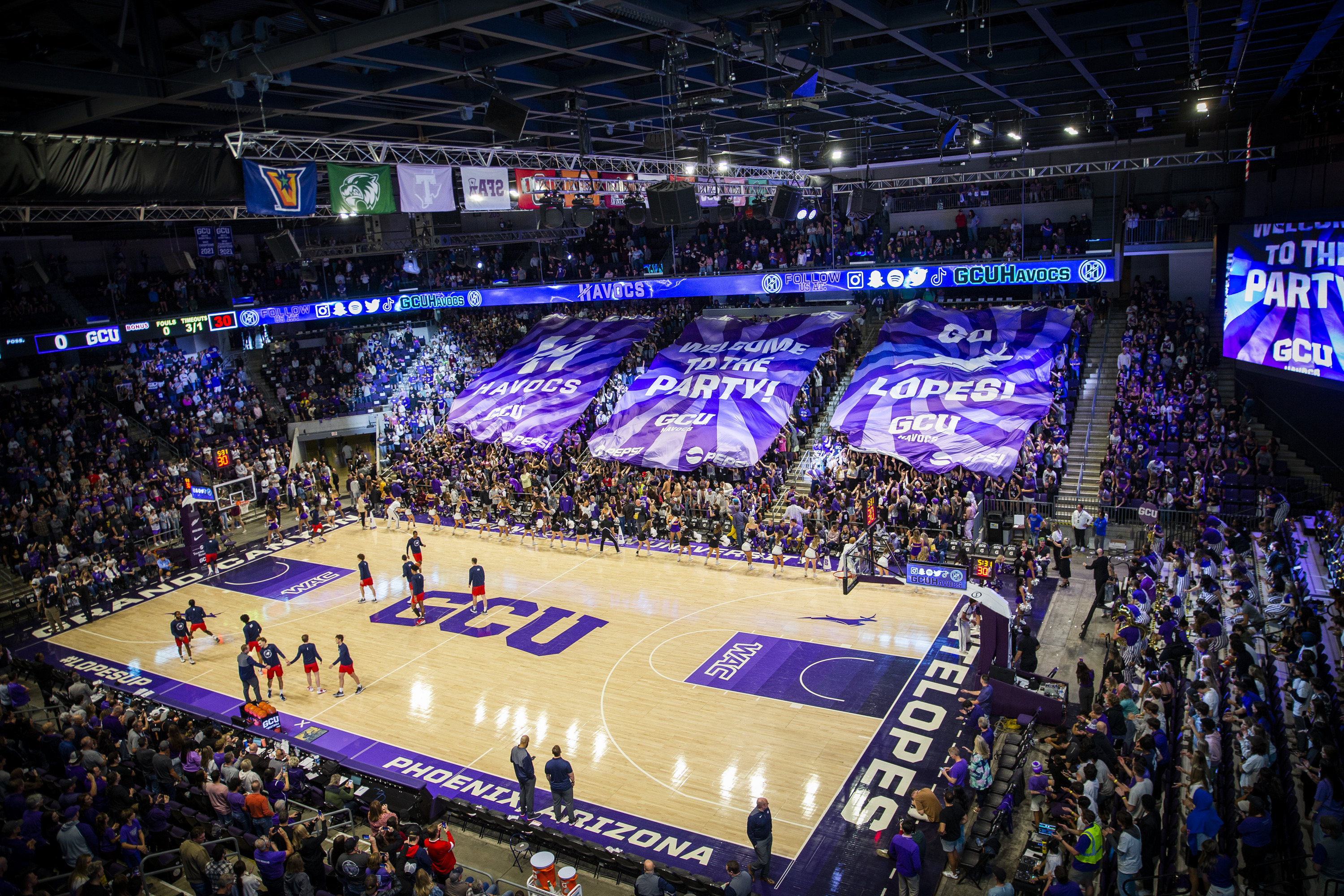
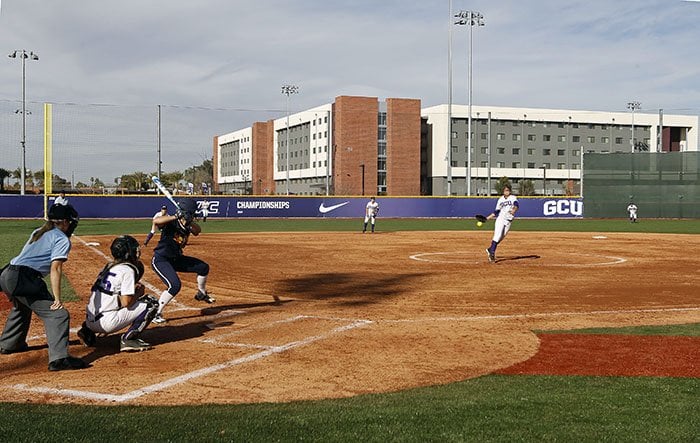
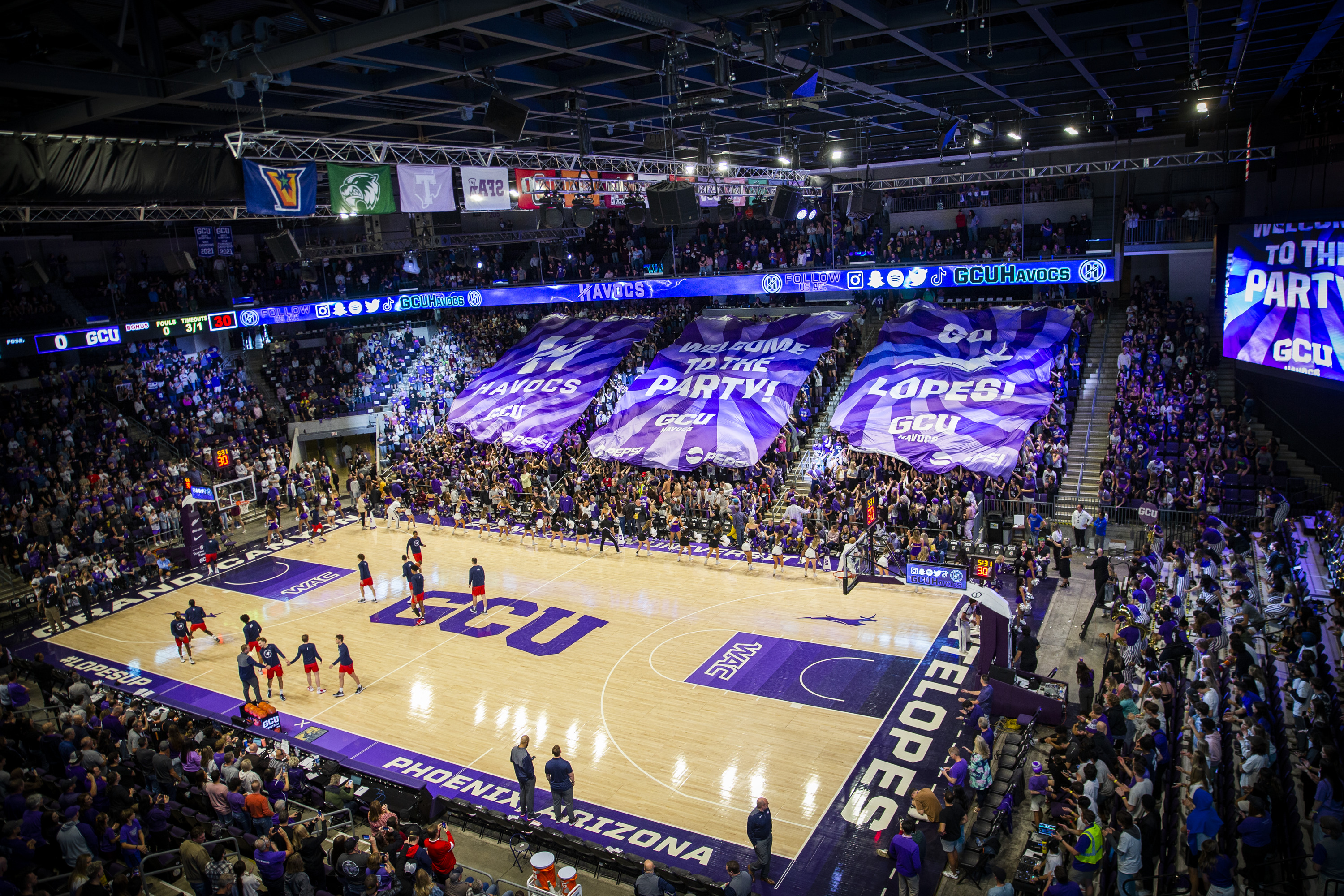
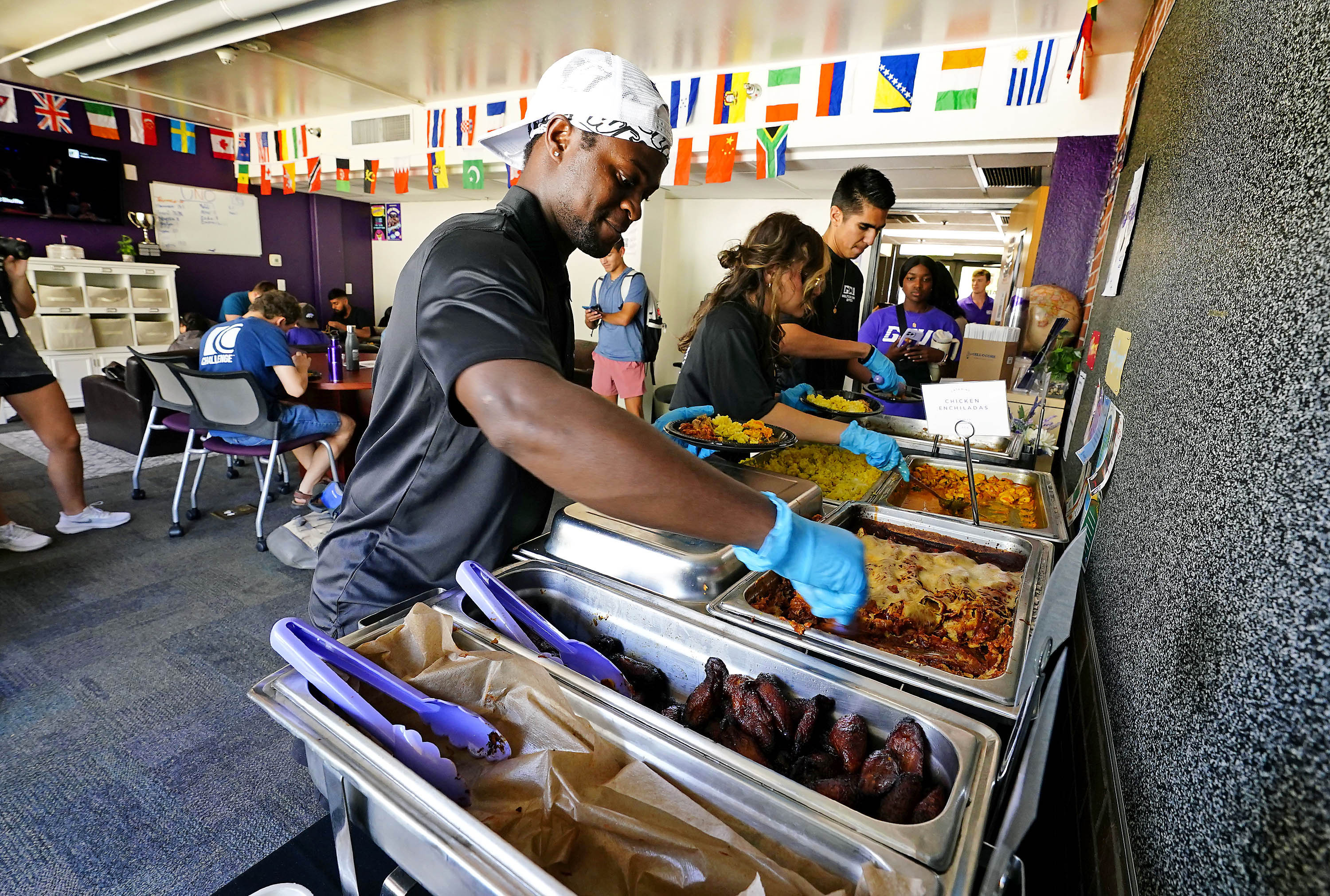
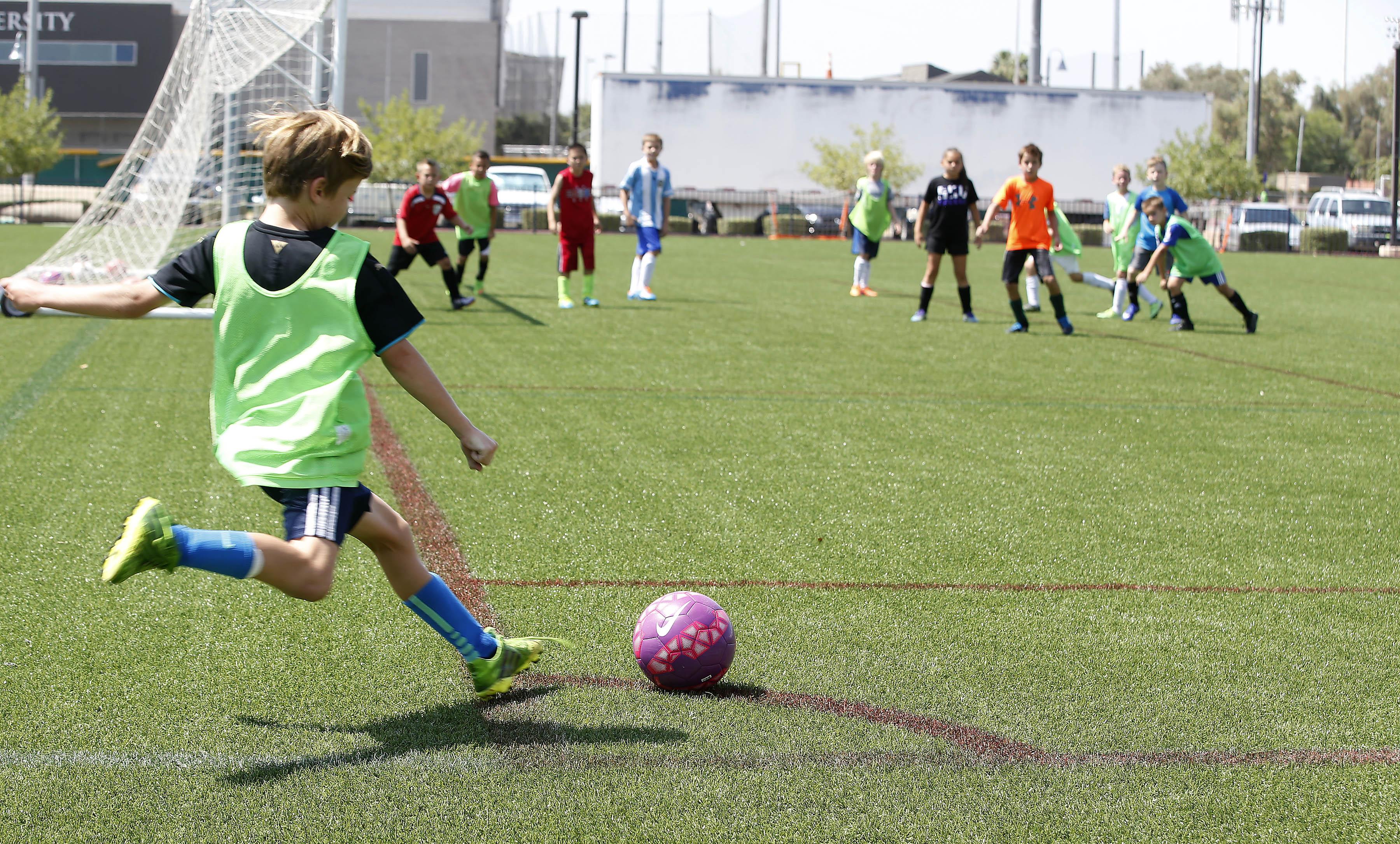
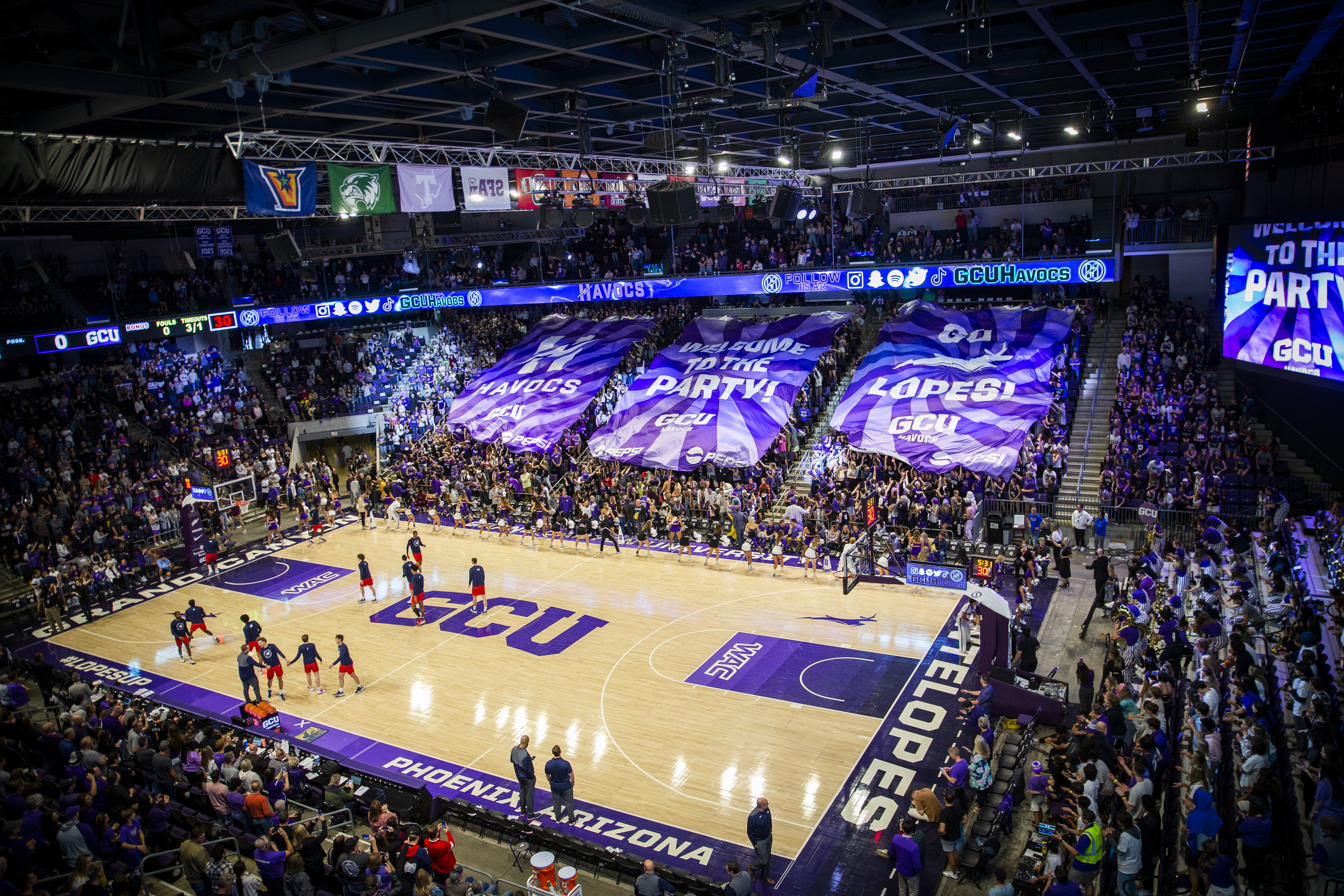
They might think that the nine colleges, 32 residence halls and apartments, 32 dining locations, popular club sports and intramural programs, championship NCAA Division I teams, 7,000-seat arena and vibrant campus life would be more than enough.
They would be wrong.
GCU’s transformation is far from complete.
Plans are to double the student population to 50,000 on the Phoenix campus and increase the online student presence to 150,000.
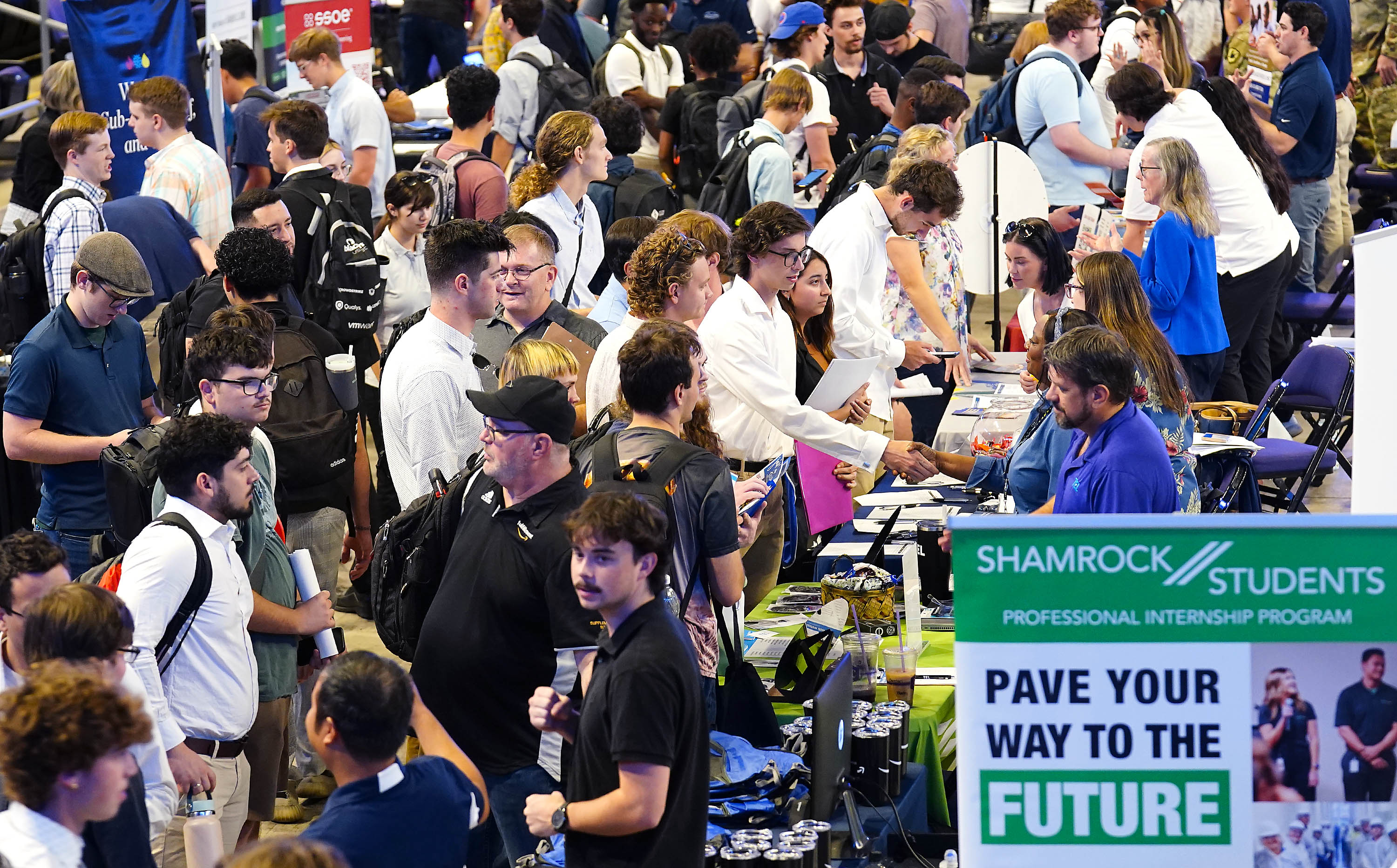
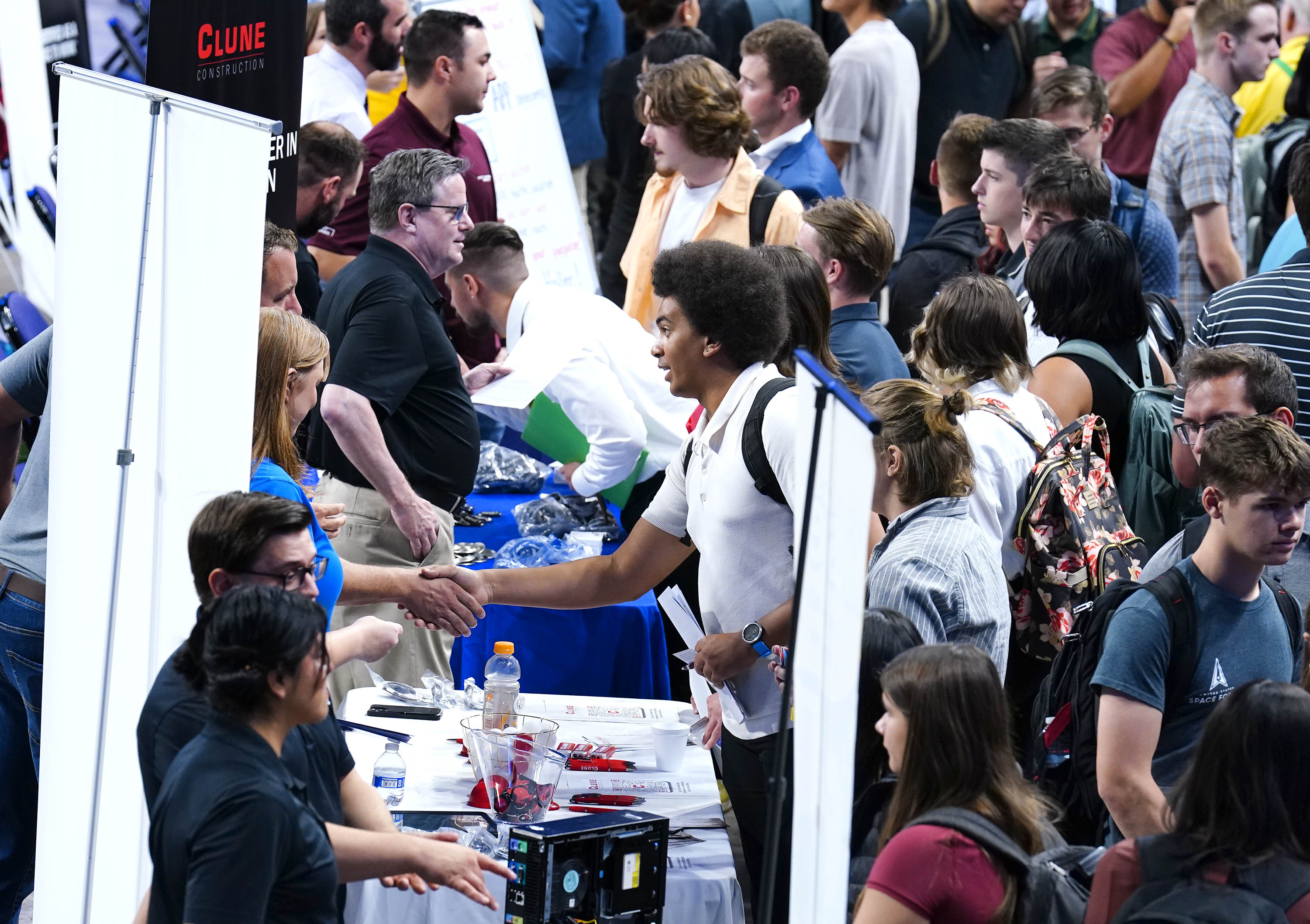
For the ground campus, that means creating 20 academic programs annually to meet the needs of industry. College leaders will continue to work with 500 industry representatives on 20 advisory boards to do so.
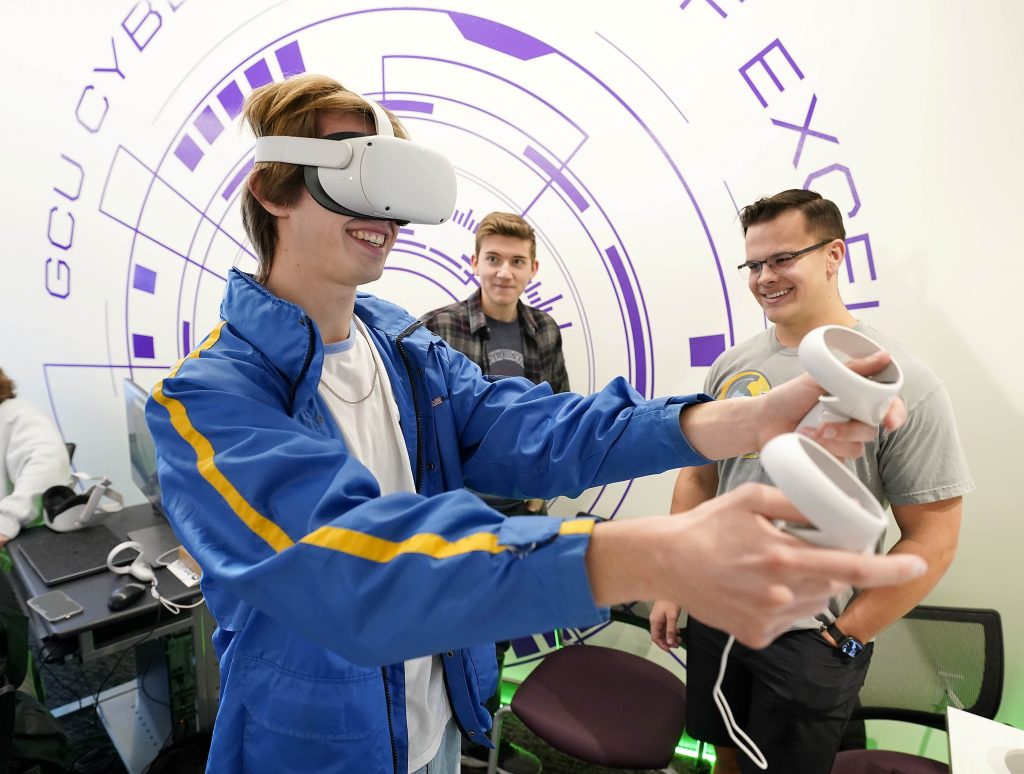
“Adding those cutting-edge programs guarantees that we’ll help people access new and vibrant careers,” said GCU President Brian Mueller.
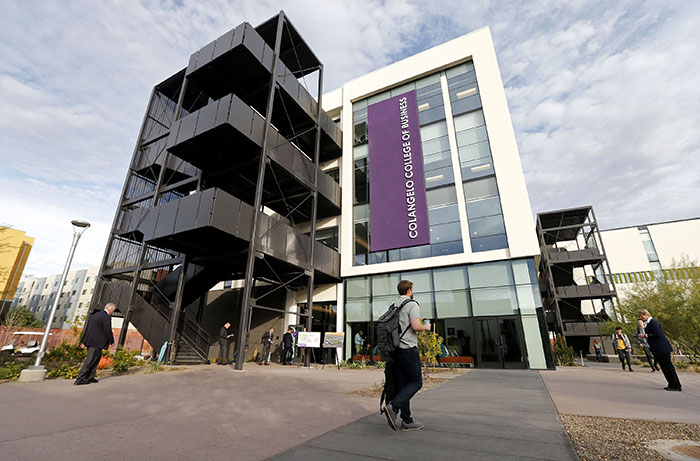
The university also will do that by building new colleges as it grows its academic standing.
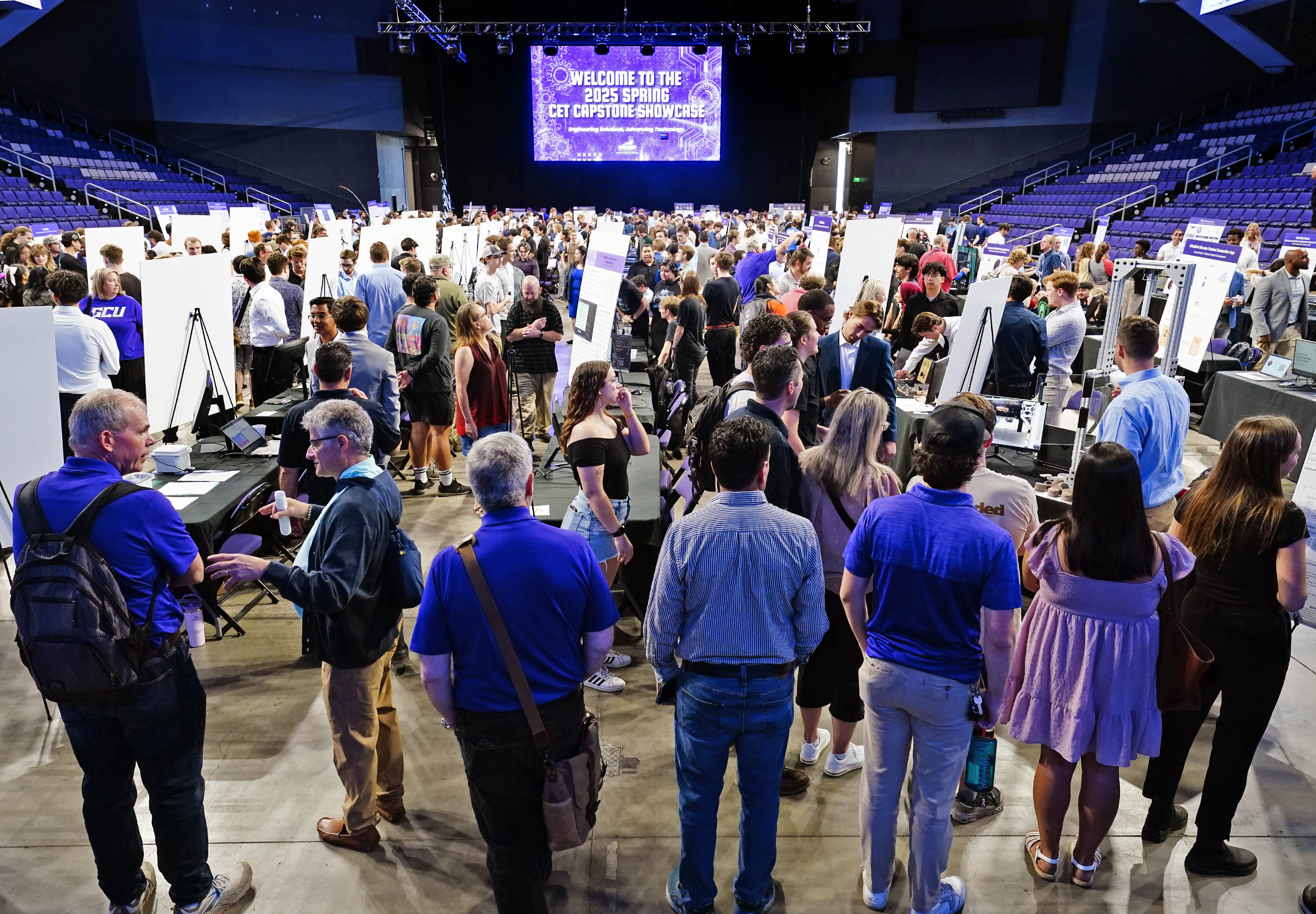
The university in 2014 opened its newest college, the College of Science, Engineering and Technology, in response to emerging career pathways in the job-rich STEM fields and will continue to be forward-looking as Arizona’s job outlook evolves.
For online students, the next decade will bring continued innovations, such as the online master’s degree in the forensic science program, whose first students graduated in spring 2023. It is believed to be the first program of its kind in which students conduct experiments at home using mailed laboratory kits. Its success is a blueprint for making other science, engineering and technology programs accessible to online students when no one thought hands-on lab work could transfer to a virtual setting.
GCU also is innovating learning platforms that didn’t exist on campus 10 years ago. The intent is to reach students wherever they are and teach them in a way that best meets their needs.
“We’ll stay focused on delivering education across the adult lifespan, very specific to the life situation of the student and the nature of what it is they have to learn,” Mueller said.
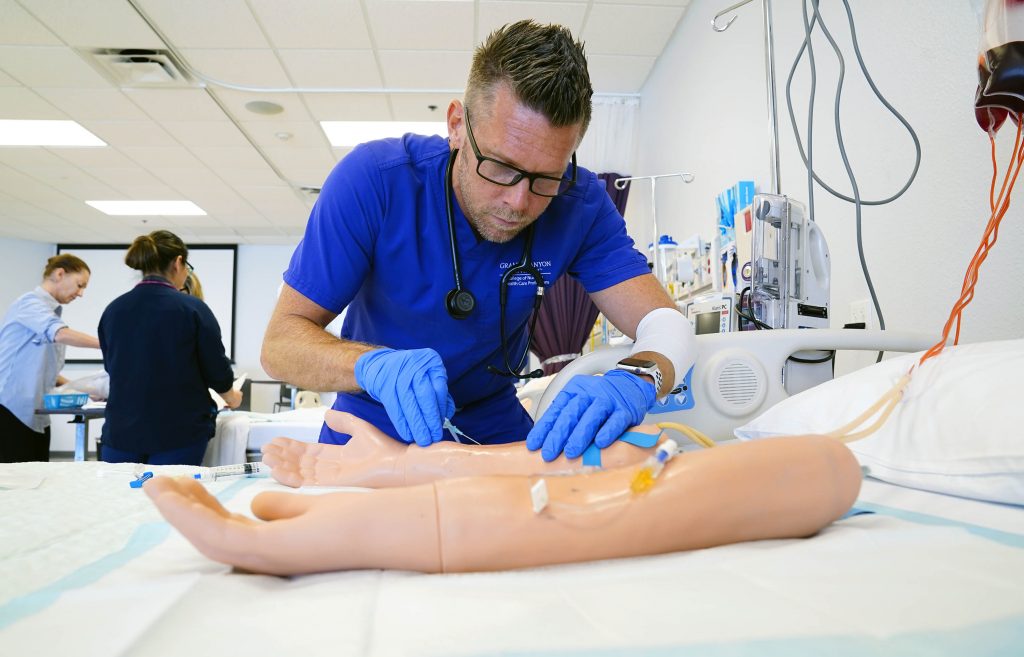
One of those new learning platforms primed for expansion: hybrid campuses, which combine online and on-site components, like the Accelerated Bachelor of Science in Nursing program. Students complete their didactic learning online and their hands-on lab work at a physical location. The program’s fifth and sixth sites, in west Phoenix and Chandler, Arizona, open in fall 2023, joining two other sites in Arizona, one in Utah and another in Las Vegas, with a seventh location earning approval in its respective state in summer 2023.
“Additional GCU locations are planned for the ABSN program to address the national nursing shortage,” said Dr. Lisa Smith, dean of the College of Nursing and Health Care Professions.
The university also will increase its certificate offerings as it expands into the trades. GCU is helping fill the workforce need for electricians through the Pre-Apprenticeship for Electricians program, whose second cohort of students completed required coursework in spring 2023.
A computer numerical control machinist certificate program was added for the fall.
But perhaps the biggest challenge for GCU will be in mastering how to use artificial intelligence. After trailblazing online education 15 years ago, GCU wants to do the same with AI.
Dr. Pam Rowland, associate dean of Computer Sciences and Technology, explained how AI can help the university gain a deeper understanding of students or make predictions about future outcomes. The technology also can detect fraud, identify trends and do mundane tasks to free human resources for more strategic work.
“What technology and artificial intelligence will do is allow employees to spend more time building relationships and to be more creative because those repetitive operational tasks will be done,” Mueller said.

He also sees GCU continuing its transformative work in the community through its five-point plan. The university works with the Phoenix Police Department in making the community safe, tutors vulnerable K-12 students at the Learning Lounge, provides jobs, helps improve its West Valley neighborhood through Habitat for Humanity home improvement projects, and assists those in need through CityServe’s distributions of household goods.
“If we make the same progress over the next 15 years, this can be a safe, middle-class neighborhood with jobs,” Mueller said.
He saw the possibilities when he first stepped onto campus 15 years ago and, alongside his leadership team, pushed to transform the modest Christian university and the neighborhood around it.
They had faith both could flourish — and they have.
But GCU isn’t done.
Now it’s time to get to work on the next 75 years.