EDITOR'S NOTE: This story is part of GCU's history page. All the stories can be found here:
GCU History Page | The GCU story | Grand 'Construction' University | A campus culture like no other | GCU timeline | Then and now | Did you know…? | Brian Mueller and the 'Phoenix 50' | Pioneering online education | Rise of athletics | The next 75 years
In the beginning
The idea of a faith-based college in Arizona was initially championed by Dr. Willis J. Ray, who would become the first president at Grand Canyon. From there, the idea took hold at the annual meeting of the Southern Baptist Convention on Oct. 29, 1946, when representatives from 48 churches gathered at Glendale Calvary Baptist Church (now First Southern Baptist Church of Glendale).
Pastor L.D. White came to the pulpit and challenged the attendees to raise the necessary funds to create a Christian college in Arizona, slamming a silver dollar atop the Communion table to command their attention and get things started. Two others strode down the aisle and placed silver dollars on the table, building excitement that led to more substantial offerings. Vernon E. Shipp of Phoenix pledged the first $1,000, followed by matching offers from U.R. Neely and Peter Ethington, both of Casa Grande, Arizona. There was even a quart jar of pennies totaling $9.03 that came from Clara P. Pierce, a widow from Glendale. Within 30 minutes, attendees raised $8,000 and planted the seeds of Arizona’s first private Christian liberal arts college.
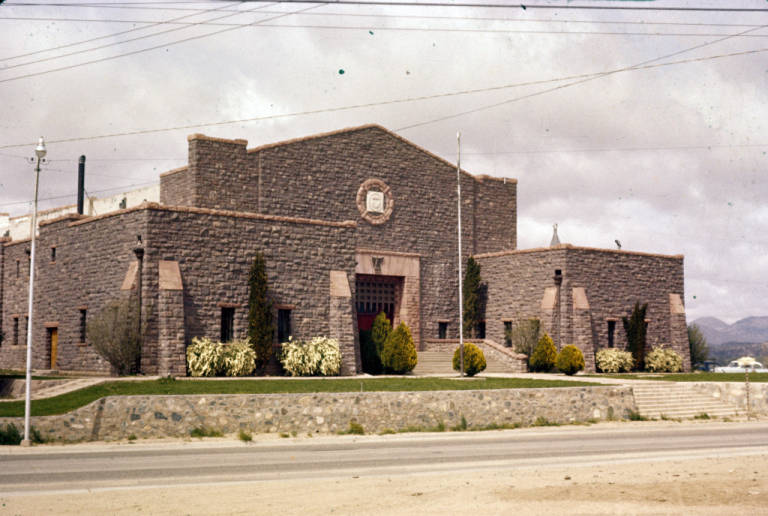
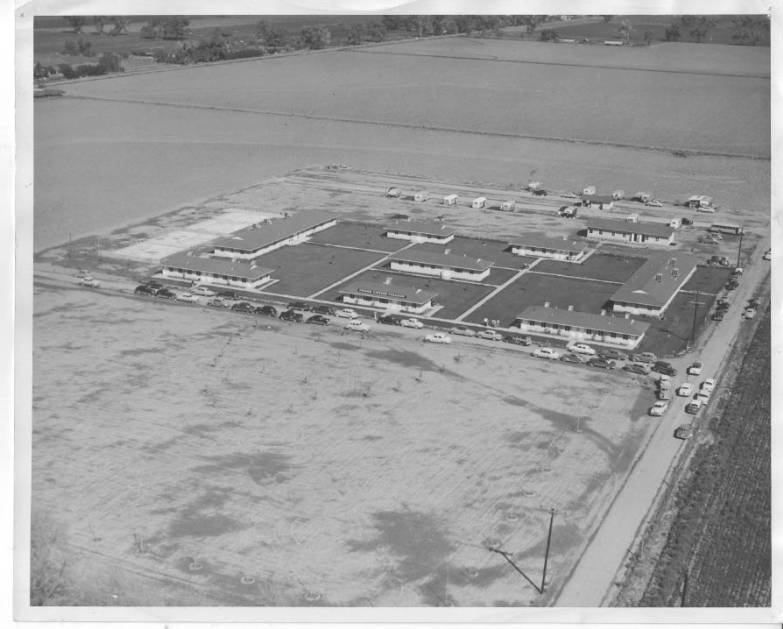
Grand Canyon College came to fruition on Sept. 13, 1949, in Prescott, Arizona, with an enrollment of 95 students from 11 states, before relocating in 1951 to what was then farmland at 3300 W. Camelback Road in Phoenix.
Much has changed in the 75 years since then. New buildings. New academic programs. New ways of delivering education. Thousands and thousands of new students and alumni.
But the heart of the university and the focus on faith and servant leadership have remained constant.
“The feeling about this place is special,” said current GCU President Brian Mueller. “When I talk to people from the ’60s, ’70s and ’80s, what they say is not any different than from when I talk to students of today.”
Mueller points to Matthew 7:24 as the foundation of Grand Canyon University’s success:
“Therefore, everyone who hears these words of mine and puts them into practice is like a wise man who built his house on the rock. The rain came down, the streams rose, and the winds blew and beat against that house; yet it did not fall, because it had its foundation on the rock. But everyone who hears these words of mine and does not put them into practice is like a foolish man who built his house on sand.”
“This place was built on the rock,” Mueller said. “There were winds and there were storms over the years. It wasn’t always easy. And yet, this place survived. It continues to survive, and all of a sudden, God allowed it to thrive. I believe He did that because it was built on the rock, and that never changed. And we are the recipients of that.”
Transforming higher education
For decades, GCU’s rock foundation housed an enrollment of around 1,000 students, relying on tuition dollars to survive, like many smaller faith-based institutions. But without the state taxpayer subsidies public universities receive or a substantial endowment, GCU found itself struggling financially.
It was $20 million in debt in 2004 and teetered on the brink of bankruptcy. To remain afloat, the university decided to take on investors and, after 55 years as a nonprofit, became a for-profit tax status institution for 14 years before reverting to its tax-exempt Arizona nonprofit heritage in 2018.
In 2008, two things occurred that would dramatically alter the course of history at GCU. First, Brian Mueller and his executive team were brought on board to chart a new course for the university. That same year, GCU became a publicly traded entity to gain access to capital and grow the university.
This was historic on several fronts: Never before had a regionally accredited university converted to for-profit status, nor had a Christian university carried that designation. But the way GCU used the free market and its investor-led approach was truly groundbreaking. GCU was also at the forefront of creating a hybrid campus model with large student bodies on both its Phoenix and online campuses — a strategy universities across the country are now trying to emulate by entering the world of online education.
Mueller and company also made a series of equally significant decisions that went against traditional norms in higher education.

To attract more students, investors in 2008 recommended the university downplay the Christian aspect of the campus. Mueller, drawing on his upbringing and background as a teacher and coach in faith-based high schools and colleges, did the opposite: He doubled down on GCU’s mission as a Christ-centered university.
With newfound capital from the public markets, university leaders also had to decide where to invest those funds. In a more affluent suburb or a city where land was plentiful? Or at 33rd Avenue and Camelback Road in Phoenix? Many would say the former was a wiser option, but the management team had a different vision. It knew it was GCU’s mission to live out its faith by helping people in disadvantaged situations in its inner-city neighborhood.
In 2009, Mueller decided to reduce the net price of tuition, providing significant institutional academic scholarships that lowered the average cost to $8,600, putting it on par with state universities and well below other private academic institutions. He also committed to keeping room and board costs, parking and other fees below national averages.
“That was a huge risk at the time. We were betting that we would attract more students, which would offset any losses we incurred by lowering tuition,” Mueller said. “More importantly, we wanted to ensure that higher education was affordable to all socioeconomic classes of Americans. Education is the great equalizer in society. By making tuition affordable, we are creating equality of opportunity for everyone while also creating a very diverse student body.”
Mueller didn’t just want more students, he wanted high-achieving students. So admissions standards were raised in 2013 for the ground campus, requiring a 3.0 incoming grade point average.
GCU also began to invest heavily in technology, pouring millions of dollars into a learning management system shared by ground and online students. It also developed an administrative system that streamlines and automates operational processes, such as financial aid, admissions, transcript evaluations, building faculty and class schedules, and assessing learning outcomes. Almost $300 million has been invested in these systems, allowing the university to scale its student body while continuing to increase the quality of the services provided.
The next steps were enhancing the curriculum to integrate the Christian worldview more fully into all classes and reinventing academic offerings to align with high-growth fields, such as computer science, information technology, cybersecurity and engineering. GCU is adding roughly 20 academic programs each year to keep up with growth and also has created 20 advisory boards with more than 500 members. These industry experts help ensure the curriculum is meeting the needs of today’s workplace.
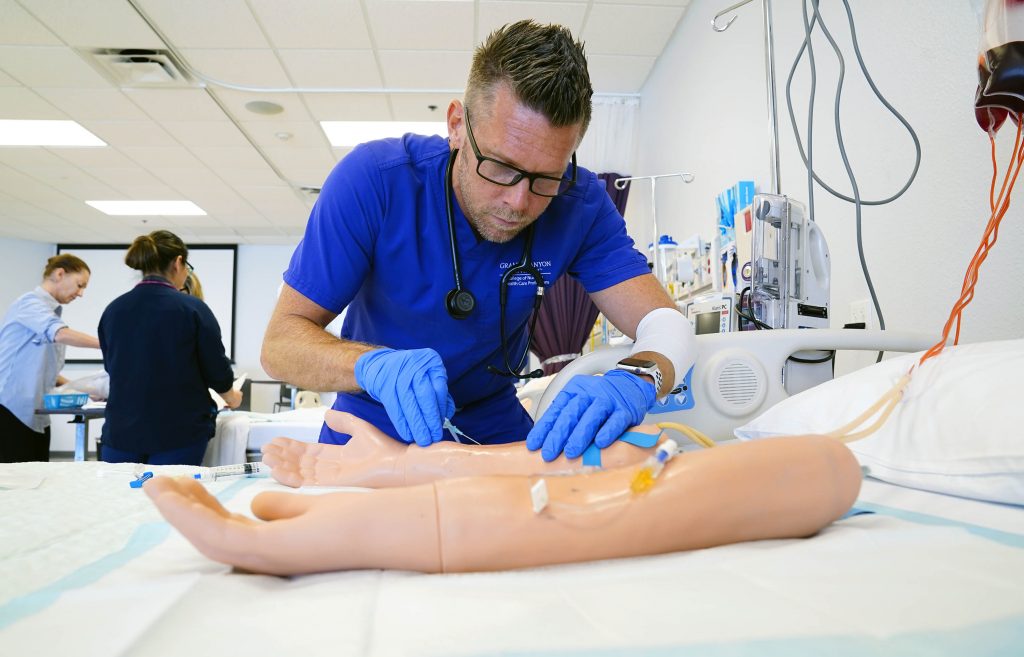
“The curriculum, both on the Phoenix campus and online, was intentionally developed to focus on instructor-led small class sizes with an emphasis on writing and project-based coursework — all within the context of a Christian worldview perspective,” said Dr. Randy Gibb, who became provost of the university after serving as dean of the Colangelo College of Business. “That academic foundation, when combined with our faith, free market principles and industry-oriented faculty, results in graduates having a sacred vocation and contributing to human flourishing.”
And, finally, with the university on solid financial footing, the leadership team decided to return GCU to its historic nonprofit roots in 2018. The group wanted to ensure that faculty and students have equal access to research grants, and it wanted to open up the world of philanthropic giving, become full-voting members of NCAA Division I athletics, and continue to freeze tuition and invest in campus infrastructure.
It was a truly innovative path to prosperity based on two pillars of American society — faith and the free market system — that has disrupted an industry in need of change.
Even during the 14 years GCU was technically a for-profit entity, that classification was a misnomer because the university reinvested all profits into the school during that time, which is essentially how a nonprofit operates. Further, no tuition or room and board dollars went to investors because no dividends were paid to them.
A more apt description is that GCU was a free-market-driven institution or investor-led institution during those 14 years. Investors received a return on their investment only because, as GCU grew and reinvested profits and became successful, its stock price reflected that success. The approach benefited the university and allowed it to grow and prosper. It benefited investors. And, most importantly, it benefited students.
“Critics didn’t understand the model and tried to argue, based on their preconceived ideology, that for-profit institutions make decisions primarily to benefit investors,” Mueller said. “While that may be true at some organizations, our approach was different. With every decision we made, we were able to balance the needs of our students, our employees, our investors and the community in which we reside. That approach benefits everyone.”
Mueller cited how GCU could have raised tuition numerous times during those 14 years, like nearly every university was doing. “That would have improved the bottom line, which would have resulted in a higher stock price, which would then benefit investors. We never did that. In fact, we have now frozen tuition for 15 straight years because it is the right thing to do for students. We also have invested heavily in advising and counseling services because it benefits students.”
The results of that approach speak for themselves.
Enrollment on the Phoenix campus is anticipated to increase from roughly 1,000 traditional students in 2008 to 26,000 for fall 2023, while online enrollment has grown to nearly 90,000 students, with almost half of those studying at the graduate level.

GCU’s campus nearly has tripled in size to 300 acres, thanks to $1.7 billion invested into infrastructure. Niche.com annually rates GCU among the top 20 college campuses in the country, while in 2023, it ranked the university’s new and modern residence halls at No. 5 out of 1,371 colleges.
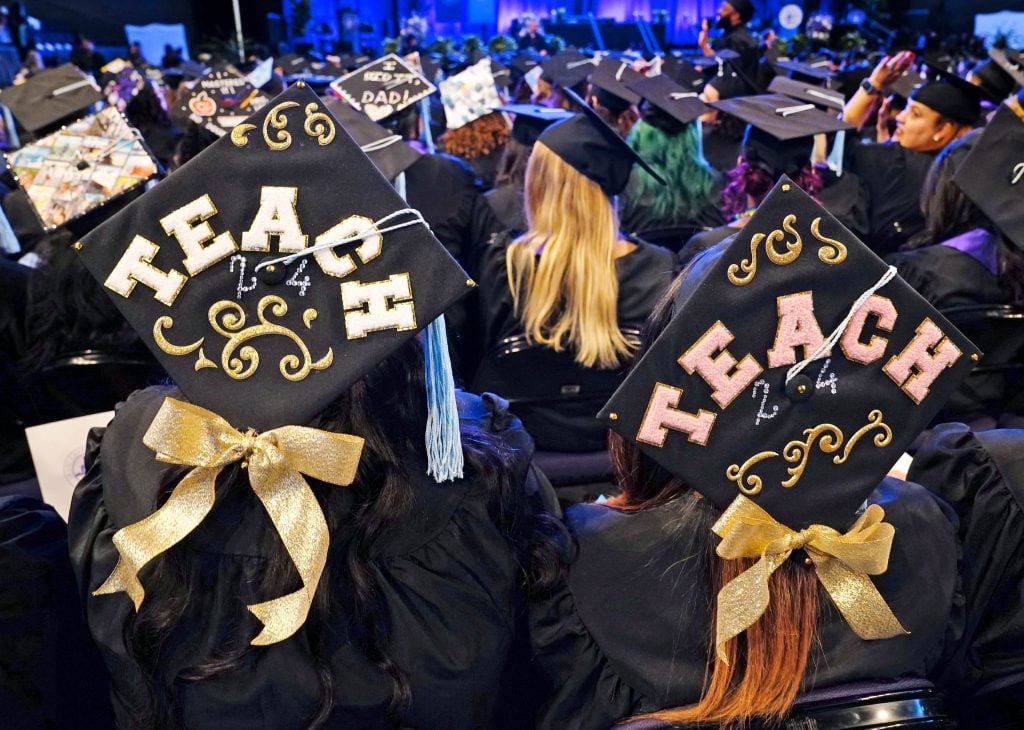
The number of academic offerings tripled to 321 degree programs, emphases and certificates within GCU’s nine colleges. The university also expanded academic programs in high-need areas, such as teaching, nursing and social work, to help address nationwide workforce shortages in those professions.
In 2022-23, GCU produced nearly 30,000 graduates who contribute to the workforce across the U.S.
Its enrollment grew concurrently with rising admissions standards, with average incoming grade point averages for traditional students of 3.5 each of the past six years. In addition, GCU’s Honors College in fall 2022 grew to nearly 3,000 students with average incoming GPAs of 4.1.
Because of its affordable tuition, room and board rates, GCU has become an attractive option for first-generation college-goers (roughly 30% of the incoming classes in 2021 and 2022 identified as first-generation students). That also has resulted in a diverse and high-quality student body that, for traditional students in fall 2022, was 45% students of color, including 26% Hispanic and almost 6% African American.
GCU and its education partner created an economic impact of $2.1 billion in 2020, according to a study by economist Elliott Pollack and Co.
Loan default rates for GCU students (1.5%) are lower than the national average (2.3%). And the average debt that GCU bachelor’s graduates incur ($25,681 in 2019-20) is on par with undergraduate students at state universities ($26,700) and well below other private, nonprofit universities ($33,600), according to data from the College Board.
“What a success story this university is and continues to be,” said Dean Barrett, retired senior vice president of Global Marketing for McDonald’s and a member of GCU’s Colangelo College of Business Advisory Board. “GCU’s impact in the innovation of higher education and how it can help bring change is a model for all of us to learn from.”
Today, GCU continues to buck trends in higher education. With rising costs and declining enrollments nationwide in a post-COVID world, many students are staying closer to home to attend college as universities become more regional. GCU, on the other hand, is becoming a national institution, drawing students from throughout the country. Of the approximately 25,000 traditional students who attended the Phoenix campus in fall 2022, 65% came from outside of Arizona. Online, 83% of the nearly 90,000 students are from out of state.
“There was a time we didn’t know if Grand Canyon was going to survive,” said GCU Alumni Hall of Fame inductee Cathy Poplin in 2018, when she was serving as the executive director of the Arizona Technology in Education Association. “I’m thrilled that it’s here and is as exciting as it is. Most important, I am glad that it still has its strong, Christian focus.”
Transforming Christian education
There are a number of ways to deliver Christian education and all have merit. GCU distinguishes itself as a Christian university by instilling a sense of vocational calling and purpose in students, faculty and staff. This is accomplished in two distinct ways: 1) by embracing a Christian worldview in which all vocations, including the sciences, are considered sacred; and 2) by committing to a missional approach to Christianity that centers on following Jesus Christ in both word and deed by loving your neighbors and helping those in need.
Sacred Vocations
GCU integrates the Christian worldview into its entire curriculum so it can purposefully promote the common good and prepare students to embark on careers marked by kindness, service and integrity. That is pretty straightforward in the caring professions, such as preaching, teaching, nursing and social work. It becomes more challenging in fields such as the hard sciences, which many see as conflicting with Christianity.
Dr. Jason Hiles, GCU’s College of Theology dean, describes the university’s approach as joining knowledge of God and knowledge of the universe to produce more complete learning about the world.
“When you start to ask, why would we integrate faith into learning, academic discipline and vocation, the simple answer is, if we don’t do that, we haven’t really educated students from a deeply Christian perspective,” Hiles said. “Perhaps we’ve educated them in a Christian environment, and they may breathe in things culturally on a campus like this that are positive and affirming. But we’re actually trying to produce graduates who can connect the dots from the foundational truths of the Christian worldview to their larger life.”
That produces graduates known for their integrity, servant leadership and ability to solve problems in a collaborative environment.
“We have always been amazed at the incredible mindset the students arrive with for their time here,” said Phoenix Heat Treating Inc. President Peter Hushek, who also serves on the Advisory Council for the Accreditation Board for Engineering and Technology and is a former member of GCU’s Engineering Advisory Board. “The engineering program has made excellent advances in the time since we joined with GCU.”
Whether it is engineering, medicine, cybersecurity, information technology or any career field, GCU President Brian Mueller said it is important to have graduates grounded in Christian principles as they enter those professions. “All of those are sacred vocations and equally honoring in God’s eyes in order to make the world a better place.”
“We believe it is really important to integrate the Christian worldview into the curriculum because the further science gets into being able to do some very controversial things, it needs to have some regulation and some belief that there are absolute truths. So, yes, we are studying science, and we want to be a contributor to the advancement of knowledge, but we want to do that with a very firm foundation from an ethical perspective that involves absolute truths.”
Loving Our Neighbors
For decades, Grand Canyon University has been involved in helping disadvantaged populations in its inner-city Phoenix community by volunteering at schools, homeless shelters, nursing clinics or homes that assist veterans, refugees, the elderly and victims of sex trafficking.
Such efforts are significant to provide relief for those in need, but the university wanted to do more. It wanted to do something to lift an entire community and bring about long-term transformation — first by meeting families’ basic needs and improving their homes and neighborhoods, then by providing equal opportunity pathways to education, and finally by creating roads to high-paying jobs to change a family’s trajectory for generations to come.
To that end, university leaders established an ambitious and ground-breaking five-point plan in 2015 that is transforming the inner-city neighborhood in which GCU resides:

Serving families in need: As part of a partnership with CityServe that began in September 2021, GCU has provided more than $9.6 million of surplus goods, such as furniture, beds, heaters, clothing, etc., from its on-campus warehouse to more than 23,100 families in Arizona.
The warehouse operates with only four full-time employees and runs primarily through the help of GCU student, staff and external volunteers. GCU is the only university in the country to serve as a CityServe hub.
Making neighborhoods safer: GCU is in the midst of an 11-year, $2.2 million partnership with the city of Phoenix to increase safety and eliminate crime in the neighborhoods surrounding GCU. The program serves as a deterrent to criminal activity by paying for police officers’ overtime to provide an increased presence in the targeted areas.
In the first seven years of the program, crimes in the surrounding neighborhood decreased 19.8% (compared to a 3.5% drop citywide during the same time frame).

Improving home values: In this first-of-its-kind partnership, GCU is providing both the funding and manpower to renovate an entire community of homes in its neighborhood through a partnership with Habitat for Humanity, a nonprofit Christian housing ministry.
Since 2015, more than $5.4 million has been raised and more than 33,000 volunteer hours contributed to renovate the homes of more than 480 families in GCU’s community. Those repairs include everything from new windows to roofing, block walls, HVAC units, painting and landscaping.
Median home values have risen 761% from the fourth quarter of 2011 to the same time period in 2022.
Supporting K-12 education: GCU is having a significant impact on public and private K-12 schools in the community through two groundbreaking initiatives.
Since 2013, GCU has provided free tutoring and mentoring to more than 5,500 students and supports 320-plus neighboring schools. GCU’s best and brightest students serve as tutors for K-12 students, some of whom are struggling just to advance to the next grade level and others who are taking advanced placement classes with an eye on a college scholarship.

The university built upon that success in 2015 by creating the Students Inspiring Students full-tuition scholarship, which has been awarded to 707 high-achieving, low-income students in this neighborhood who otherwise may not have been able to afford college. As of Dec. 31, 2022, GCU has raised over $7.6 million in donor funding to support the scholarships.
Reflecting the demographics of the surrounding community, in September 2020, about 85% of the recipients were students of color who otherwise may not have been able to afford college. The first group of SIS recipients graduated in 2019, and since then, over 165 students have completed their degrees and received jobs at companies like Banner University Downtown, American Express and General Motors.
Creating jobs: GCU has become an anchor institution in west Phoenix that, along with its partners, supported 17,690 jobs and created an economic impact of $2.1 billion in fiscal year 2020, according to a study by Elliott Pollack & Co.

GCU also launched 10 new business enterprises, including a hotel, golf course, two public restaurants, a merchandise company, and coffee and pizza companies. These enterprises provide management opportunities for recent graduates and employment opportunities for nearly 500 graduates, students and local residents, while also providing an economic stimulus for west Phoenix. In the case of the hotel and the golf course, the university spent tens of millions of dollars renovating these community assets that had fallen into disrepair.
GCU also offers no-cost office space for select startups at its business incubator, Canyon Ventures, which houses 15 startups. Since the center launched in 2019, five technology firms have graduated from the space and have established new office locations in the Phoenix metro.
“I love GCU,” said Rick Calcutt, creative arts pastor at Compass Christian Church in Chandler, Arizona, after he was inducted into the GCU Alumni Hall of Fame in 2020. “What I admire most is the steady march that they’ve made over the last 15 years to take a place that was already impactful to the community … now their impact is monumental.”
Transformational statement
The transformation — of a university, its mission and the community in which it resides — is ongoing. To better articulate that mission and what GCU has become as a university, a committee formed in 2022 to craft a new mission statement. More than just words on a page or a summary of ideals, the new mission statement captures the intentionality of how GCU incorporates its Christian mission and its commitment to putting that mission into action.
The mission statement reads:
“GCU is a missional, Christ-centered university with an innovative and adaptive spirit that addresses the world’s deep needs by cultivating compassionate Christian community, empowering free and virtuous action, and serving others in ways that promote human flourishing.
Through academic excellence, the university equips students with knowledge of the Christian worldview, instilling in them a sense of purpose and vocational calling that enables them to be innovative thinkers, effective communicators, global contributors, and transformative leaders who change their communities by placing the interests of others before their own.”
The statement reflects the instructions from Jesus Christ to live as the salt and light of the world to bring about transformation and live our lives in ways that contribute to the common good.
“I absolutely believe that God put us here in this place, at this time and in this neighborhood for a reason,” GCU President Brian Mueller said. “As our students are learning and preparing for their future, we also want them to participate in being a city on a hill, a light that shines so brightly that the message of Jesus is absolutely, 100% irresistible.”