Presenters address sex trafficking prevention, FAFSA barriers, more
Photos by Ralph Freso
When founders of sex trafficking prevention organization Red Light Rebellion visited Grand Canyon University this summer, they wanted to find students dedicated to their mission.
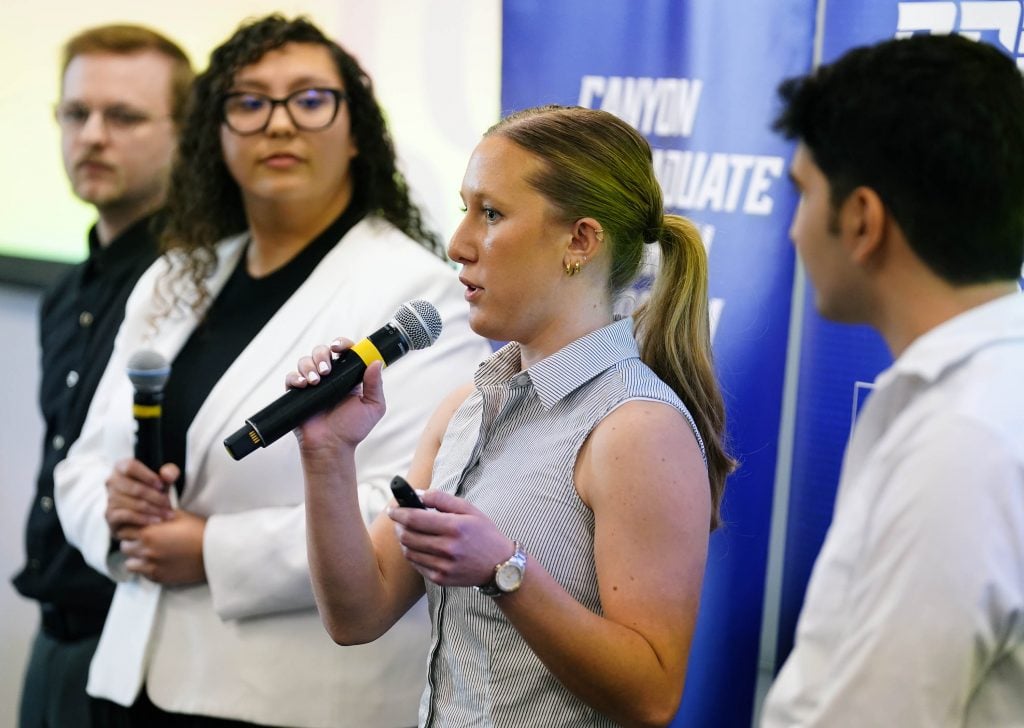
Enter seniors Caleb Migura and Cierra Baca and juniors Carlos Diaz and Elise Ahrens. They were intrigued by the idea of serving and educating the community when it comes to sex trafficking, a high-risk issue for people their age, and a problem that isn't talked about enough.
They delved into research, and on Monday, presented their data and results at the Canyon Undergraduate Research Symposium.
“We really like their mission,” Ahrens said. “We like education of sex trafficking so we can get away from that world. One thing the EPIC Lab wants to do is improve our environment, our city, but also our mission as Christians at GCU.”
The College of Humanities and Social Sciences opened the EPIC Lab roughly a year ago. The space is dedicated to students who want to work on undergraduate research, collaborate with other students and receive mentorship from faculty.
With Dr. Magen Branham’s help, Migura, Baca, Diaz and Ahrens used the lab space to compose surveys and collect data to strengthen and spread the impact of Red Light Rebellion.
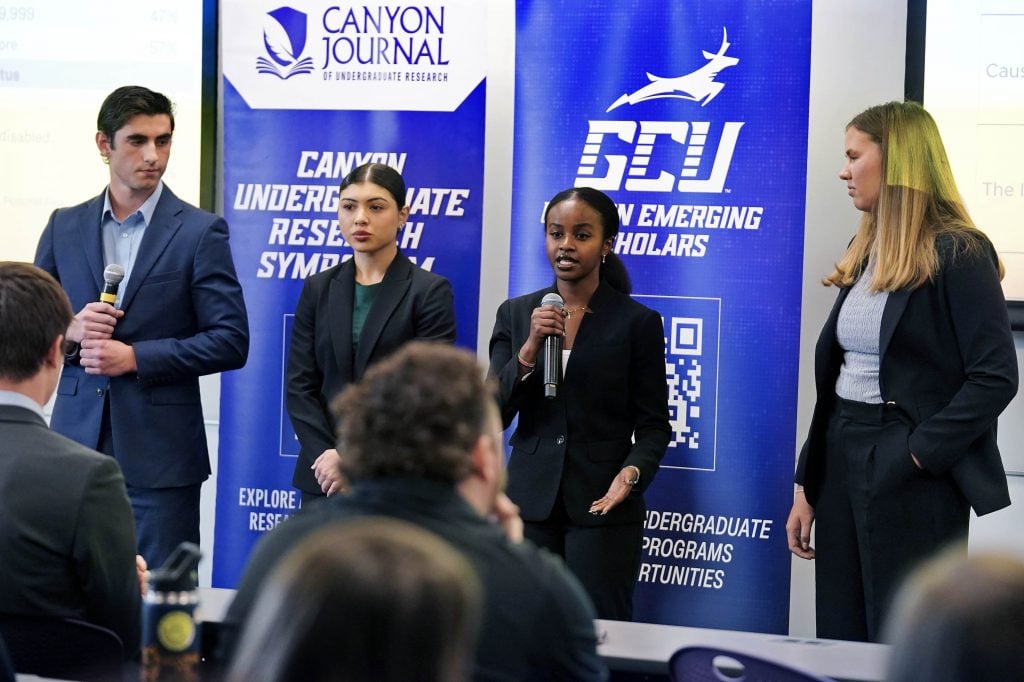
The two primary focuses of the organization are prevention and arrangement strategies. Their staple projects include touring schools and sharing presentations on sex trafficking to educate students on what that looks like and how to notice warning signs and prevent involvement.
The group of Honors College students developed surveys that gathered data in internet safety, pornography awareness, sex trafficking, knowledge of defining sex work and healthy relationship education.
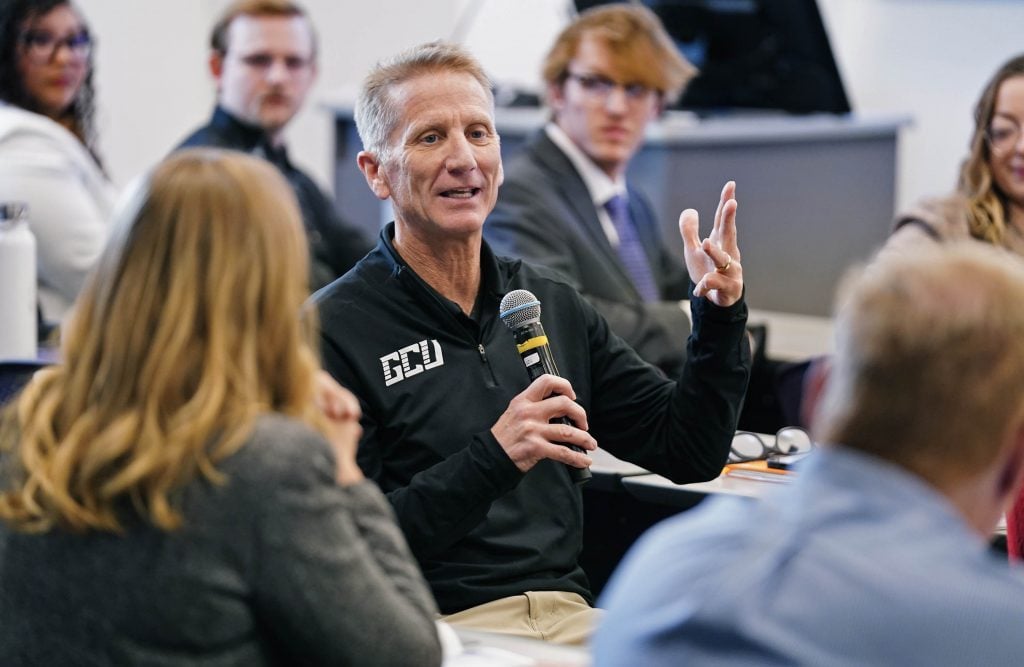
“This is helpful for us because we get to see the type of data we want to get back to the program so they can make it easier and more effective for them,” Migura said. “We wanted to progress the goals and purpose for Rebellion and overall be more effective with their mission task force."
The group administered their surveys, which included 18 questions, to 245 students. Quantitative questions focused on yes or no answers and collected data on how many students are exposed and knowledgeable about the project topics. Qualitative data was more subjective, asking open-ended questions that allowed students to provide explanation on how they gained prior knowledge.
The team administered the surveys in pre- and post-test fashion to measure the efficacy of the questions. Migura, Baca, Diaz and Ahrens hope to use their results to advance and progress Red Light Rebellion’s mission and target focus areas where most students are lacking education.
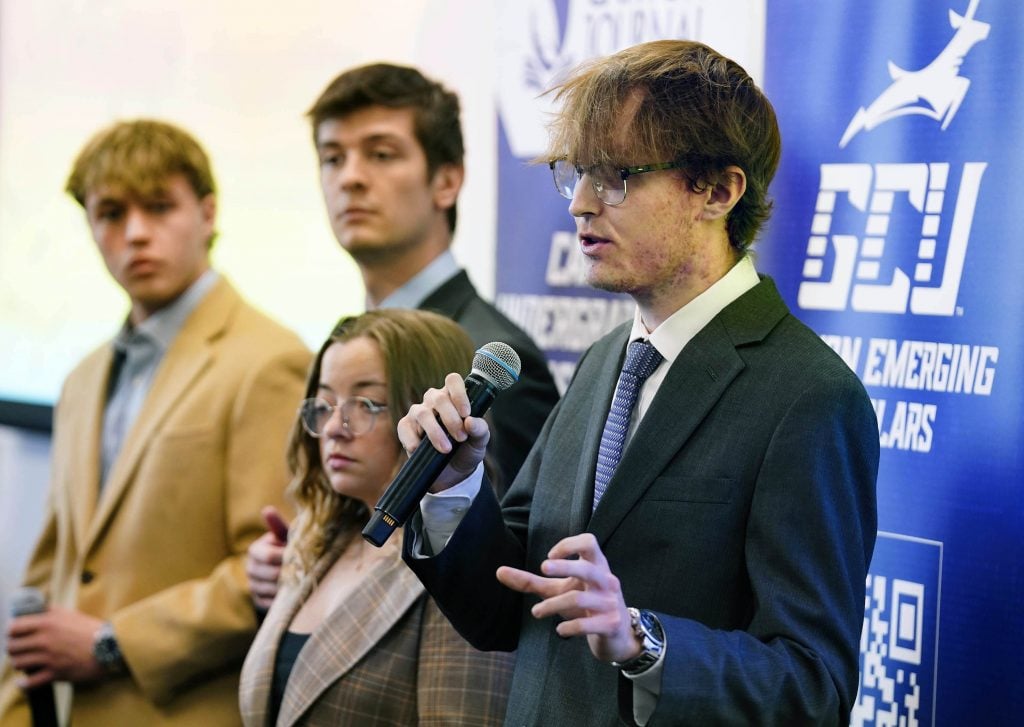
“This collaboration is to better improve the efficacy of this program as a hope to spread to many more school districts,” Diaz said.
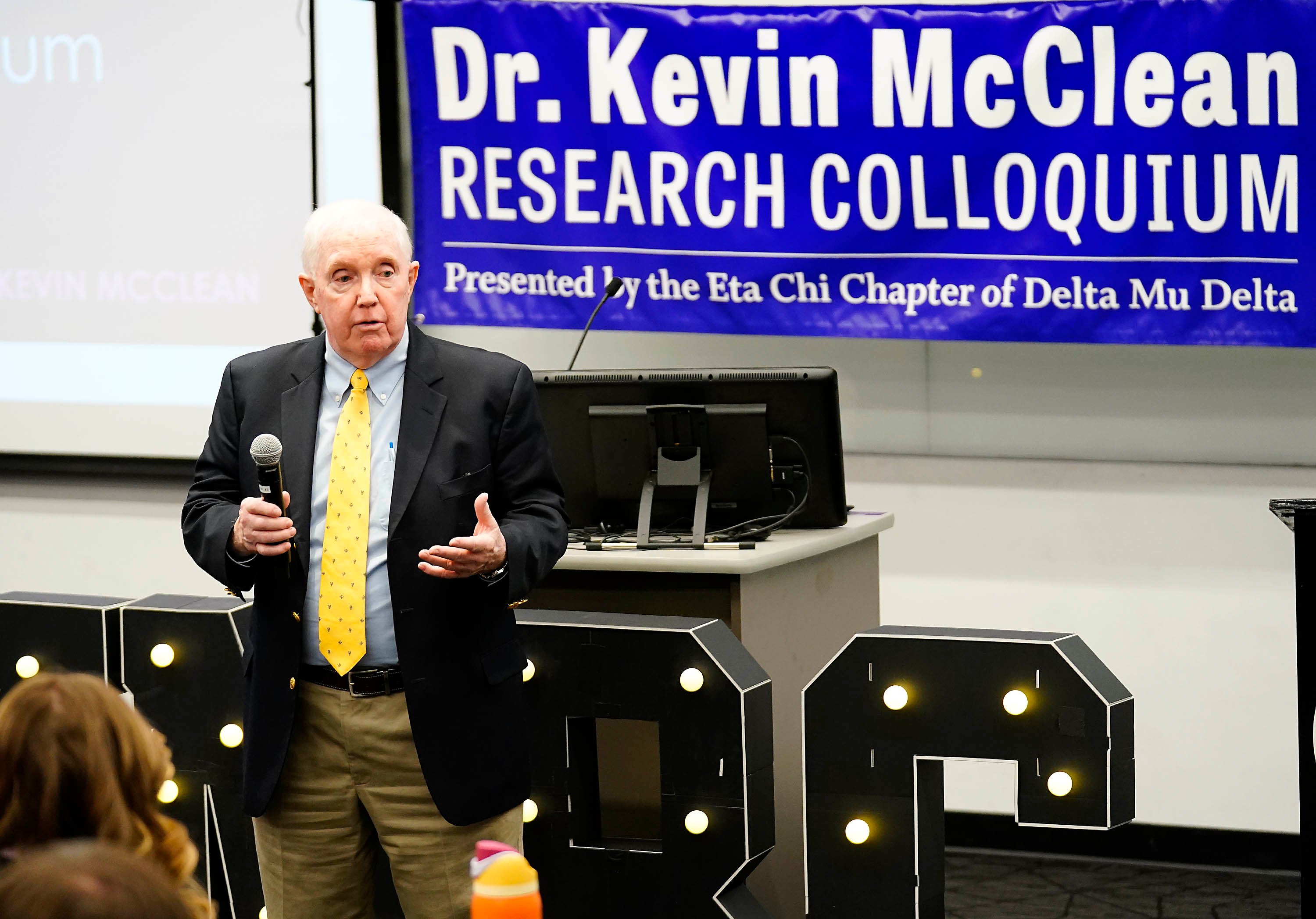
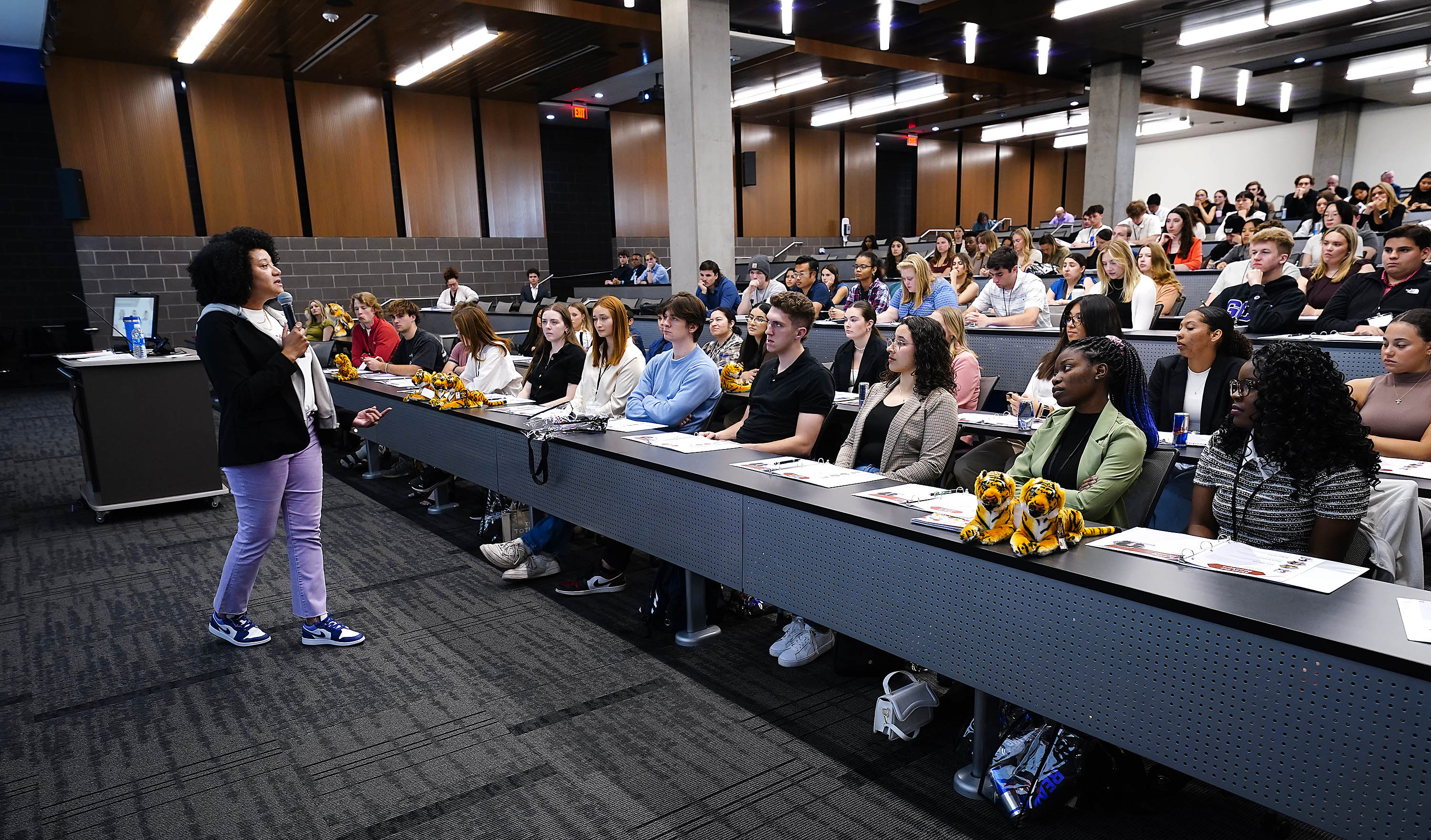
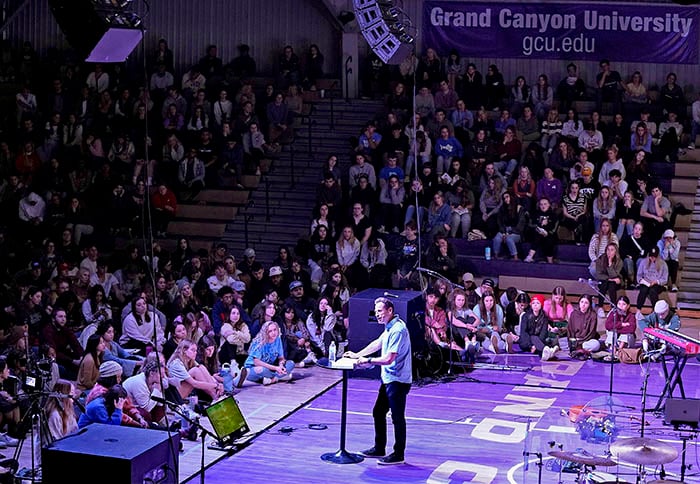
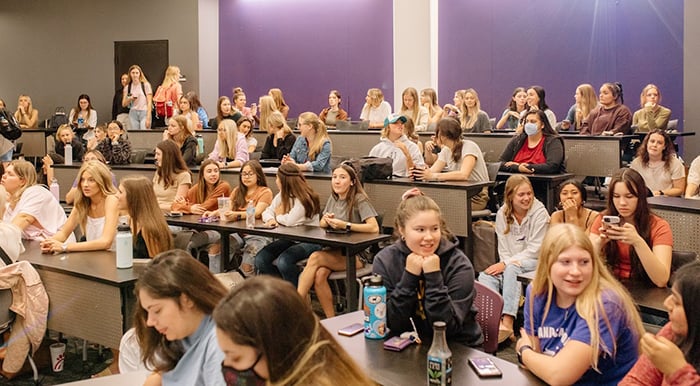
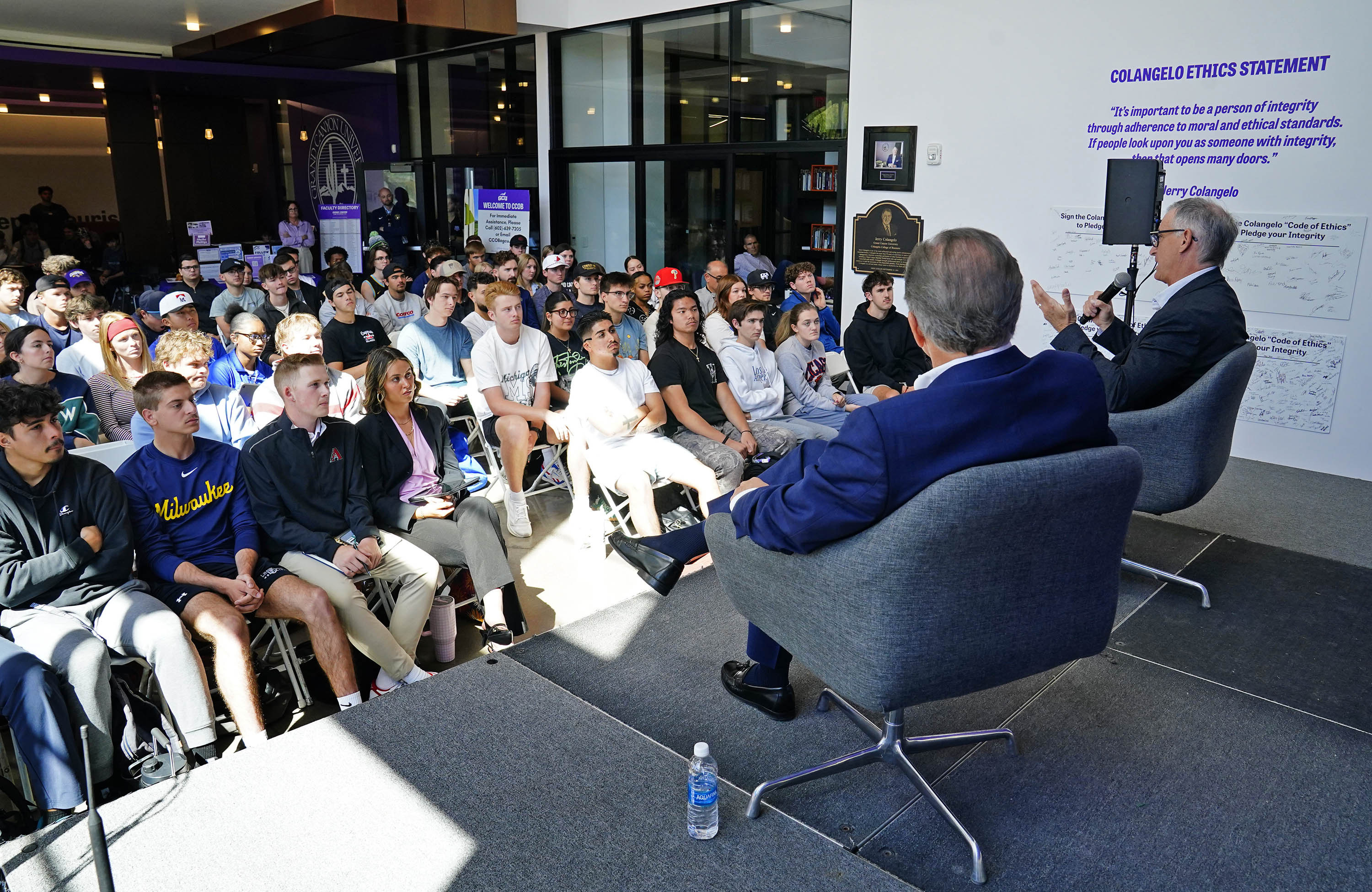
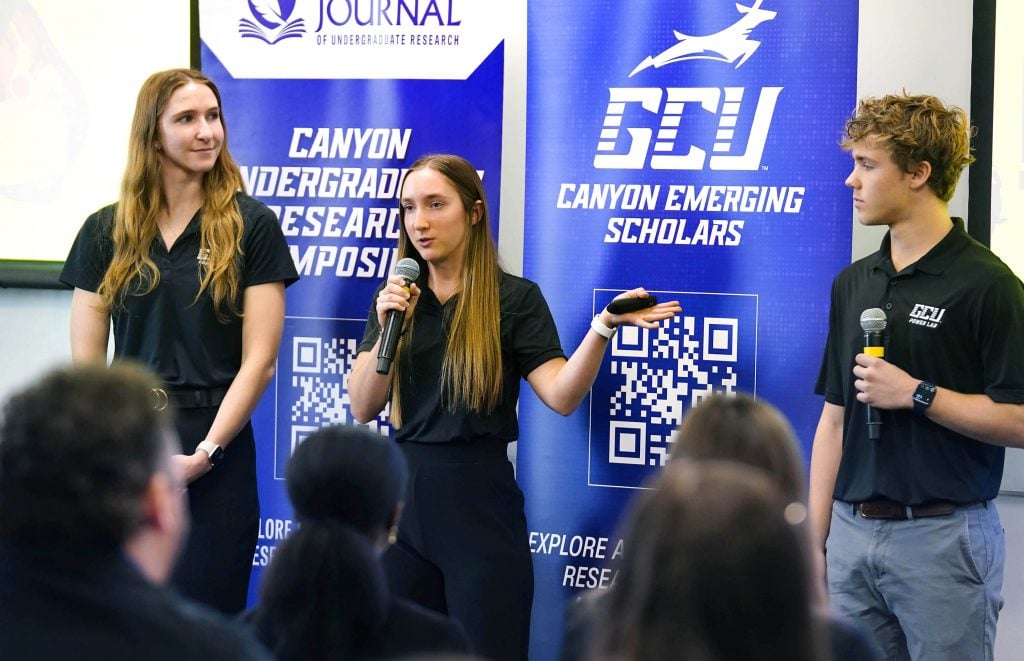
The symposium featured three additional student groups that shared their research in front of a packed classroom, including academic leadership, college deans, faculty and staff. Students chose topics that spoke to their passions and mission fields, such as addressing financial aid difficulties, the depths of loyalty in human relationships and bettering physiological and psychological health through eating habits.
“Students really put a lot of work into these presentations” said Katalina Inzunza Herrera, Honors College program manager. “They meet with me at least once a week to go over their slides. I really appreciate their caliber and the work the colleges do to select these groups. By the time they present, I can see the feedback has been applied, so it feels very rewarding.”
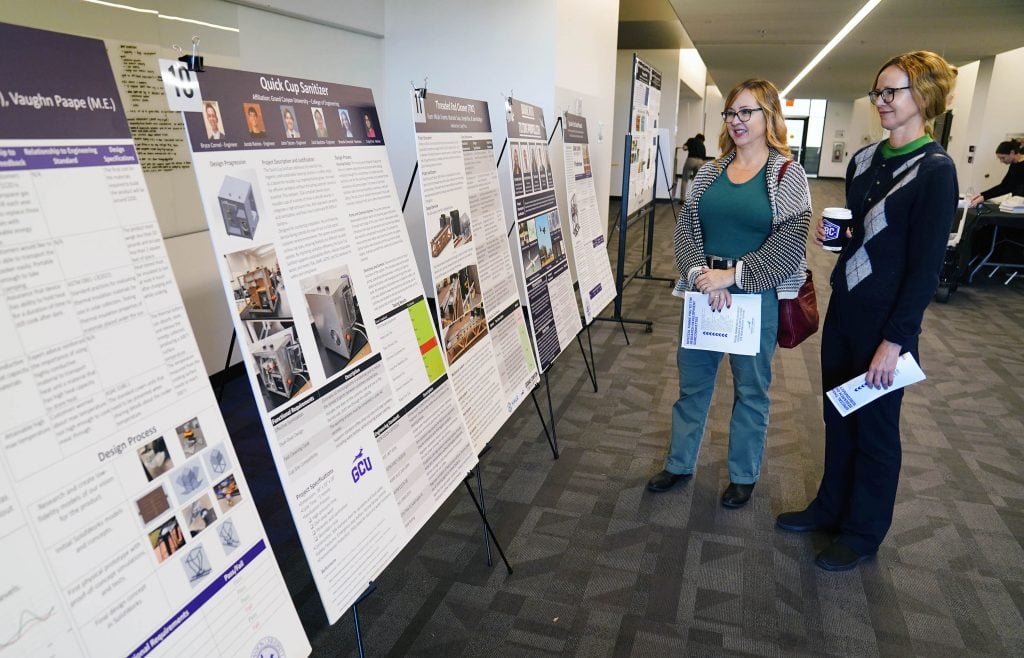
Other student presenters were:
Jackson Khan, Jozy Kairu, Ellie Mohr and Sofia Almo: “Addressing Barriers to FAFSA to Enhance Economic Mobility”
Elijah Winslow, Owen Swanson, Hope Ingalls and Liam Kindelberger: “Loyalty Dynamics Theory”
Elise Bayer, Colton Reger and Kayley Brennan: “From Physiology to Psychology: Advancing Health Through Multidisciplinary Research”
GCU staff writer Izabela Fogarasi can be reached at [email protected]
***
Related content:
GCU News: Students emphasize health and religion at research symposium
GCU News: Youth leadership program motivates student to publish research in Canyon Journal
GCU News: Honors College extends a helping hand during service month