Friday afternoon slideshow / Friday afternoon livestream
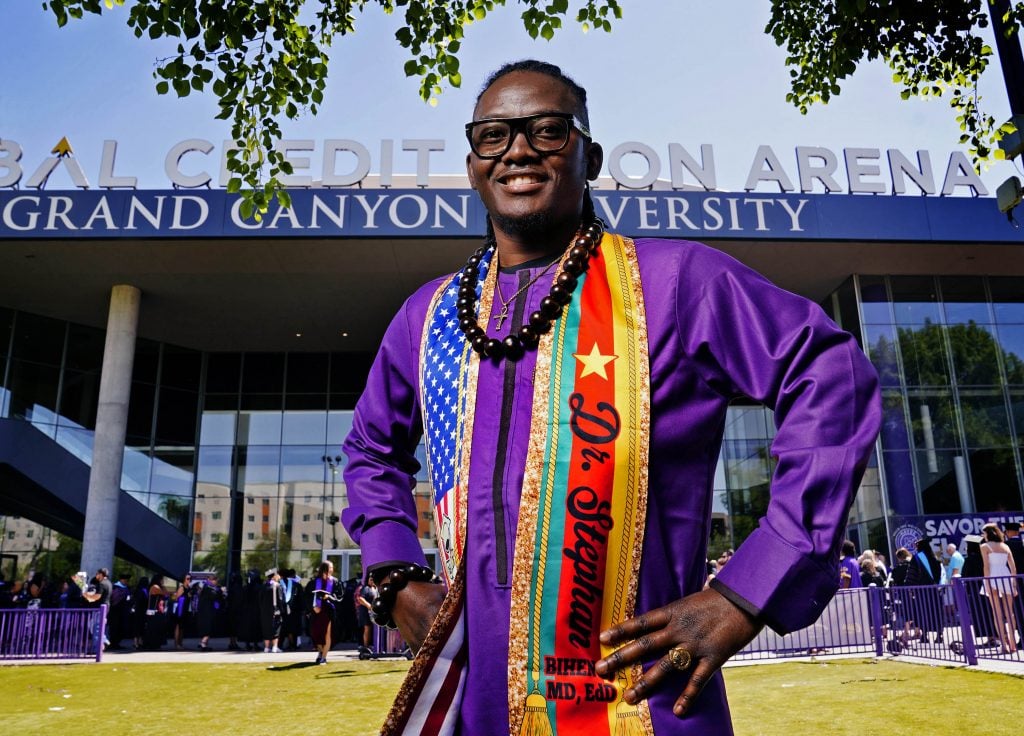
Dr. Stephan Biheng, growing up in Cameroon, would be struck with bouts of intense, bone-crushing pain.
A “pain crisis,” they call it.
When Biheng speaks of these crises, he doesn’t say he recovered or got better. He’ll tell you, he survived it.
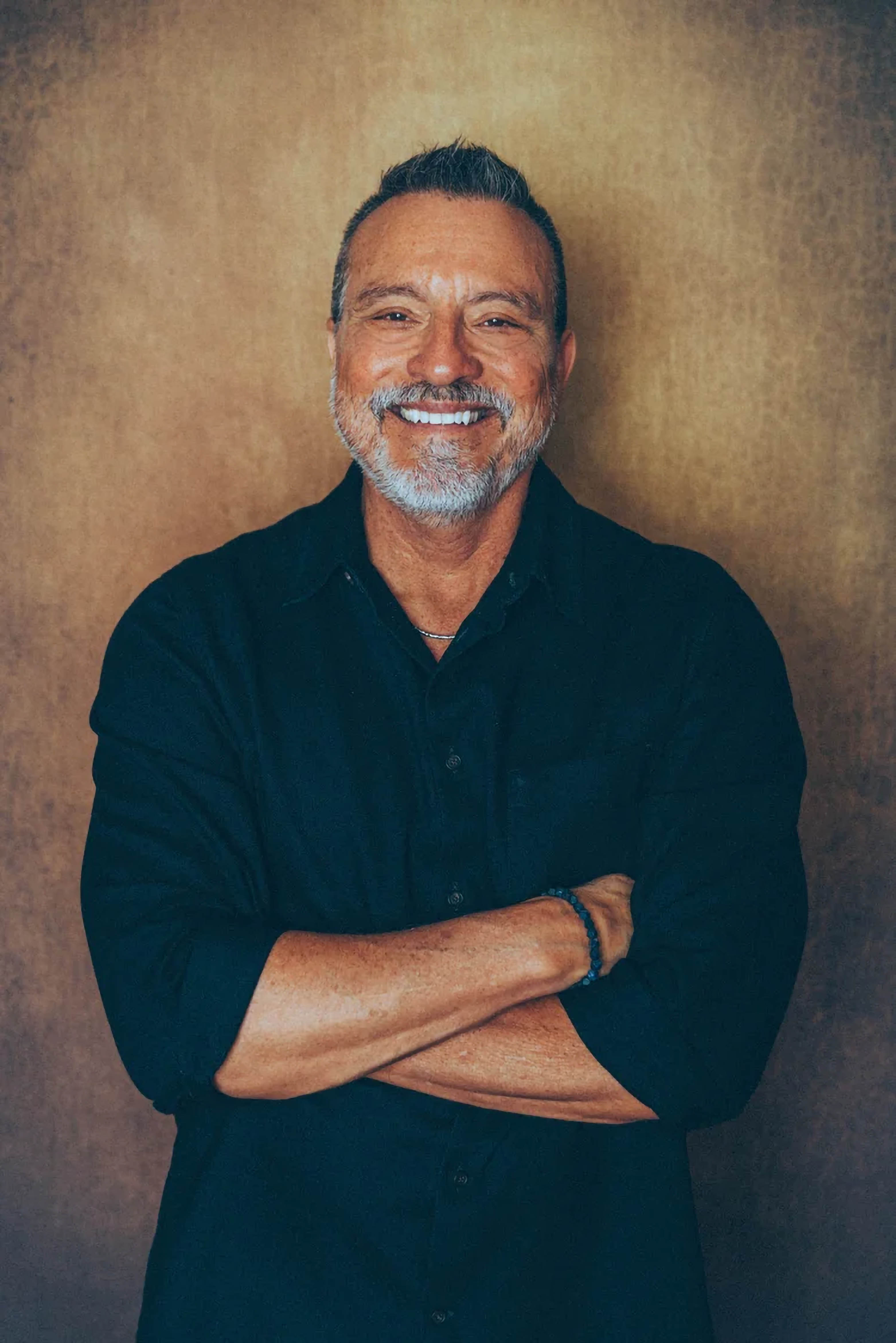
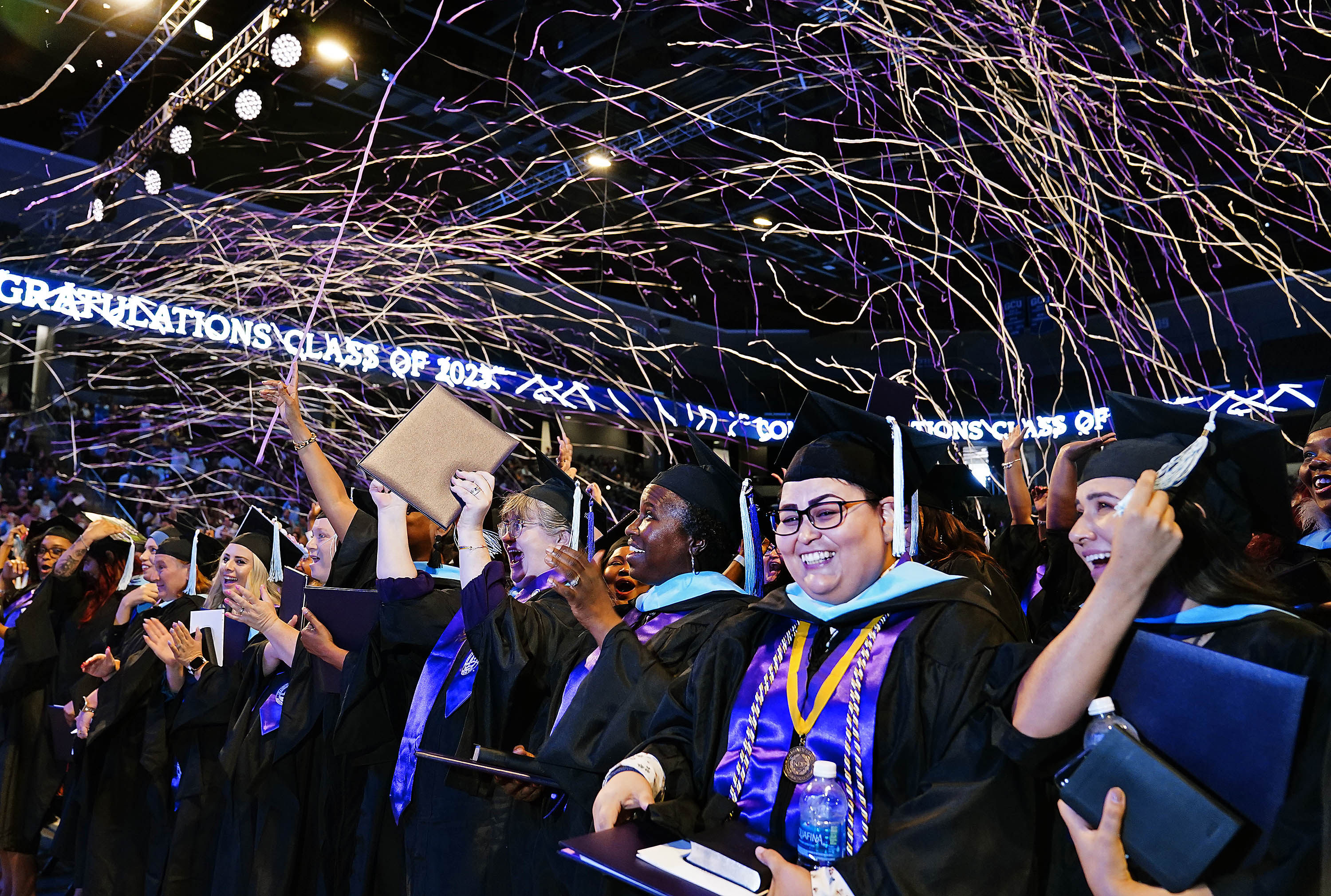
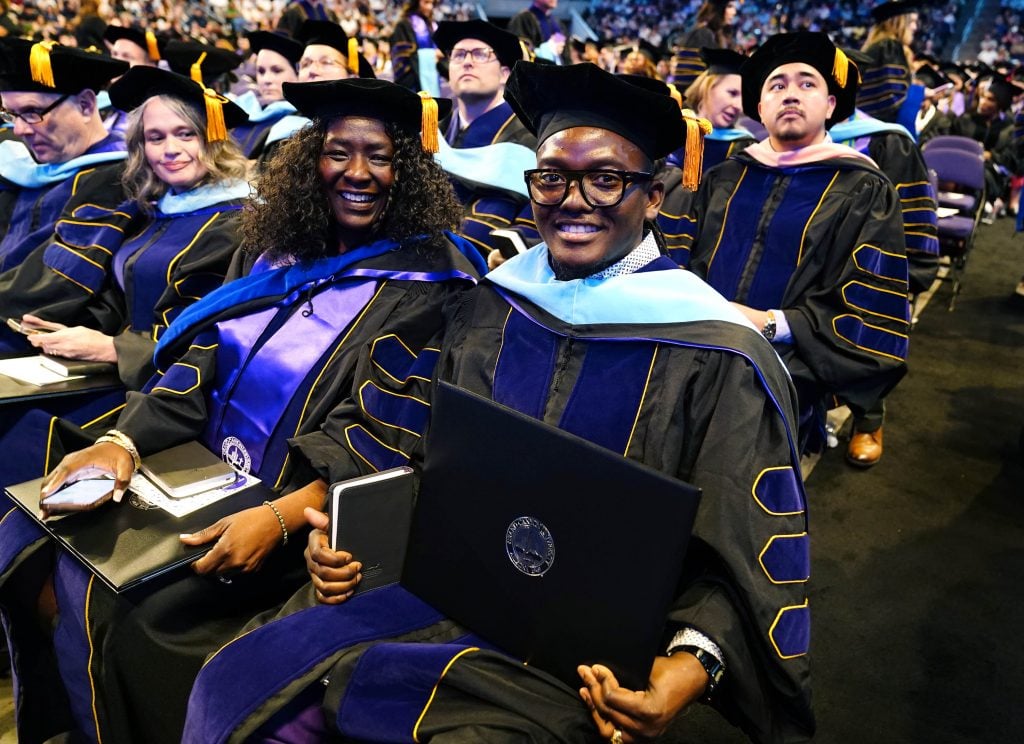
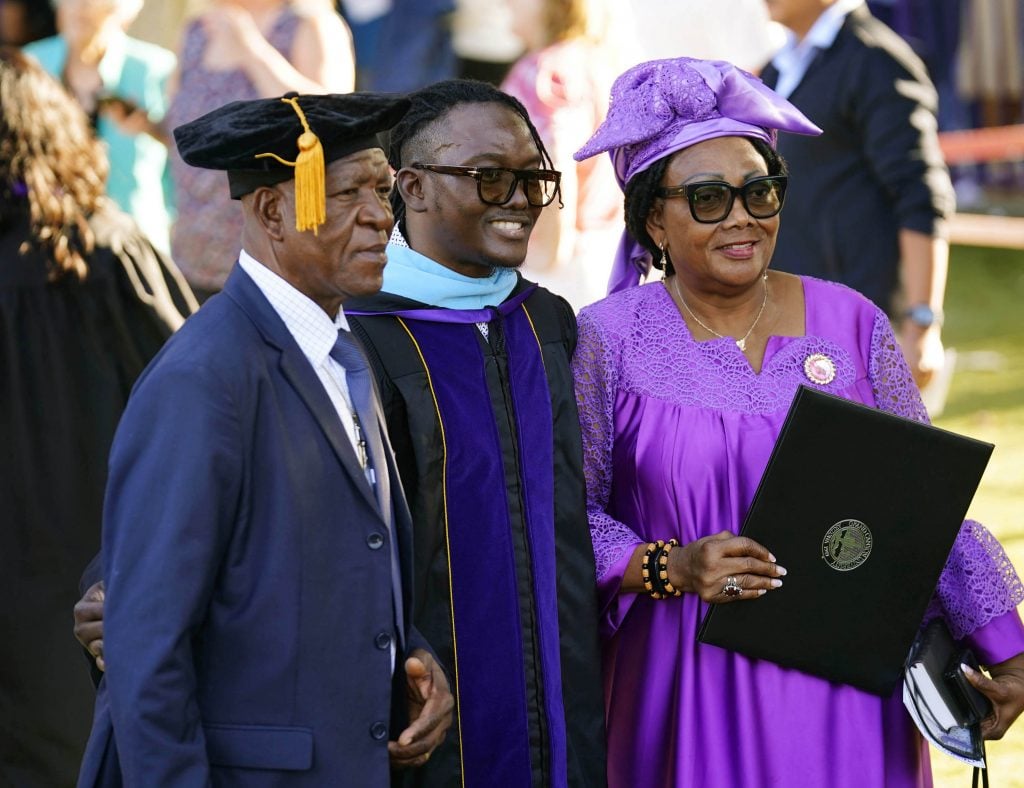
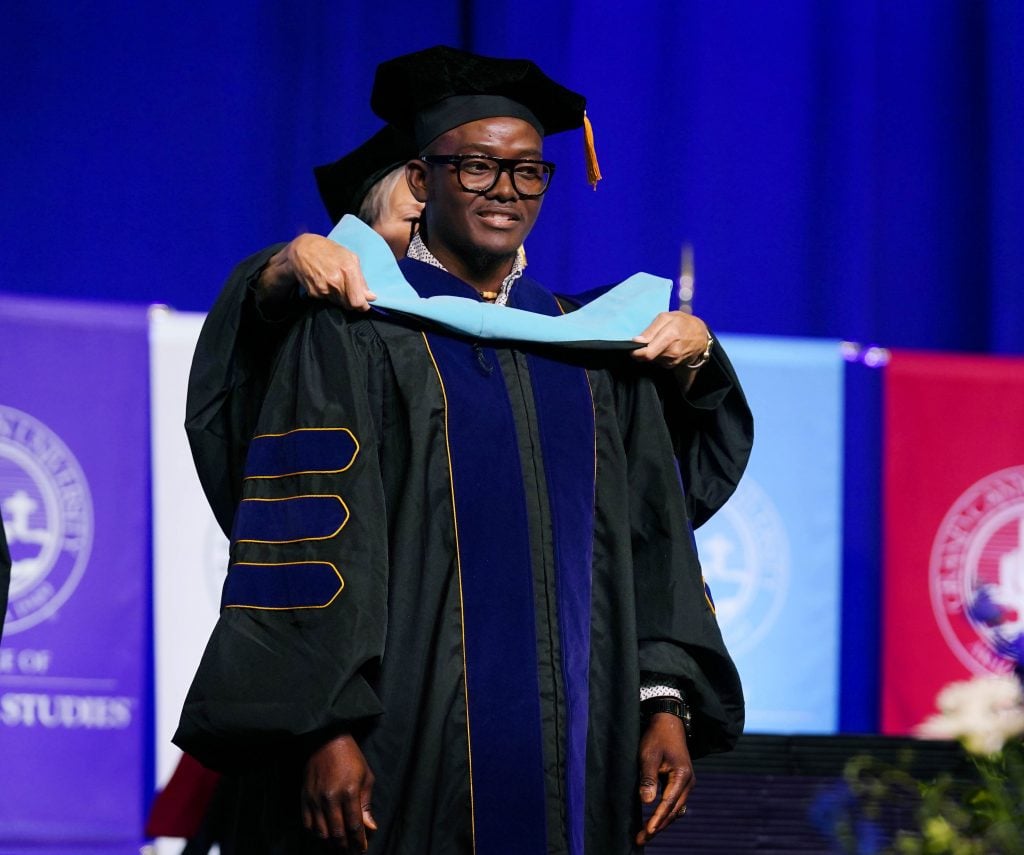
The recent doctoral graduate of Grand Canyon University – he traveled from Oklahoma City to GCU’s campus in Phoenix on Friday for commencement – has survived through these pain crises all his life caused by sickle cell disease.
When you ask the medical researcher why he does the work he does now, which is to use evidence-based research to make health accessible to underserved or low-income patients, he’ll tell you it goes back to his childhood, his struggle with sickle cell disease, and the family pastors who would instill faith, courage and compassion in his life.
He’ll tell you, “It’s a long story.”
Biheng was just 5 years old in his home country of Cameroon but already knew what he wanted to do with his life.
“I was already dreaming to be a pastor and a doctor,” he said, adding how, when other children played with toys, he would pretend to be a pastor or doctor.
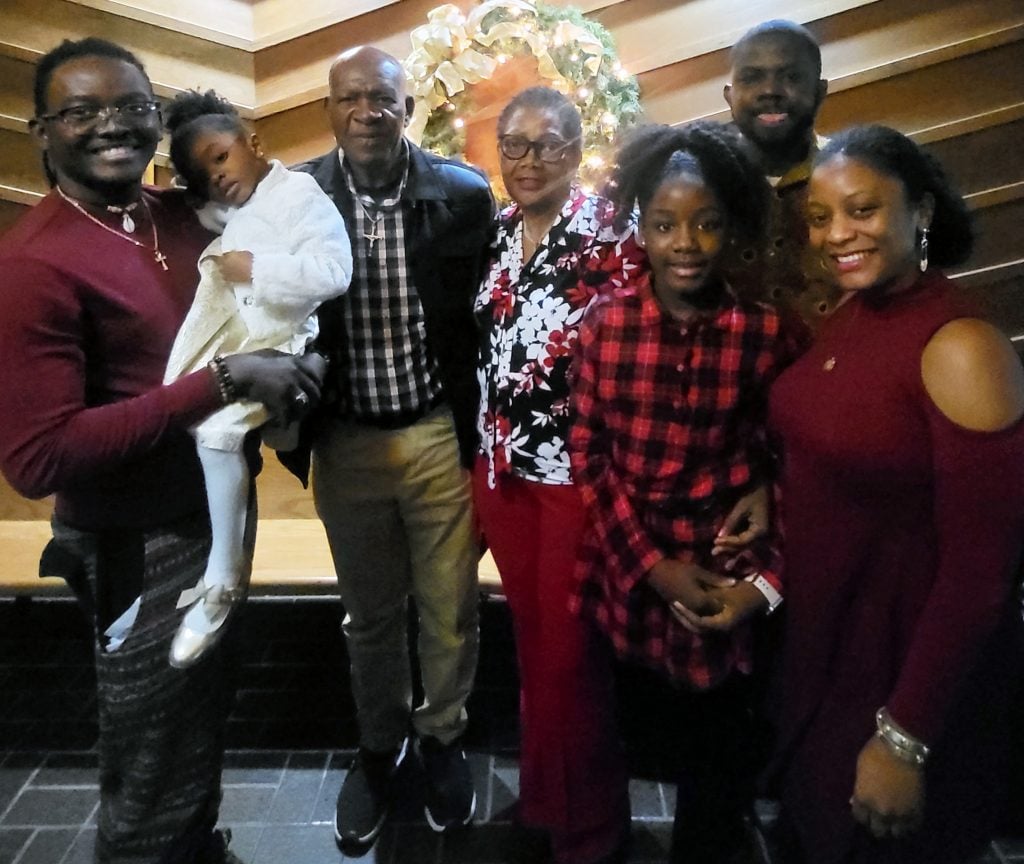
He was influenced by his father, a religious elder and educator, and also his uncle, who was a pastor for many years, traveling to rural locations to preach.
“In Cameroon, when you’re a pastor, you tend to travel to places … so I was going with him, every time.”
But also, “I was a sick person; I’m still sick.”
Biheng’s family didn’t know what was happening when he’d have these pain crises or the fatigue that often accompanies sickle cell, a group of inherited disorders that cause red blood cells to become sticky, hard and C-shaped (or shaped like sickles). The shape blocks the flow of blood, which leads to severe pain, organ damage, anemia and a higher risk of infection.
In Cameroon, sickle cell disease has become a major public health issue, with the country ranking No. 6 globally for the disease. Approximately 7,000 children are born with it annually, and more than 90% with the disease in the country die before age 5 because of delayed diagnosis and limited access to care.
“My parents would take me to the hospital, to the church … so they could find something that can help,” said Biheng, whose doctors in Cameroon knew he had sickle cell disease, though it wasn’t until he was 19 that he found out which type.
Biheng said he was hardly in school because he was in the hospital so much, but he had a lot of friends in class, and they would bring school work to the hospital or home to help him.
“I would study there and then go to the exam.”
After high school, he started college in Cameroon, dividing his time between two cities since he had to travel to see a doctor who had knowledge of the disease and treated him.
He traveled even more after a Swiss doctor told his family that he needed to go outside of Cameroon to get the health care he needed.
Biheng left for Tunisia, where he had a scholarship to be a nurse technician in the ICU. Then one week, when visiting his soccer-player brother living in France, he got sick and was hospitalized for a month.
“That’s where they actually came with the right diagnosis. I was almost 19,” he said of learning which type of sickle cell he had. “So now it was made clear. They decided not to let me travel after that, so I had to find a school in France.”
It’s where he completed his premed degree and finished medical school. After an internship in Romania and almost five years as a medical doctor at Montbrison Hospital in France, he came to the United States.
He worked for a private clinic, Alivation Health, in Nebraska. It was the first time he did research in behavioral health.
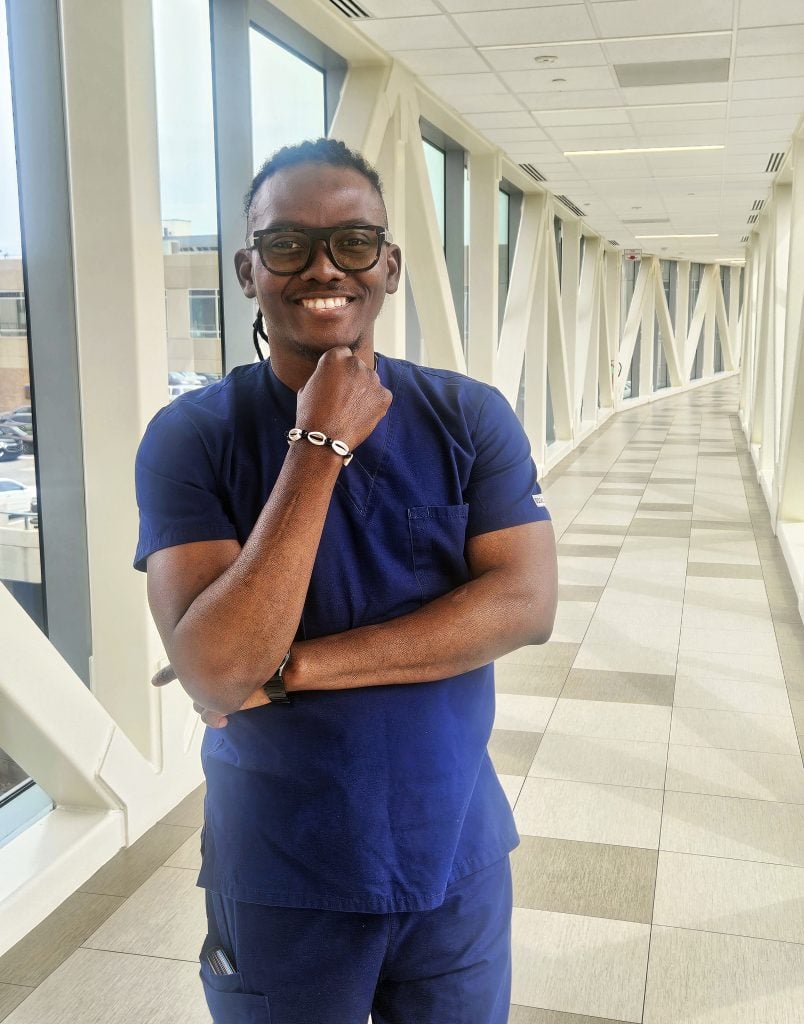
Now he’s a researcher at the Oklahoma Clinical and Translational Science Institute at the University of Oklahoma Health Sciences Center in Oklahoma City.
“We do research in almost everything,” Biheng said.
The institute’s CARE for Health Program, for example, brings National Institutes of Health-funded clinical trials to primary care offices to reduce travel costs for specialized care and works to decrease expenses related to chronic conditions, such as cancer, diabetes or cardiovascular disease.
At GCU, Biheng earned his doctoral degree in organizational leadership with an emphasis on health care administration, and he speaks passionately about his doctoral degree, “Religious Leaders’ Approaches to Promote Sickle Cell Disease Awareness and Prevention through Education.”
It combines the two passions of his life that have been speaking to him since he was 5 years old: religion and medicine.
Biheng said religious leaders, ultimately, don’t have the medical knowledge when it comes to sickle cell disease. But as influential leaders in their communities, they have the ability “not only to galvanize the audience but influence their followers” when it comes to simply being aware of the disease and to encourage parishioners to get screened for sickle cell, particularly in places like Cameroon, where the incidence rate is so high.
“Another thing is the stigma,” he said. “… When I was a kid in Africa, the thought was that it (the disease and its pain crises) had to do with the mystical or supernatural something.”
That your soul needed healing.
“In the villages in Cameroon, there are some places … (where) people tend to NOT trust science, not trust medicine.”
Religious leaders could be influential in that realm, too.
Those parishioners might not trust science, but they have faith in their religious leaders, as Biheng has had faith during the long journey that brought him to GCU.
Manager of internal communications Lana Sweeten-Shults can be reached at [email protected].
***
Related content from commencement:
GCU News: Grad’s accident prompts change to help others
GCU News: Online graduate dedicates achievement to late family members
GCU News: Hearing loss doesn't stop single mom of 11 on journey of compassion