Photos by Ralph Freso/GCU News
The homeless population in Phoenix didn’t escape Evan Lance’s attention.
“One of the first things me and my teammates noticed when moving to Phoenix was that homelessness was a huge issue. It was very prevalent,” said the Grand Canyon University senior behavioral health science major during Thursday’s College of Humanities and Social Sciences Senior Showcase.
“Over half a million people on any given night are homeless,” said Lance. According to Housing and Urban Development’s Point-in-Time Count, homelessness increased in 2023 by 18%, from 654,104 sheltered and unsheltered people on a given night in January to 771,480 people in 2024. “They don’t have a place to sleep. They don’t have anything to eat.”
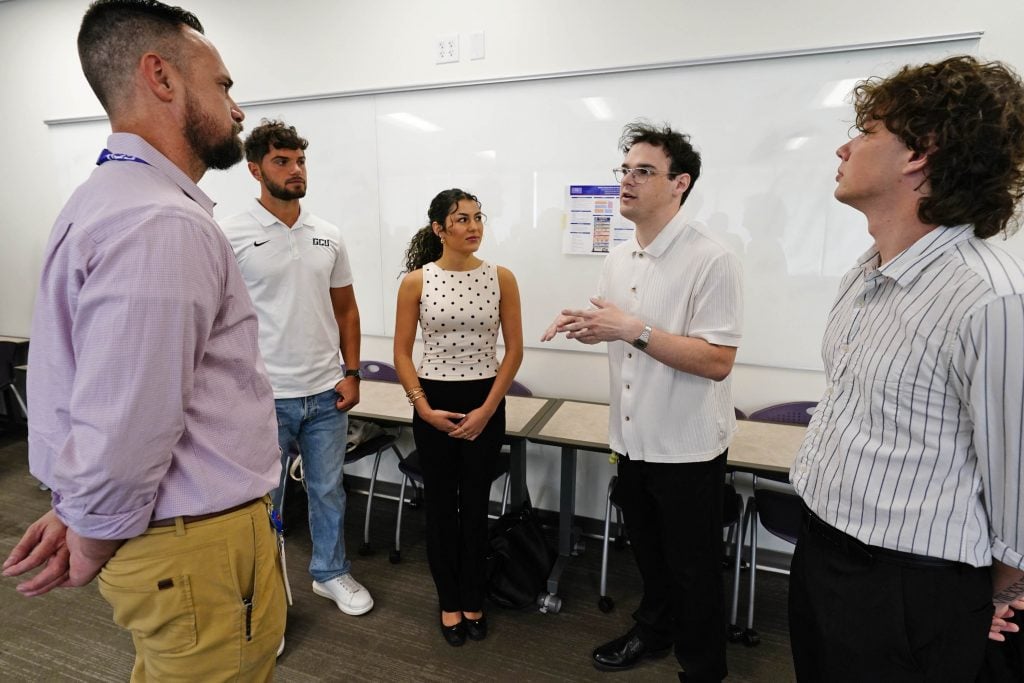
That prompted him and his teammates, Hunter Stewart, Kaley Misquez and Elton Bajo, to come up with an answer.
What if they created an agency centered around mobile rehabilitation units? They would send vans to homeless-populated areas. The vans would include case managers, health care providers, licensed counselors, all the resources. They would document, screen and assess.
Deploying mobile units and bringing resources to those who are unhoused is key to their model, since “homeless individuals struggle with getting to places they need to,” Lance said. They don’t have the financial means to own a car or pay fare for public transportation.
In addition to services in the field, the model would include an outreach site where professionals would prepare a treatment plan then would connect those individuals with employment specialists and housing agencies.
“A difficult part about our company would be funding,” he said. “To address that situation, we would have to collaborate with other teams that are doing the same thing.”
Another pickle in the plan: “Mass government agencies are really reluctant in supporting agencies like this one,” Lance said, “just because they don’t deem it (behavioral health) as high a priority as they do other things.”
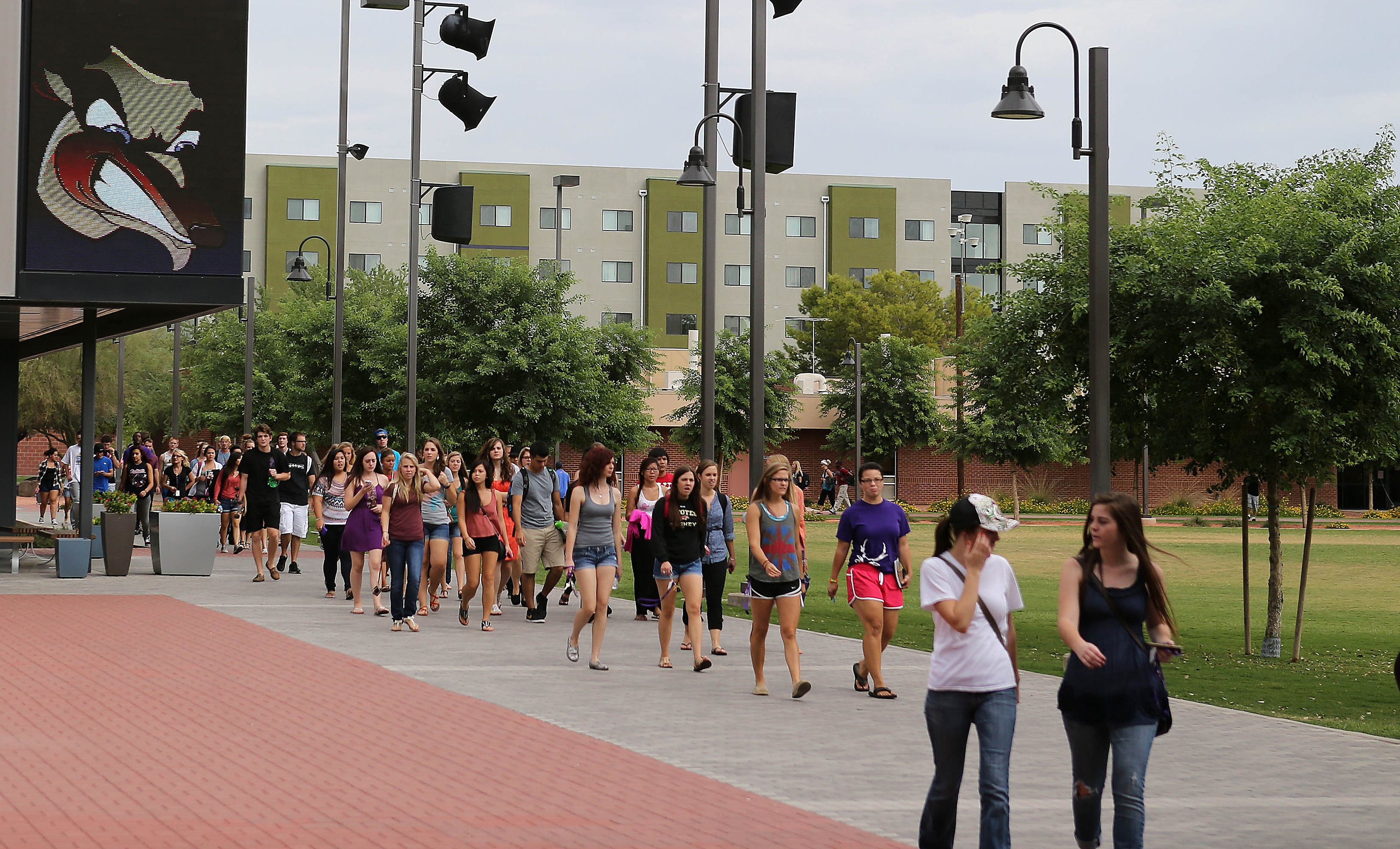
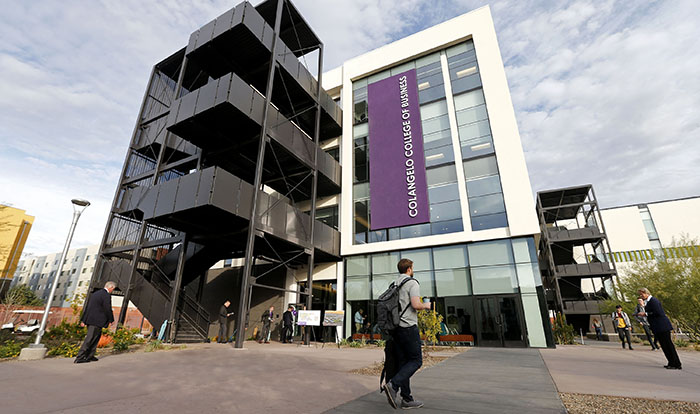
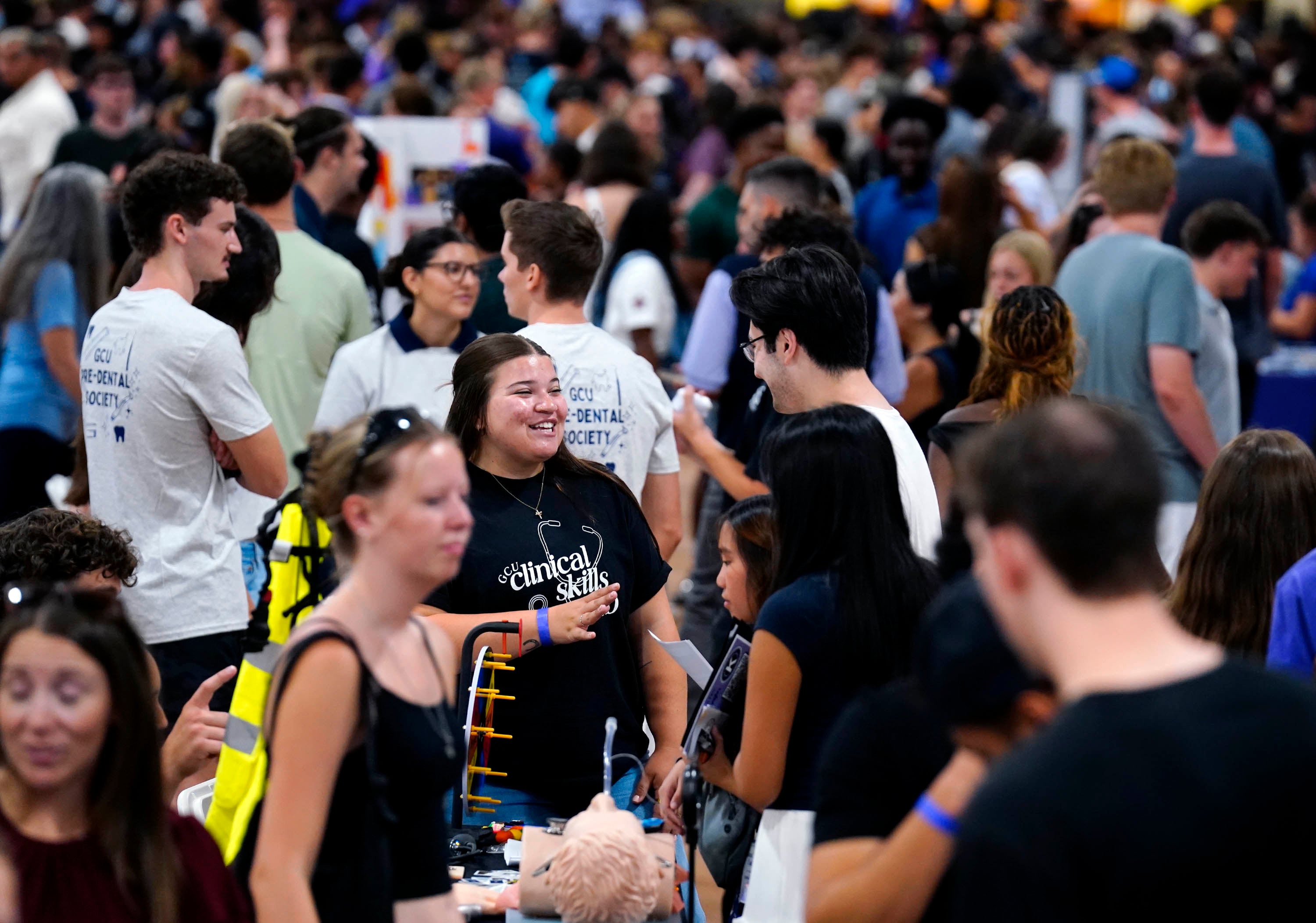
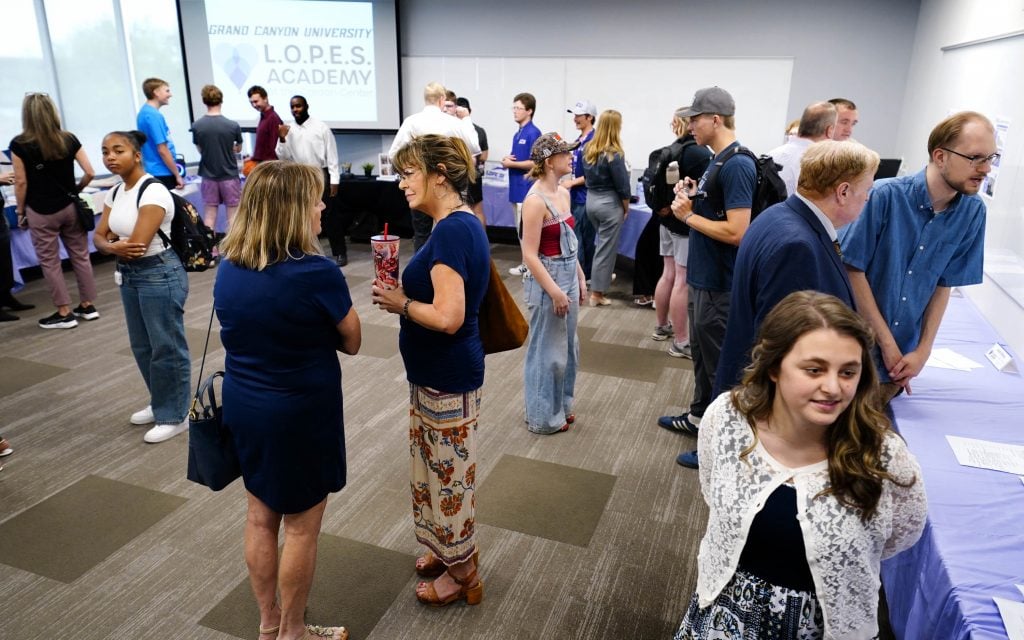
The “Mobile Rehab Unit for Homeless Populations Logic Model” was just one project that was part of the senior showcase, so big it occupied multiple classrooms on three floors of the CHSS building and spilled over to a floor in the neighboring Student Advising Services Building, where the college’s administrative offices and additional classrooms are located.
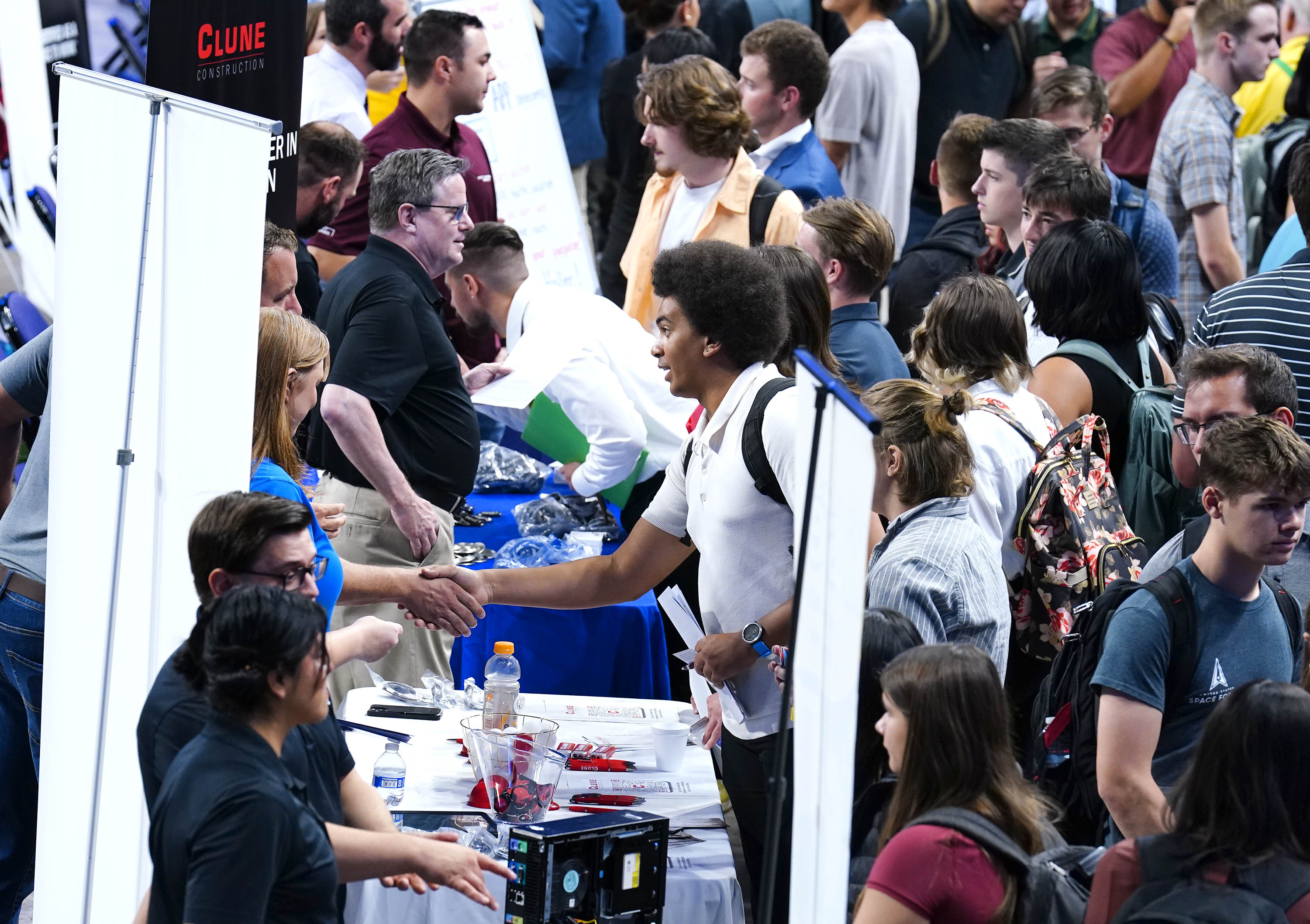
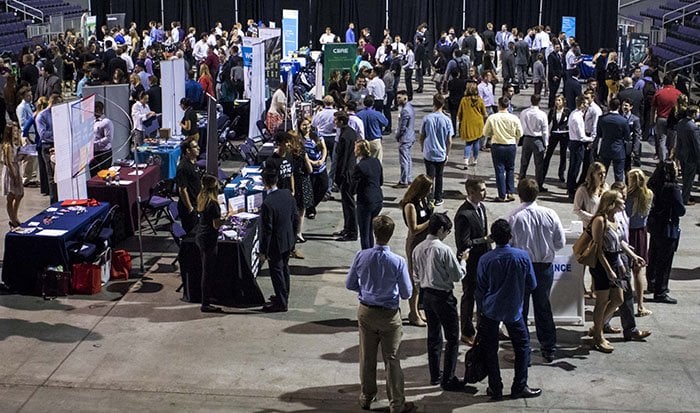
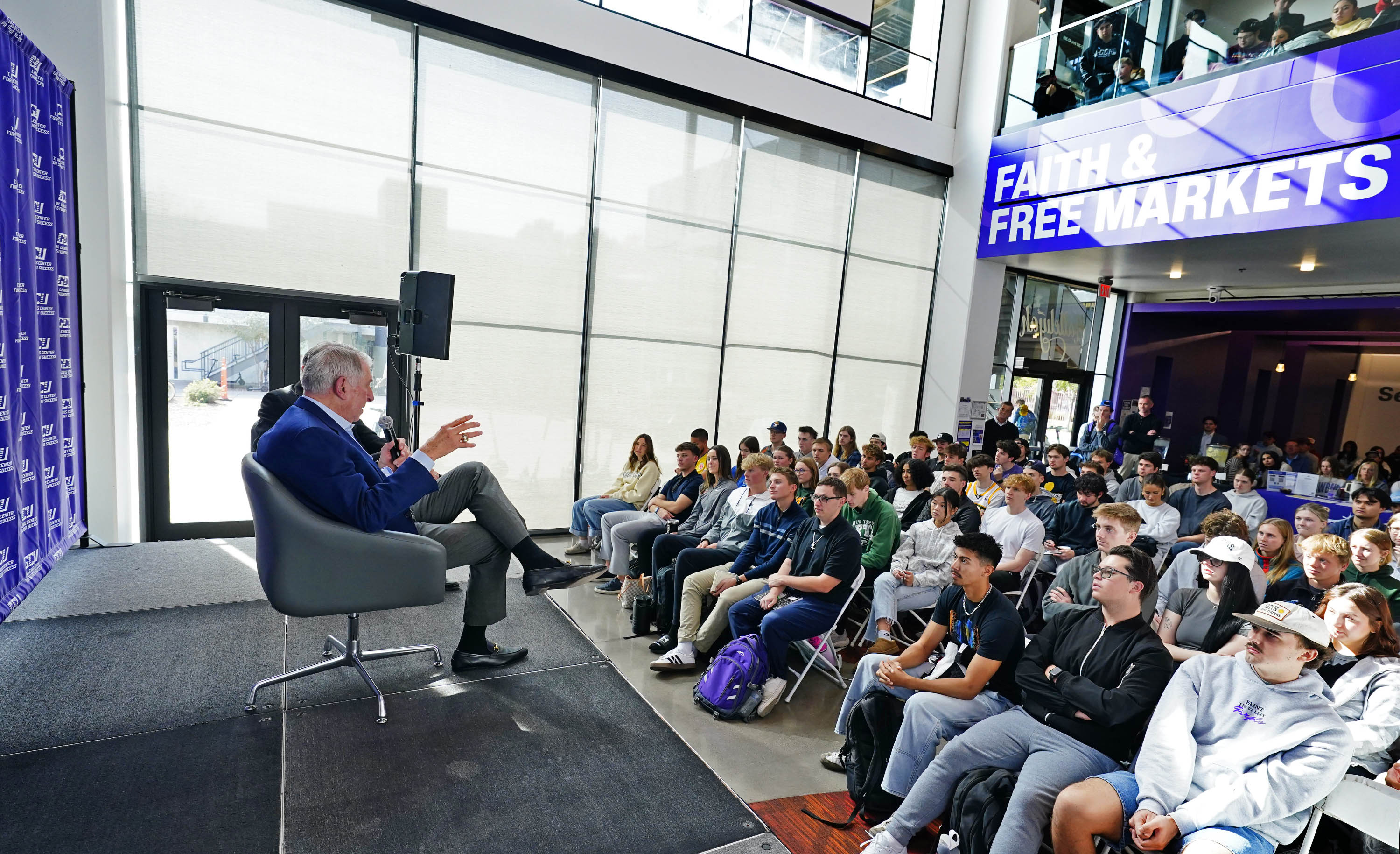
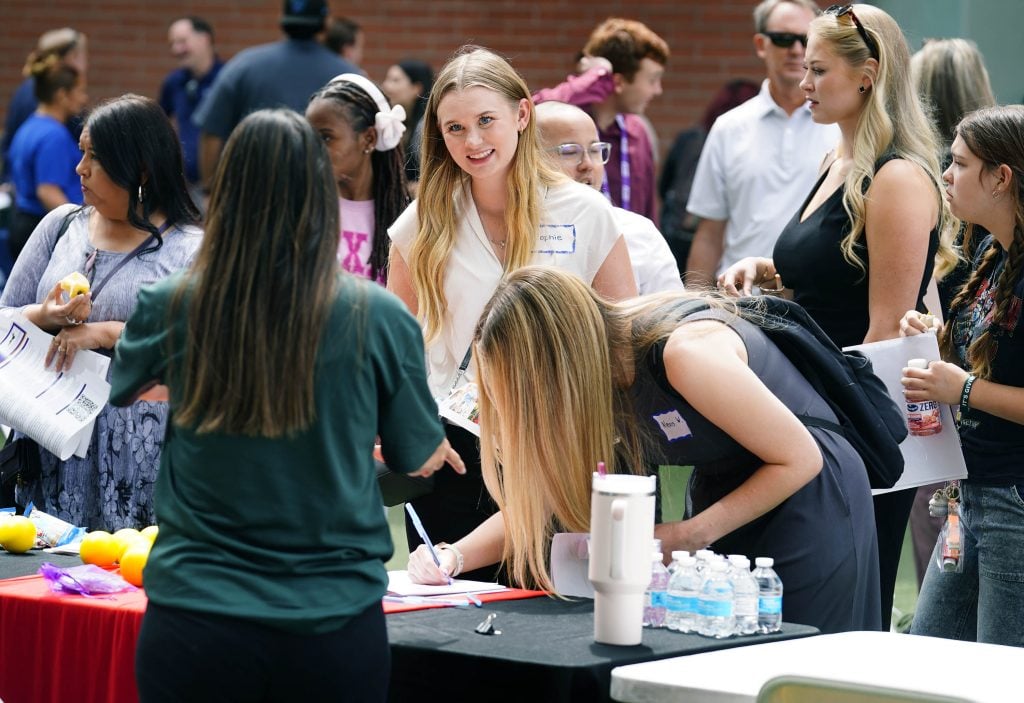
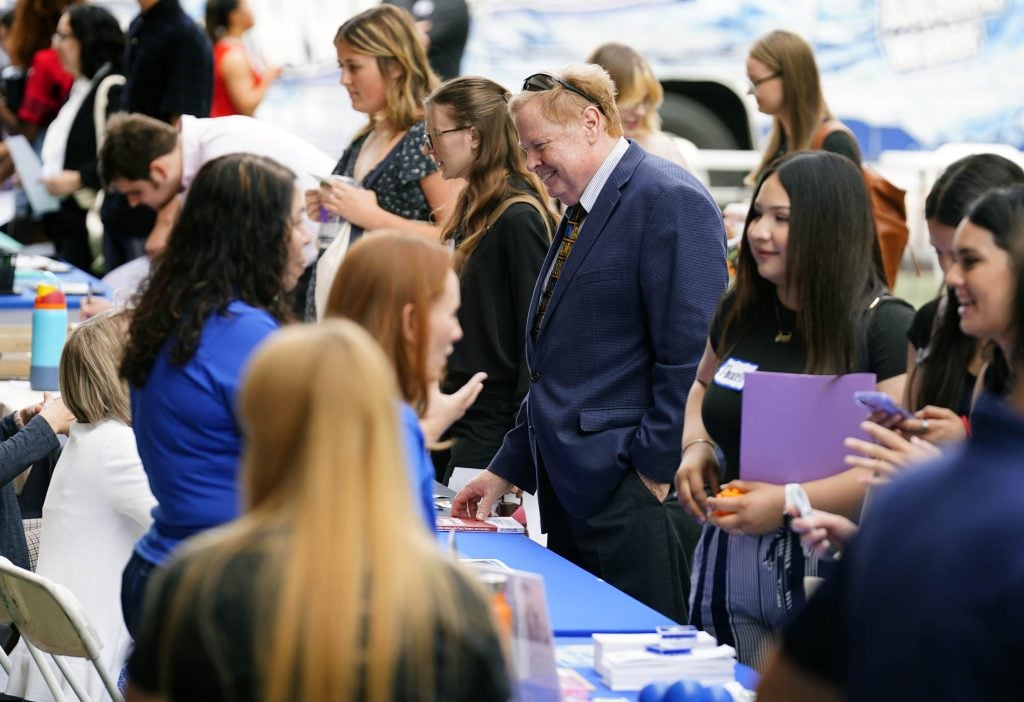
More than 550 students presented from nine disciplines. Speech and Debate also hosted a student debate, and 40 employers were featured at a job fair outside of the college.
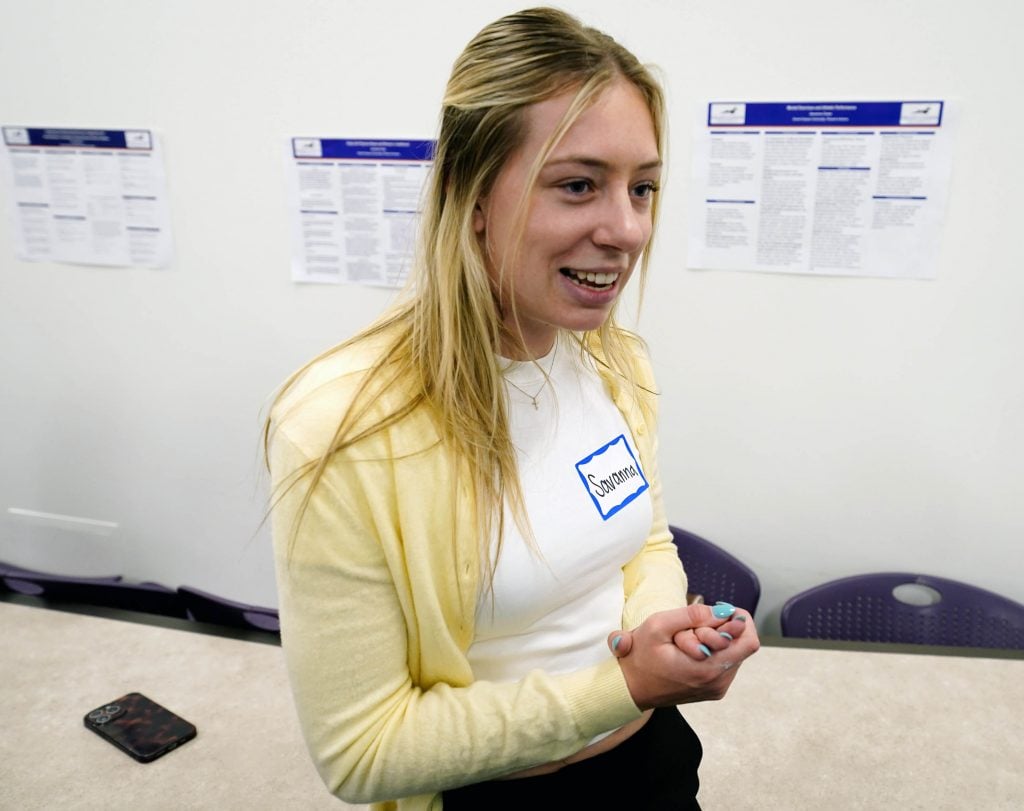
In one of the classrooms showcasing projects by psychology students, performance and sport psychology senior Savanna Chase presented her project on “Mental Exercises and Athletic Performance,” a study she designed, though didn’t conduct, for a professional counseling class.
The study would involve looking at gymnasts before a 14-day program on mental resilience and then again after the program to see if the gymnasts' performance improved. The goal would be to help mitigate an athlete’s mental strain.
“I was an athlete for a long time. I was a gymnast, so I know the mental strain and how prioritizing your mental health can help so much,” said Chase. “If you think about Simone Biles from the Olympics from a couple of years ago, everyone was baffled by that. So was I. But even the best athletes in the world, it still happens to them. Everyone’s human. Nobody’s a perfect robot.”
What Chase loved about doing this project was the literature review, in which she researched previously published work on the topic. She learned so much, she said, about different mental exercises, from hypnosis to mindfulness, used in so many different sports.
“It was cool to see the different kinds of mental exercises they use and the sports and what their results show.”
Neighboring psychology exhibitor Lola Arvizu designed a quantitative study on “The Effects of Positive Feedback on Motivation and Task Persistence.”
She wanted to see what the power of positive feedback might do.
The research proposal she designed would compare the effects of positive feedback to neutral feedback.
The researcher would give subjects a brain teaser, such as a puzzle. They’d be given positive feedback: “You’re doing great!” and then also neutral feedback, such as just letting them know how much time they have left.
“This was definitely an interesting class where I got to learn more about the research side and really get pushed out of my comfort zone and what designing a research experiment looks like,” Arvizu said.
Zach Sleasman, who was in the military for six years – he served at Camp Pendleton – wanted to do a project close to his heart.
“I saw firsthand how Marine spouses were affected when they (their spouses) were on deployment,” he said. “I had multiple friends with their family in high stress because they were on combat deployments.”
Sleasman wanted to do something.
What he found was that resources do exist for military families, but the problem is they aren’t always aware of the resources.
Also, many families who do know about those resources don’t have a way to take advantage of them because their family structure had changed, and the spouse at home was taking on additional responsibilities. They found themselves with a lack of childcare or with many scheduling conflicts.
“Instead of creating an entirely new organization,” Sleasman said the best solution was to “build on top of that one but make it more flexible.”
His pitch: Focus on small support groups that meet weekly and also create a digital tool to serve as a resource hub to get the word out.
“I liked how I could incorporate this into the real world,” Sleasman said of his “Military Family Stress During Deployment” project. “I know people that have gone through this problem, so now I could be a guide for them after all the research I’ve done.”
Michael Carroll III, a criminal justice studies senior, put together a threat assessment plan for the Dysart Unified School District, where his mom works.
It was just one threat assessment for various organizations and businesses that his class put together. Fellow students created threat assessments for everything from a trucking company to a military facility.
He focused on increasing cybersecurity: strong passwords, codes to enter buildings, two-factor authentication to access protected areas.
The district already partners with the city of Surprise, which can remotely access campus cameras, allowing the Surprise Police Department to view live video during potential emergency situations. And the district partners with El Mirage and Surprise to have school resource officers and safety officers on school sites.
Carroll said there’s also a button that staff and faculty can push during an emergency that will send an alert to the nearest police station so those employees won’t be giving away their location, say, if there’s an active threat on campus.
“That’s pretty cool,” he said.
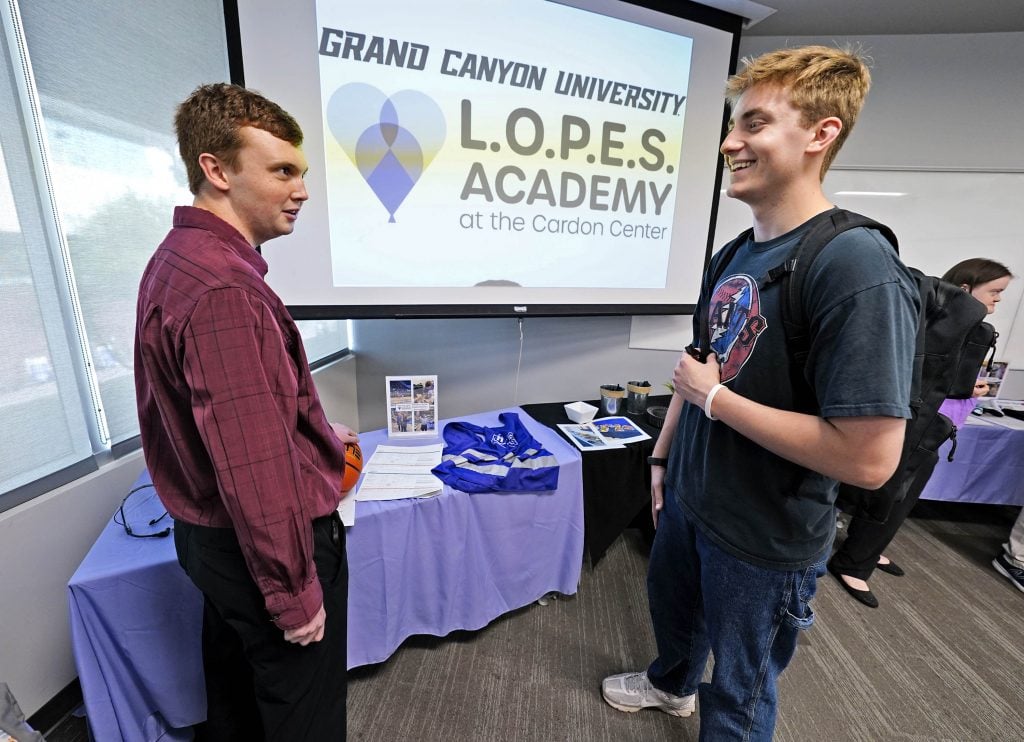
One area of the senior showcase spotlighted projects by the LOPES Academy, a two-year nondegree program for neurodivergent adults. It’s where finance senior Jack Edlin dropped in to check out the presentations.
“This event in particular was so impactful,” said Edlin, who has been the lead mentor for the program over the past two years and himself is about to graduate. “The students got to showcase everything they have been able to learn through the LOPES Academy program. … I was so blessed to see the smiles on their faces – the enthusiasm they shared and their passion for making the world a better place.”
Manager of internal communications Lana Sweeten-Shults can be reached at [email protected] or at 602-639-7901.