Photos by Ralph Freso
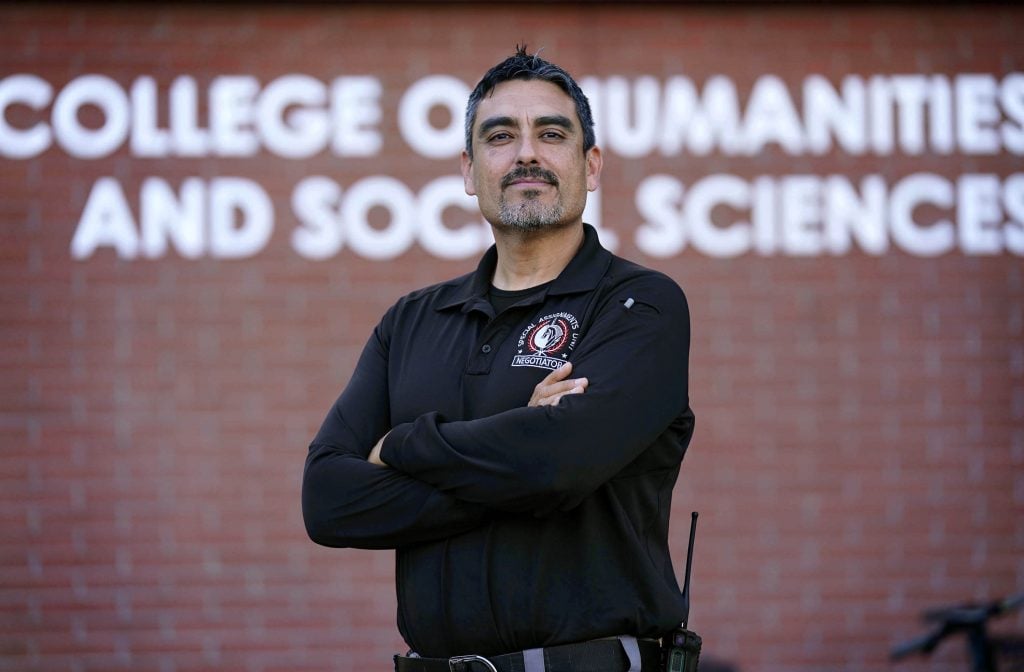
Enzo Ortiz was called to an all-too-familiar scene in his job as a crisis intervention detective and negotiator for the Phoenix Police Department: A woman teetered on the interstate bridge, threatening to jump.
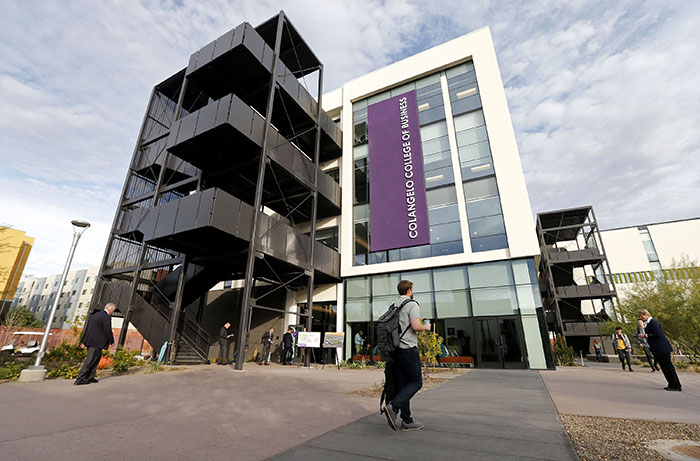
It was just a few hundred yards from where Ortiz is studying toward a master’s degree – Grand Canyon University – and those clinical mental health classes would help.
“As I was speaking with the individual, skills I had gained through the program helped in my assessment of the individual and the situation overall,” he said.
He realized that hours of chatting with the individual weren’t going to do any good; she would never allow them to talk it out. He used his communication to de-escalate and assess her mental health, not get to any root causes.
“It enabled us as a team to recognize that we were going to mitigate the risk of suicide and keep the individual engaged while advising tactical officers that they would have to rescue the individual physically,” he said.
A life saved with communication. It’s not exactly how he saw police work as a young man out of Catholic school in Tucson – “fast cars and being in exciting situations,” he said. What he got in working the Maryvale area was “shootings and assaults and robberies, and you are like, ‘Whoa this is a lot.’”
What Ortiz also learned was that he often just wanted to talk with those folks in crisis.
“What ended up coming out was my style – I was always more willing to take some time to hear people out and to give them more time of day,” he said of his early 2000s days. “At the time people were like, ‘What are you doing?’ A lot of it was a survival mechanism for the officer – we don’t have time to sit here and do this.”
His skills led to a role in crisis intervention with numerous mental health calls, then a negotiator with the special assignment unit, a rare position in all but the nation’s largest cities.
“Our job is parallel to the tactical approach throughout the engagement, offering other options,” he said. “Hey, we don’t have to go this way. Let’s talk about your situation, and let’s try and figure out how we can resolve this peacefully while hearing you out about why you’re so upset or how it got to this point.”
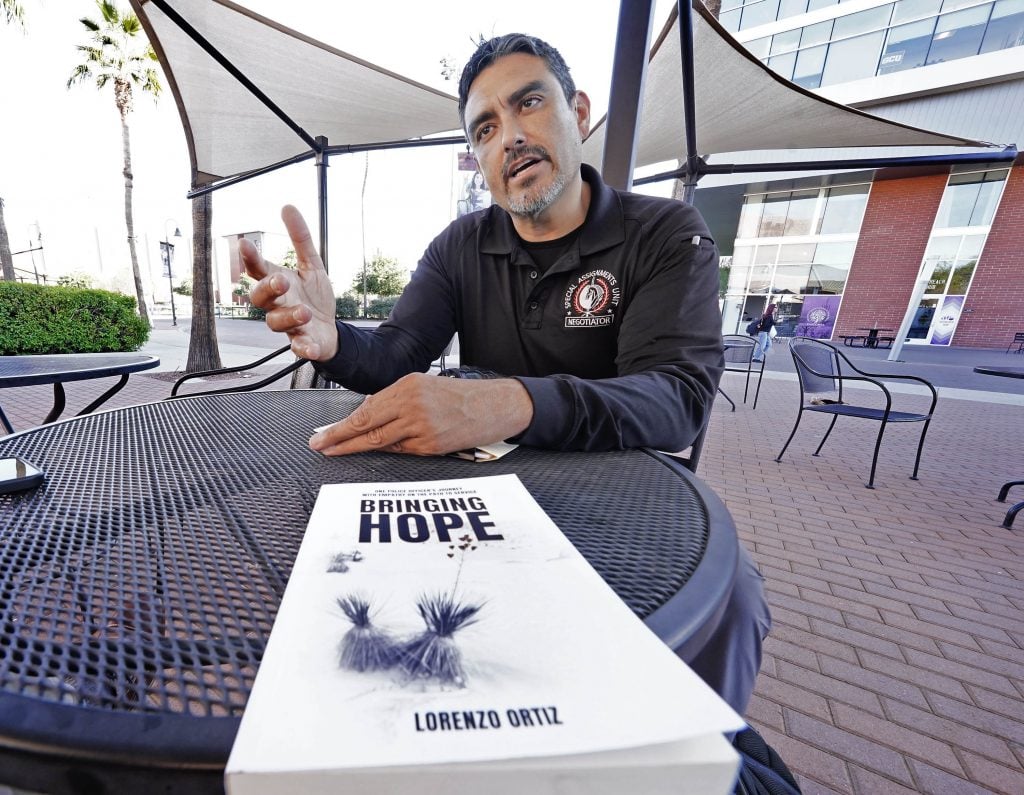
Ortiz began to train other officers across Arizona and the U.S. and wrote a self-published book, “Bringing Hope: One Police Officer’s Journey with Empathy in the Face of Service,” a fictionalized account of snippets from his own experiences.
In it, the officer shows how he comes to realize that he needed to ask if they’re OK, to label the emotions they might be feeling (“You sound angry.”), and to make them the hero of their own story.
“It is meant to help anyone going into law enforcement who is a current officer or anyone that works in high-stress, crisis-related situations,” he said. “The biggest thing is that approaching people with patience and empathy is not a weakness in our field, it’s a sign of strength. I want officers to understand how much value they could bring to someone’s life by just extending connection with someone.”
A mental health call can be dangerous. A family member may have asked police to pick up a subject, who is shocked, he said.
“People can get violent, barricade inside of their house or apartment,” he said.
That’s when the skills come in, slowing things down, using calm communication, hearing them out.
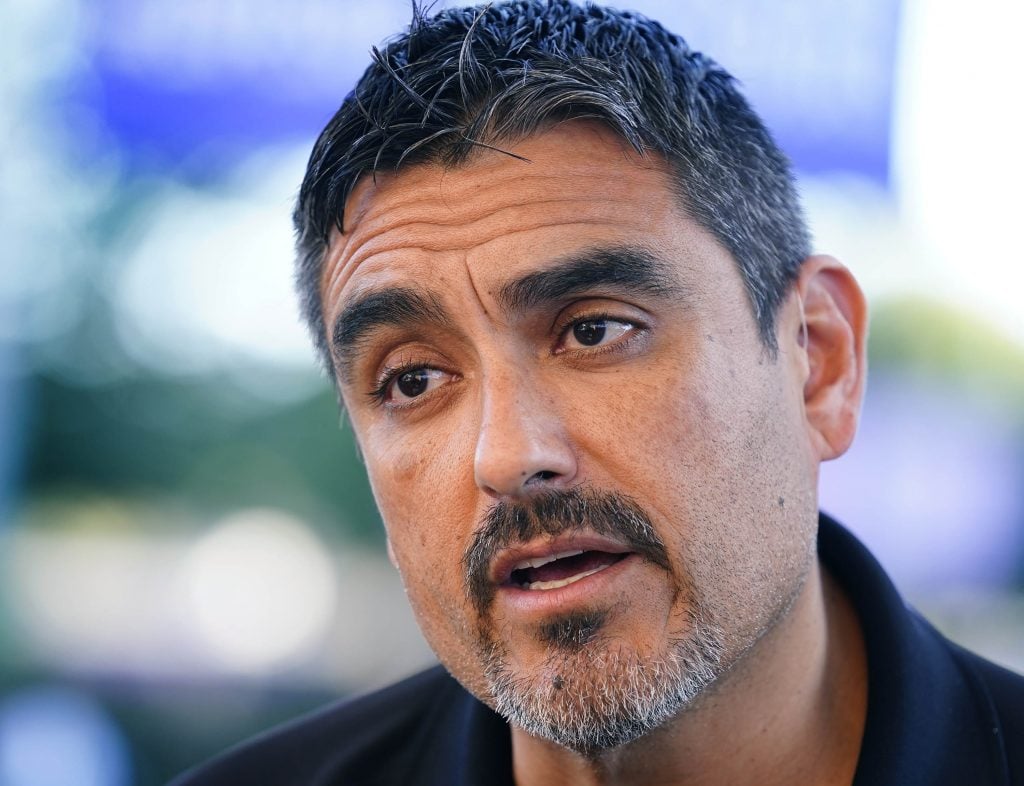
Ortiz realized he was committing a lot of time to mental health issues on the street. He needed to learn more about it, so five years ago began taking courses at GCU to answer a question that haunted him:
“How can I serve these folks better?”
“You need to get back to the root of the problem,” he said. “Yes, it’s nice to save these people when they’re on the bridge, literally. But how about we go back and try to find how we can help these folks before they even get there.”
At GCU, he was exposed to ideas, such as the polyvagal theory, “which addresses the stages of stress the body goes through and recognizing this person is probably here, so maybe this form of communication is effective.”
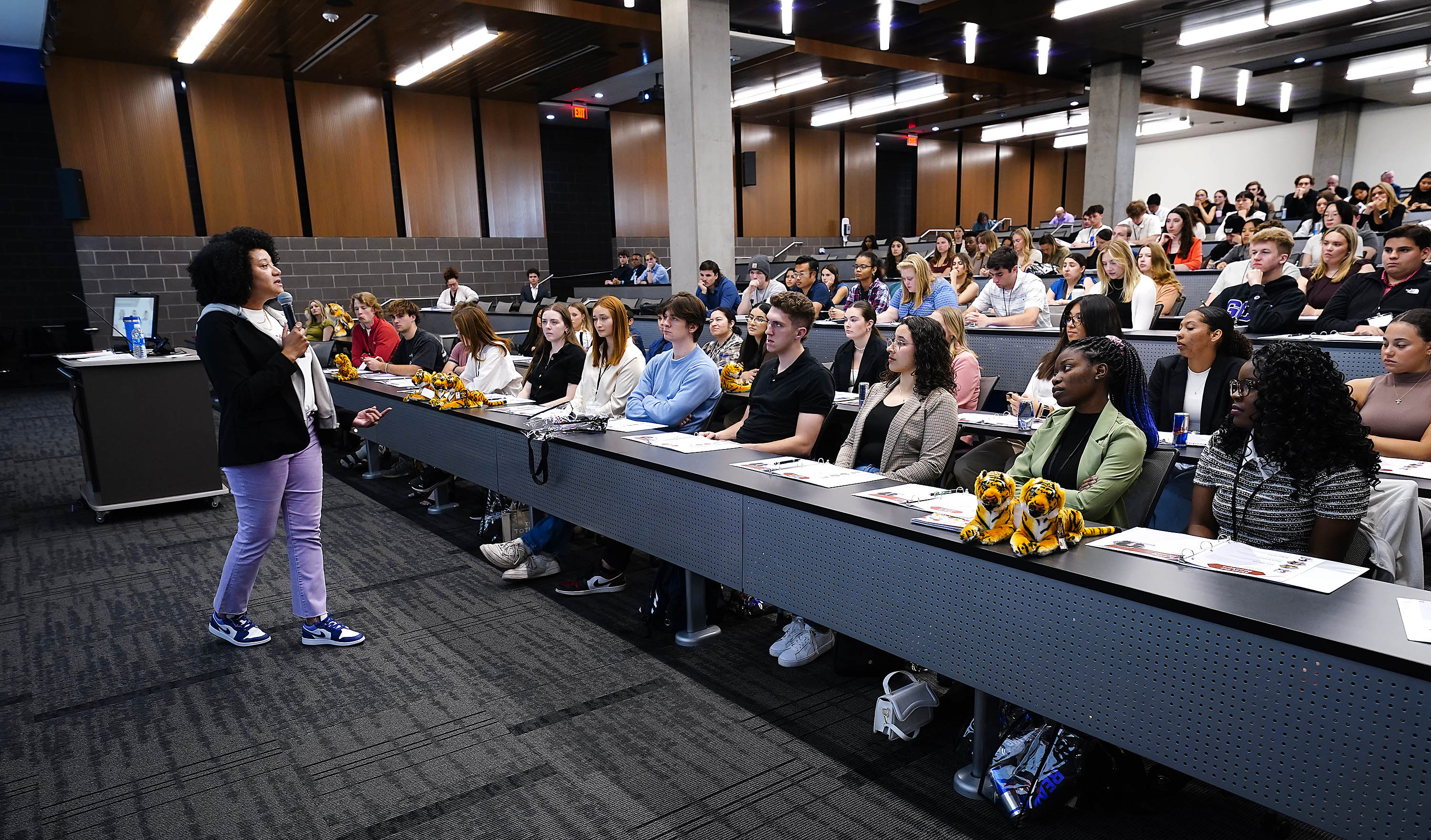
As he got deeper into his study, he invited one of his professors, Dr. Dean Aslinia, to observe and participate in a crisis negotiation training for officers to practice de-escalation strategies in life-threatening hostage situations or in another situation working with someone with schizophrenia.
The exercise highlighted the critical intersection of behavioral health knowledge and law enforcement practice, Aslinia said.
“Witnessing Enzo and his colleagues apply counseling and communication strategies in real time was both empowering and exciting,” he said. “It demonstrated how the skills taught in GCU’s clinical mental health counseling program enhance public safety and community well-being.
“Officer Ortiz represents the very best of public service, bringing decades of frontline law enforcement experience into the classroom with humility, discipline and a genuine commitment to continued growth.”
As Ortiz nears the end of his studies, he will complete his internship with Aslinia’s newly formed nonprofit, New Horizons Foundation, whose aim is to increase mental health care access and education.
He hopes to be a therapist and maybe help retired officers who have dealt with so many crises overcome their own.
Grand Canyon University senior writer Mike Kilen can be reached at [email protected]
***
Related content:
GCU News: Two graduate counseling programs earn prized accreditation
GCU News: Couple doubles up on doctoral degrees