It’s raining. Raining hard. You’re driving down the street. Ahead at the intersection, there is an accident. In a bright chartreuse vest, a police officer signals you to slow down and turn right. You move slowly, following the instructions, even though his hands and arms are close to his body.
Now, imagine you're a passenger in a self-driving car. How can the autonomous vehicle differentiate between a 6-foot-4-inch-tall officer gesturing with hands close to the body from one who's 5 foot 2 inches tall waving arms as far as they can go?
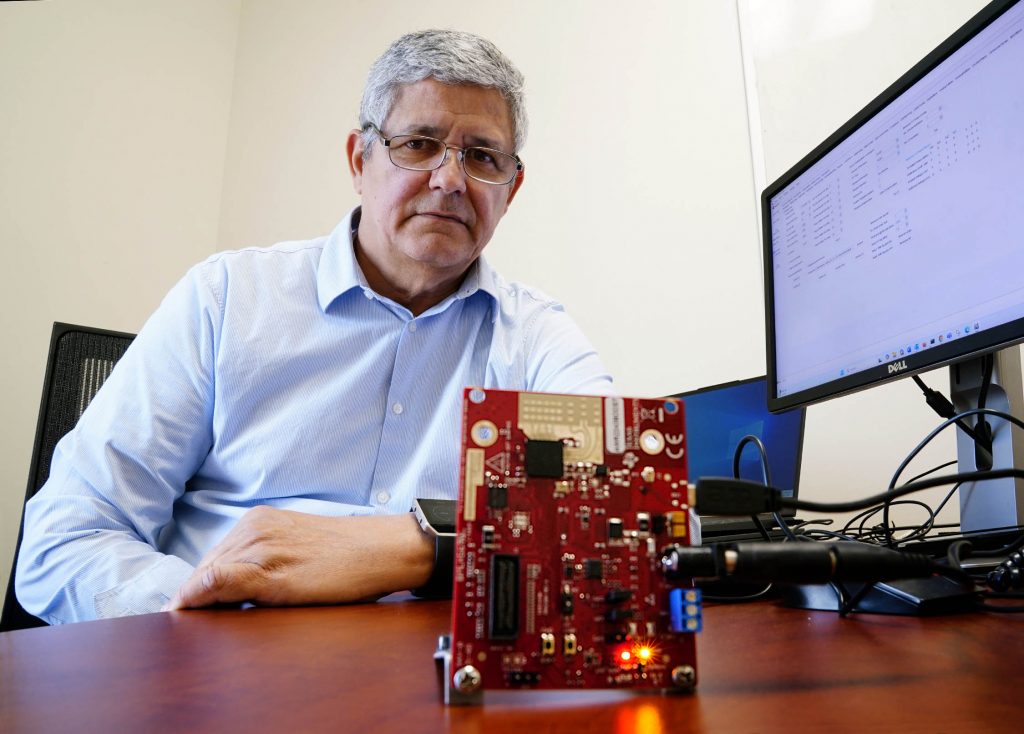
That’s the challenge for Grand Canyon University students and their professor, Luciano Albuquerque, chair of electrical and computer engineering in the College of Engineering and Technology.
The solution: smart radar.
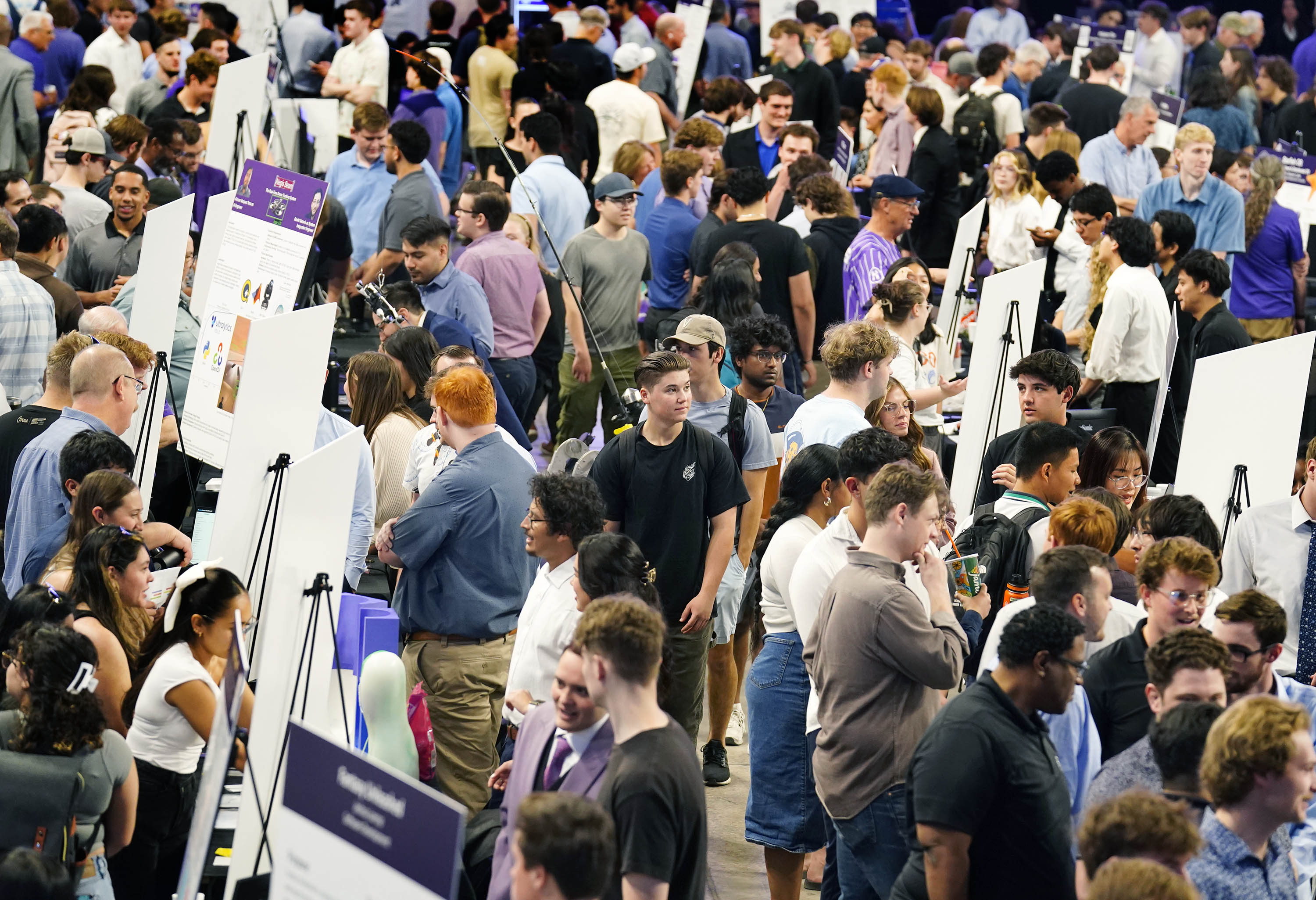
The reality: It’s a tough challenge for the research team, just one of about 30 that are part of the university's Canyon Emerging Scholars, and for researchers at other colleges across the nation.
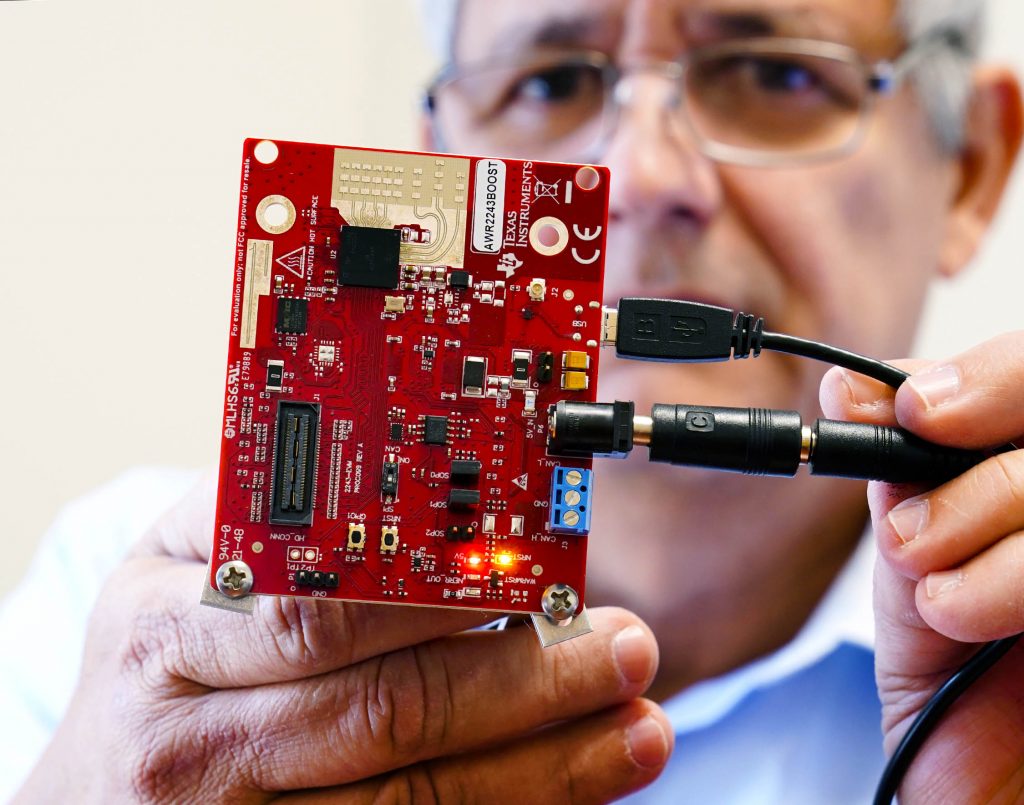
Cars today already feature machine-learning technology, which is becoming more sophisticated.
“It's basically when you have a police officer or someone directing traffic on the road, it's difficult,” he said. “It's a difficult problem for the vehicle to identify. It’s extremely complex for (an autonomous vehicle) to understand what the police officer or someone directing traffic wants it to do.”
Not only does the car’s radar have to detect the accident, but it also has to do so in various conditions, including blizzards, rainstorms and haboobs, all reasons why a camera is unreliable.
“You can do some of these with video cameras and with other technology,” Albuquerque said. “But the advantage of radar is that you don't depend on the weather conditions. A camera is unreliable if it’s night, if it is bright, if it's foggy, if it's raining or if it's snowing. Radar doesn’t care about that. So what we are trying to do is basically try to improve the existing systems to detect this type of situation with its unpredictable criteria.”
The pickle for Albuquerque and his students is getting the machine to recognize the human providing direction. It has to look for law enforcement on the left, a flagger on the right, a tall person, a short person, one with dramatic movements and another with tight movements. The variables create the conundrum.
“It really has to be very focused on being able to find the movement. It's difficult too, because (whoever) is directing traffic has different shapes and heights,” Albuquerque said. “People make the motions a little different. How can we interpret those and understand the correct result?”
He pointed out that a person can roll down a window and ask to understand, but a computer cannot do that.
“So how can we make this more reliable, correct and accurate today, so you might make a decision without human interference,” Albuquerque asks rhetorically. “Basically (this research asks), can we do that? It's a field where there is a lot of research going on about this specific problem.”
The advanced automotive radar research draws upon advances from multiple universities.
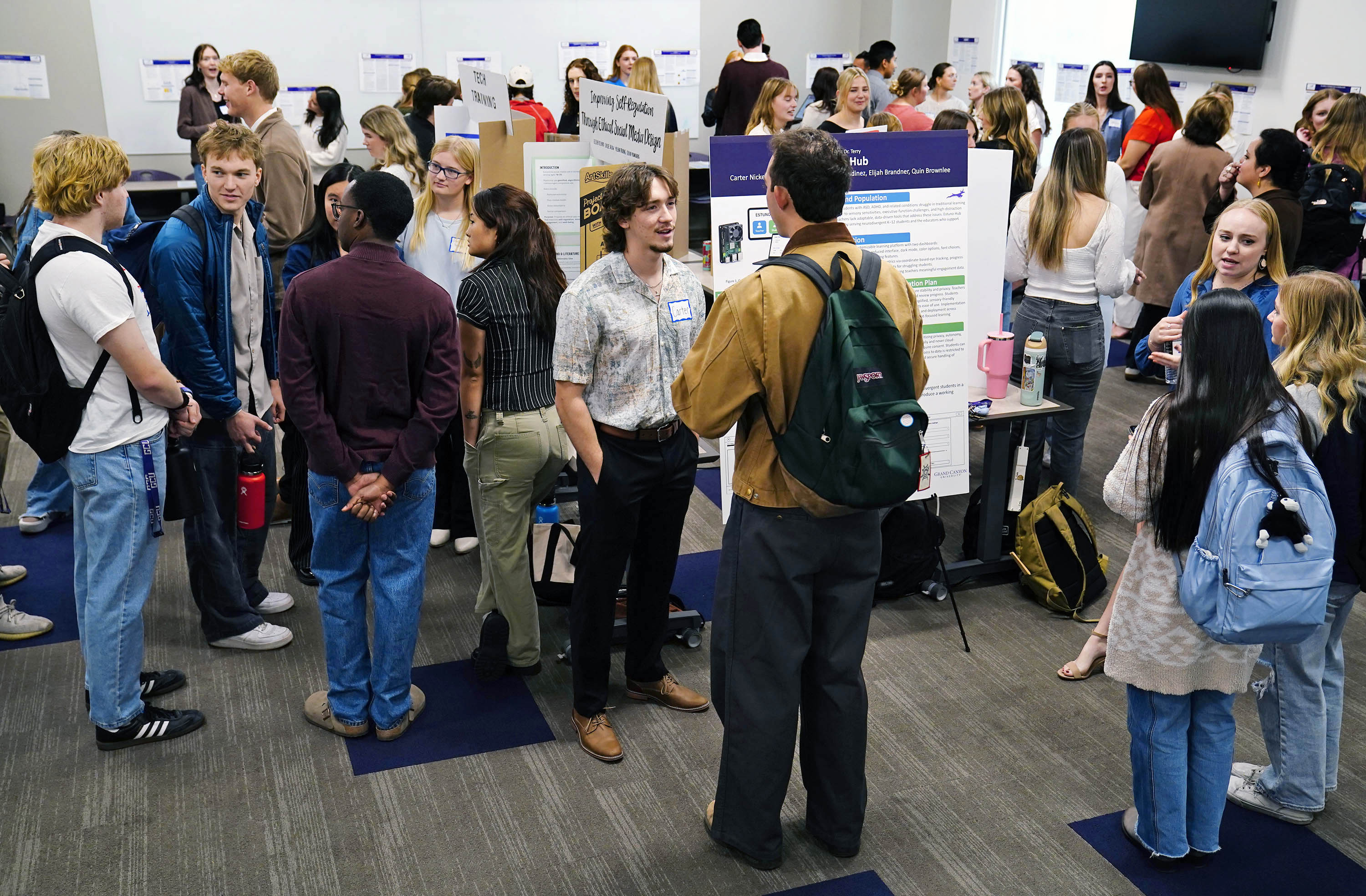
Jennifer Cormier, a senior electrical engineering major, sees the project as an opportunity to gain real-world experience and credentials. She signed up for the 2025-26 school year to participate.
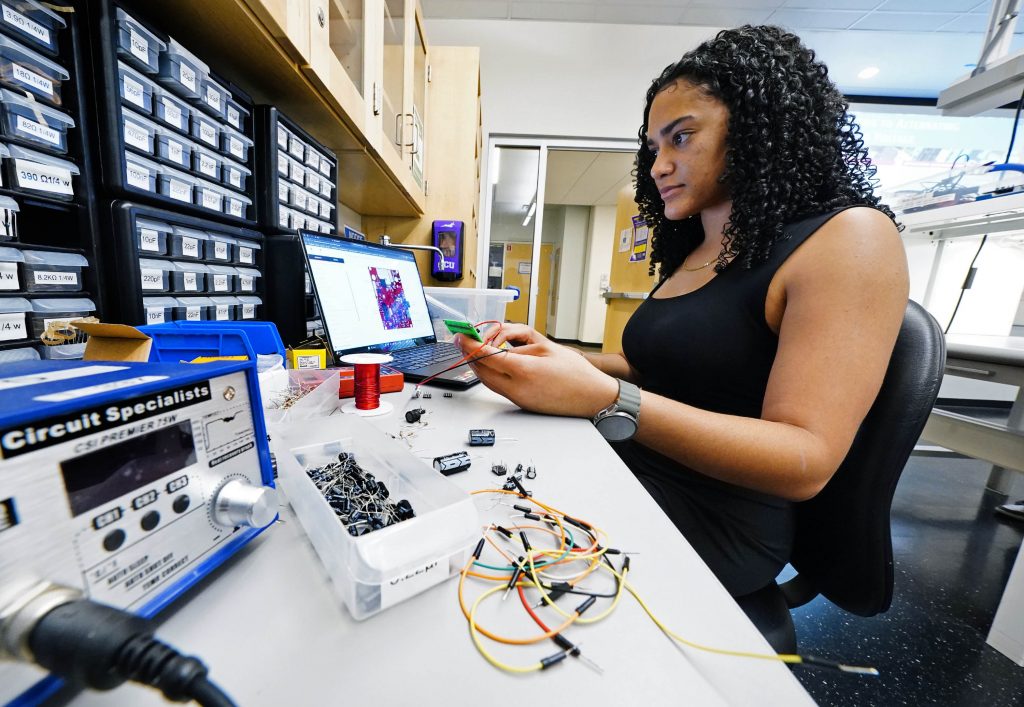
“My expectations are to gain hands-on experience in real-world applications,” she said. “I just think it's a really interesting project. I don't know very much about radar, so I think it'll broaden my horizons on this specifically. I just thought it was interesting going in.”
She students are primarily conducting in-depth research, reviewing publications and communicating with researchers from all over the world. The work Cormier and other students will develop this year builds on research from prior years, and she said it’s not just for autonomous vehicles.
“We'll take a couple hundred samples of information, label it and train the system to recognize it. That can be beneficial in the medical industry,” she said. “Like AI, anything that needs a system that has to be trained. It just helps develop information on how it works. We don't know how AI and other things like machine learning actually learn stuff, but we can adjust what we do to teach them better.”
Cormier said that their work this year could result in a research publication. That’s something that gives her credibility when she graduates, she said. The global reach of the program helps her learn to work with teams and communicate with her peers. The group has started work with Albuquerque.
“One of the first things that students will do is a literature review. They will see what is out there, what people are researching, how they are trying to solve this problem,” Albuquerque said. “(They) learn whether others solved a problem. As far as we know, this problem has not been solved yet. You can make improvements (to the program). It could be right 80% of the time, but 20% of the time, it cannot identify what the police officer wants to do.”
That failure rate is unacceptable, and it also creates unsafe conditions for drivers and those around the vehicle.
We don't know how AI and other things like machine learning actually learn stuff, but we can adjust what we do to teach them better.
Jennifer Cormier, senior electrical engineering major and Canyon Emerging Scholar
With the information disseminated through peer-reviewed publications to various universities working on the same problem, those other researchers can review GCU’s student progress and use it to move their own problem-solving research even further.
“We did some of those experiments last year, and those students graduated. Now I have a new team of students that we are forming for the project. It’s basically the same research because it's a complex, very complex problem,” said Albuquerque. “We’ll see if we can improve on the work done last year. Even if they didn't make it better than what exists today, they learned everything about the technology and how we do research, how we set up experiments, and how we apply the data.”
Albuquerque stated that the variables create a complex environment. An autonomous vehicle needs to recognize a dog in the road, a person jaywalking or what action a sign demands. It must differentiate who to obey when multiple people are milling around the traffic control person.
“Seems like it's easy. But, if you don't understand what the officer wants you to do, you can open the window and ask, ‘What do you want me to do?’” he said. “An autonomous vehicle cannot do that.”
Asked if he sees the potential for robots to replace people in traffic control, Albuquerque smiles.
“That would make it a lot easier. You wouldn’t need signs or controls; the two machines would talk directly to each other,” he said. “When we start mixing robots with humans, that becomes very complicated too; it will be the reverse problem, but still a problem. Now a robot is trying to direct the traffic but doesn’t know the reaction of the driver.”
A native of Brazil, Albuquerque came from New York City to GCU in 2019.
He worked as an Electrical Engineer for over 30 years, and taught at the City University of New York, Bronx Community College for 5 years.
He said he likes Arizona, except for the summers.
“I like the New York summers better (than Phoenix),” he said. “In Arizona, I like winter.”
He believes it is essential for students to learn how to conduct a literature review, understand how to conduct an experiment, and how to research and collect data. Their efforts contribute to the knowledge needed to solve this problem and make autonomous vehicles more reliable in complicated situations.
“In the process of learning new things, new technologies and the state of the art, that's what is up front,” Albuquerque said. “Many research universities out there in the world are trying to solve this problem as well. So, (the research is) not outdated, and GCU students are helping to make our roads safer.”
Senior writer Eric Jay Toll can be reached at [email protected]