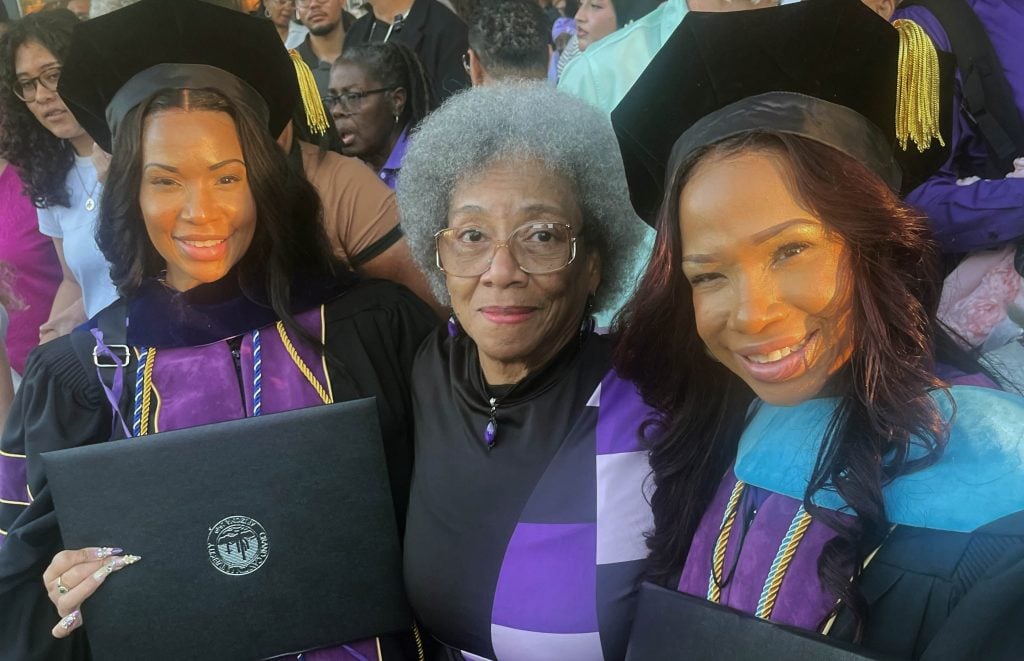
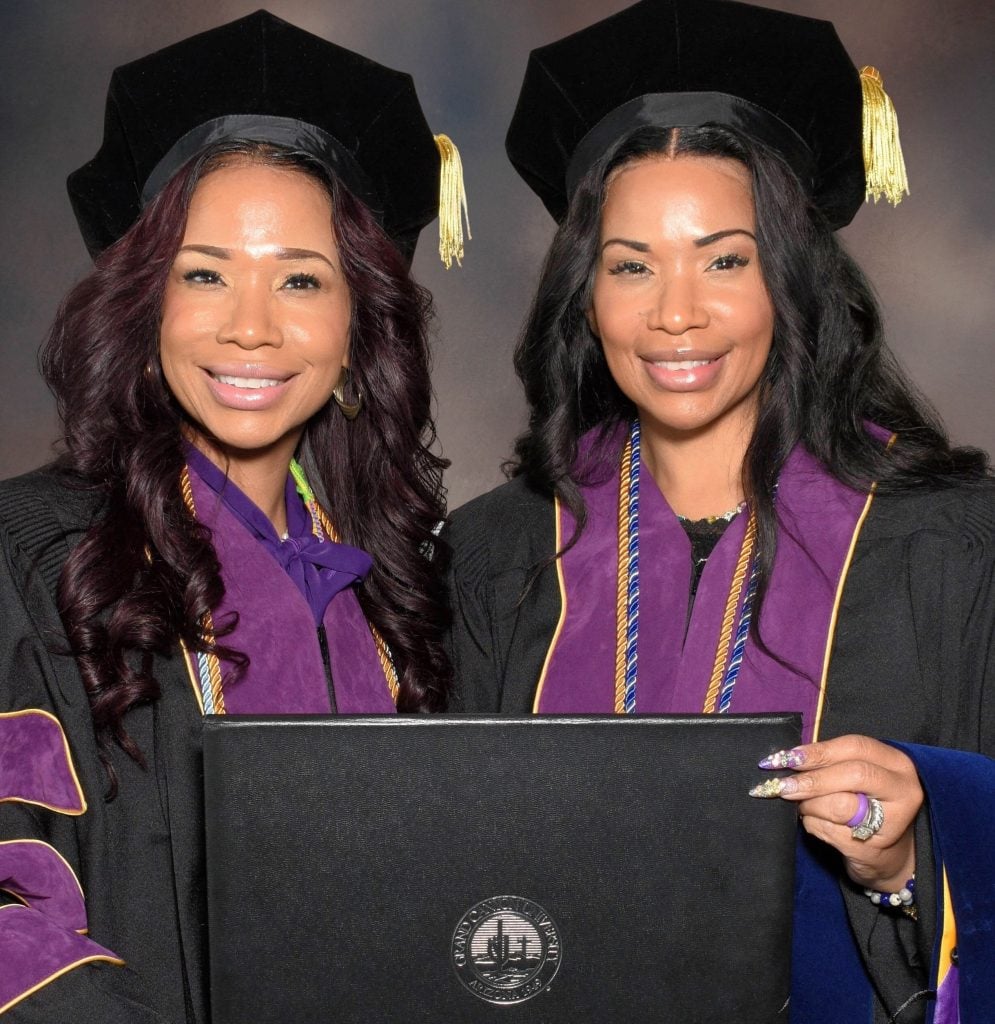
Separated at birth by three minutes, academically, degrees apart.
But identical twins Tina Garcia and Lillian Lucas crossed the finish line of their doctoral pursuits at virtually the same time, thanks largely to their mutual support and resiliency.
“It was definitely surreal because we looked at each other and thought, ‘We really did this. We really made it,’“ Garcia said, reflecting on when she and her sister were onstage during Grand Canyon University online commencement ceremonies in October. “Every journey that we've ever had in life, educationwise, we kind of did it in lockstep. Even though our journeys were very different, it was in lockstep.
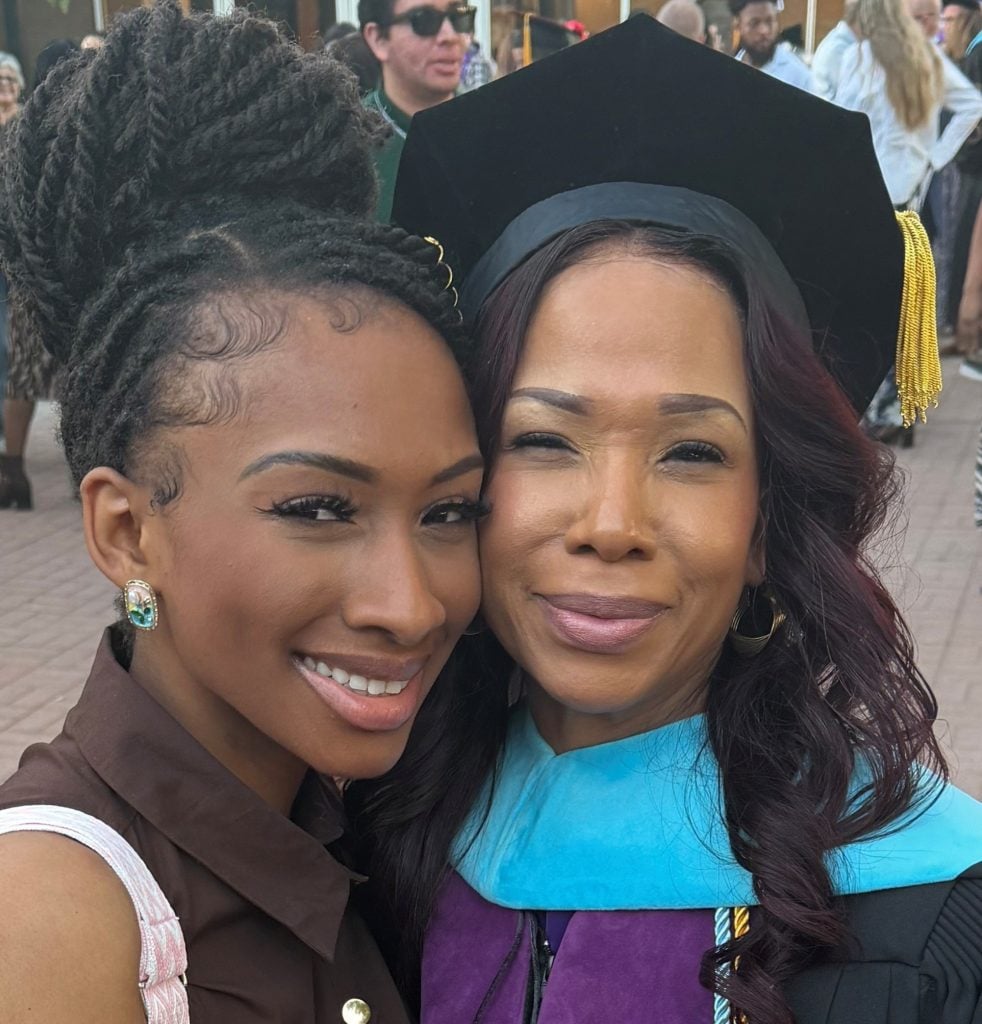
“And just about everything that we've done in life has pretty much been hand in hand. We take vacations together. We spend holidays together. We're very close, familywise. So it's just been when it comes to our immediate family, it's been her and me, and then my immediate family.”
Lucas said it was fitting that she followed her sister onstage because her mother gave birth to Garcia first, but that came after an uneven set of circumstances.
Garcia, a counselor with the New York State Department of Corrections and Community Supervision, earned her doctorate in general psychology. Lucas, a STEM teacher at a high school in Queens, New York, received her doctorate in organizational leadership with an emphasis in special education.
Garcia did not start her master’s program at GCU until 2018 – 17 years after she earned her bachelor’s degree and 10 years after her sister received her master’s from Touro University in New York City. Garcia’s return to the classroom motivated Lucas to pursue her doctorate the following year, which created mutual motivation.
Lucas admitted she wanted to quit a few times, only to listen to her sister remind her that they shared the same mission, even as Garcia moved ahead of her in their doctoral pursuit.
“I told her, ‘Oh no, you can’t finish this on your own. I can’t be left behind,’“ Lucas said.
Paperwork obligations, changes in chairs and health issues eventually aligned the twins to graduate together.
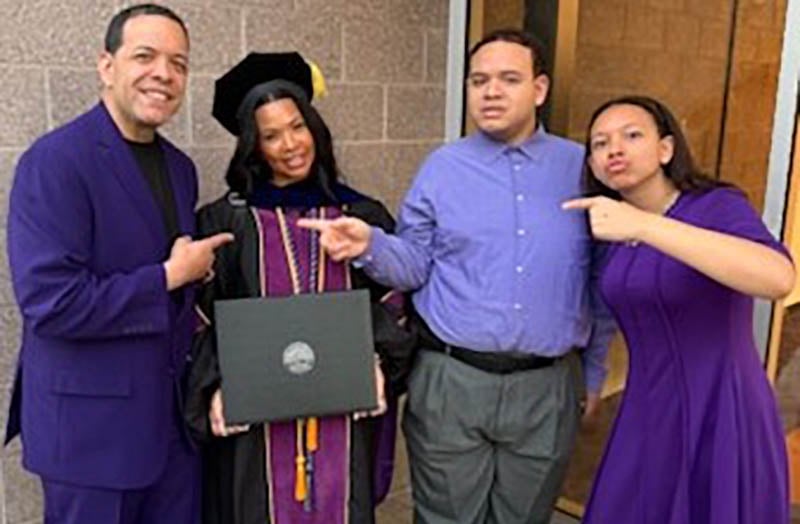
“I feel like it was God, (that He) designed for us to even walk together because she was supposed to be finished long before me and go to the spring graduation,” Lucas said. “… It worked out that we were in lockstep right towards the end, but even before we got to that part, she was my rock in this whole program.”
Despite pursuing different studies, the twins would exchange feedback on homework and professors as part of their motivation. “We would vet each other’s project throughout the entire process,” Garcia said. "We were each other’s support.”
Garcia started working at a juvenile residential facility in 2001 and became a probation officer in 2009 after taking a break to prepare for a family.
She served as a probation officer for 12 years before advancing to a corrections counselor for the Department of Corrections and Community Supervision in New York State.
The COVID-19 pandemic in 2020 and a work-related injury in 2023 provided Garcia with more time to study.
Those breaks were helpful, especially after she was making the transition from legal writing in her job as a probation officer to academic writing.
“What impressed me about her was her willingness to learn and adapt,” Holli Eskelinen, Garcia’s chair, observed. “She brought a strong foundation in writing and analytical thinking, but she recognized that doctoral-level scholarly writing required a different approach.
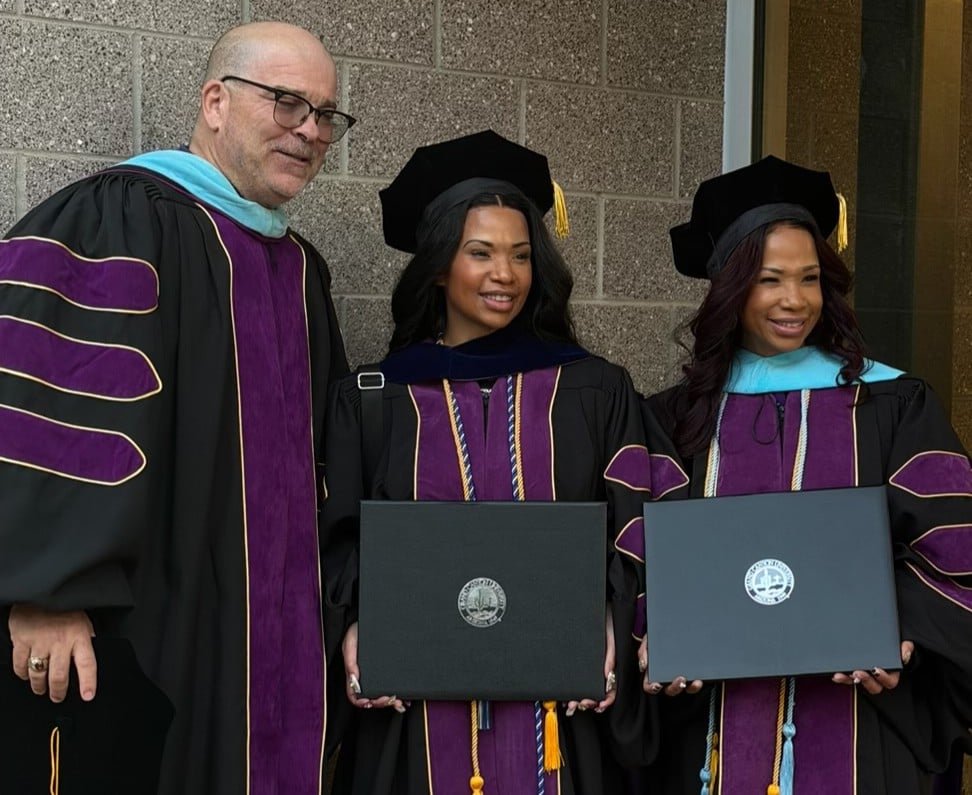
“She was extremely receptive to feedback, organized, thoughtful in her revisions, and committed to strengthening her work. That ability to take an existing skillset and adapt it to a new intellectual challenge speaks to her academic ability and her dedication to the process.”
Lucas would often bring her computer to Garcia’s house to share ideas and compare notes on courses and professors,
“We would be sitting on the deck on a cruise ship with our laptops,” Lucas said. “… I don't know if I would have made it through the program without her.”
Or without cousin Michelle Allman, who recommended Dr. Justina Kwapy as her dissertation chair.
“It’s really a family affair because I graduated (Allman in April of 2025),” Allman said.
Lucas remained determined to collect data and write and defend her dissertation despite struggling to get participants in her school district for her topic: “High school STEM teachers' perspectives on cultural response to sustaining education, professional development in New York City.” She had to file for an Institutional Review Board (IRB) modification, Kwapy said.
“Any avenue that needed to be crossed to get it done, she was willing to get it done. Her resilience and perseverance were incredible,” Kwapy said.
The twins raved about GCU’s Christian pillar, adding that the Scriptures helped them stay grounded and focused.
“Those Scriptures were the thing that held me together for the very beginning of the program,” Lucas said. “When stuff got tough, I relied on those Scriptures.”
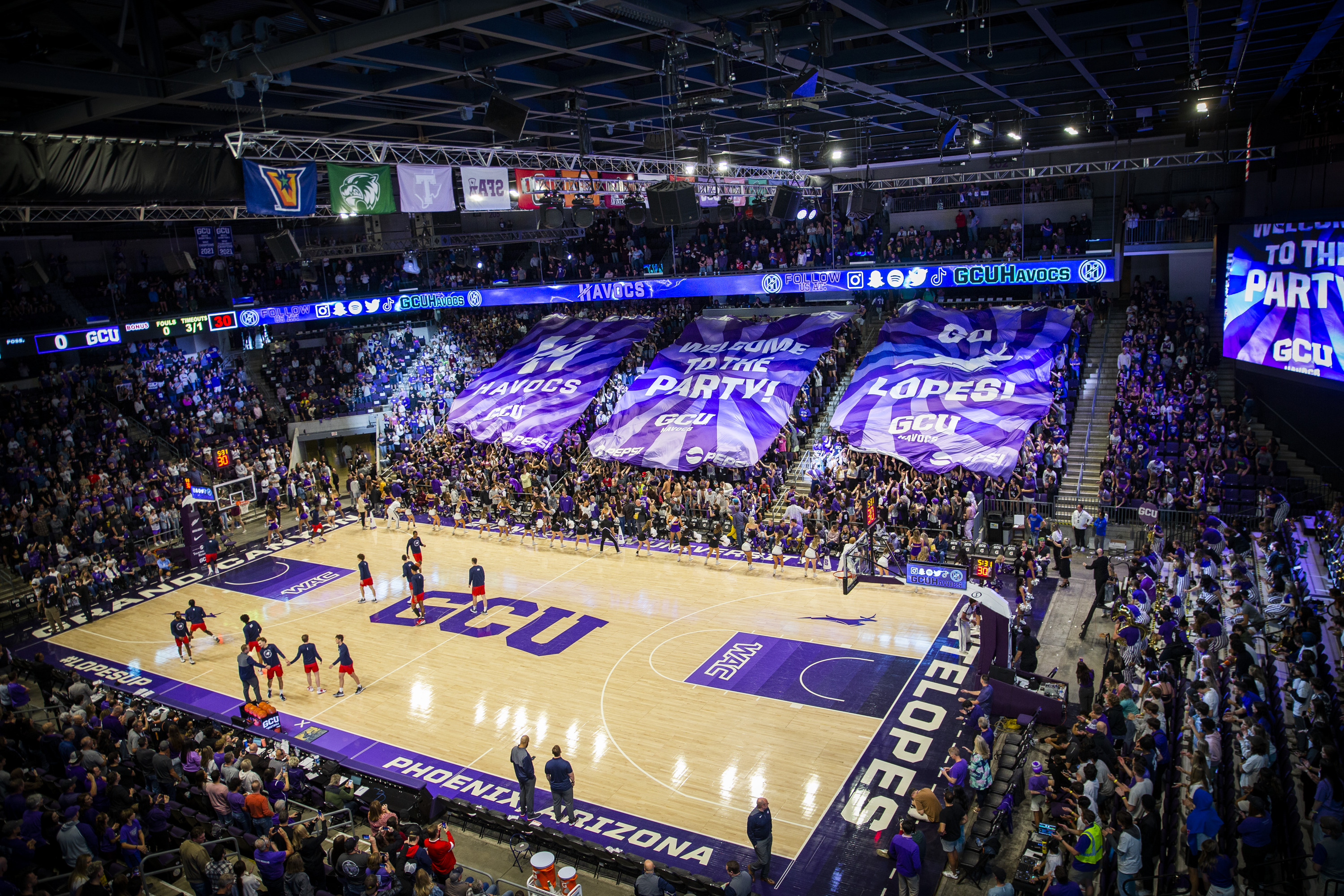
Walking off the stage at Global Credit Union Arena after her name was announced gave Garcia a strong sense of accomplishment and vindication.
“I've had many people in my life (insinuate), ‘You're not smart enough,’ or ‘You can't do this,’“ Garcia recalled. “So it's kind of like a moment of saying, ‘You know what? I am good enough. I am smart enough. I am disciplined enough.’
“Because at this point, it's beyond smart. It's more discipline, and it's more of sticking to, if you set a time to study, you have to stick to that time of study, so it's more than just being smart."
GCU News senior writer Mark Gonzales can be reached at [email protected]
***
Related content:
GCU News: Colorado couple achieve principal goal of earning doctorates