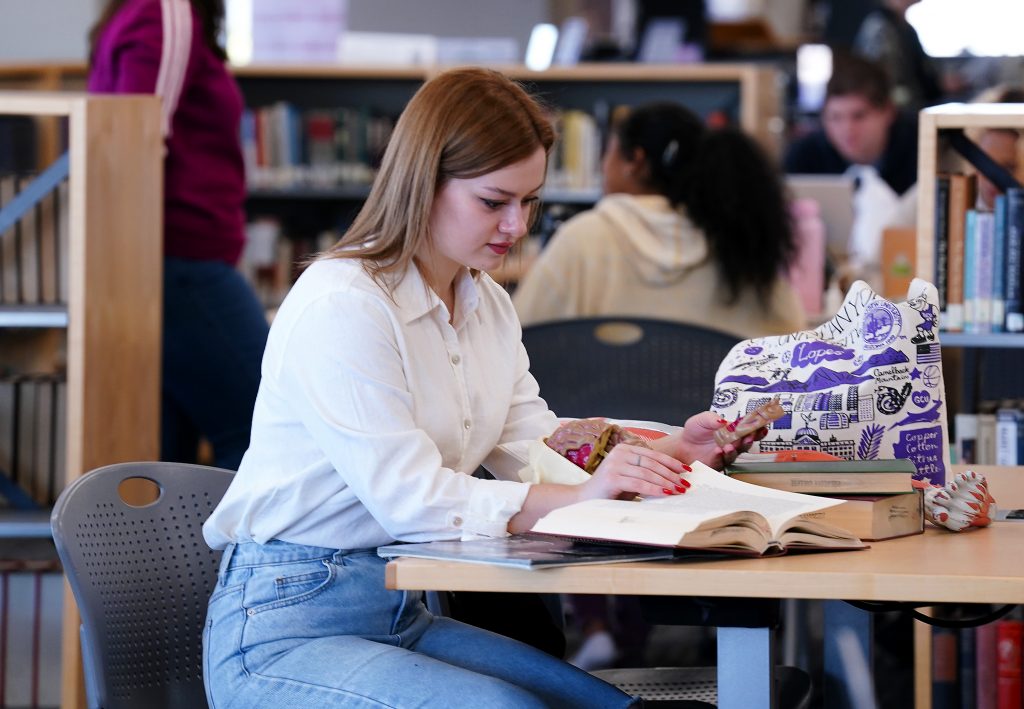
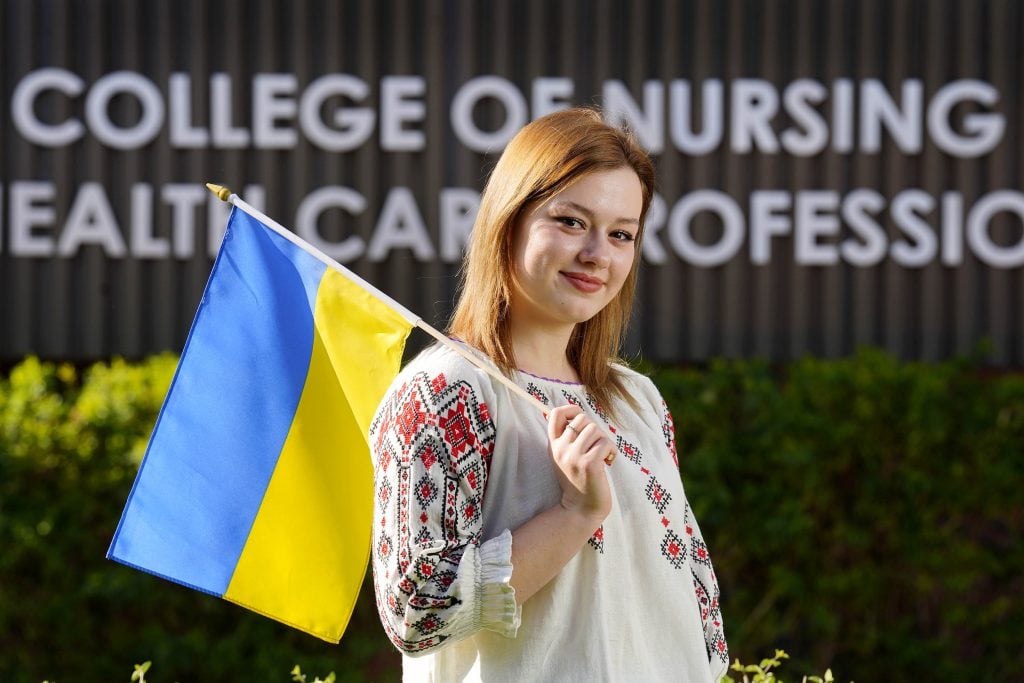
Grand Canyon University alumna Veronika Solovei loved languages, finding poetry in it as she delved into French and English as a student at Kyiv National Linguistic University in her home country of Ukraine.
But in her new life in the United States, where she found herself alone after a harrowing journey in which she left her family behind to escape the Russo-Ukrainian war, language became something altogether different.
More than just conversational and colloquial English, she had to learn medical English after finding her footing at GCU, with her church, Christ's Church of the Valley, helping her along the way. She had decided to change the course of her life, switching from languages to nursing. Just as so many had helped her, she said was called to help people as a nurse.
“Nursing school is not something where you finish nursing school and that’s it,” said Solovei, now a critical care nurse for HonorHealth. “When you’re a nurse, there’s going to be a bigger learning curve for you.
“I would say even the first year – the first semester – was challenging,” she said. “Learning English in Ukraine is so different than going to school in the United States and speaking to native speakers every day and hearing so many new words.
“Especially medical terminology was pretty challenging to me,” Solovei said. “And up to this day, I still sometimes learn a lot of new words. For me, sometimes doctors will say something, and I’m like, ‘What are you talking about?’”
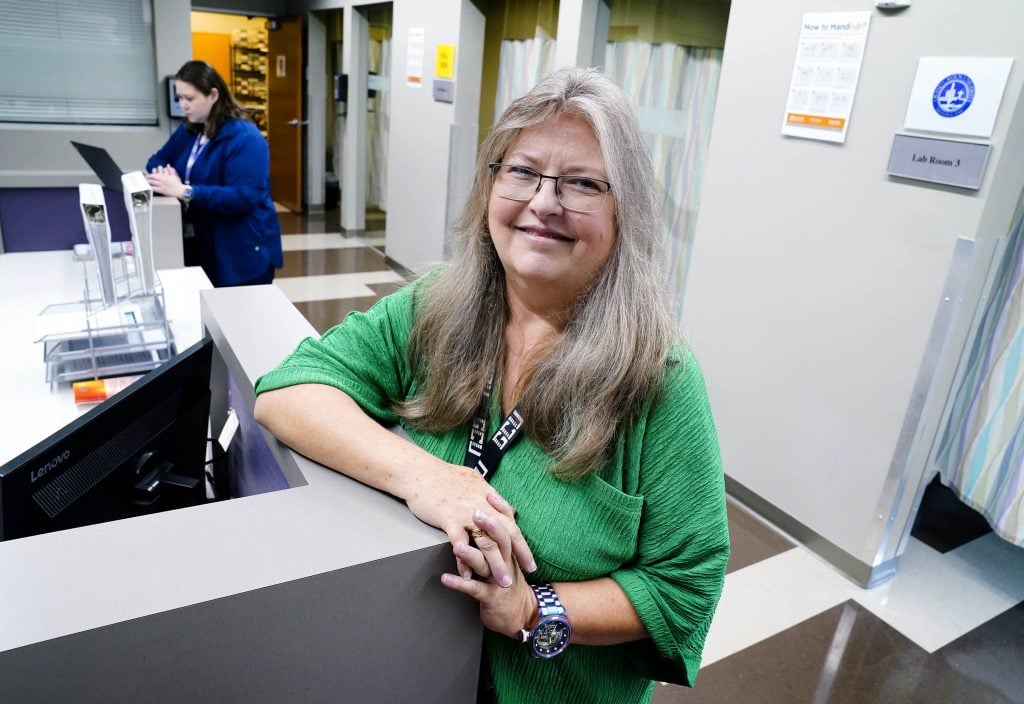
While she had to understand medical terminology as an English-language learner, native English-speaking nursing students face the same challenge, said Becky de Tranaltes, nursing faculty for the prelicensure Bachelor of Science in Nursing program.
“In my experience, I have found that students of all languages, English included, struggle with terminology,” de Tranaltes said. “It is its own language. I have also found that students will look confused when a new word is used in a lecture, yet they do not ask for clarification.”
Then there's the metric system, which is universal in medicine and also needs to be learned for math equations, medication orders and amounts prescribed. She stressed that terms and measures are crucial because they affect the quality of patient care.
Learning terminology continues after graduation. De Tranaltes shared how she continually runs across words new to her.
“I do what I tell my students to do,” the instructor said. “I look up the word in a medical dictionary and read the definition.”
Solovei found resources throughout the university and during her clinical rotation, which ultimately led to a full-time position with HonorHealth.
“English is not my first language; it is the third language that I’ve learned,” she said. “I’m still learning every day. But I have a lot of support at work, and people know that I’m not from here, and they always help me if needed. Just going through school and talking to so many people helped me learn English better.”
Solovei, who hadn't thought of going into health care before coming to the United States, came to live with her godparents in the West Valley.
It wasn't an easy journey.
She boarded a plane from Germany to Paris, then from Paris to Mexico City. According to the Transactional Records Access Clearinghouse (TRAC), a data gathering organization based at Syracuse University, almost 21,000 Ukrainians sought entry to the U.S. through Mexico in April 2022, a little more than a month after Russia invaded Ukraine on Feb. 24. More than 90% of them came through the San Diego Customs and Border Protection port authority, as Solovei did.
She was detained twice, in Mexico City then Tijuana. They told her godmother, who had arrived to pick her up, to leave her.
But Solovei was able to enter the United States in early April on humanitarian parole.
It was Solovei's godparents who took her to their church, Christ's Church of the Valley.
“Coming here, CCV helped me enroll at GCU. I was going through majors, and I was like, ‘nursing?’” Solovei said. “I was looking at the list of courses that they offer – like anatomy and physiology – and I was like, ‘That sounds so fun, learning about somebody’s body. Let’s just do it.’”
She started with what she called the ‘fun’ side of learning nursing, but as her coursework and clinical rotations progressed, she mastered the vocabulary. The rotations let her master the language of care.
“During nursing school, I thought I wanted to be an (emergency room) nurse,” Solovei said. “(That was) until my last semester of nursing school, where I had (transition to practice) in the ICU. I fell in love with it.”
What captured her interest was that, in the intensive care unit, she recognized that nurses needed to be more attuned to the patient. This role combined compassion, investigation and caregiving.
“The (ICU) nurses were so smart and knew so much,” Solovei recounted. “You don’t just look at one part of the story, you look at the whole picture.”
That whole picture connects her with her faith.
Being in the ICU means that nurses see people die. In addition to high-level medical skills, nurses need coping skills to help loved ones and families when a patient passes away. Compassion is a key word for critical care.
“I’m so drawn to the ICU and helping people when they’re in the most vulnerable states of their lives,” Solovei said. “You rely on God to help you and guide you to help those people.”
She said that GCU’s nursing program truly prepared her with the knowledge and skills necessary to be a successful ICU nurse.
“GCU’s nursing program is one of the best. (Almost) everyone passes,” Solovei said. “Professor Riley Rosengarten and Dr. Candace Young were so supportive. They helped us grow from baby nurses to actual nurses.”
That growth is recognized in the first-time pass rate of GCU graduating BSN nurses on the National Council Licensure Examination, the test they must pass so they can get a license to start practicing nursing.
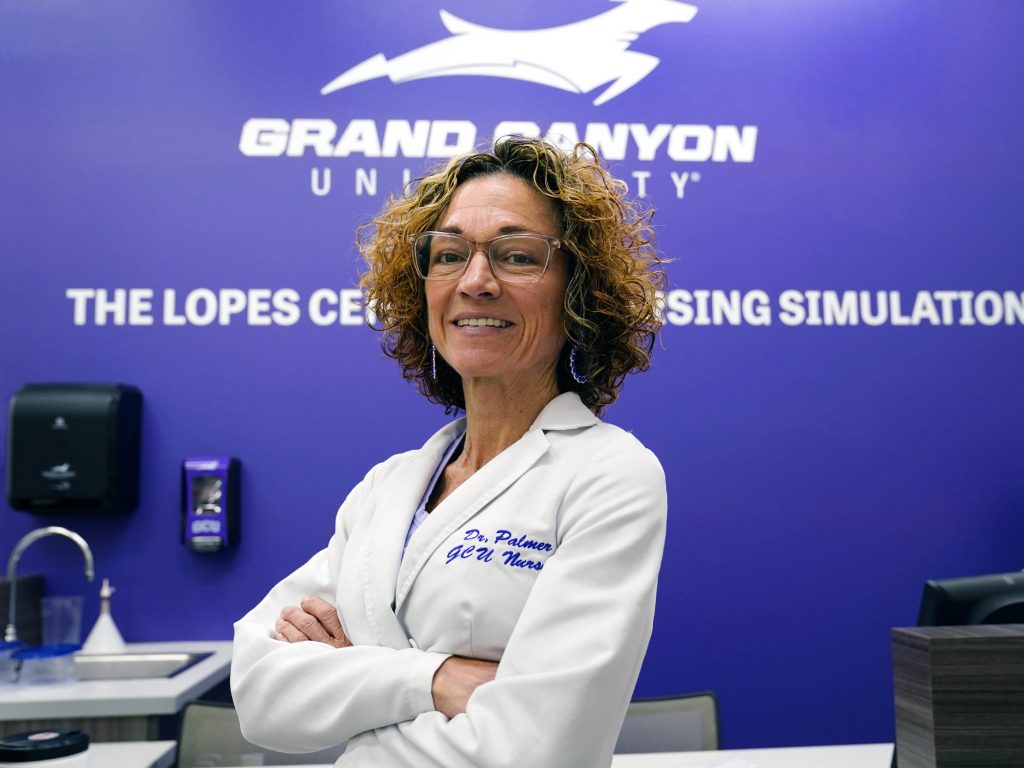
“They [students] are prepared very well. Our (NCLEX) pass rate is consistently in the high 90s, almost 100%,” said Dr. Tristan Palmer, director of clinical operations for the BSN program. “That’s because we emphasize clinical readiness from Level 1 all the way through Level 4.”
GCU teaches nursing with a Christian worldview. The approach calls for nurses and health care practitioners to be compassionate and understanding. The GCU nursing approach sees its graduates entering the world as servant-leaders.
“(Teaching) allowed me the privilege of being able to work with these students on a level as students, but, to me, more importantly, as humans,” said Dr. Riley Rosengarten, associate professor in the Doctor of Nursing Practice program. “Because at the end of the day, you’re going to be a nurse, but you are always going to be a human first.”
That sense of faith guides Solovei's path – in every language.
“(God) gave me the strength to get through nursing school and be in the tough field in the ICU and be able to handle that,” she said. “So I believe it was a calling for sure, and I believe everything that I went through in my life, it just added to it, because it made me resilient, which helps me be a better ICU nurse.”
Eric Jay Toll can be contacted at [email protected]
Related stories:
GCU News: Nursing student turns compassion into a career path
GCU News: GCU nursing student’s faith and compassion earn national recognition
GCU News: Her nursing journey encompasses 3,000 miles, 16 months, 3 states and her faith