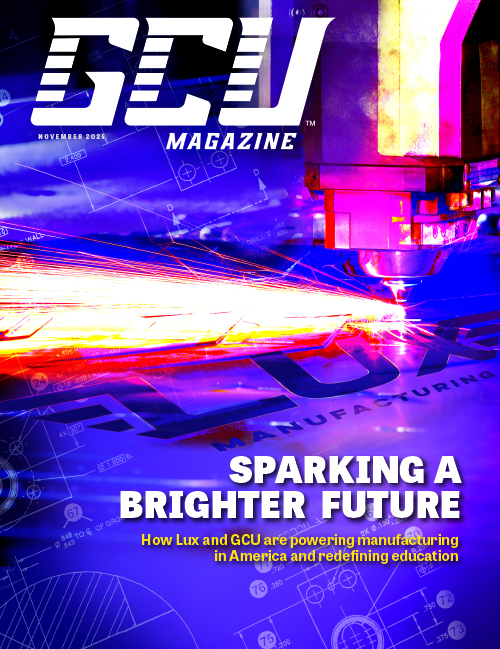
The university and company are re-energizing manufacturing and forging an ecosystem where engineering, the trades and technology intersect
EDITOR'S NOTE: This story was originally published in the November issue of GCU Magazine, available in the purple bins around campus or digitally.
Photos by Ralph Freso
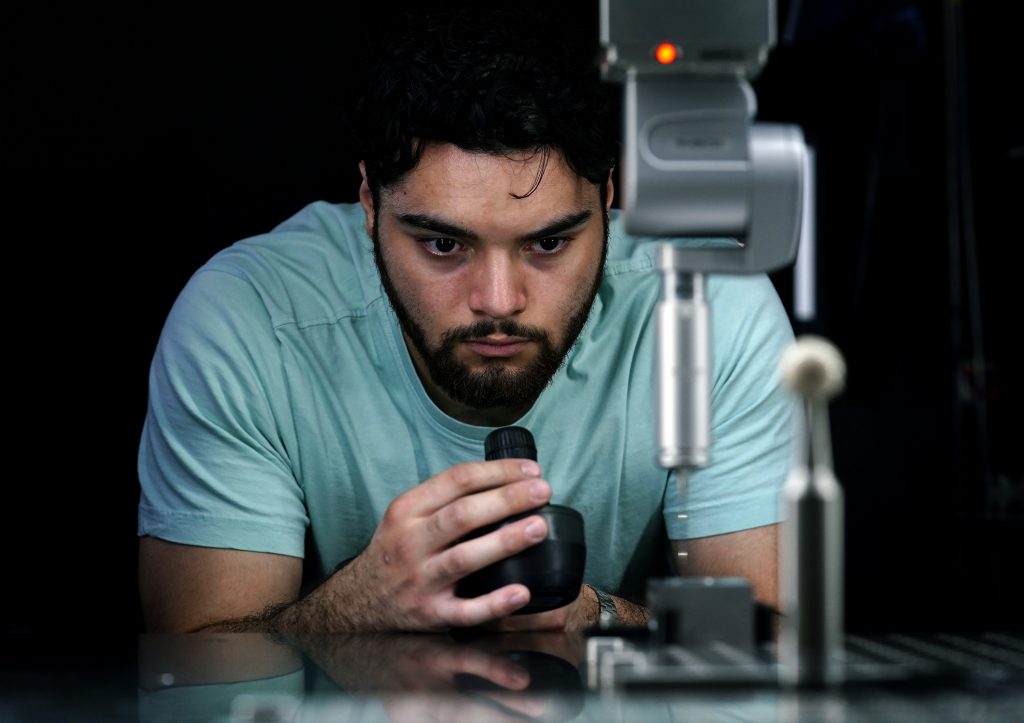
The world is quiet except for Mauricio Manrique’s slowed breathing and the zippy-zingy metallic whirr of the coordinate measuring machine, those sounds mingling with the distinctive aroma of coolant in the air at Grand Canyon University-based Lux Precision Manufacturing.
Manrique is regulating his breathing and movements as he peers into the machine while it collects precise data – to the micron (or submicron, if need be) – to determine lengths, widths, angles. The goal: to make sure a part produced at Lux, an on-campus aerospace machine shop that also makes parts for the medical and defense industries, meets design specifications.
Just a little more than two years ago, Manrique couldn’t have told you what a caliper does or the function of a micrometer. Nor could he tell you about the tolerances of manufactured parts. He just didn’t speak that language.
What he wanted to do after high school?
“Honestly, I really didn’t know,” said Manrique, a quality inspector at Lux, which is in the throes of a major expansion that will triple the company’s size. “I was kind of like against the wall in terms of what I wanted to do.”
Then a GCU admissions counselor reached out.
The university’s trades-focused Center for Workforce Development, part of the College of Engineering and Technology, was launching a CNC machinist certificate pathway. The cost would be covered by funding from industry partners, grants and institutional aid.
Would he like to enroll?
“It’s been a full-time job since,” said Manrique, who earned his certificate in 2023.
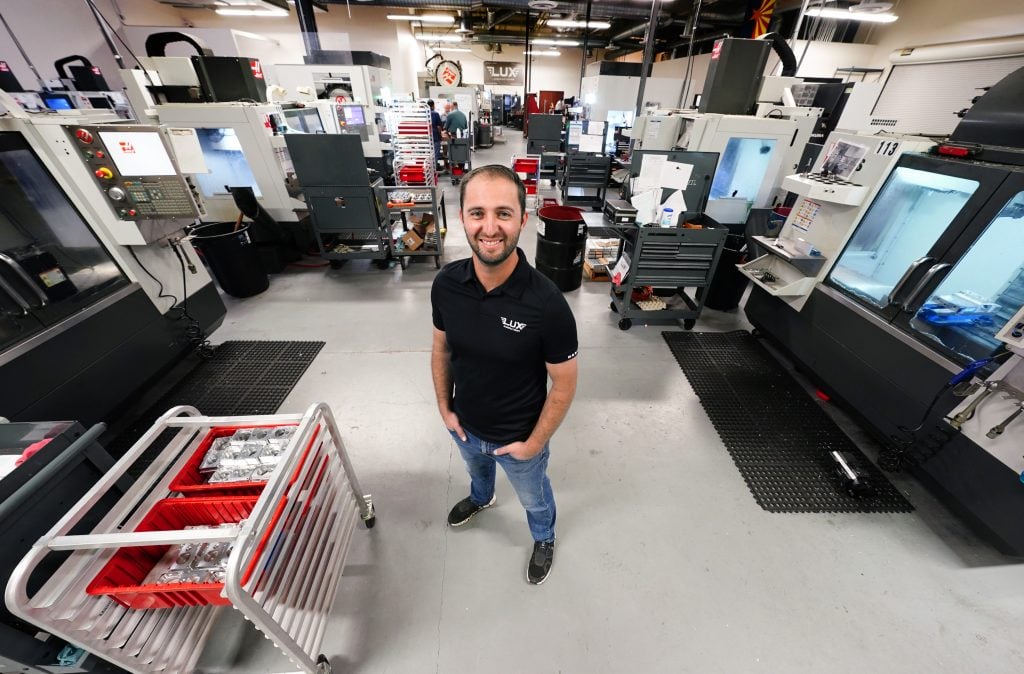
He’s part of the wave of 20-year-olds at the forefront of a post-COVID manufacturing attention shift to American-made products. And he works for a burgeoning company founded by 20-something visionary Weston Smith, who stumbled upon manufacturing when he founded Lux in his GCU residence hall room just eight years ago.
Smith, whose rise has been intertwined with GCU since those residence hall days, has a clear two-fold vision of what he wants to do: one, manufacture parts that power industry, and two, train the next generation, like Manrique, to do it.
“America is going to become a manufacturing mecca again,” Smith said. “And it starts with education, whether that’s trades or engineering – and GCU is going to do it better than anybody else on both. That’s what built America, then it (manufacturing) left. … Our mission is to re-energize American manufacturing, and it has been since we started.”
Smith shares that vision with university President Brian Mueller, who looked back to World War II, when “we created the greatest middle class in the history of the world.”
He sees that starting to happen again.
“We have the ability, through an intersection of engineering, technology and manufacturing, to create an opportunity to bring literally thousands and thousands and thousands of young people who have been living in poverty to the middle class,” Mueller said.
“We need to build things in this country again, and I’m really excited about being a big part of that. We need to think collectively about how we’re going to lead the charge there and create the new American middle class that makes things.”
***
In the beginning, Smith’s vision wasn’t as ambitious.
He just wanted a way to get around campus and bought his first electric longboard his sophomore year that transformed his college experience. When students stopped him to ask, “Is that an electric longboard?” “Yes.” “Cool,” his entrepreneurial instincts kicked in.
Smith, who grew up in a house on a dirt road in Flagstaff, Arizona, and never owned a skateboard, launched an electric longboard rental company that would become the first startup at GCU business incubator Canyon Ventures.
But the batteries, which had a 90% failure rate, didn’t hold up to the vibrations.
So the mechanical engineering student immersed himself in the campus engineering labs, developing a flexible battery pack using the same technology found in Tesla cars.
“We started designing all these boards, had everything manufactured overseas in China, and then all of a sudden, COVID hit and our supply chain went poof!” Smith said. “We couldn’t get toilet paper, much less electric longboard parts.”
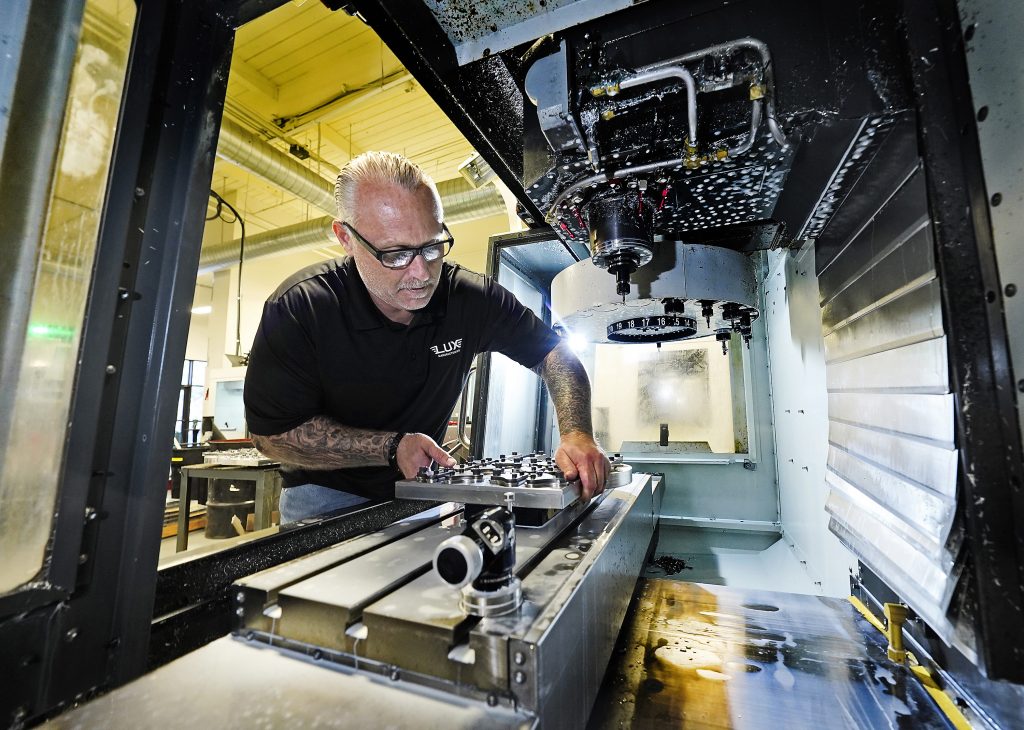
The necessities of COVID would become the mother of invention.
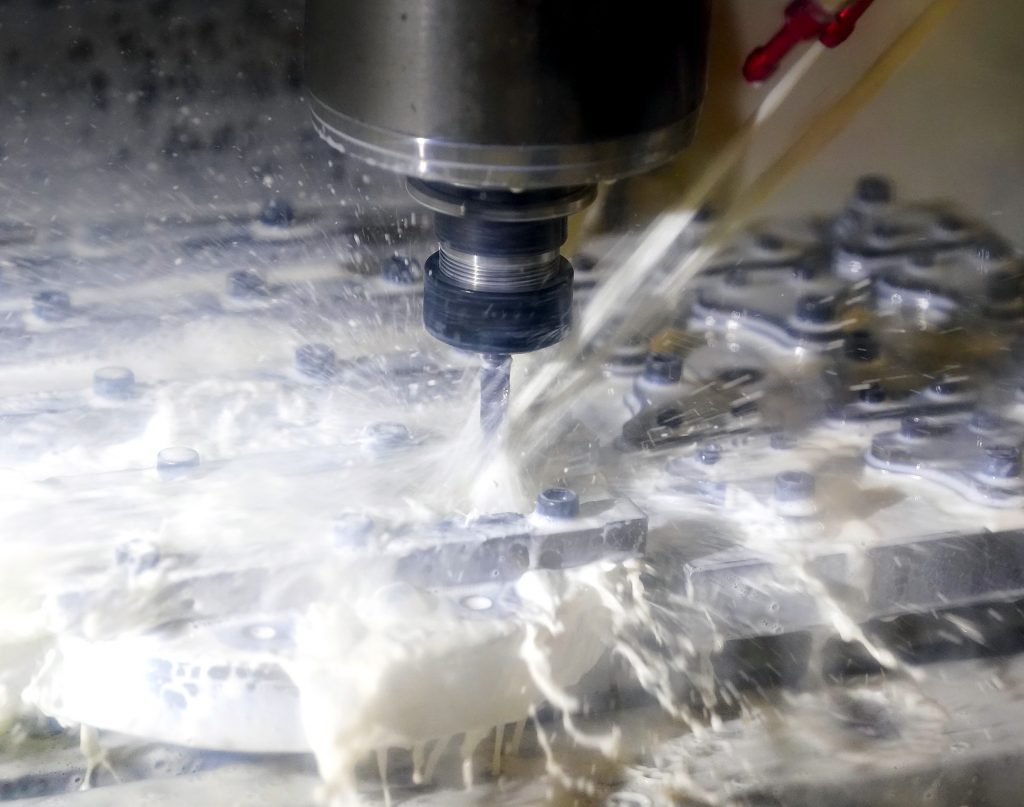
Smith bought the company’s first CNC machine to start making his own electric longboard components.
Then out of the blue, he got a call from the engineering director at a medical device company which made machines that manufacture catheters and heart stint balloons for surgeries.
They were in desperate need of components. He said, “Would you be interested in taking on contract work?”
“It just accelerated so incredibly fast,” Smith said. “It got to a point where it was like, what is this industry? What is the opportunity?”
That opportunity has led here, with Lux expanding its 10,000-square-foot space to 30,000 square feet in Building 66 at GCU’s 27th Avenue and Camelback Road complex.
Smith visited in the spring with Mueller, who has spoken about his father, part of that great post-World War II middle class. Mueller’s father became an engineer after serving in the war and joining a General Motors program that trained him while he worked.
Mueller asked Smith, “How do we grow this company?”
Three weeks later, Mueller had his answer when an opportunity fell in Smith’s lap, and Lux acquired Dillon Manufacturing. It was a major acquisition, with Lux adding 20 more machines to the 15 it already operated and doubling its full-time workforce to 30 after bringing all the employees it could from Dillon Manufacturing’s facility.
That means a bigger footprint for Lux as it continues to make parts for the aerospace, defense, medical and semiconductor industries in Arizona. The state is “one of the largest growing locations in the world for manufacturing,” said Shelly Seitz, director of the Center for Workforce Development.
According to global real estate firm Newmark Group in its January 2024 Manufacturing Momentum report, metro Phoenix was ranked as the top growth market in the U.S. for new major projects and projected jobs.
Arizona Chamber of Commerce President Danny Seiden said the state owes its manufacturing boom, in part, to the semiconductor industry. Taiwan Semiconductor Manufacturing Co. is the most prominent example, investing more than $165 billion into its six chip fabrication plants and other facilities in Phoenix. But it owes much, too, to the tech sector and the work of companies in the production of medical devices and military equipment.
Manufacturing contributes approximately $77 billion annually to the state’s economy, according to the Chamber, and employs an estimated 630,000 Arizonans.
But Smith wants Lux’s impact to go beyond that.
***
“We build parts for industry, which is what every other manufacturing company does,” Smith said. “But on the flip side, we want to invest in the next generation of manufacturing professionals – and that’s what makes us unique.”
Lux is a fully functional, profit-making company, but it also helps educate future CNC machinists by partnering with the Center for Workforce Development to give part-time jobs to those in the CNC machinists undergraduate certificate program. It transitioned from a pathway to an undergraduate certificate program in the summer, making those students now eligible to apply for federal funding through the Free Application for Federal Student Aid.
The company also hires GCU undergraduate students as student workers.
Smith tells anyone who’s thinking of working for him, “If you want to go work at a shop that makes parts for industry, clock in, clock out, that’s great. There’s plenty of those. But if you want to be at a place where we have a bigger mission and impact, then that’s us.”
Lux’s expansion will include two classrooms and an industry lab.
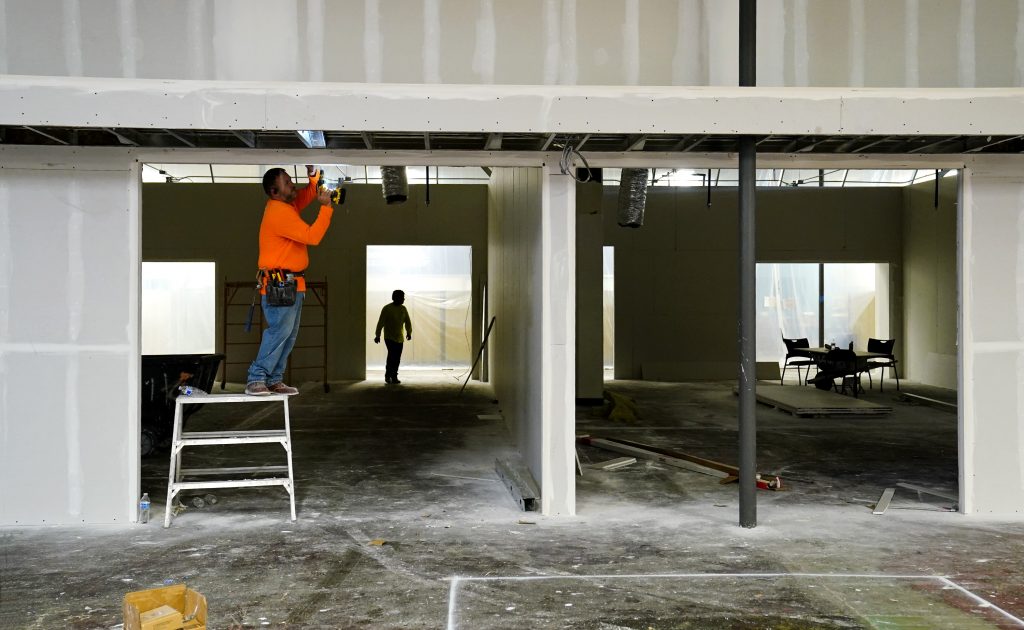
“The lab will be a real, functional, student-run machine shop,” said Smith, that will be dedicated to manufacturing industry parts made by GCU students.
Another feature, a tour space, “is going to be designed to really showcase the exciting things happening here at GCU, especially within the engineering and technology college,” he said.
Tour-goers will get a bird’s-eye view of the manufacturing floor from a mezzanine, and they’ll be invited onto the manufacturing floor. They’ll also see a GCU purple-colored helicopter – a real working helicopter – that Smith purchased so future machinists can see the bigger picture: that they’re just not making parts.
They’re making parts that could have an impactful life, like helping power a helicopter, and “we do make parts for helicopters,” Smith said.
College of Engineering and Technology Dean Paul Lambertson said he wants students to see that what’s happening at Lux is hands-on and boots on the ground.
“We’re here on the factory floor. Can you be more impactful than that?”
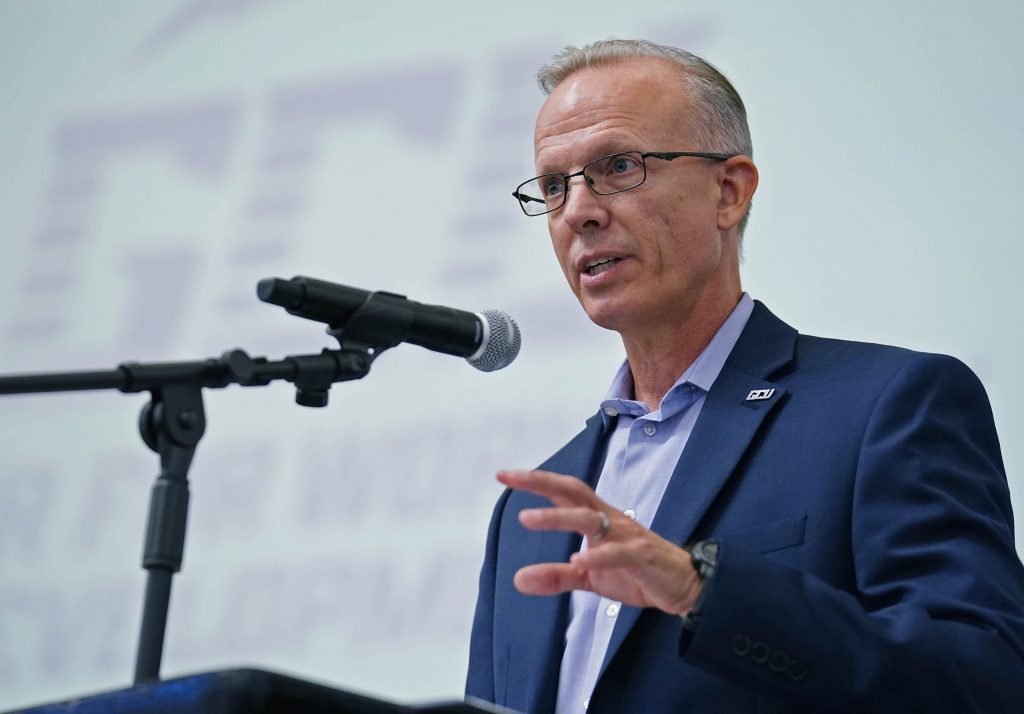
It’s in this factory ecosystem that Lambertson sees the worlds of academia and trades co-existing harmoniously – something he knows well, having worked in a factory during his time as an aerospace industry chief engineer and factory leader.
Not only will Center for Workforce Development students continue to work at Lux and get that hands-on training, but the college also will embed manufacturing engineering, industrial engineering and other students from related bachelor’s programs.
“What we’re doing with the factory is now we’re able to take our manufacturing trade students and our engineering students and our technology students and put them on an active factory floor,” Lambertson said.
“They’re learning by doing. They’re in the middle of it. That’s the game-changer.”
Added Smith, building that ecosystem of trades and academia, where book learning and hands-on learning meet, “It’s really cool. It’s part of a unique ecosystem.
“And when you can merge education with application, the product is really beautiful.”
Lux’s new space is a manifestation of how GCU approaches education.
Helping fill jobs in the trades isn’t something universities do traditionally. But Mueller stepped up when he heard from Rosendin CEO Mike Greenawalt about the electricians shortage, which led to the first program offered by the Center for Workforce Development.
When other universities questioned why, Mueller remained resolute in solving that workforce problem, emphasizing that not everyone needs four years of college.
“We are going to do this,” he said of trades education. “I know most people (universities) wouldn’t, but we are going to do this.”
Lambertson said, “How I share this with people is, one of the things that’s a separator for us at GCU is we share knowledge across a spectrum.”
Those in the university’s undergraduate cybersecurity certificate program complete their studies in six courses, students in the bachelor’s program three to four years, and master’s students in five years.
For those in the trades, they complete their courses in one or two semesters.
“That’s just the length of their program,” Lambertson said.
Seitz said how the university embraces every learner, from those seeking a certificate to others wanting to pursue a doctorate, “really goes along with our motto of Find Your Purpose. We’re not dismissing people because we see, ‘Oh, you’re not here for four years, therefore we don’t want your business.’ … The bottom line is, we’re here for everyone, and we’re meeting the needs of industry.”
As Lambertson puts it, “It’s not, ‘We’re a four-year university, and you’re going to do it our way.’ It’s, ‘Hi. We’re GCU. How can we help you find your purpose?’”
***
Mauricio Manrique did just that when he stepped onto the GCU campus for the first time.
He completed the one-semester, four-course CNC machinist certificate program, which included English and math courses bookended by industry-specific classes, two years ago, then punched in at Lux for his first machinist job.
Although he left the company for a few months to see what was out there, he quickly found his way back home, where he now works alongside Lux Quality Manager Joni Wisenbaker.
"When you can merge education with application, the product is really beautiful."
Weston Smith, CEO, Lux Precision Manufacturing
After a divorce and becoming a single mom, Wisenbaker supported herself and her son with 12-hour shifts, three days on, three days off, balancing working at night and going to school during the day.
That determination earned her an engineering technician degree.
“I fought hard for my degree,” said Wisenbaker, who spent almost 40 years in the manufacturing industry.
Wisenbaker had been retired for almost 10 years when she got a call from someone she knew during her years in the industry who now works at Lux.
“I have a job for you,” he told her.
When she heard that she would be teaching young machinists, hands-on, at a real working machine shop, she said, “(I loved) the thought of working with the kids and teaching kids the industry that I love because industrial machining is the backbone of America. It is the BACKBONE of America.”
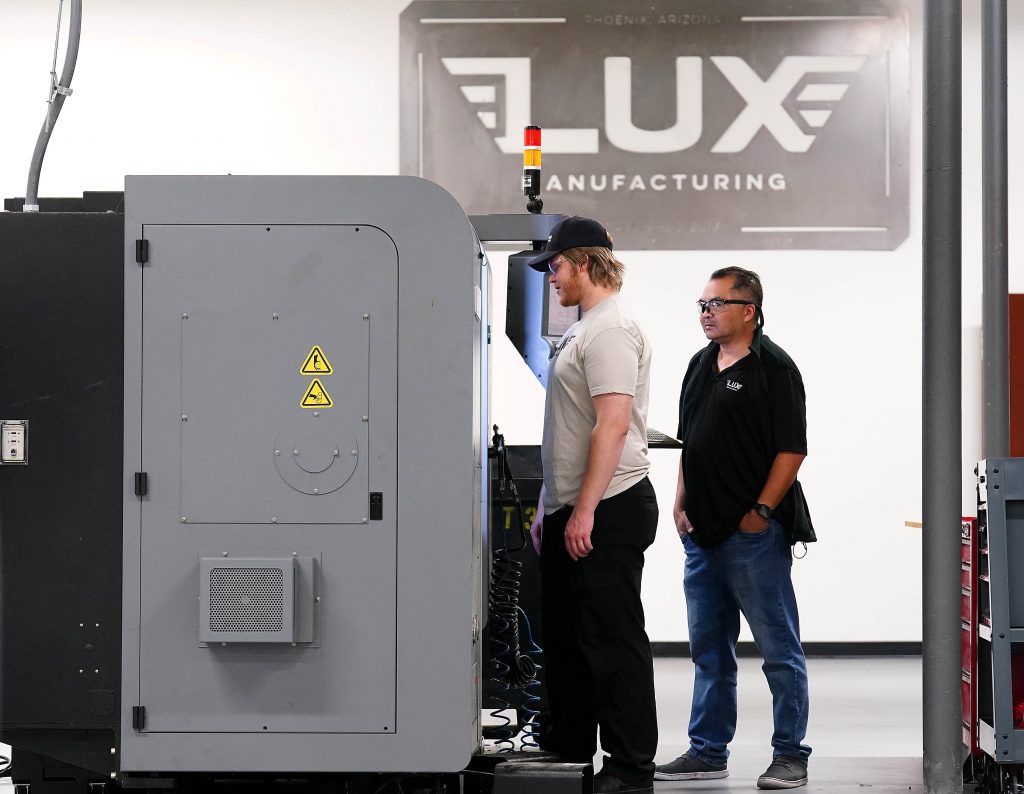
You can’t have that backbone without people like Wisenbaker, Smith said of the old-guard labor force who can make sure there will be a young guard to follow them.
“Manufacturing doesn’t start with machines. It starts with people,” he said. “I can add all the machines we want, but if you don’t have the people to run them, forget it.”
Said Seitz, “We need to expand or at least replace those who are leaving because, of course, all that skill and knowledge is retiring out. We need to backfill to get people trained so that manufacturing can stay open – not just to keep the doors open, but to expand and keep up with the demand.
“From the economic standpoint alone, the implications are huge.”
Manrique is grateful to learn from Wisenbaker and other mentors, the central cog in this factory learning ecosystem at Lux who have the knowledge and expertise to push this new wave of manufacturing forward.
“When you have people like that behind you, they can really elevate you to another level,” Manrique said. “I’ve really learned so much from them.”
Not that he isn’t happy when he sees students his age in GCU’s trades programs taking their place behind the CNC machines at Lux, where he was two years ago, and choosing the same path he did.
“When I see new students come in, I’m hopeful.”
GCU Manager of Internal Communications Lana Sweeten-Shults can be reached at [email protected].
***
Related content:
Phoenix Business Journal: It's about academics at GCU, but the university is also manufacturing a future in the trades
GCU News: Center for Workforce Development is growing, changing more lives