EDITOR'S NOTE: This is an article by Makenzie Stamets, a GCU professional writing student and a GCU Outdoor Recreation guide.
Story by Makenzie Stamets
GCU News contributor
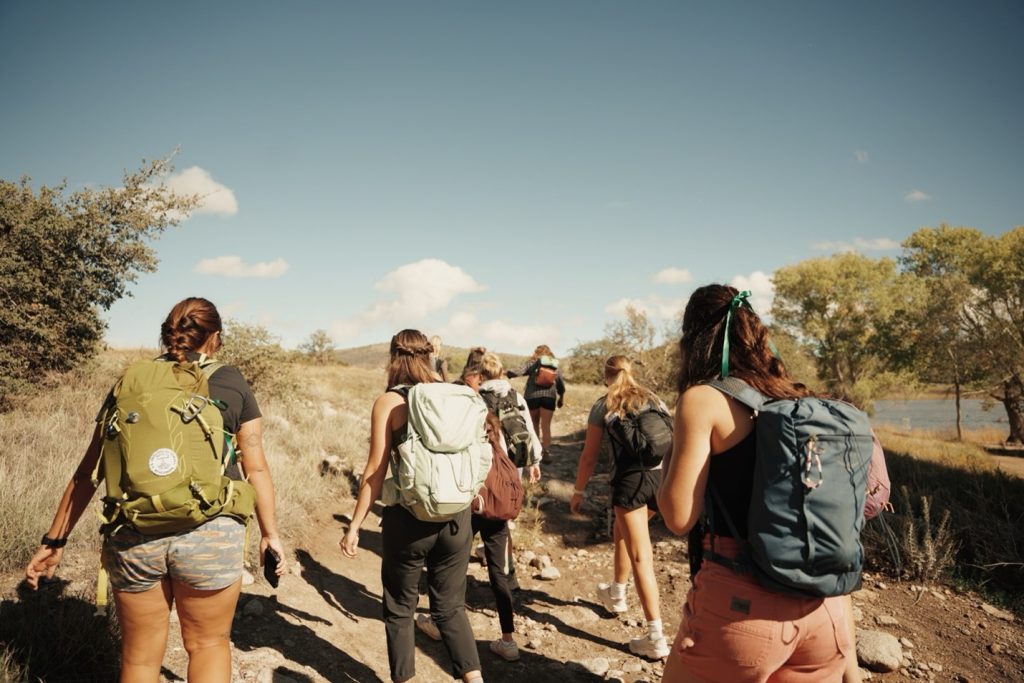
At the base of Arizona's Superstition Mountains, Hannah Lanchbury and Kate Halverson adjust the straps of their bags, geared up for a three-day, two-night backpacking trip.
They are responsible for guiding seven women with varied experience through 17 miles of heat and elevation. They carry the weight of leadership – and 40 pounds each of water and gear.
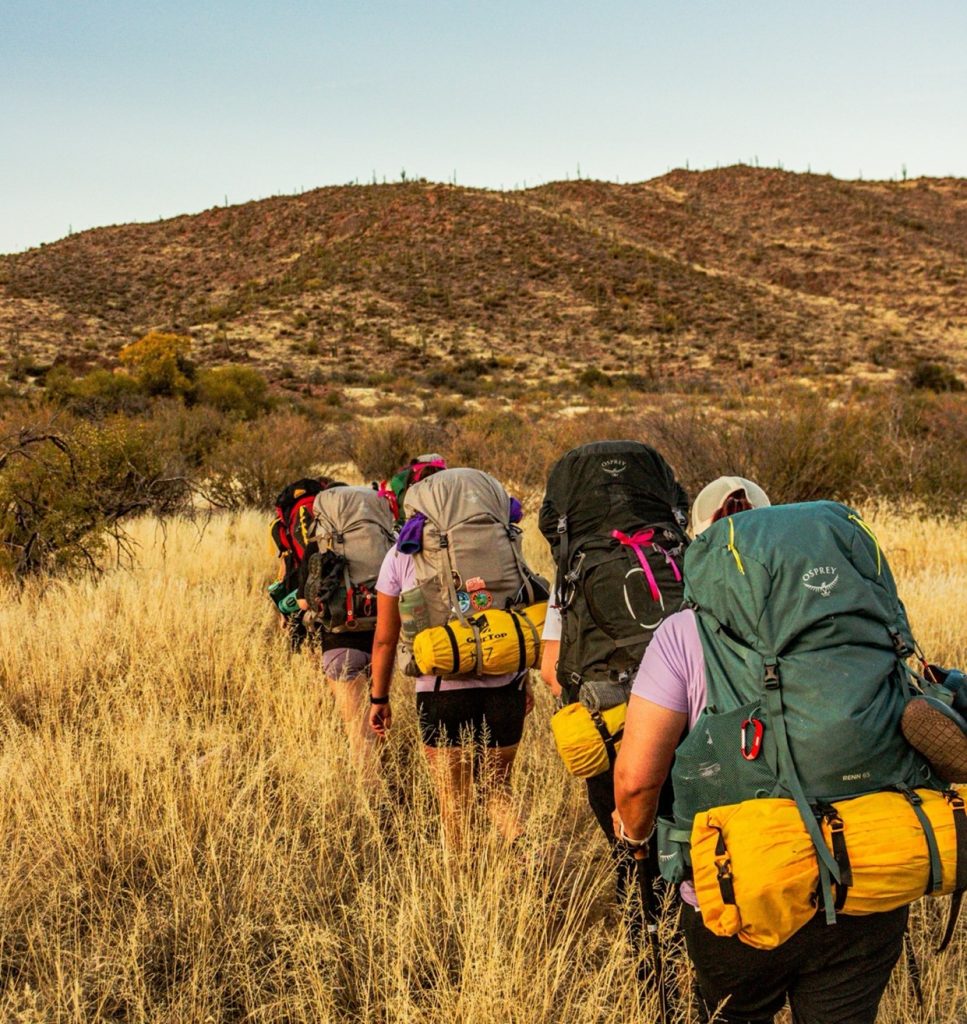
Lanchbury and Halverson are guides in Grand Canyon University’s Women in the Outdoors program, launched this academic year. Its goal is to lower barriers to entry for women in outdoor sports and equip them to lead with strength, confidence and resilience.
Lou Pratt, GCU Outdoor Recreation Assistant Manager, has a distinct vision for the women she mentors.
Pratt said the program builds up women to enter the workforce as capable leaders of the outdoor industry. WIO spans two semesters and begins with a camping trip focused on community building and goal setting.
Throughout the year, the group hikes, trains, climbs and grows together with monthly events that create a space where women feel comfortable and supported. At the end of the year, they complete a multiday backpacking trip.
The program fits into larger narratives beyond the college campus within the outdoor industry.
Data trends demonstrate that while women are getting outside and excelling, there is not yet equal representation in leadership roles.
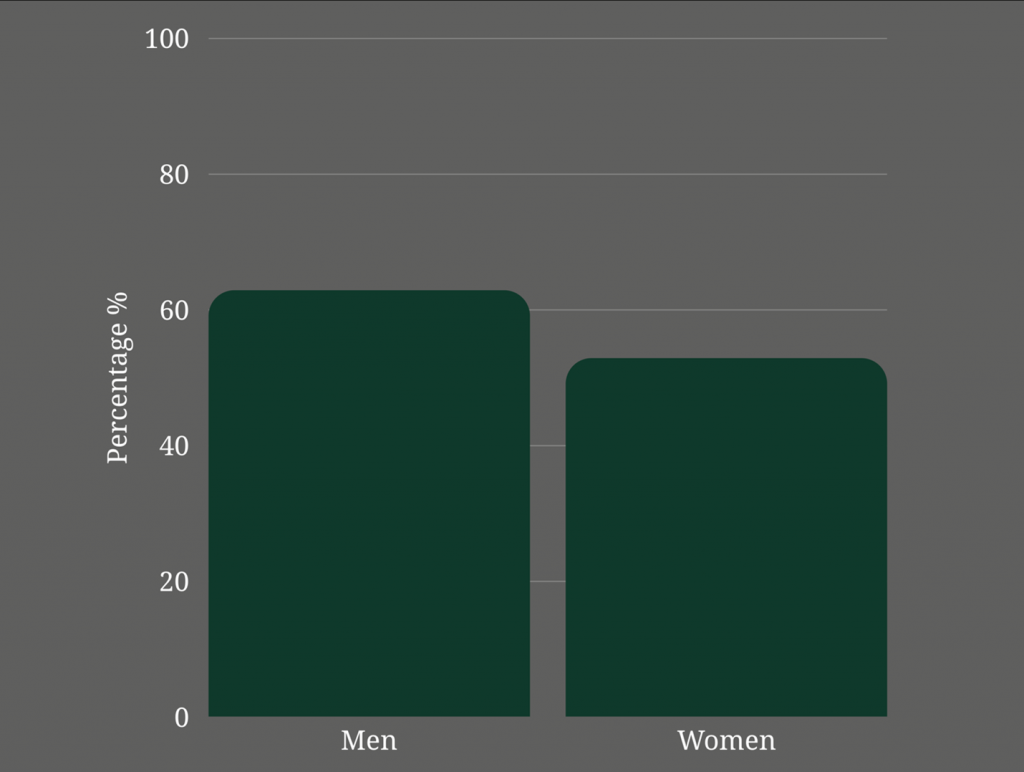
According to the Outdoor Industry Association, more than 181.1 million people headed outdoors to participate in outdoor activities in the U.S. in 2024.
In the study, 51.9% of American women participated and 63% of American men participated.
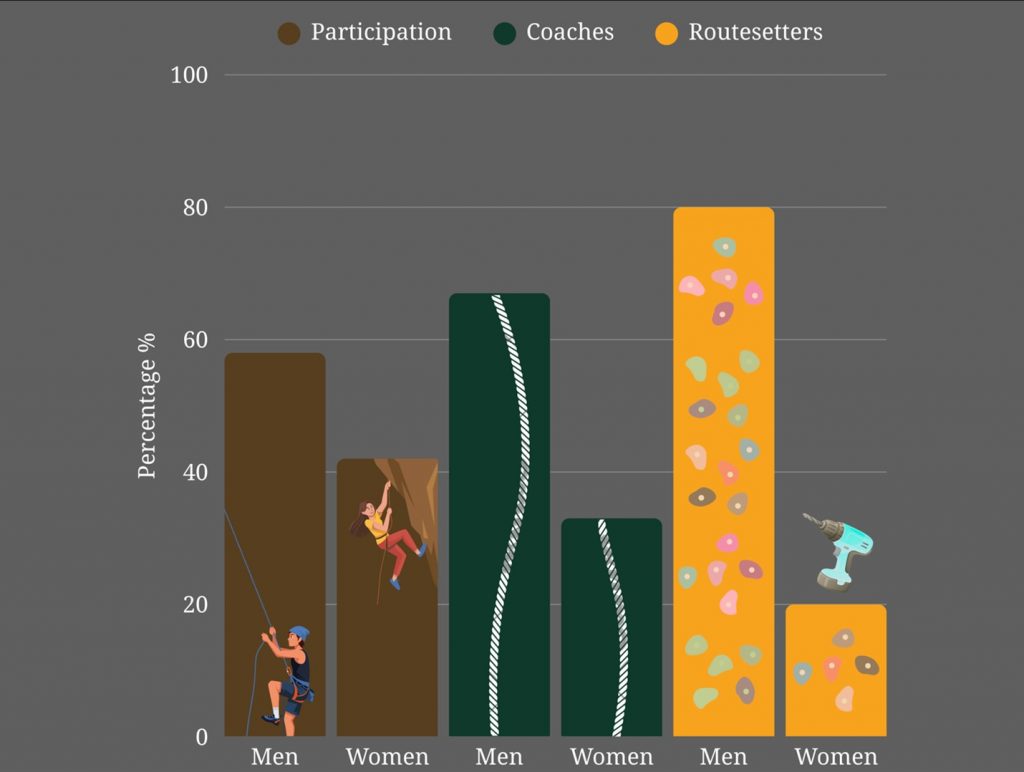
According to the Climbing Business Journal, in 2021, indoor climbing reached 5.6 million participants. Of those, Rock Spot estimates 42% were women.
At the highest level of sport climbing, a gap is shrinking between men and women in climbing performance.
The record for male sport climbing is held by Adam Ondra at 5.15d on the Yosemite Decimal System, the North American rating system for hiking, scrambling and rock climbing difficulty, with 5.15d indicating a hard, technical sports climb. In 2025, Brooke Raboutou set the women’s record at 5.15c, placing her within one letter grade of the hardest climb ever completed.
Coverage by climbing news outlets described Raboutou's ascent as further evidence that the performance gap at the elite level is narrowing.
For other outdoor milestones, such as summiting Mount Everest, women reach the same benchmarks but often years later because of access and cultural barriers.
For example, Edmund Hillary and Tenzing Norgay first summited Everest in 1953, while Junko Tabei summited in 1975.
According to National Geographic, women were long excluded from major expeditions, denied sponsorship and discouraged by popular beliefs that high-altitude climbing was unsuitable for the female body. These structural barriers delayed women’s entry into the world’s highest-level mountaineering.
While about 42% of indoor climbers are women, Rock Spot estimates that only one-third of coaches and one-fifth of routesetters, who design and build climbing routes on indoor walls, are female.
Fewer than 2% of International Federation of Mountain Guides Associations guides and about 8% of American Mountain Guides Association certified guides are women. Yet, women have summited Everest, completed the Seven Summits and continue to grow in recreational participation.
In a survey from Climbing Magazine, 76% of women said someone had assumed they were weaker or less experienced because of their gender. Around 65% of women reported an experience where they felt uncomfortable at a climbing gym, compared to 29% of men.
Dr. Karren Warren completed a study about the impact of hidden curriculum in outdoor programs, where unspoken norms, gender-biased language and practices subtly framed men as natural leaders and women as helpers.
Hidden narratives
According to Warren’s study, in outdoor settings, women’s technical decisions are often more heavily scrutinized, they are assigned emotional support roles or depicted in media as less physically capable or adventurous.
Gender-biased language can subtly undermine female leaders, such as saying they are “too emotional” or “soft.” This language, even teasing, can reinforce a narrative that assume women need extra help or are less capable.
These experiences can place women into a box of cultural norms that creates barriers to full participation and entry into the outdoor industry.
Warren addresses the pivotal role of higher education programs for entry into the outdoor adventure sphere. While women’s trek into the outdoor industry may differ from men, strong female mentorship can provide an example of advanced technical skills and physical capability.
This mentorship can develop a culture where girls are encouraged to choose for themselves their path in the outdoors and are not assigned a cultural narrative or box.
The women of GCU Outdoor Recreation aim to be the next generation of leadership.
Meaningful struggle
Surrounded by photos of the National Parks she has visited, Halverson shared her experience in outdoor leadership.
Halverson balances being a full-time student with adventure guiding. Previously, she worked as a raft guide over the summer.
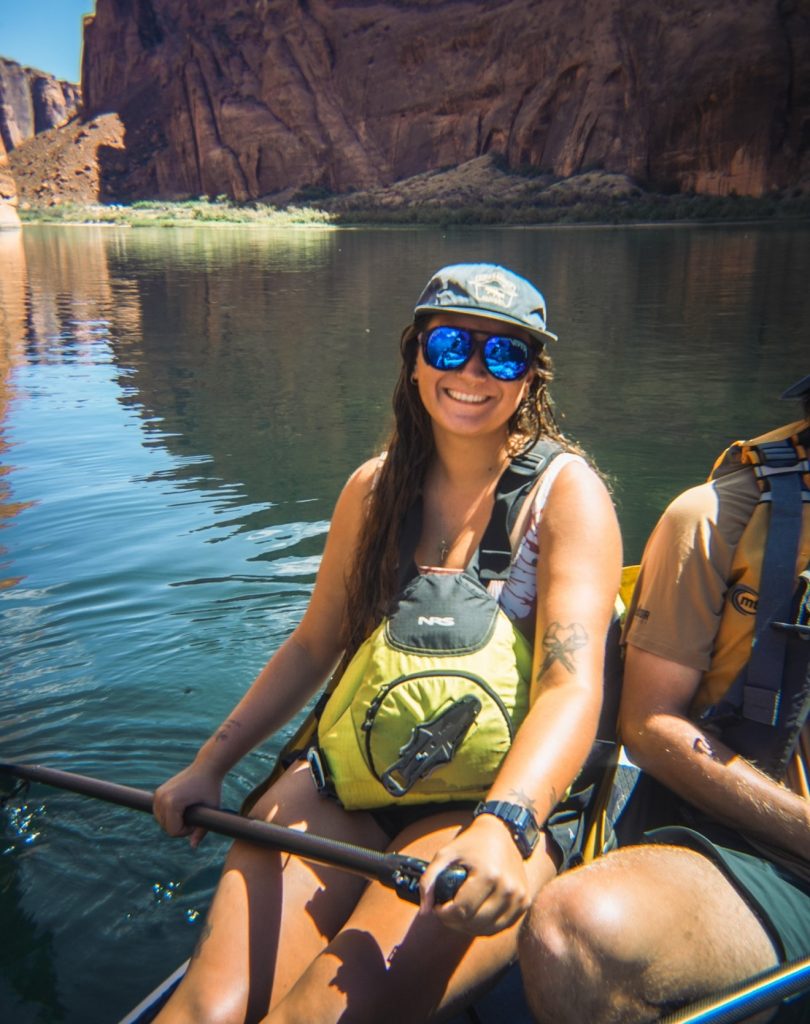
Growing up in Colorado, Halverson’s family was her entry into the outdoors. She said she was self-conscious growing up. The outdoors seemed daunting, but she had support working through her fears.
Now, her passion is to lead other women into a space where they can work through insecurities by embracing growth from meaningful struggles alongside a community with a common goal.
Showing her brightly colored fingers, Halverson said when she was younger, she was embarrassed to paint her nails.
“You have to let go of things that are embarrassing about yourself,” Halverson said. “It’s really hard to worry about what you look like when you have 50 miles of walking that you need to be doing.”
The outdoors has developed her ability to make sound decisions quickly, to make others comfortable in challenging situations and to take ownership for mistakes. Halverson’s goal is to lead people past their comfort zone so they can experience growth.
She seeks to challenge media narratives and gender-biased language in the media, such as the phrase “just a girl.” Especially for young women that she mentors, Halverson wants them to learn to push themselves.
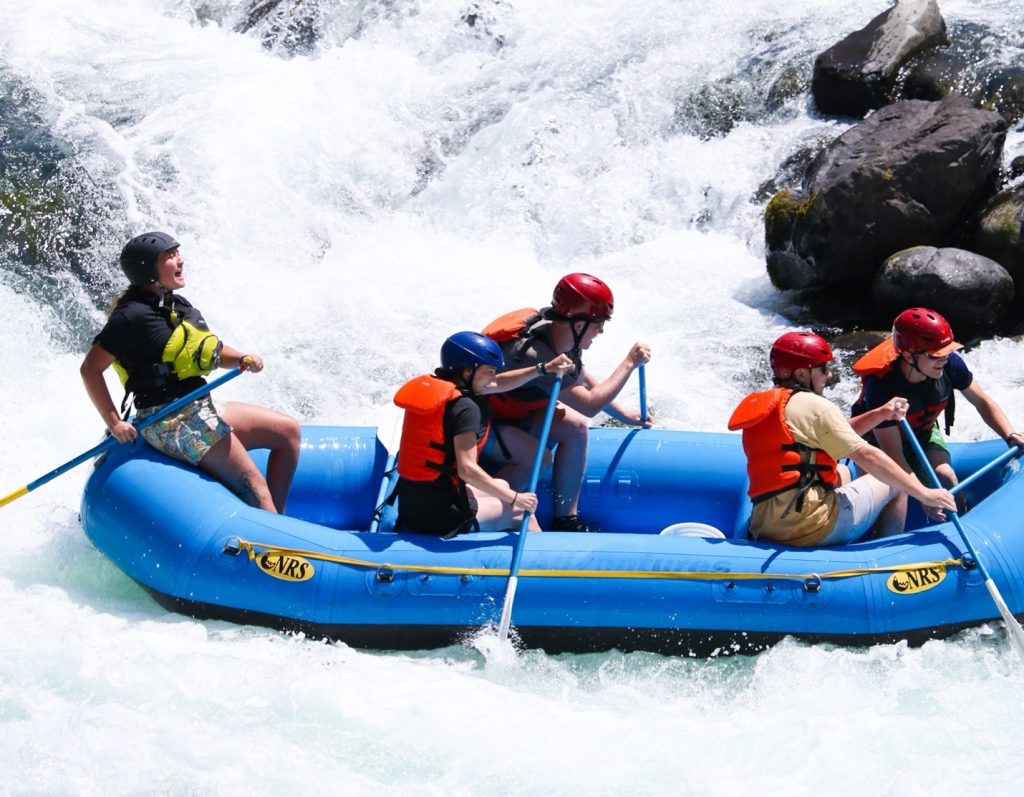
Working in the summer as a whitewater rafting guide, Halverson loves the technique rafting requires and the way you can excel at it despite size or physiology.
On the rapids, she experienced pushback for her decision-making, though she was more informed and experienced. She saw this happen to her fellow female guides but did not see her male coworkers get made fun of in the same way.
Halverson said that as an adventure guide, she has had similar experiences of being disrespected but has learned to confront these situations.
Halverson said she has been impacted by the strong leadership modeled through GCU Outdoor Recreation staff and hopes to empower the people on her trips in the same way.
“I really want women to see themselves as capable. It's hard to believe the narrative will change about women. But I really think we can view ourselves differently, and that will impact individual men in our lives,” Halverson said.
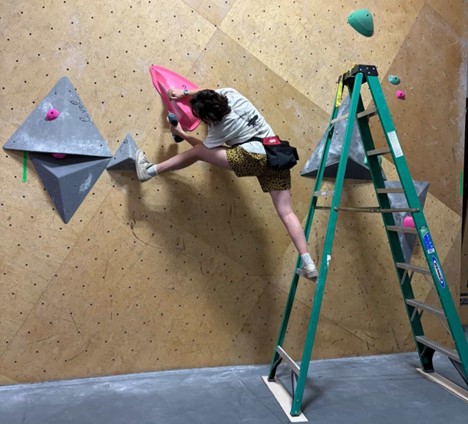
Kendall Miller, head routesetter at the GCU Climbing Wall, sorted through a cart of bolts with her light blue power drill strapped to her harness.
After placing the final hold, she pulled on her climbing shoes to try the bouldering route.
Miller got into climbing five years ago, and she said her first experience with setting at her home gym in Colorado was incredibly positive.
Under that gym’s leadership, Miller was allowed to learn through trial and error. Her mentors trusted her, which allowed her to throw herself into the industry and focus on growing through experience.
Miller contrasts this with a later experience at another gym where she said she was belittled, criticized and treated with less respect than her male coworkers. Miller said this experience damaged her confidence, which took time and effort to rebuild.
Her experience in the industry has grown her appreciation for communities that provide people with the chance to learn and grow their passion for outdoor sports, regardless of ability, experience or gender.
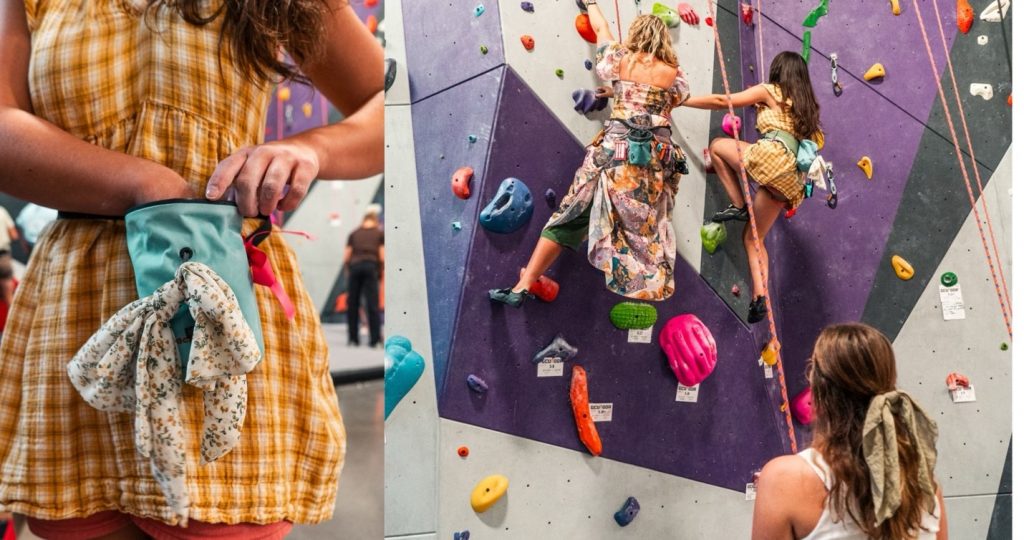
In addition to the mentorship offered through the WIO program, the GCU Climbing Wall has women-only climbing nights.
“It builds a really solid female community. That’s going to translate to when they’re out of school and putting that into a corporate gym, or when they’re coming to the gym at a normal time and standing up for who they are,” Miller said.
Pushing Limits
Lanchbury is majoring in exercise science in addition to working as a head adventure guide for GCU Outdoor Recreation.
On the first camping trip for the WIO program, she led a workout at different stations at the campsite.
Lanchbury shared her takeaways from the book “Better Faster Farther” by Maggie Mertens, which explores the way women’s running has challenged old science.
According to Mertens’ research, historically, women were treated as fragile and discouraged from exercise. This developed a cultural narrative that women’s bodies are weaker and in need of protection. Due to this, women started competing later for a faster mile time.
Despite having a late start in the evolution of training and performance, women continue to push people’s understanding of their physical limits. Especially in endurance events, women are contenders for world records.
Profound unity
Cole Hanson, manager of Outdoor Recreation, shared his experience seeing gender bias in the outdoor industry.
As a raft guide, Hanson said, people would request his boats over women with more experience and skill because of his gender. At REI, customers would seek his opinion over his female boss.
Hanson’s leadership goal is to exemplify a different kind of culture on campus.
“It starts with us as a team,” Hanson said.
This includes empowering women to have equal roles, not publicly questioning their leadership and shutting down demeaning comments.
“The biggest thing is calling them up. You can be this. You can do this. Don’t put limits on yourself,” Hanson said.
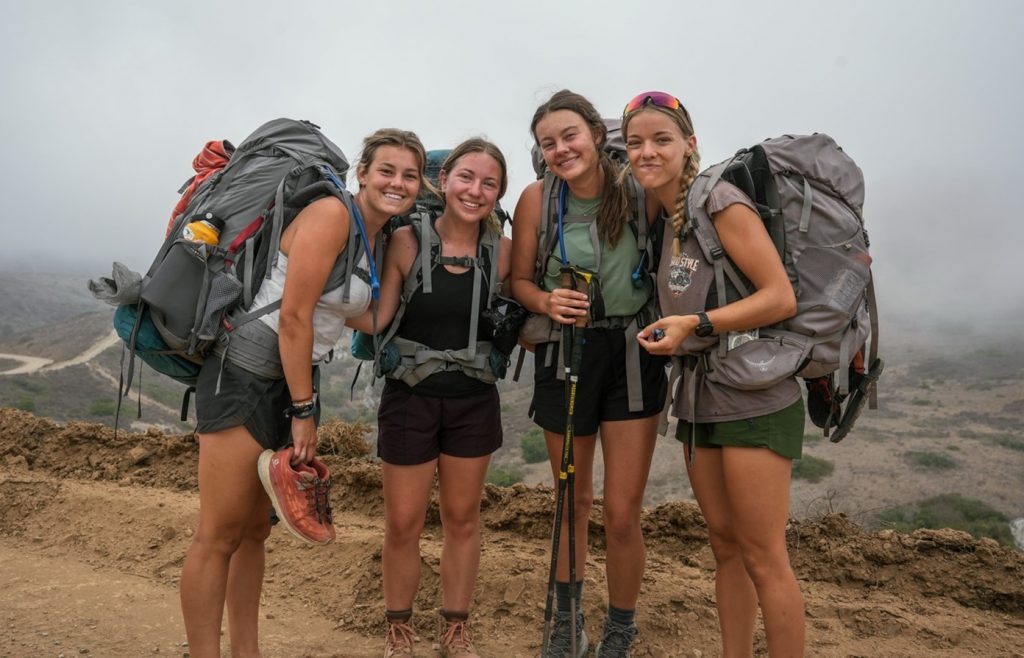
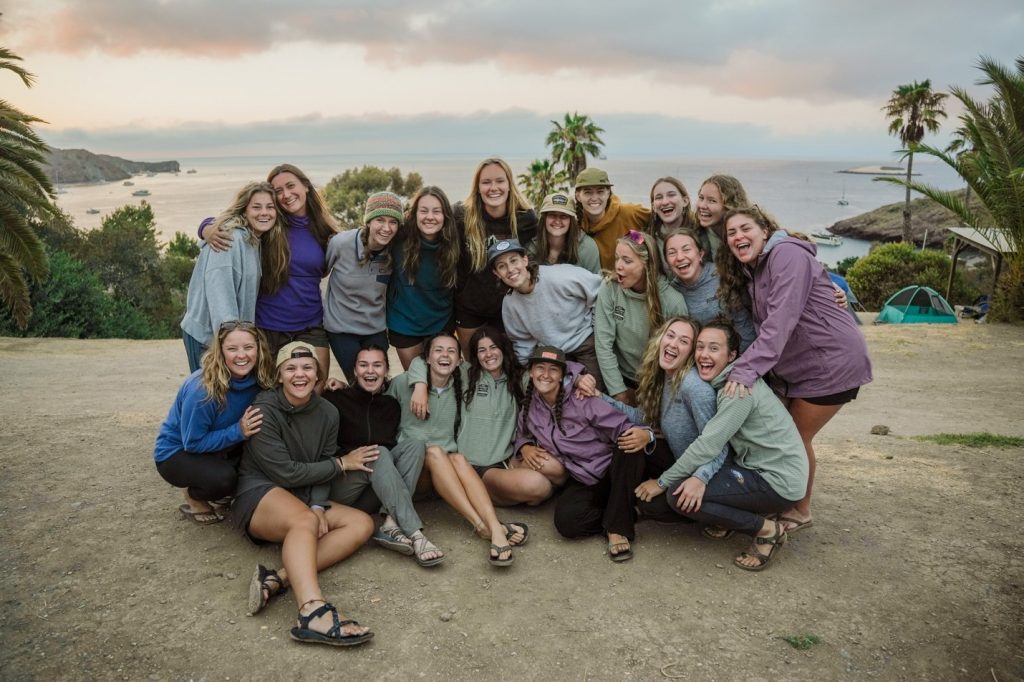
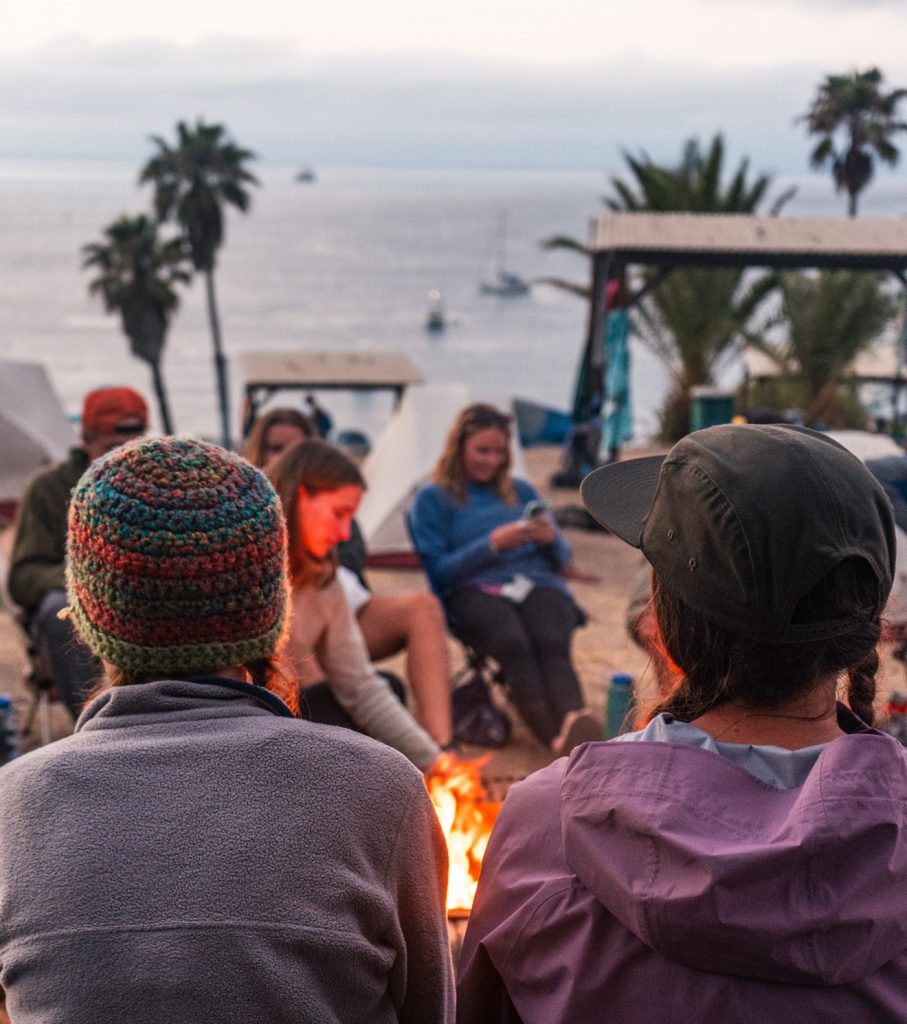
Overlooking a remote beach on Catalina Island, a group of girls rest in a circle after hiking 18 miles.
Halverson pulls from her pack a game of Bananagrams.
A silver thread
In the early weeks of August, Lanchbury started training for her first year as a guide. During that training month, she pushed through feeling inexperienced and unequipped for the role.
Supported by her team as they were backpacking and camping for multiple weeks, the work began to feel natural as she grew into the role.
A month later, at the rim of the Grand Canyon, a female participant shared with Lanchbury that it was her first time camping.
Lanchbury helped her collect rocks to dig stakes into the ground and set up guidelines to protect the tent from rain. She shared with the freshman her own experience entering the outdoor industry and encouraged her that there is a place for her, too.
Lanchbury said she grieves for young girls and young women who do not think they belong in the outdoor sphere. To leave women out of leadership roles, she said, is like working with one hand behind your back.
Two years later, the woman she encouraged is a guide and founder of the WIO program.
“It's cool to see this silver thread,” Lanchbury said. “It’s gone through the women who were on the team before me who really invested in girls, who then invested in other girls and now the next generation.”
You can reach GCU professional writing student Makenzie Stamets at [email protected].