Photos by Ralph Freso/ Thursday slideshow / Livestream
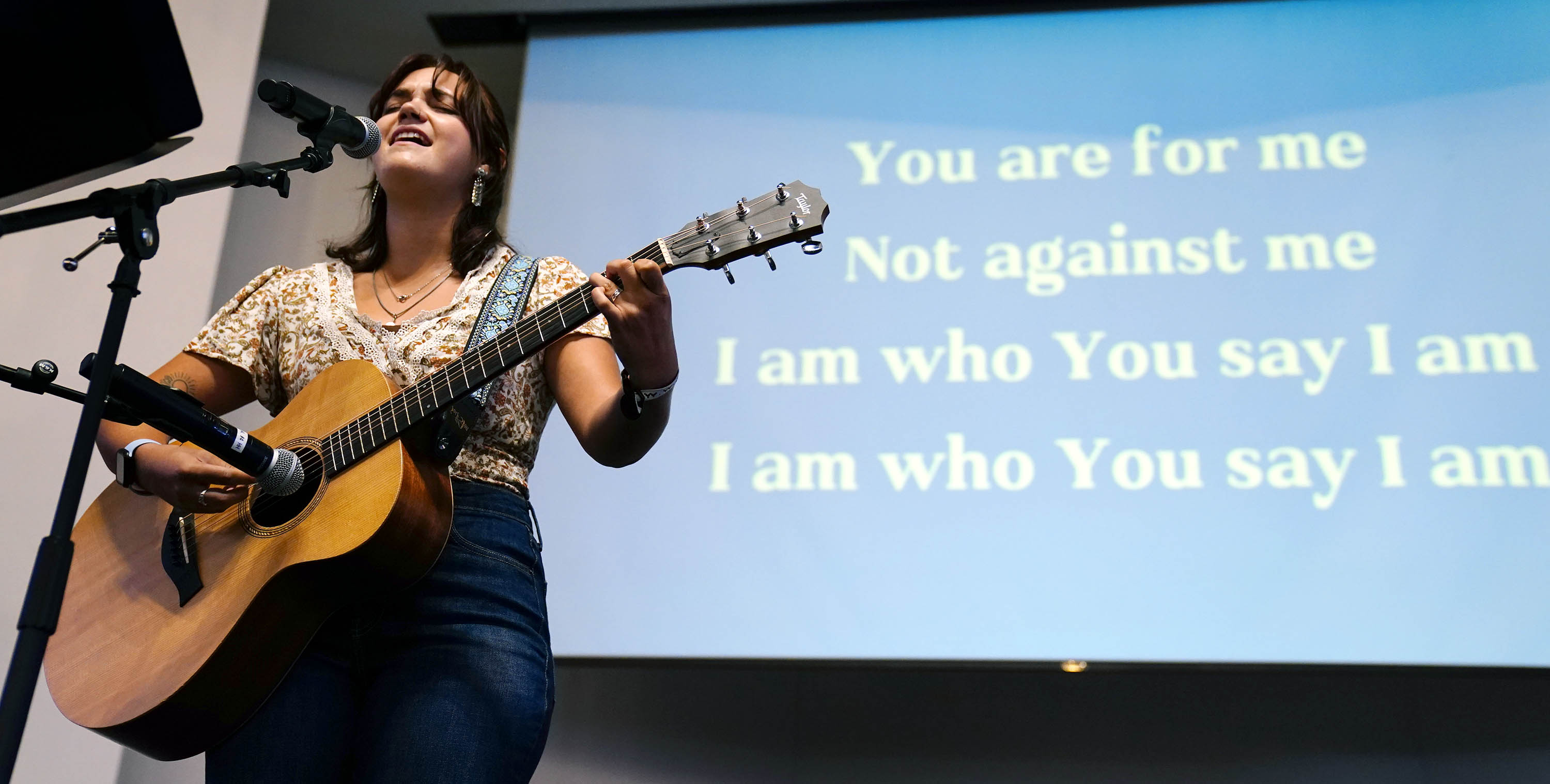
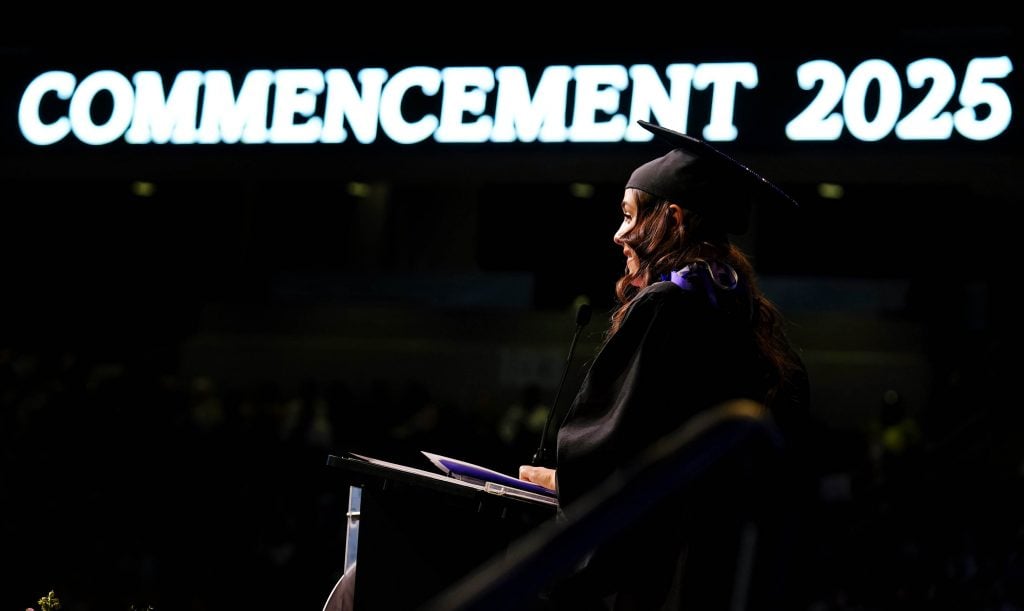
This is the story of how a shattered dream meant a calling for Savannah Rosengreen.
The Tacoma, Washington, teenager, and Grand Canyon University student commencement speaker at Thursday's ceremony, loved to sing and act. She could see her name in the lights of Broadway. Her God-given talent for performance defined her path to the future. That is, until her choir director mentor dropped five words on her like boulders off a cliff: “We don’t need you anymore.”

It all started with the COVID-19 pandemic in her sophomore year. Her high school switched to online education, including the choir. Rosengreen was in the elite jazz choir, traveling to performances in and outside of Washington state. It was soon apparent that singing to a computer didn’t work for her.
“I decided to take a health class instead because I needed the credits,” she said. “It's just a completely different ball game when you're online trying to participate in a choir. Respectfully, I said, ‘Hey, I'd love to come back when we're all in person this year. But is it OK if I take this health class?’”

With that assurance, she settled into the pandemic-era online health class and waited to be part of the jazz group once again when pandemic isolation ended. Later that school year, after Rosengreen returned to the classroom, she tried to re-enroll in choir.
She remembers the heartbreak, “That's when (the jazz choir director) said, ‘You know, we actually don't need you anymore.’ It was my senior year. So it was just kind of a blow.”
The lights of Broadway dimmed to black for her dreams of the musical stage.
But one thing Rosengreen’s faith taught her is resiliency.
“What felt like rejection at the time was actually God redirecting me,” she said.
Over time, she discovered her love for teaching through mission work and children’s ministry. She said it was a revelation.

“I realized I could combine my passion for theater and music with teaching in a classroom,” she said of pursuing her bachelor's degree in elementary education. “Now I get the best of both worlds.”
Growing up in a faith-filled household, active in church, and hearing her parents share the gospel at home, she faced faith challenges when she attended public schools.
“I think knowing that going into a public school arena was definitely foundational and crucial to my walk with Christ,” she said. “I had a lot of friends that would go to Sunday school ... and they would say that they knew Jesus too. Yet it wasn't quite all there.”
She found it essential to strengthen her faith. This was especially true following those shattering words: "We don't need you anymore." They became the foundation for Rosengreen’s teaching philosophy, which she intends to bring into her classrooms.
“Entering the teaching field reminded me how powerful a teacher’s words can be,” she said. “A single impression, whether positive or negative, can change the entire outcome of a child’s confidence and future aspirations.”
Drawing on her experience and discussions with others, Rosengreen said she learned that teachers play significant roles in the classroom beyond teaching.
“Students model their teachers, remember their words,” she said. “They stow in their heart for a lifetime how (a teacher) made them feel.”
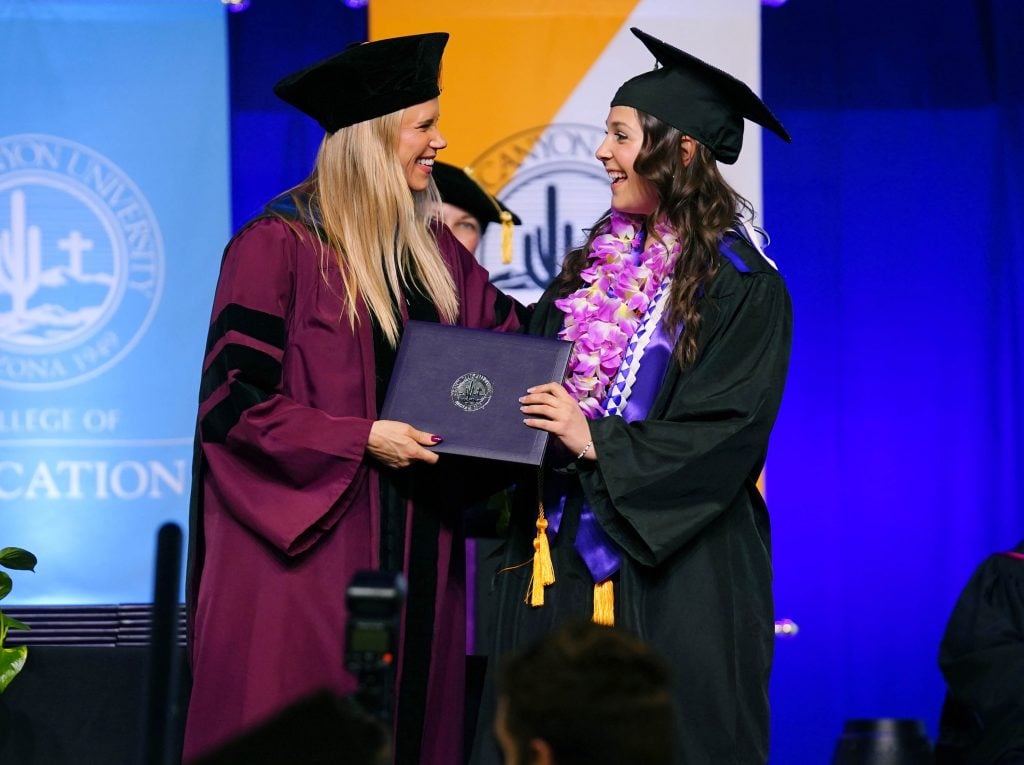
To be the model students remember, courage and kindness became watchwords. This was the lesson she learned from her choir experience and how that undermined her confidence in her dream.
“Courage helps us face challenges head on, pushes us to advocate for ourselves, and enables us to step outside our comfort zones to shine our light for others,” Rosengreen said. “To display kindness is to pay special attention to those pushed (to) the outskirts, to bring light to the hopeless, (and) to instill purpose in those who feel alone.”
She learned to find the courage to act on faith and discover purpose in life. Rosengreen wants to be someone who makes a lasting impact on others’ lives. She said that it’s something you can see if you look.
“Everyone wears an invisible sign,” according to Rosengreen. “It says, ‘Make me feel important.’”
She believes that people who look for those invisible signs help others find purpose. She wants to encourage others so they believe they are important. To find her purpose, she left the rain and clouds, and the forests and greenery of Washington, for sunshine in the Arizona desert and GCU.
“(College) was my time to flee and do my own thing,” Rosengreen said. “I'm so glad I went to school in a place that had sun because I think if I (had) gone to school at home, I would have been really antisocial and not wanting to go outside.”
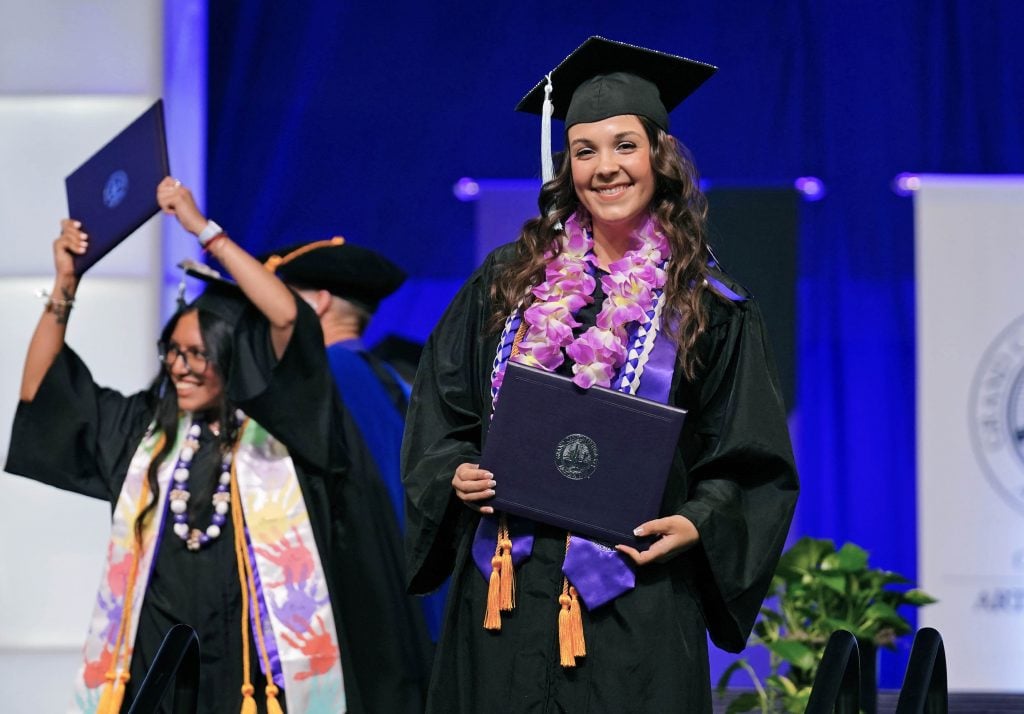
Her experience at GCU led to healing from the stinging choir experience, finding family among her friends and teachers, and opening her heart to strengthen her faith.
After graduation, Rosengreen heads back to Tacoma to student-teach third grade under the mentorship of an old family friend. She’s returning home, but she is not the same young woman who started college in a faraway city. She left with a hope and returns with a mission..
“I love the environment (in Washington),” she said. “It's a huge opportunity to share faith. I know that it's not very prevalent there. It will definitely be good to share the gospel there because people need it.”
GCU News writer Eric Jay Toll can be contacted at [email protected]
Related stories:
GCU News: Commencement speaker talks the walk, from war-torn Syria to GCU
GCU News: Grad earns his cybersecurity master's degree while living in his car
GCU News: She went back for her grandchildren – and found herself along the way
GCU News: Online student goes from single Latina mom to doctor