Photos by Ralph Freso
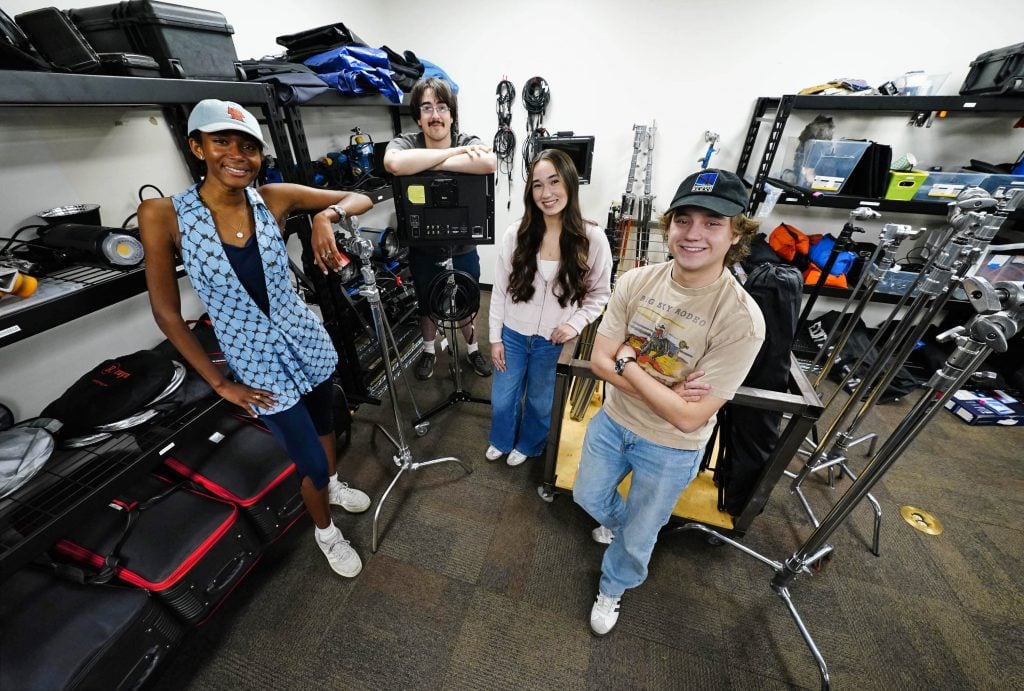
Grand Canyon University junior Cedric Tinard had one of those anxious moments walking into the second day of class after missing the first. The instructor hit them with this:
“How are we feeling about the films we are making?”
What?
Tinard soon learned his Storytelling for Social Impact class under adjunct professor of digital film Lynn Pellistri had already started work with just a few weeks to finish a short documentary to be shown at February’s Stewardship in Action Conference at GCU and at the Skyfire Environmental Film Festival in Mesa March 27-29.
“It was like a dagger,” he said. “But it was fun. You just gotta get a film done. I think she did it on purpose.”
It’s not going to be perfect, but it’s a common timeline in film production, added Erin Stenzel, his teammate on the film “Changing Lives One Wheel at a Time.”
“One of the things I really admire about this college is that it gives you that sink or swim mentality, but that’s what the industry requires, so they are prepping us for the industry,” she said.
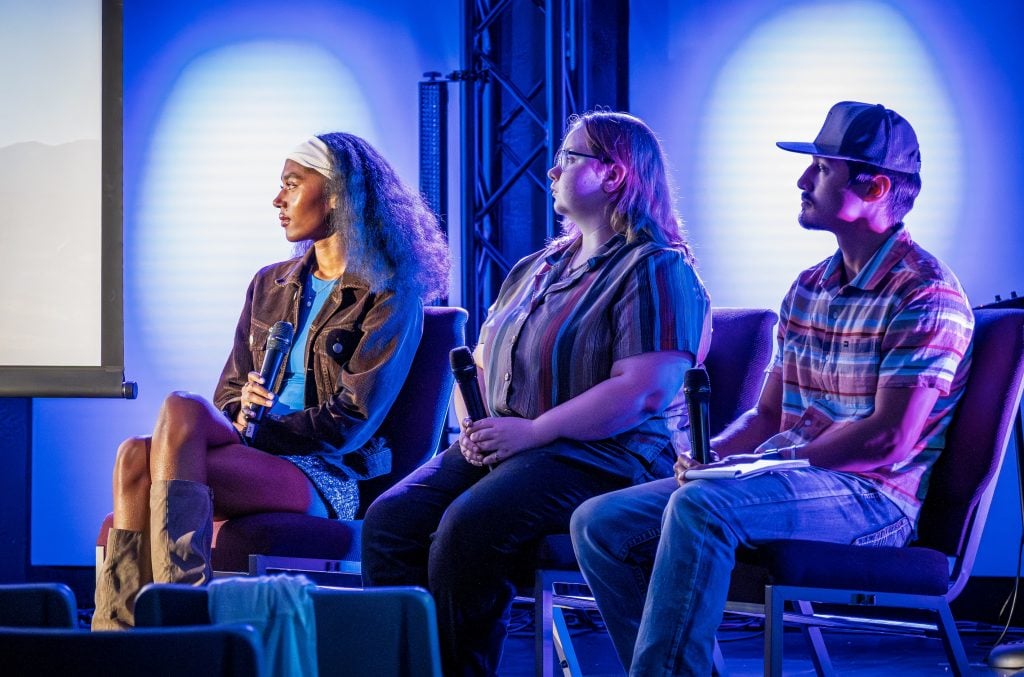
Tinard, who wants to work in a big Hollywood studio as a director or producer, loved that when they started the project there were, in his estimation, “six-minute classes,” when Pellistri told them to get busy making a film, no time to talk about it.
“If you’re sitting and watching a screen of a famous director telling you what to do, you’re just not out there making movies at the end of the day,” he said.
Their film, with teammates Ryan Goff, Kyler Johnson and Genevieve Foster, showcased GCU’s CityServe and its new program of fixing up damaged electric bicycles donated by Lectric eBikes of Phoenix to give to folks in the community who face transportation barriers.
It presented some real decisions in the storytelling, such as what to leave out to squeeze the story into a five-minute film. For example, the omitted details on Lectric as a hugely successful GCU alumni-owned business to keep the focus on the impact on one man.
The filmmakers felt like they hit that impact by telling the story of Colin Sellers, who used one of the ebikes to get to work, go to therapy and to see his son because he didn’t have a driver’s license.
Such a small thing can be life changing, Sellers told the filmmakers.
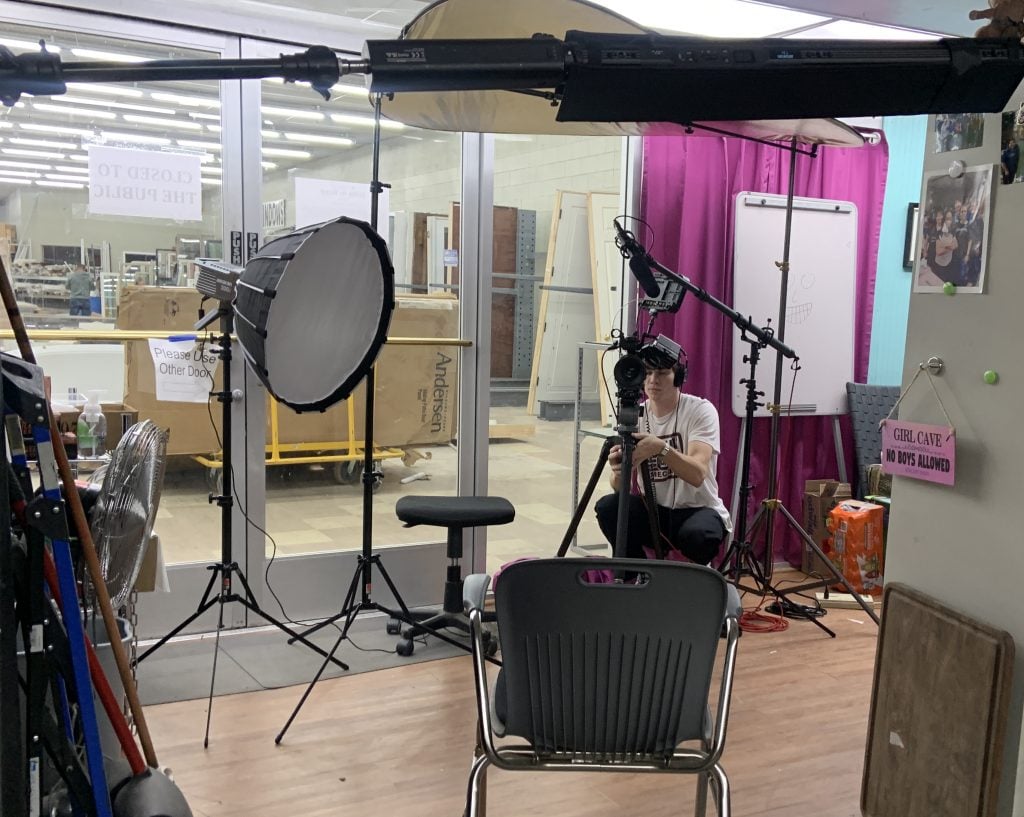
Pellistri, who owns a digital media business serving largely nonprofits, urged them to dive deeper into that emotional impact and not worry about the technology and the gear.
"Technical choices on set should enhance the story, not compete with it," she said.
But she chooses not to micromanage their projects, letting the digital film students work their way through it.
"Years of experience has taught me how you to structure an interview to get the story and the emotion," she said. "They learn and I’m letting them learn.”
A second team of Emmalee Yamaguchi, Brooklyn Jones, Garrett Carpenter, Henry Graybeal and Jackson Clune made the film “Foundations of Sustainability,” telling the story of the Outdoor Recreation Campus Garden and how learning to grow your own food can lead to self-reliance, a healthier planet and better mental health.
Jones said they wanted to simplify a complex story, teaching sustainability in a garden and showing it can have long-term impact.
“What did we want people to take away from this? This isn’t just something that they watch and forget about, so we centered around the end, taking the story forward, whether it was students taking classes in the garden or those who are inspired to create their own garden at home,” she said.
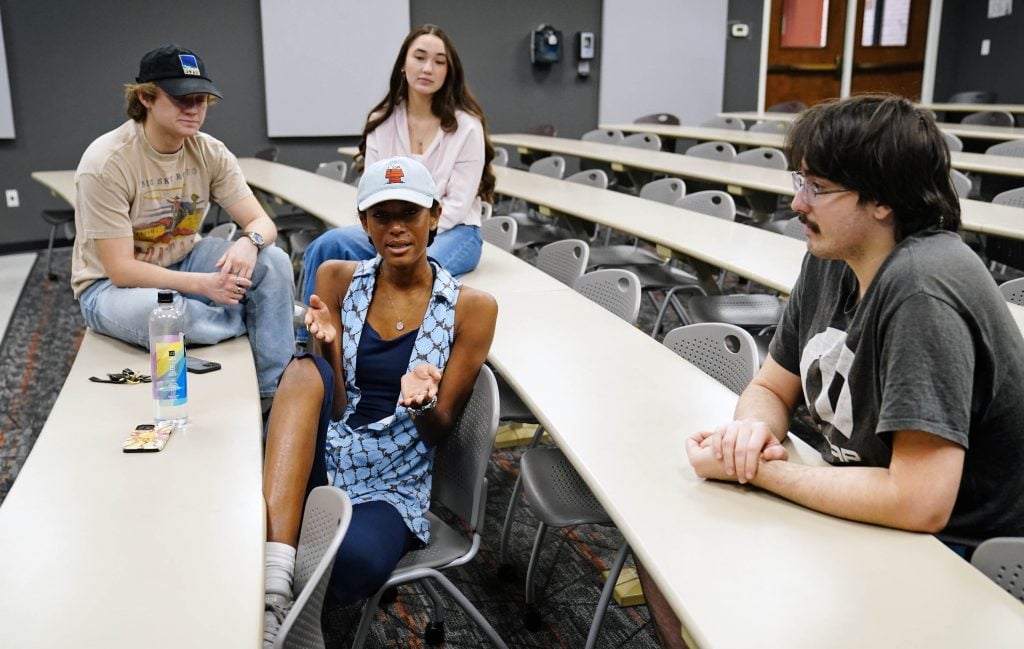
They interviewed students who shared how they learned to be self-sufficient, cook with produce or help their own mental health.
“The big point is that it starts small,” Graybeal said.
At first, some thought the environmental subject unappealing for a documentary. But it turned into something they learned from and cared about. It was deeper than just telling people to use fewer plastic bags.
“When you spend time with passionate people, you kind of just become passionate about the same things,” said Graybeal, revealing an advantage of a career in such reportage.
Foster said she had a growing school pride for what the university is accomplishing in these programs, and Tinard said he realized that a small documentary can help people learn how to give to others.
“Something I took away from this,” added Jones, “is we are called to steward the earth. I feel like it was instilled in me in a deeper sense.”
Pellistri said the students are an example of the program’s growth she has witnessed in her seven years at GCU. Students now don’t just come with aspirations for film careers, but as broadcast journalists, like Jones, or marketing professionals for corporations or nonprofits.
“It’s fascinating to see how everybody can use the art of just creating a story because everybody needs it now,” she said. “You can’t just put a memo up you’ve got to connect with people.”
Stenzel, who is from Southern California and grew up surrounded by the film industry, said it rekindled her love of the art.
“I’ve gotten to know so many different people and hear so many different stories,” she said. “You realize its more than just what we see through social media. I like being able to have the opportunity to tell the stories of people who maybe don’t their story told very often. It’s such a special opportunity to have.”
Grand Canyon University senior writer Mike Kilen can be reached at [email protected]
***
Related content:
GCU News: Sundance makes the cut in inspiring GCU film students to seek new opportunities
GCU News: Campus film series explores the comic theology of the Coen brothers