Grand Canyon University entrepreneurial students who wonder about the potential of small businesses only need to look at Germany and its Mittelstand.
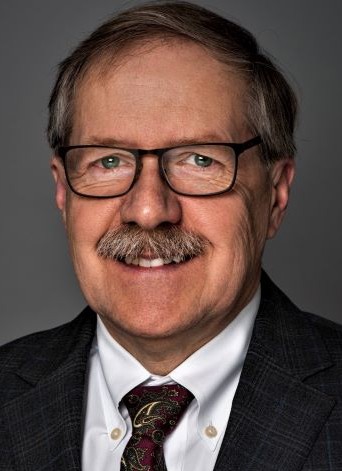
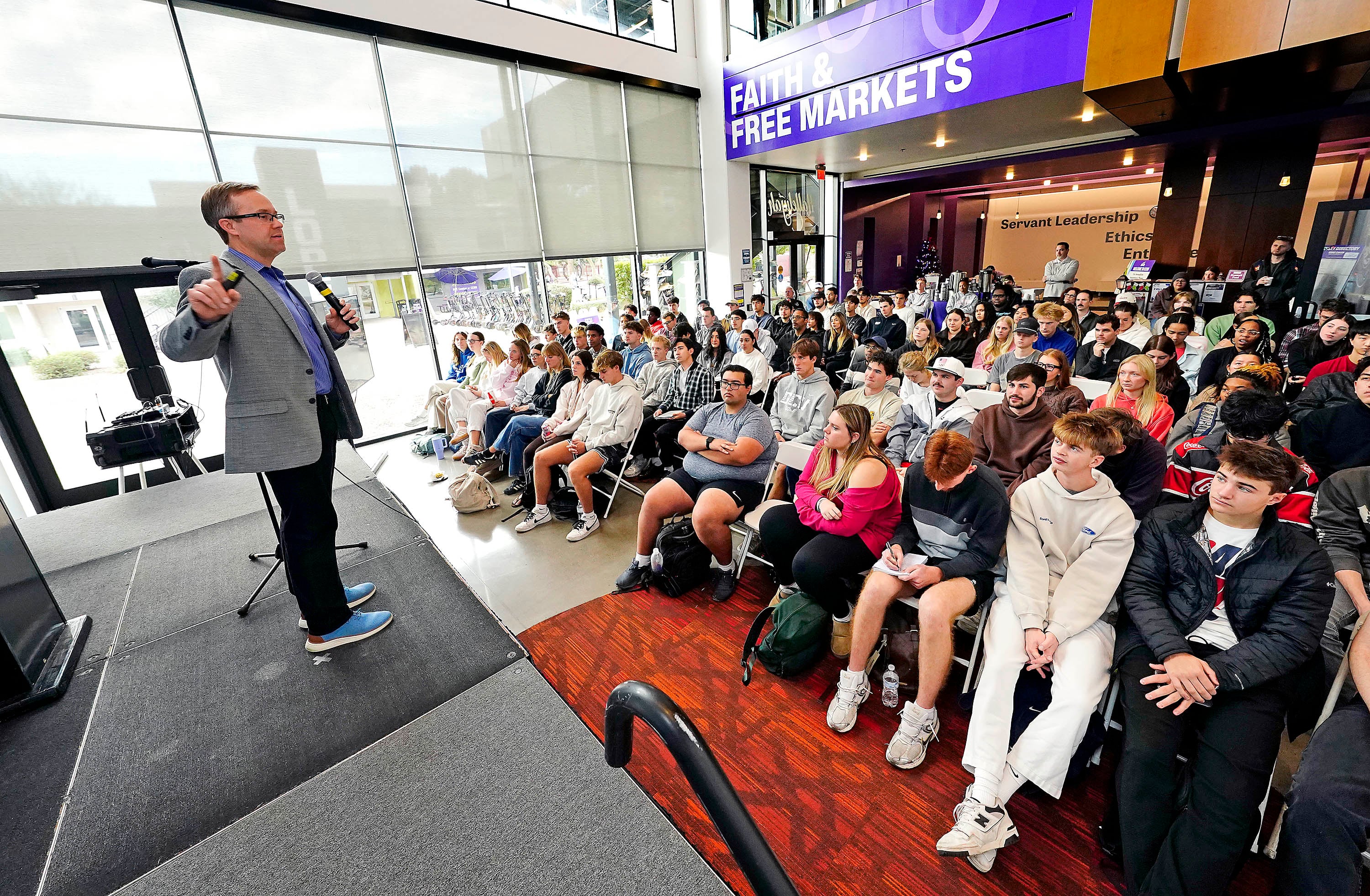
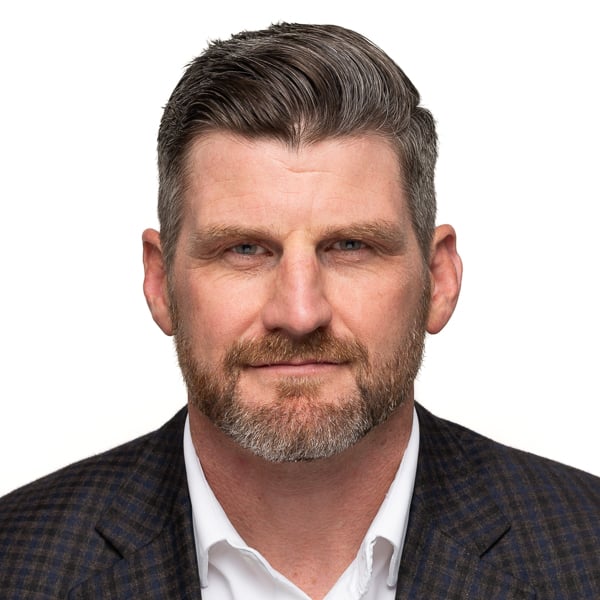
It's something Jesse Young, who teaches in the Colangelo College of Business, and co-author Peter Plank reinforce in their book, “Doing Business in Germany: A Comprehensive Primer."
“In the United States, we always talk about the Fortune 500, the S&P 500,” Young said. “Those are the 500 largest capitalized companies. That's not the case in Germany. Yes, they have Siemens and Daimler (Mercedes-Benz Group), but the growth of Germany’s business structure is the Mittelstand.”
The Mittelstand is a group of small- and medium-sized enterprises (SMEs) that form Germany’s industrial structure. They are often family-owned and are crucial to Germany’s high standard of living.
“Some of those companies exceed 100 million euros (about $116 million) in annual revenue, and some of those companies have been around pre-World War I and have just continued to develop their products and services,” Young said. “Many of them are in small, mid-sized towns, whereby the town and the company are synonymous, creating employment for everyone. For many, the expectation is these companies will be there for generations going forward.”
Young, who teaches finance and economics, was well equipped to write a 179-page book that focuses on the backbone of the German economy and how to enter the market there.
Young, whose father served in the U.S. Army, was born in Germany and spent part of his youth there before serving in the military from 1973 to 1976. He lived in Germany and worked for three companies from 1988 to 1996, including a stint as the general manager of Adobe Sysems GmbH, the limited liability company of Adobe Systems in Munich.
Young returned to the States for Adobe and has worked and traveled across Asia, including a two-year run managing Adobe Japan, where he supervised 200 employees in Tokyo.

In addition to sharing his observations, Young and Plank surveyed five German executives for their views on the differences between business in the U.S. and Germany and what suggestions they would give an American businessperson interested in Germany.
“It’s very interesting,” Young said.
One of the most striking observations is that Americans generally have a shorter buying cycle, while German customers tend to be more deliberate in finding tailored products and services that fit their needs.
“Conservative in general, very financially conservative, but also conservative in terms of decision making, very thorough,” Young said. “Gründlichkeit is the German word for thoroughness. They're very thorough, and they take their time in making decisions. And when they decide, they hold to it.”
Young’s book lists the 50 leading Mittelstand companies, many specializing in mechanical and industrial engineering, automotive supplies, electronics and high tech, and chemicals. Germany, Young added, is heavily involved in medical technology and is an international leader in renewable energy.
As a side note, Aldi and Trader Joe’s originated in Germany.
“The two brothers had a sort of a falling out, and one decided to take northern Germany, and the other southern Germany,” Young said. “And then when they started exporting their businesses, they kept them separate.”
The history of Germany is mapped out in the book, which is important, Young said, because it helps tourists and prospective businesspersons understand the structure of government, culture, the educational system, as well as a host of business topics.
“I've never seen so much interest in Germany (when it comes to) reducing bureaucracy, and that's part of their activities within the European Union. The European Union is driving these changes, but Germany is behind the scenes within the EU structure,’’ said Young. “… (Germany) is the largest economy in Europe, and it's the largest economy within the European Union by a long shot, so you know they have a lot to say about what goes on, and they're perfectly aware of the bureaucratic burden and the legislative and regulatory burden.
“They're trying very hard to reduce the administrative burden, and that means shortening the time for environmental impact studies, shortening the time for licenses and fees, as well as expediting the business application process. Germany sees this as priority one. I would not say they've solved the problem, but they're working really hard on it because they understand that they want to be a leader in the next stage of whatever comes, which was obviously artificial intelligence.”
Young also noted the structural differences in education between the U.S. and Germany. Some German students are placed in a vocational training/apprentice track as early as the fifth grade. An Abitur, a certificate showing graduation from upper secondary school (grades 11-13), and mastery of mathematics, foreign language, and social and natural sciences is required for admission to universities.
The book includes case studies involving Intel, Telsa and Taiwan Semiconductor Manufacturing Company in Germany (TSMC is building an $11 billion semiconductor factory in Dresden). Those massive, global companies have had different outcomes there.
But one outcome has remained: That small- and medium-sized businesses continue to form the bedrock of the economy.
GCU senior writer Mark Gonzales can be reached at [email protected].
***
Related content:
GCU News: Entrepreneurship chair earns Fulbright assignment
GCU News: From GCU students to start-up CEOs