EDITOR'S NOTE: This story is part of GCU's history page. All the stories can be found here:
GCU History Page | The GCU story | Grand 'Construction' University | A campus culture like no other | GCU timeline | Then and now | Did you know…? | Brian Mueller and the 'Phoenix 50' | Pioneering online education | Rise of athletics | The next 75 years
We all know GCU was founded in 1949, that Thunder is the university’s mascot, and that purple, white and black are the official school colors. But you probably didn’t know these gems: that Thunder actually was preceded by a fluffy mascot dubbed the Purple People Eater, that professors spent their lunch breaks from teaching literature or history to put up a few 2x4s and build North Gymnasium, and that purple, white and black actually weren’t the school’s original colors? Here are a few little-known historical facts and dusted-off stories behind some of the university’s traditions, popular events, notable alumni and more.
GCU's original location
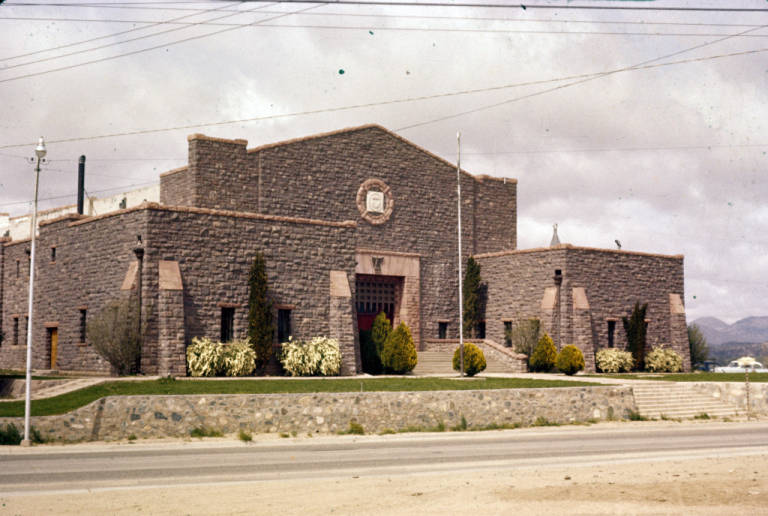
GCU was founded in 1949 in Prescott, AZ. Originally named Grand Canyon College, the institution welcomed 95 students that first semester. Students gathered in temporary classrooms at the Prescott National Guard Armory. Leadership realized that Prescott's job market could not support a growing student population and in 1951, moved the college to its current home in Phoenix.
The origin of America's Favorite Mascot
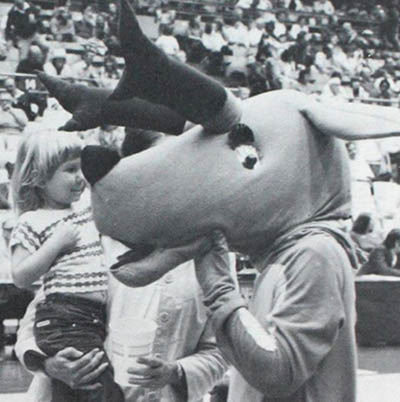
In 1949, the first students voted on what they wanted the school’s nickname to be. It came down to the Antelopes and the Donkeys. Thankfully, the students picked the Antelopes. The name Thunder was chosen for GCU’s mascot because of the rumbling sound of an antelope herd migrating across the plains. In 1981, Thunder replaced the first mascot, a furry, purple blob called the Purple People Eater. After initially being called Andy the Antelope and Johnny Lope, today’s fun-loving, athletic Thunder took his name in 2008 and wears a No. 49 jersey (for Grand Canyon’s founding year) and, of course, is “America’s Favorite Mascot.”
How GCU was first funded
At the 1946 annual meeting of the Baptist General Convention of Arizona, Dr. Willis J. Ray (standing left with Grand Canyon College Business Manager W. Neil Record) and Dr. J.N. Campbell proposed the creation of the four-year Baptist college. Pastor L.D. White of Casa Grande, Arizona, donated the first silver dollar, followed by Peter Ethington, who produced the first $1,000 check.
The origin of Lopes Up

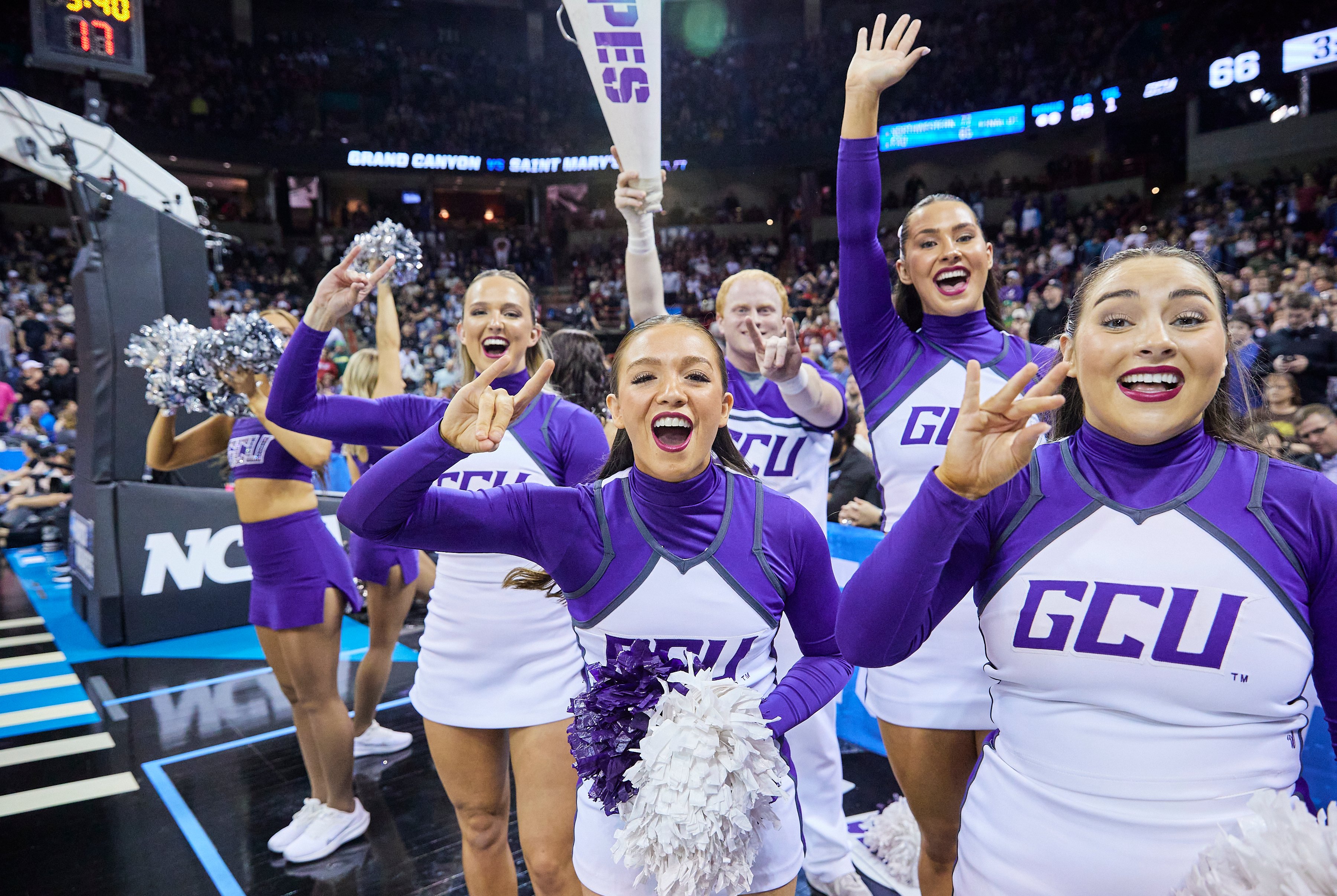
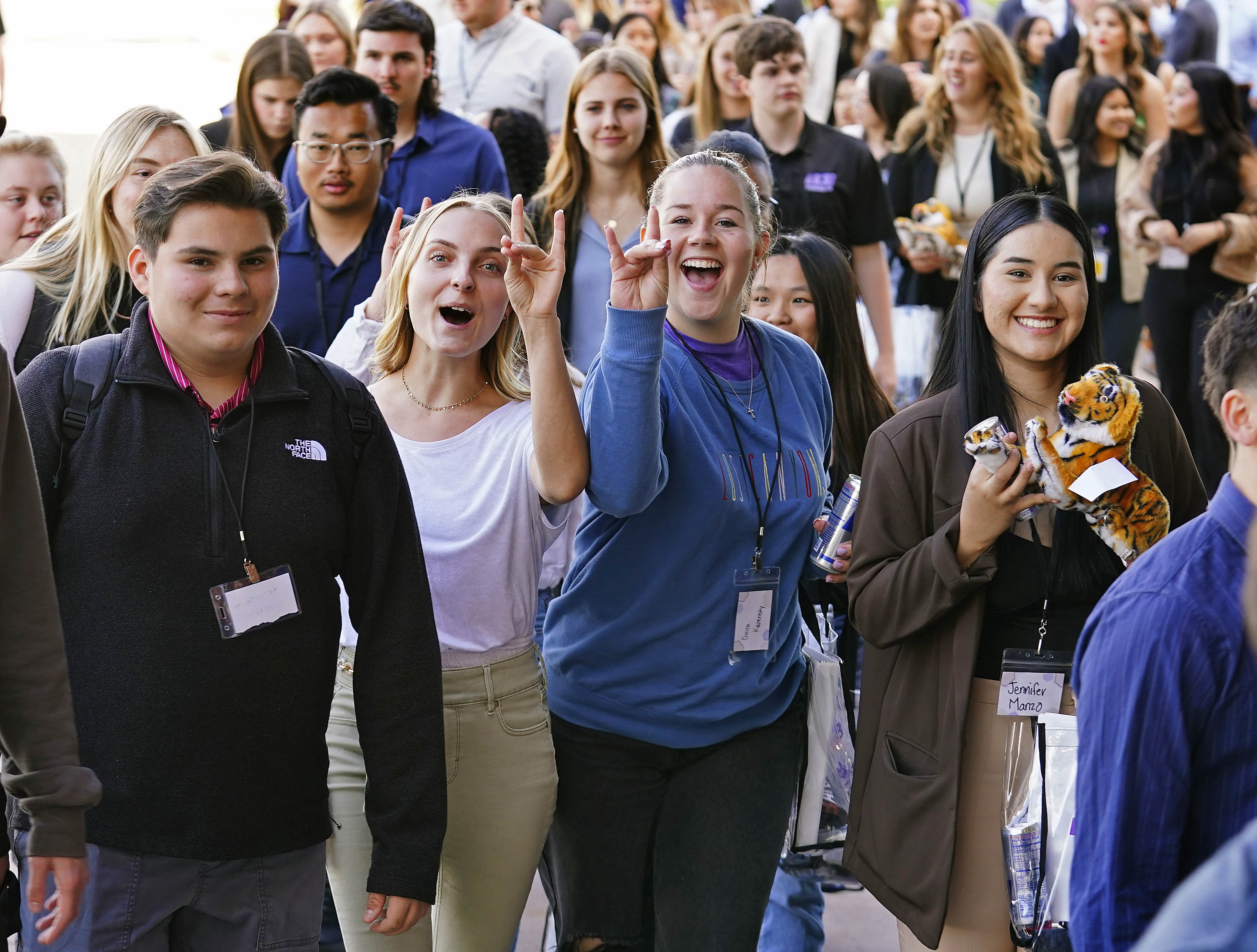
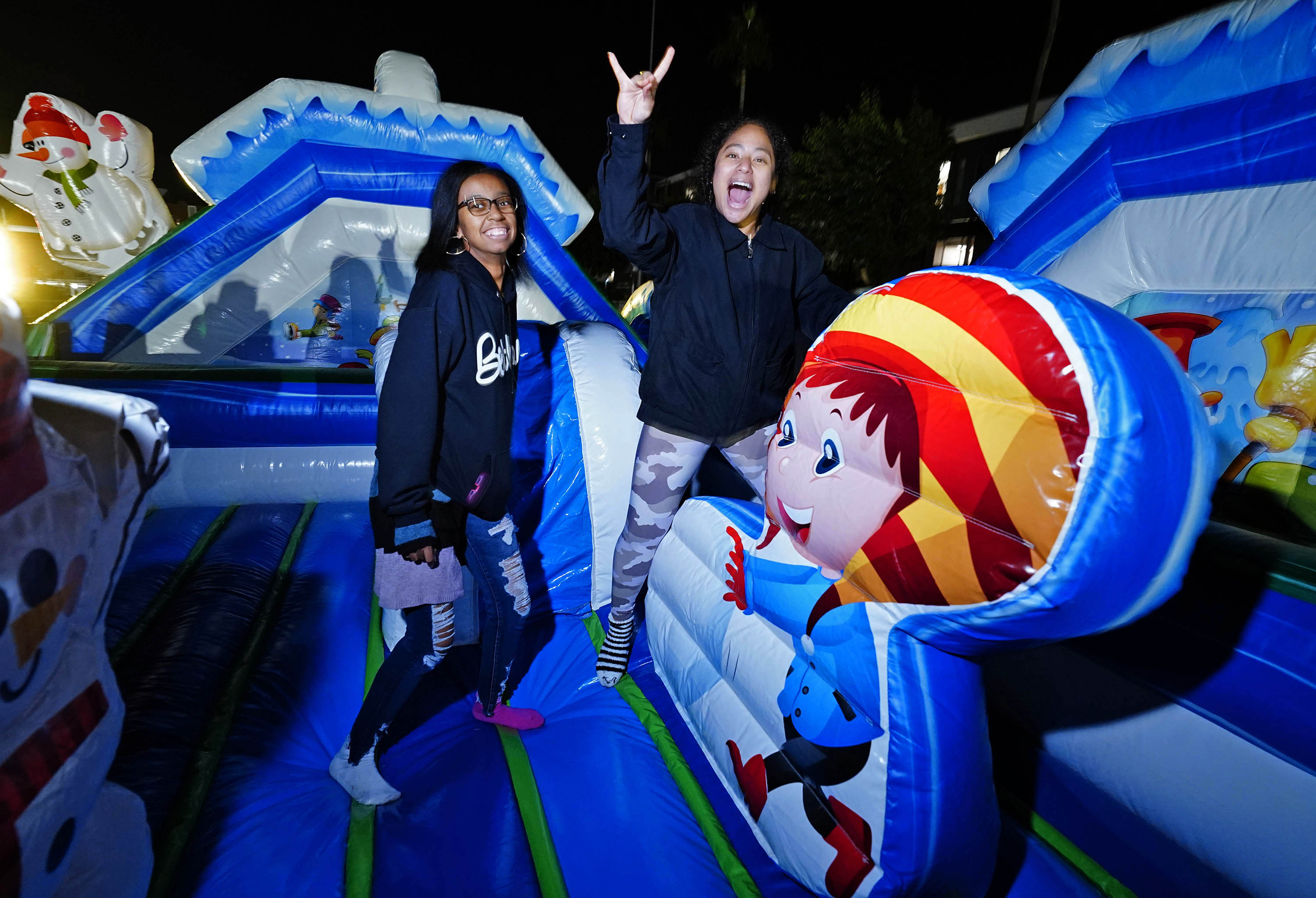
The Lopes Up hand symbol was created in 1996 by student Jim D'Apice, who felt the campus community needed a way to show its spirit. It was slow to catch on and didn’t really take off until 2009, when freshman Taylor Griffin approached the cheerleaders about starting a chant during free throws at basketball games. And thus the “1-2-3 Lopes Up!” chant was born.
Original colors
GCU’s original colors were maroon and gold, but students voted to change them to purple and white when the college moved to Phoenix to distinguish it from Arizona State University. Black was later added as an official school color. Purple is significant in that it represents Christ’s royalty and divinity.
The Biggest Party in College Basketball: The Havocs
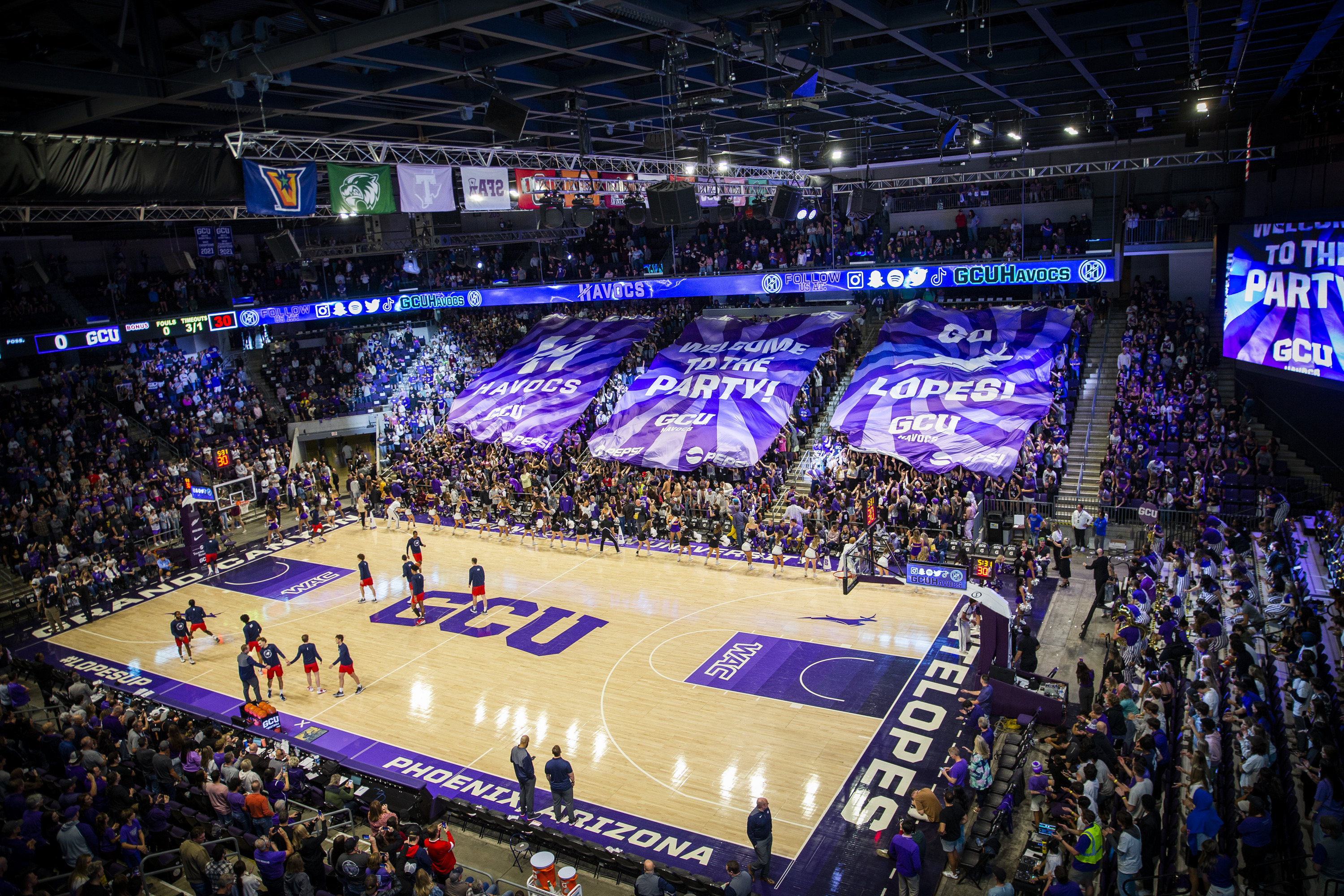
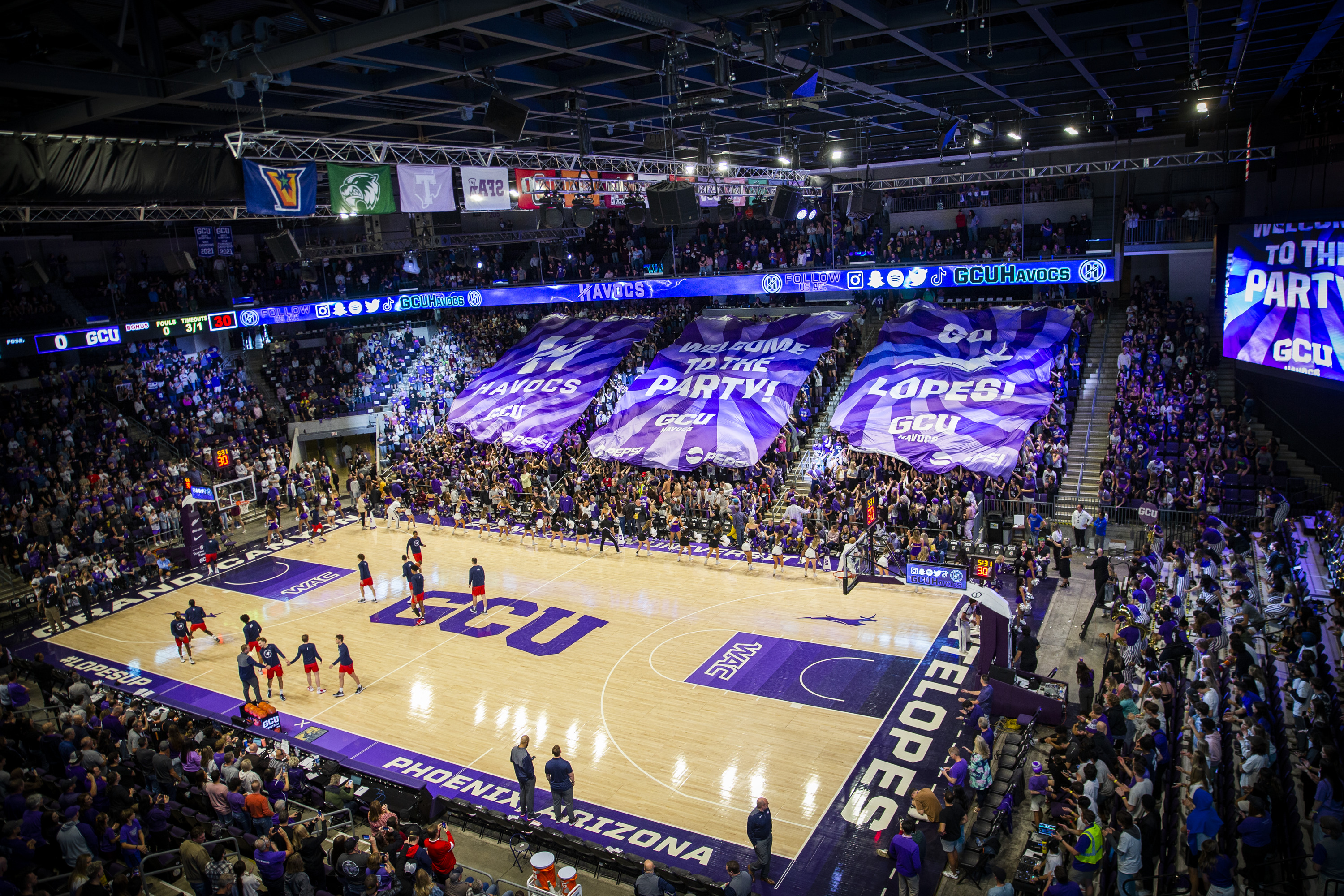
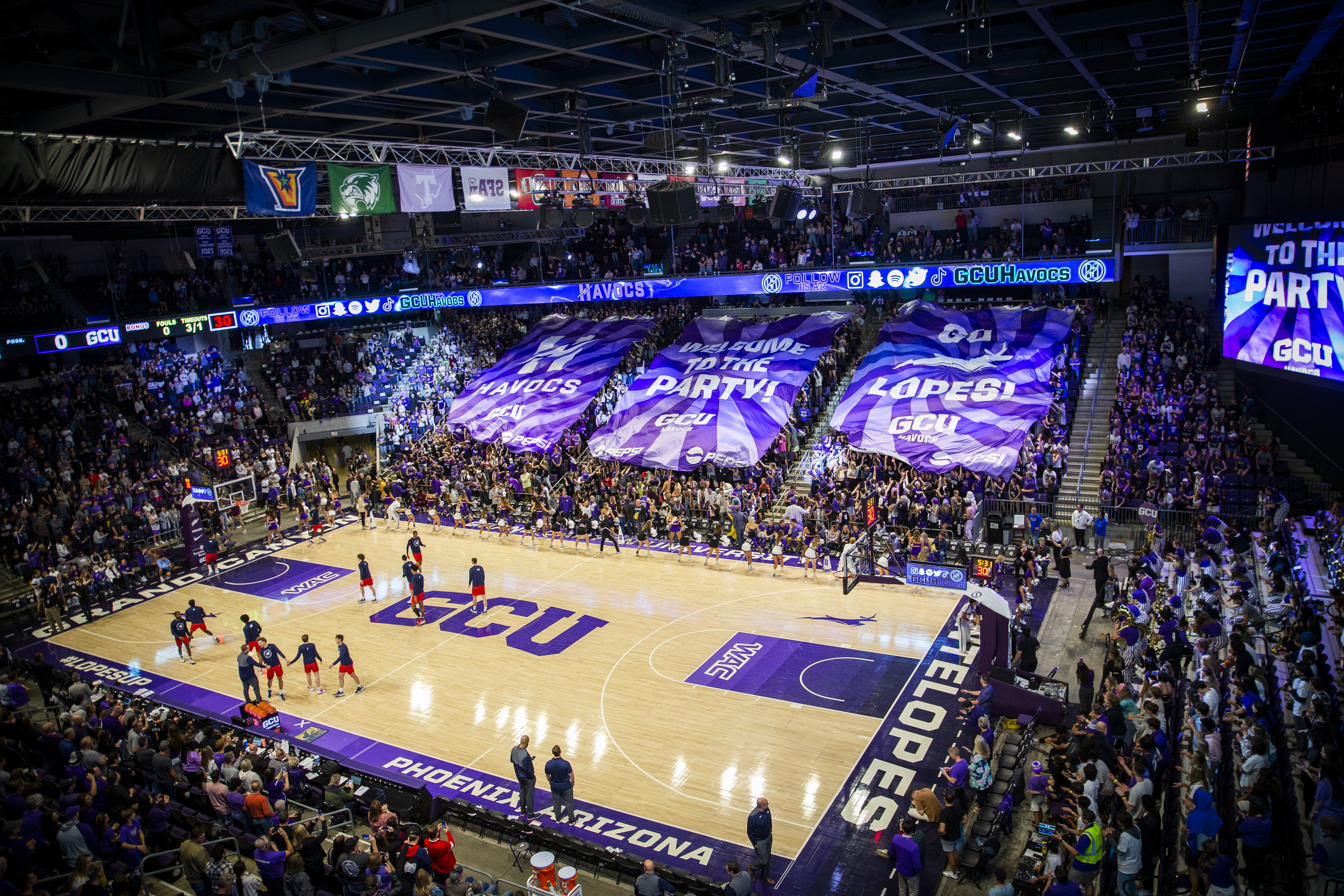
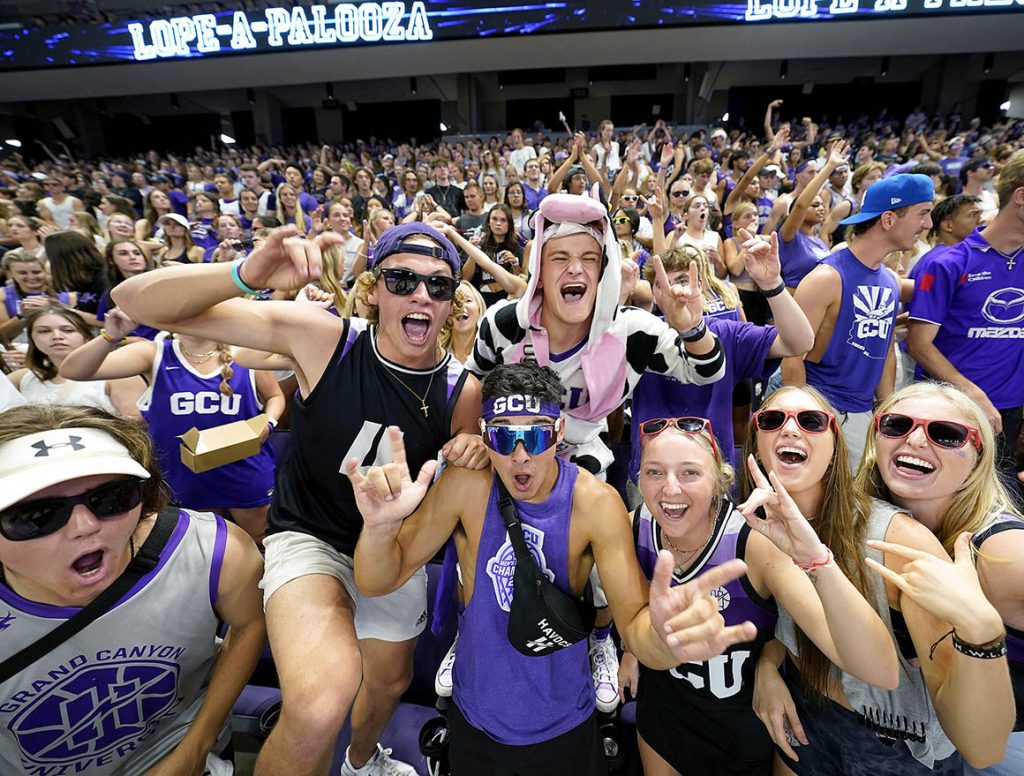
Before they were a nationally recognized student section, one that fuels the biggest party in college basketball that we all know today, the Havocs looked a little different. In 2010, the small group was called the Canyon Crazies. When GCU’s new arena opened in 2012, the Crazies got a new name, the Monsoon. To prepare for GCU’s transition to Division I in the 2013-14 school year, former Director of Spirit Programs Emily Stephens put out a call to discuss starting a special section within the Monsoon, and the Havocs were born. Later, that Havocs name was applied to the entire section in which every student is a Havoc.
Number of palm trees
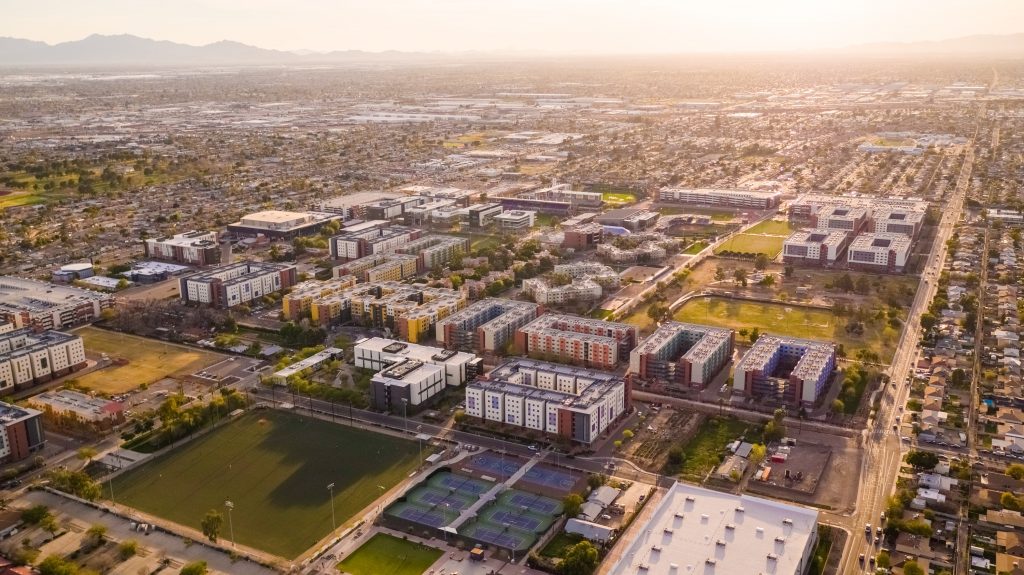
When GCU first arrived in Phoenix in 1951, builders saw an expanse of flat land surrounded by cotton fields. But a lot has changed since then. The campus has evolved into a green, palm tree-filled oasis in the middle of the urban sprawl of west Phoenix. Three-hundred sixty-one palm trees — 309 fan palms and 52 date palms — dot the campus. Forty-nine Mexican fan palms, estimated at 60 to 70 feet tall, line the Promenade. The palm trees that give GCU some of its desert mystique are trimmed once a year, in early July, after the seed pods have grown out.
History of Ethington
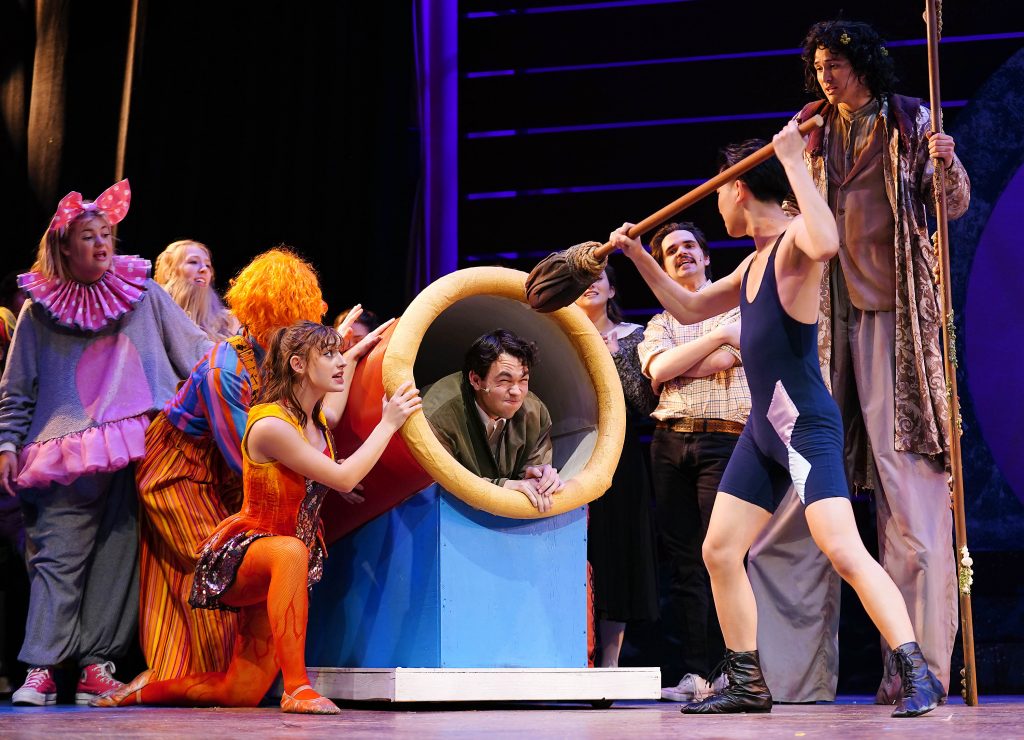
Peter and Anna Ethington of Casa Grande, Arizona, were heavily involved in Grand Canyon. After each passed away, their children remained connected to the school. The family donated $325,000 for Ethington Memorial Theatre to be constructed in their parents’ memory in 1973. It is still home to GCU’s fine arts productions, such as 2023’s presentation of “Big Fish”.
Number of campus pools
The university’s first (and only, at the time) swimming pool was located where the current Student Services Building is today. Now five swimming pools are spread across campus.
Story of first basketball team
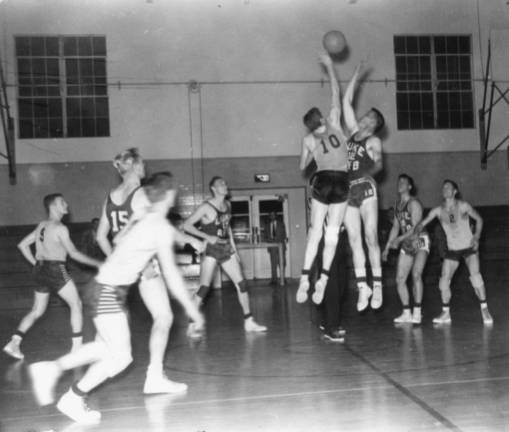
Grand Canyon College formed its first men’s basketball team in 1950. Under the coaching of Howard Mansfield, the team consisted of 10 students. Each of the student-athletes had a job on top of their schooling, so practice was held in shifts. The team played eight games that season and lost every one. A hard loss, but it made the next season that much sweeter when the team won its first game. The campus was so ecstatic that the dean of students declared a campuswide holiday the next day.
Story behind Hanging of the Greens
The Hanging of the Greens winter formal got its name from when campus departments decorated wreaths for the holidays. They would be displayed for a couple of weeks, then students would be invited to join faculty and staff for a formal sit-down dinner that at one time accommodated about 200 students. They would dress in formal attire and learn proper etiquette from one of the faculty members. The food was delivered by the deans of the colleges. As student interest has changed, so has the programming, including being dubbed the Changing of the Leaves in 2022 as it was moved up a little earlier in the event calendar. These days, thousands of students who attend the formal event dress in their finest, dance, enjoy food and visit with friends.
Roots of Camp Elliott
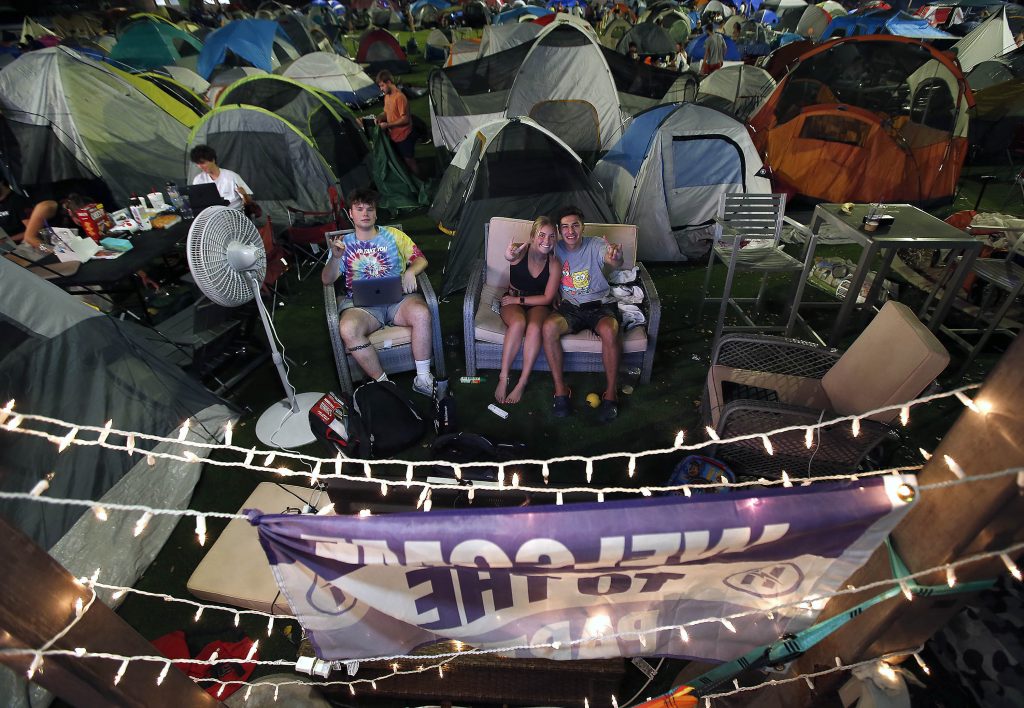
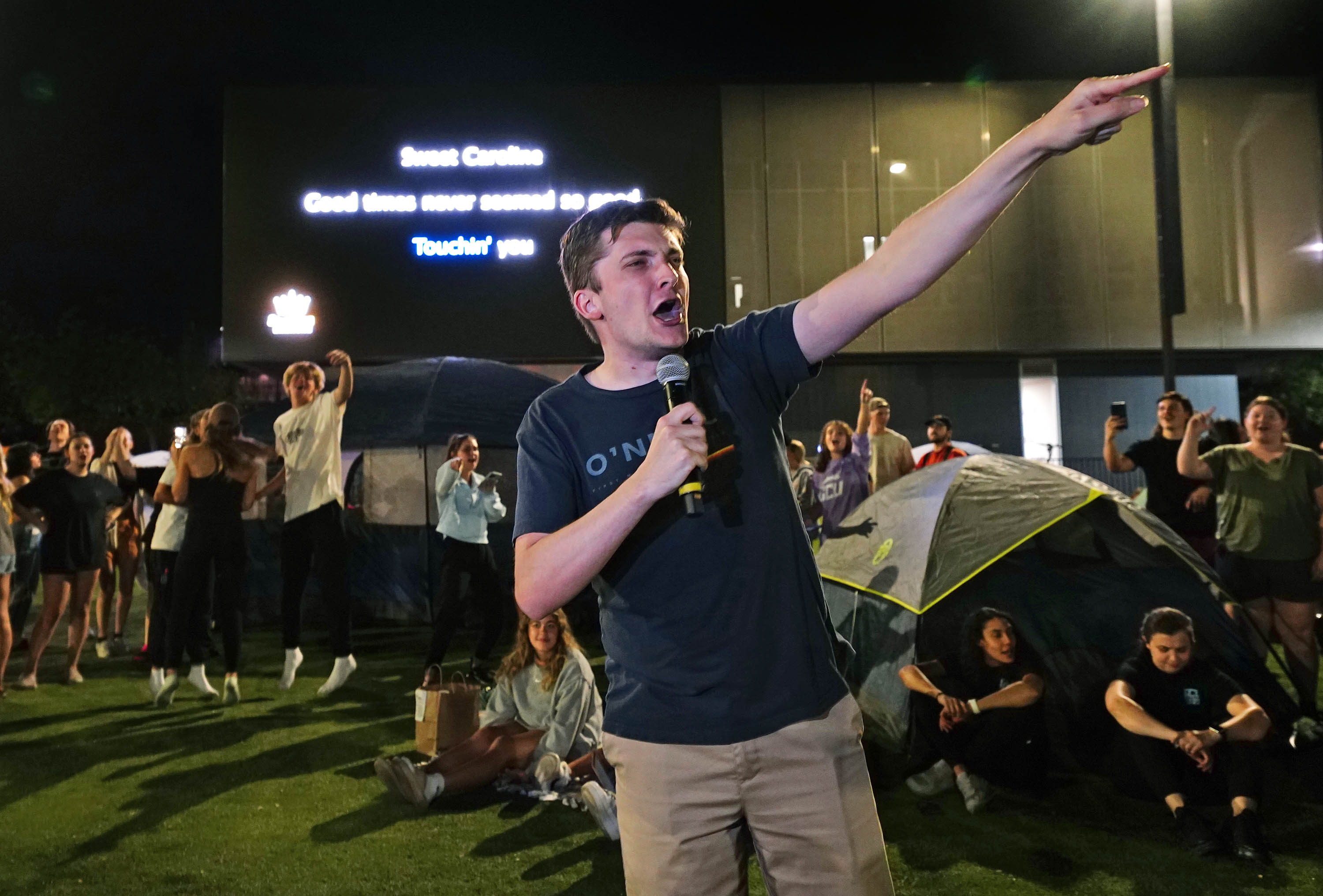
GCU students will camp out for anything. They pitch tents and hang hammocks in front of GCU Arena days beforehand to get premium spots for Midnight Madness, the first basketball game of the season and games against key rivals or big-name opponents. Daniel Elliott started the tradition in 2015 — and Camp Elliott continues today. It is managed by the Havocs, GCU’s nationally renowned student section. The planned “glamping” community has included elaborate set-ups of kiddie pools, TVs, video games, board games and a visit by the men’s and women’s basketball teams, who deliver doughnuts or pizza. The pop-up student village on the Quad has reached an estimated 200 tents and 1,000 students. Havocs leader Jennifer Burke told the Glendale Star in 2019, “It’s part of what makes our school so unique. The players see how much effort we put into being there, and you can see they feed off of it, and hopefully it makes them better.”
Only college with a namesake
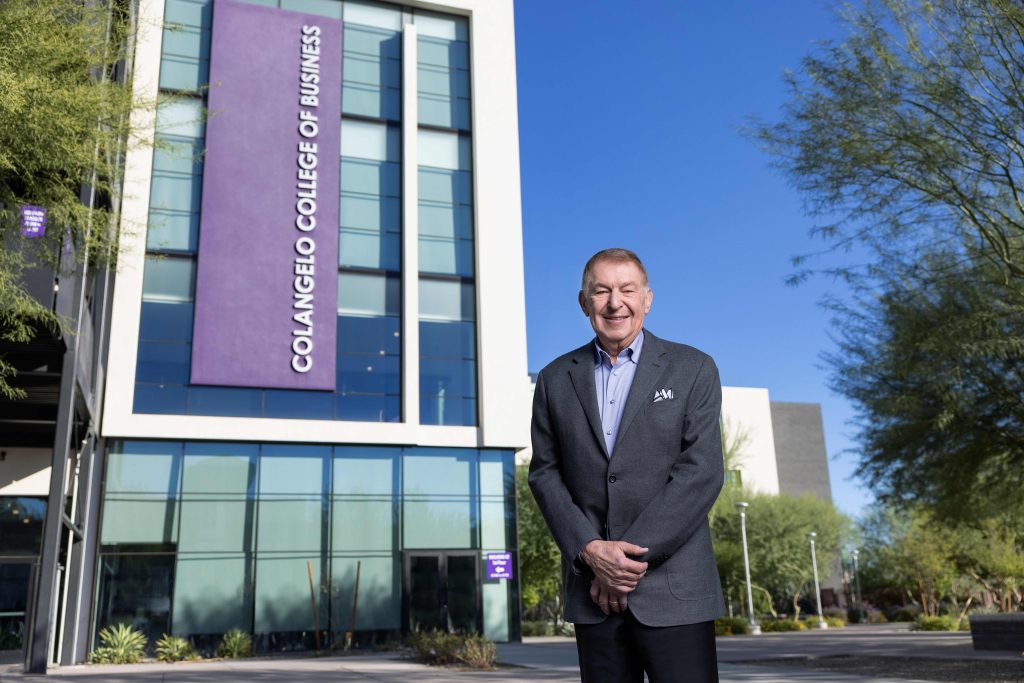
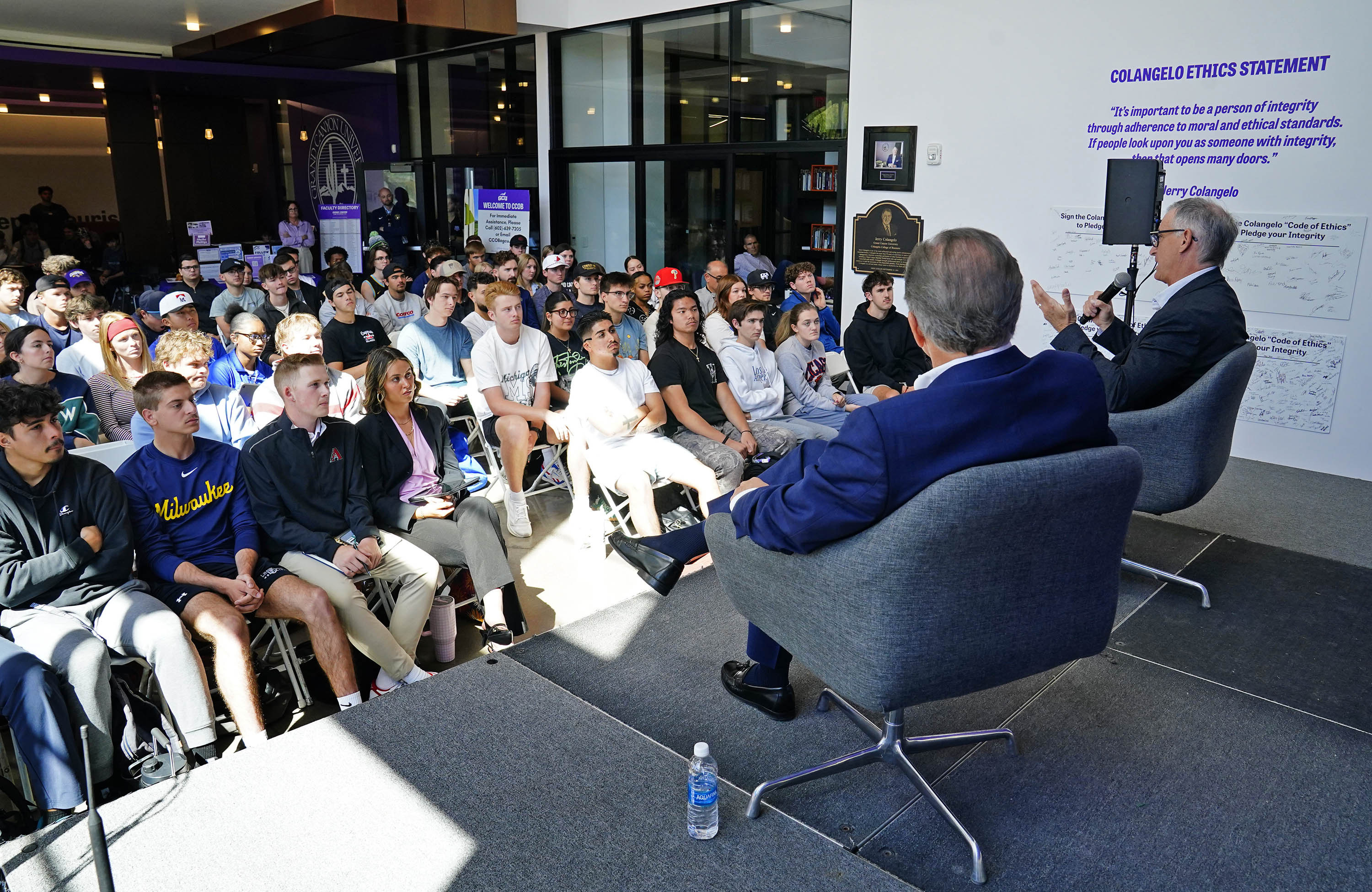
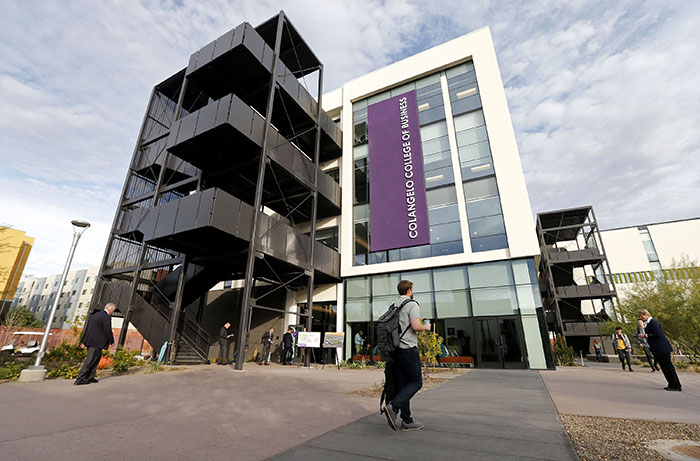
Out of GCU’s ten colleges, only one has a namesake. In 2014, the College of Business became the Colangelo College of Business, bearing the name of sports and business icon Jerry Colangelo. Mr. Colangelo has been a longtime supporter and advisor of the university, helping usher GCU into its Division I sports era and shaping the sports business programs. In 2017, the university further honored him by opening the Jerry Colangelo Museum, which features sections from his early years with the Chicago Bulls to his highly successful management of the Phoenix Suns, Arizona Diamondbacks and USA Basketball.
First graduating class
Seniors were not enrolled at Grand Canyon College until its second academic year, so the first students to graduate made up the class of 1951. The first commencement ceremony was on May 28 at First Southern Baptist Church of Prescott, and four graduates were honored: D.E. Wallace, James R. McFatridge, Robert Callin and Jack McDaniel. The next graduating class would walk the commencement stage 100 miles away at the college’s new home in Phoenix, where classes resumed that fall, on Sept. 17, 1951.
Groundbreaking graduate
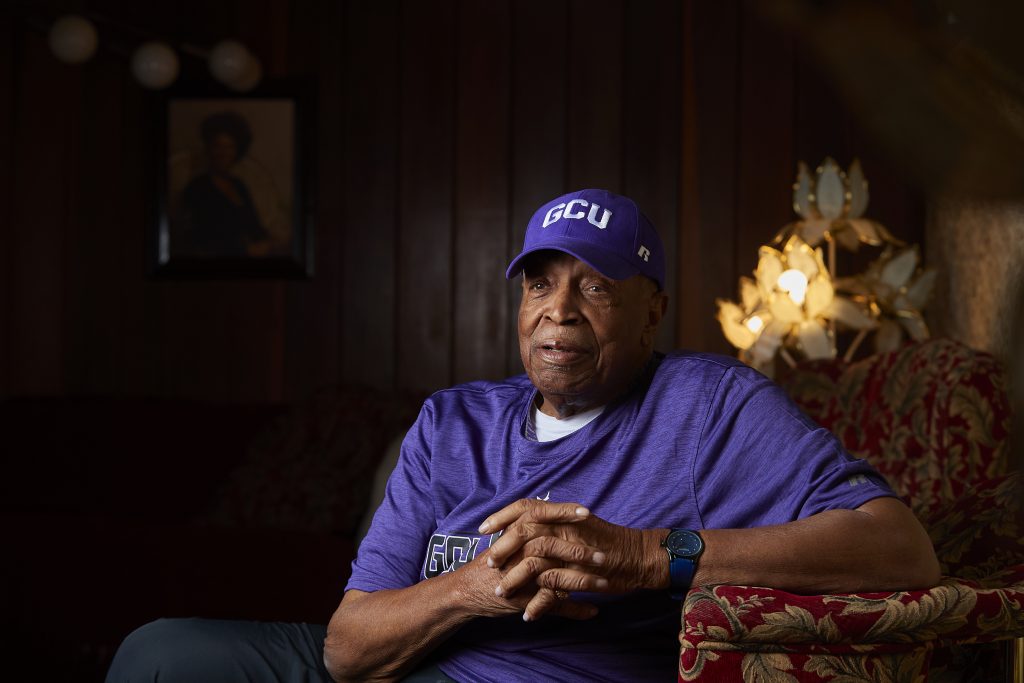
T.C. Dean became Grand Canyon’s first Black graduate in 1959 and went on to a 50-year career in Phoenix schools as a teacher and administrator. The GCU Hall of Famer has held the Lopes basketball record for rebounds per game (20.1) since the 1957-58 season.
Evolution of Antelope Gymnasium
It’s not every day professors teach a class and then help build a gym on their lunch hour. That’s what happened in 1956, after the basketball team lost its practice spot at the YMCA. Undeterred, coach Dave Brazell laid out blueprints for a gym. Building it “was a community affair, as advertisements in the local churches would inspire churchmen to join faculty, staff and students alike in their combined labor,” according to the GCU 50th anniversary book, “The Miracle of the Desert.” The 500-seat gym, which served as home for the three-time NAIA men’s basketball championship program after its 1957 opening, wasn’t even regulation size, so postseason home games were moved off campus. In 1994, South Gym, now called Antelope Gymnasium, was added. The 1,500-seat venue was the home of men’s and women’s basketball and volleyball teams before moving to GCU Arena. It is used today for Club Sports, is a secondary indoor venue for GCU volleyball, and welcomes conferences, spiritual gatherings and other activities.
First President, Founder
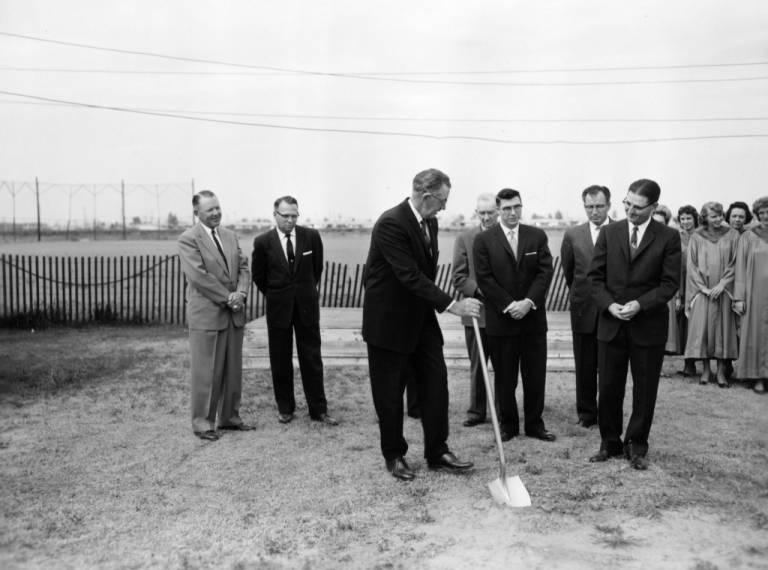
While he found it improbable at first, Dr. Willis Ray (standing right at a groundbreaking ceremony) witnessed three silver dollars slapped down on a table at the 1946 Baptist General Convention quickly rise to $8,000. The money was pledged for the creation of a Christian college in Arizona, and Ray was all in. He traveled across Arizona and other states to raise money, hitting every church pulpit with new fervor. He even sold his Buick for $1,000 to put into the fund. So it was natural that his passion for the project led the board of trustees to name him Grand Canyon’s first president. In 1949, when Grand Canyon College opened in Prescott, Ray was credited with its enduring foundation. He envisioned “education with spirit and soul” and a college that interacted with the global community, welcoming students of all faiths. His tenure as president lasted through the following July, when he returned to the role of secretary-treasurer of the Baptist Convention of Arizona.
Number of alumni
GCU’s alumni community became 100,000 strong in December 2015, a feat that took 66 years. But in just the last seven and a half years, through 2022-23, GCU has added more than 160,000 happy alums to that number, bringing the alumni community to more than 260,000.
Who Brazell Field is named for
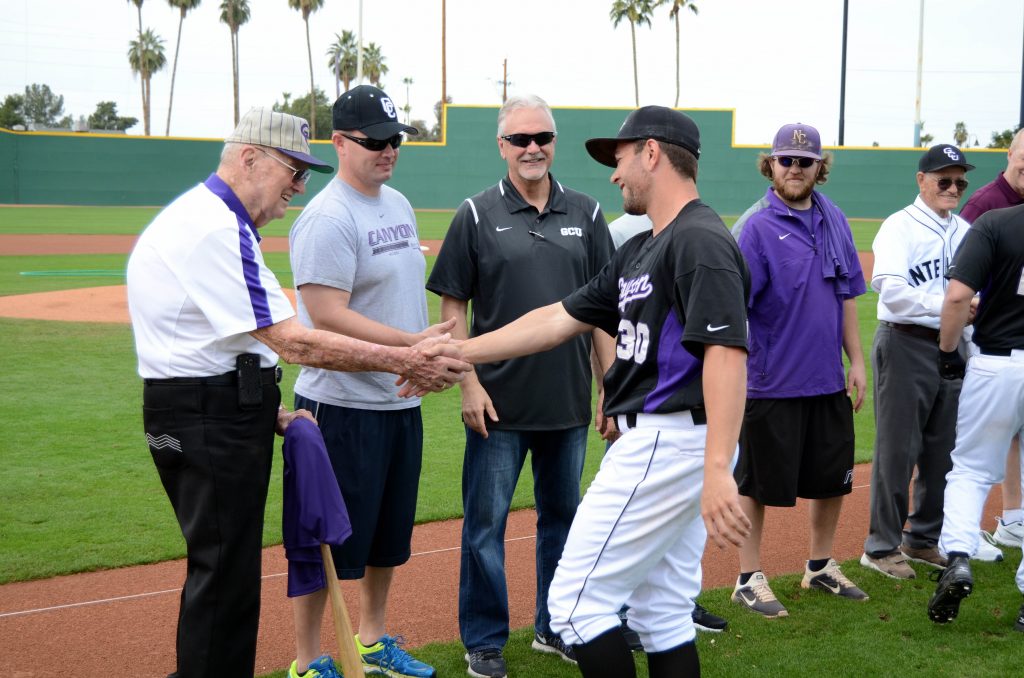
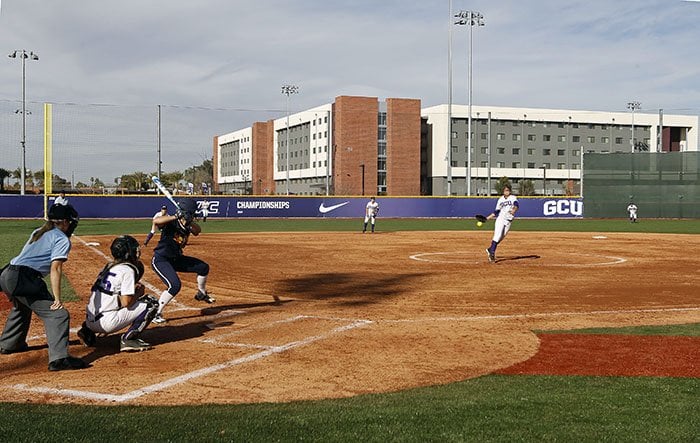
Dr. Dave Brazell (left in photo) was a Grand Canyon coach, teacher and administrator for 50 years (1951-2001), including 28 as coach of the baseball program he founded. To honor his 728 wins, 1980 NAIA national championship and academic impact, the team plays today on the field he designed in 1953 — Brazell Field at GCU Ballpark.
Namesake of the baseball clubhouse
Tim Salmon is the most prominent student-athlete in Grand Canyon history. The Phoenix native went on to a successful 14-year career in Major League Baseball. The former 1987-89 Lopes outfielder became the 1992 American League Rookie of the Year, won a World Series with the Angels in 2002, and has his name on the 5,000-square-foot Tim Salmon Clubhouse, which has been the home of the GCU baseball team since 1999.
Longest-termed president
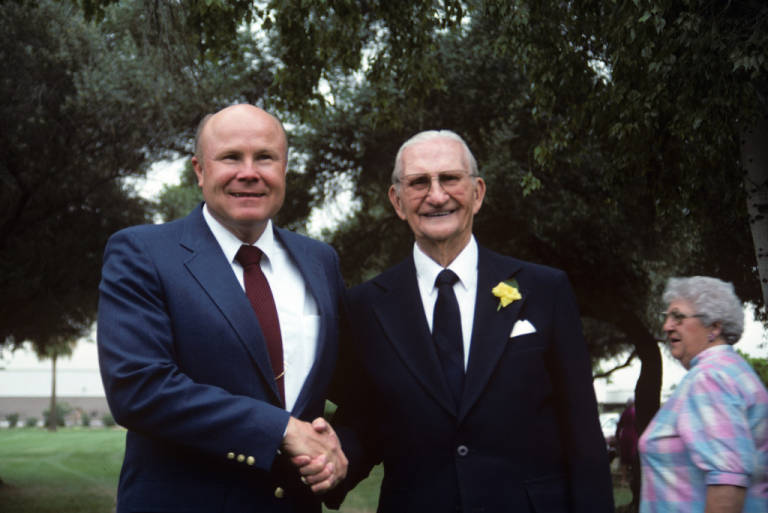
Dr. Bill Williams (left, with Dr. Willis Ray) had a passion for math research. So when he was named president of Grand Canyon College in 1978, he immediately figured out how to elevate the college to one of great academic standards and variety. His goal was the transition to a university, which required more academic offerings, facilities and money. He sought alliances with other colleges and organizations in the effort, and in only 11 years, accomplished his goal. The leader of the new Grand Canyon University was beloved by students for his approachability and likability, and his 22 years of service stands as the longest-termed president in its history.
Baseball coach-turned-president-turned-reverend
The Rev. Dr. Gil Stafford served as the university’s second baseball coach for 20 years, from 1981-2000. He led the team to four national championships and, in 1991, helmed the team when the baseball program moved from NAIA to NCAA Division I status. GCU was the first NAIA baseball program in history to make that jump. Stafford also served as the ninth president of the university from 2000-2003. He walked Ireland from coast to coast and wrote several books on spirituality and education. These days, he is the Canon Theologian for the Episcopal Diocese of Arizona and assistant to the rector at St. Peter’s Episcopal Church in Litchfield Park, Arizona.
Family with the most alumni
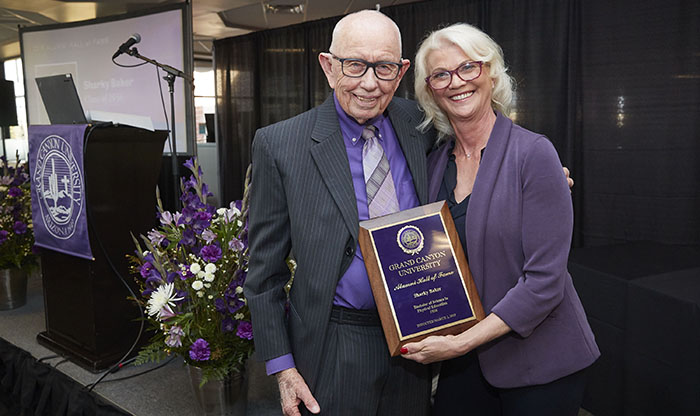
La Vern E. “Sharky” Baker (left with retired College of Education Dean Dr. Kimberly LaPrade) and his four brothers started a family’s love for a university that would be hard to top. Sharky followed Jesse (1952) and Charles (1953) to Grand Canyon in 1954, while Douglas came in 1955. La Vern played sports, was a residence hall janitor and editor of the campus newspaper before he graduated in 1956 with his Bachelor of Science in Physical Education and Social Studies and was inducted into the GCU Hall of Fame in 2019. Evidently, he was a shining example to those who followed. Three generations of Bakers have walked the commencement stage. At last count, 58 members of the family tree have attended GCU.
High-profile graduate
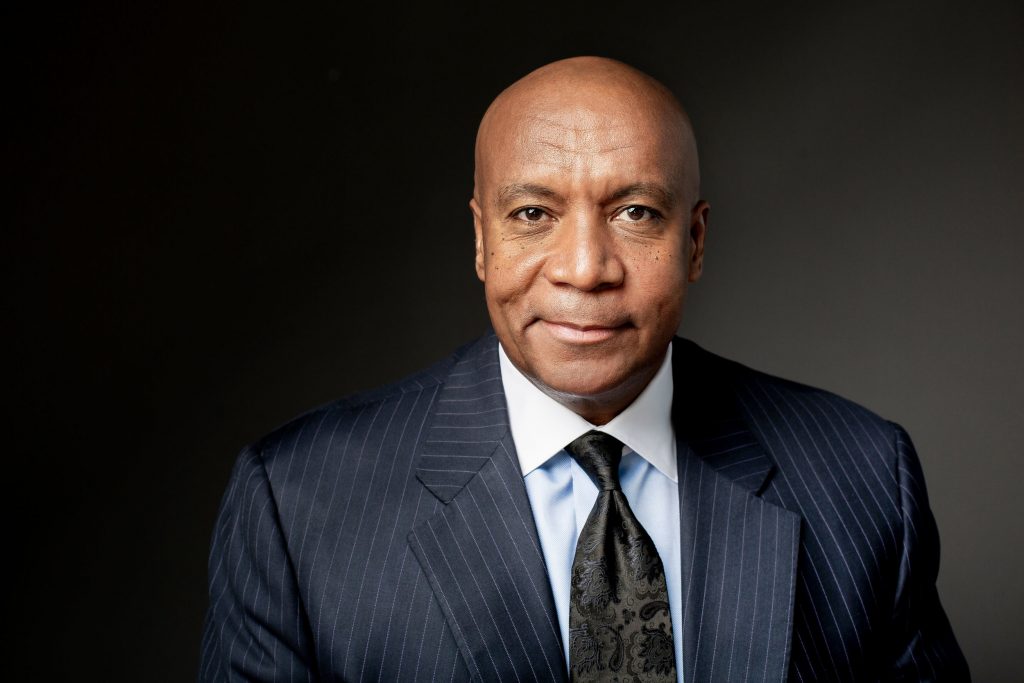
Kevin Warren is one of the most high-profile graduates in Grand Canyon history. He became the president of the NFL’s Chicago Bears after serving as commissioner of the Big Ten Conference and as a longtime NFL executive with the Minnesota Vikings, Detroit Lions and St. Louis Rams. He played basketball for Grand Canyon, averaging 20 points per game over the 1984-85 and 1985-86 seasons. He graduated from GCU in 1986 with his bachelor’s degree in business administration and has served on GCU’s Board of Trustees.