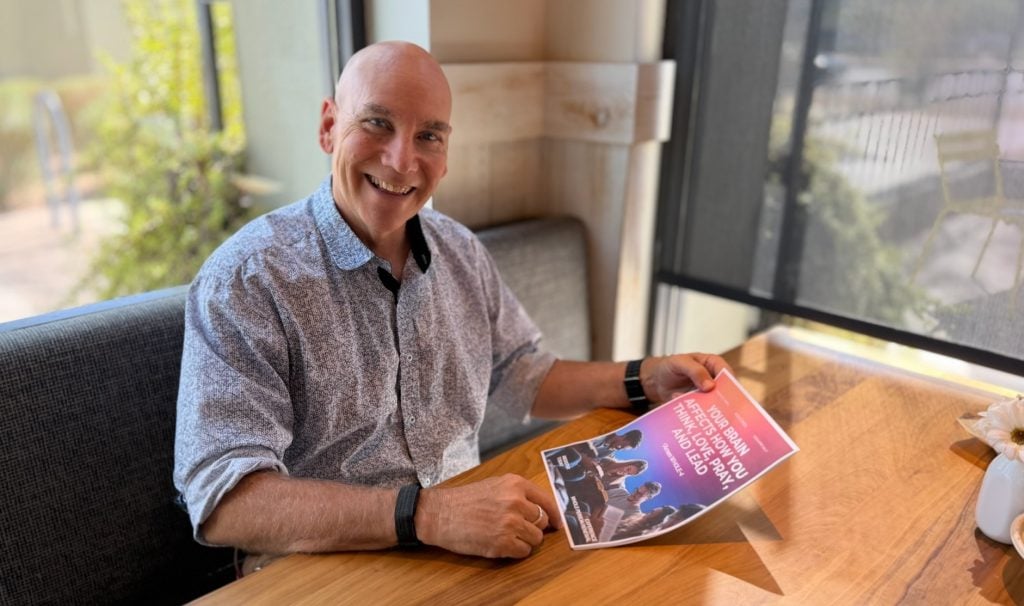
GCU faculty member and alumnus team up to host program that pairs Scripture with neuroscience across four domains
Sven Olson can’t remember his own children growing up. He has survived what he counts as 16 near-death experiences and lived with a traumatic brain injury since a 1996 scuba diving accident.
At 62, he learned only this year that some of that loss might be restored, that a damaged brain can be improved through proper care rather than merely endured.
"I feel like I'm learning this way too late," the Grand Canyon University adjunct professor said. "Why didn't someone tell me this earlier?"
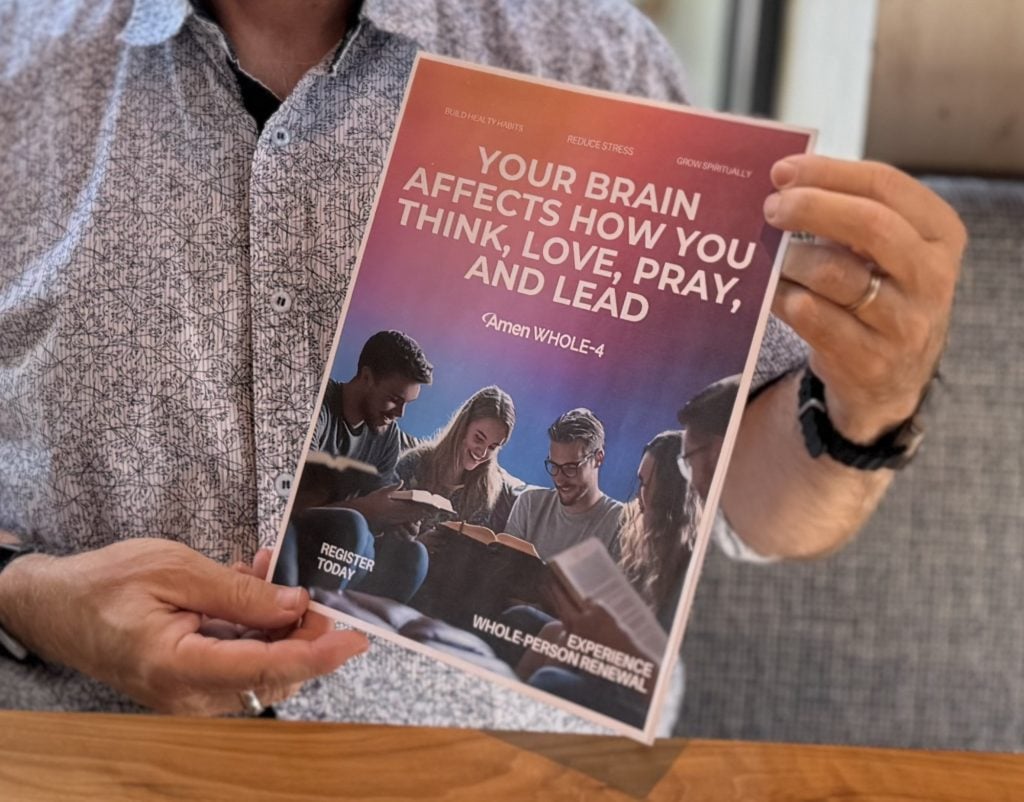
Beginning Sept. 24, Olson and the Rev. Arey Glass Sr., a GCU alumnus, are leading a pilot of Amen WHOLE-4, a faith-based neuroscience curriculum developed by Dr. Daniel Amen, the psychiatrist who co-created "The Daniel Plan" with Pastor Rick Warren. The six-week study is free and open to GCU students, staff, faculty, alums, friends and family with the intent of showcasing how proper brain health is connected to Scripture and can yield healing in all aspects of life.
The program is built on the idea that "your brain affects how you think, love, pray and lead.”
"I've lived with a brain injury for 30 years, and I never processed that," Olson said. "A person with a normal brain or a person with a brain like mine should consider how these are connected."
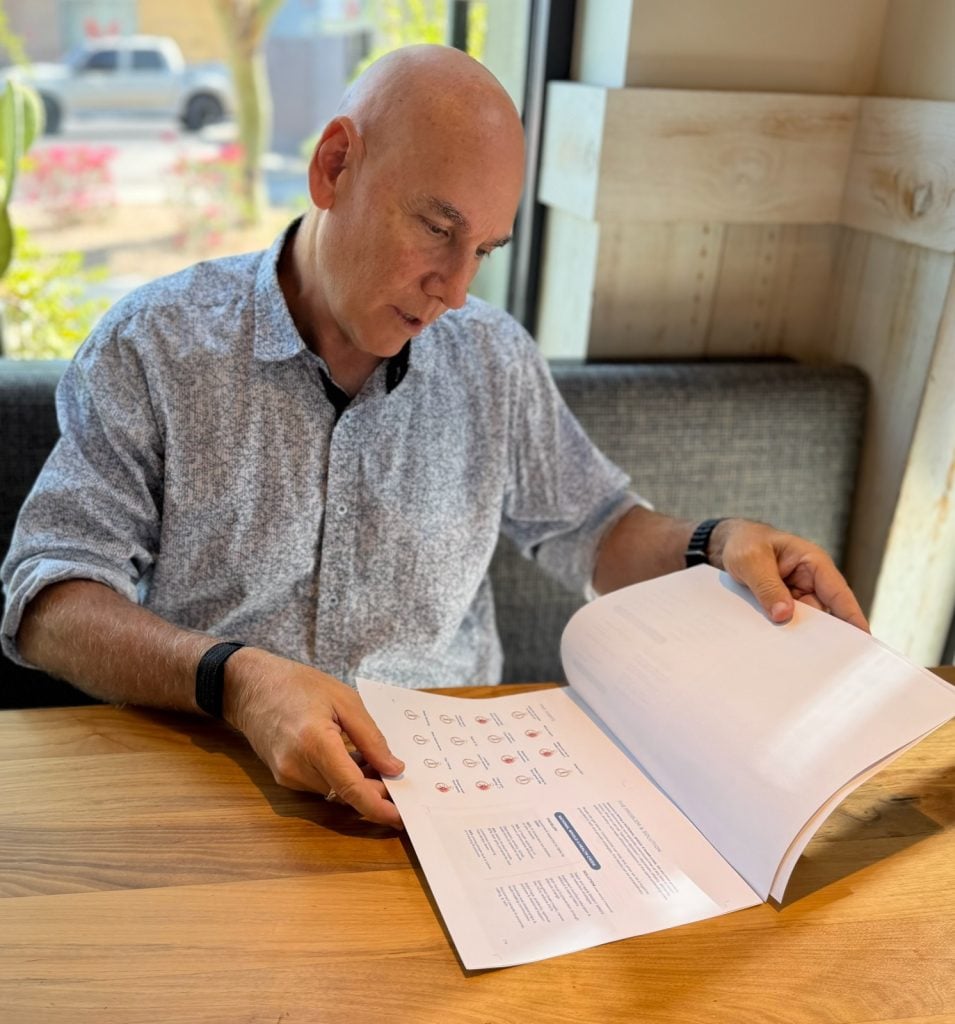
The study is built on the WHOLE-4 framework: brain and body, meaning and purpose, mind and relationships. Each week pairs a biblical theme with neuroscience-based tools to improve brain and overall health. A brain health assessment is offered to participants at the beginning and end of the six weeks to track progress.
The results provide a hope score, a positivity-versus-negativity bias, adverse and inspiring childhood experiences scores, a brain type, and profiles the emotional experiences from the past that still shape how a brain reacts today, sorted into wounded, responsible and angry.
The overall message is that the brain can be changed for the better.
Olson sees himself as an example of what's possible after a career full of trauma.
He served 27 years in the Army National Guard while working as a State Department foreign affairs officer, saw combat in Iraq and was posted to four U.S. embassies – including the one in Panama, where the 1996 diving accident left him blind and paralyzed for three months. He later directed hospice services before joining GCU, where he teaches transcultural health care, ethics and spiritual decision making in health care for the College of Nursing and College of Humanities and Social Sciences.
A scan at the Amen Clinic in Scottsdale in February confirmed what Olson had been telling doctors for three decades – no ridge between his hemispheres, the damage concentrated in the temporal lobes, the memory centers.
"I know I have brain damage,” Olson said. "But no doctor had ever told me I could fix my brain. We were just trying to survive the disabilities."
He changed his sleep after a study clocked him stopping breathing 50 times an hour and started a CPAP. He overhauled his diet and dropped nearly 70 pounds. In Kenya this summer, leading a mental health conference for schoolchildren, he woke and told his team he had remembered a dream, his first since the accident. He no longer recalls the dream, only the excitement.
"For me, that's progress,” he said. Progress he wants to share with others.
"I have never heard of the connection between the brain and the Bible," Olson added. "It's easy to be a Christian and blindly believe in science, but this connects the dots and validates the science behind the brain and elevates the brain as God's greatest creation."
Yuri Huntington, national faith ambassador for Amen University, said roughly 100 pilots have launched since February, with 87% of participants improving across the four domains in early data. Olson’s pilot is among the last to begin.
Huntington argues a campus like GCU is where the material does the most good. Young adults are absorbing so much the world is throwing their way, and neuroscience and Scripture together give them tools to evaluate what is most healthy.
The WHOLE-4 program changed Huntington’s life.
“I went to a Bible college myself, and I saw the temptation in real time. We were all part of a Christian community, yet there were outside forces trying to influence,” she said. “People who struggle with self-esteem or image issues get to recognize that their brain is the thing that needs the healing. They separate their personality and behavior away from the brain activity.
“I recognized it wasn't about losing weight. It was about brain health. And when that switched for me, it was this light bulb. It's not about vanity, it's not about being skinny, it's about brain health. And that is what shook my world."
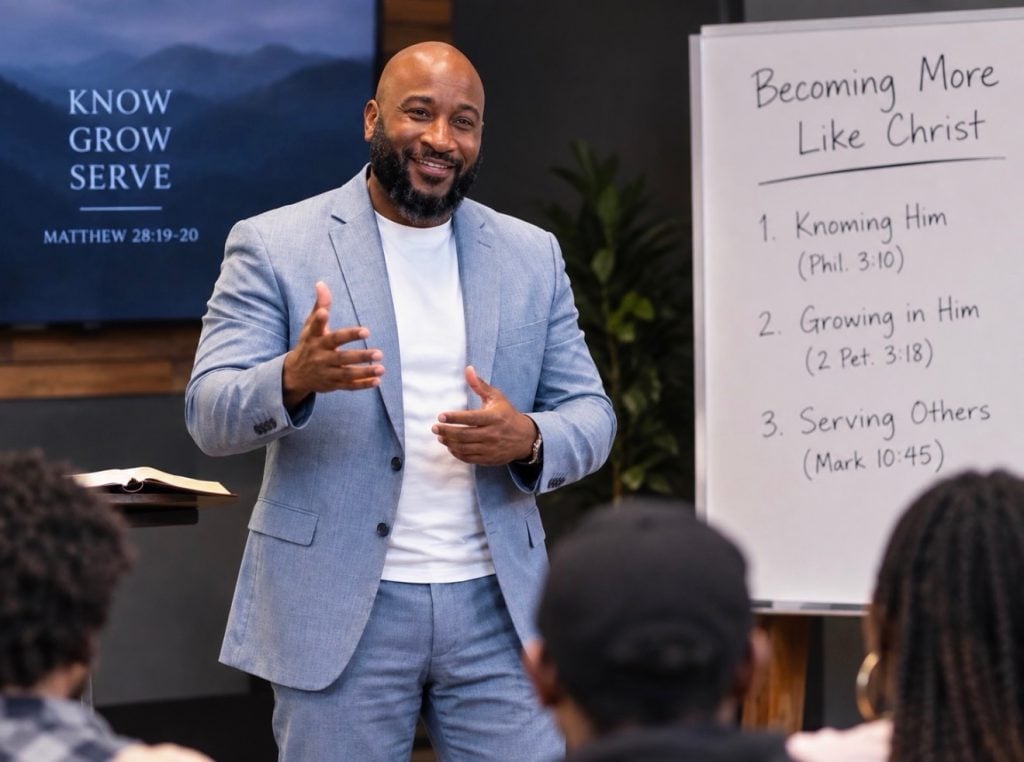
Olson recruited Glass, an Air Force veteran, hospice chaplain and two-time GCU graduate, after the two met at a veteran pinning ceremony.
Glass, who earned a bachelor's in business administration and a master's in Christian leadership from GCU, said the partnership works because the program refuses to treat people in pieces.
"We can't be fragmented versions of ourselves when we go to God," he said. "You don't want to give God 85% of you. You don't want to give Him 97% of you. You want to give Him 100% of the being of who you are."
The Bible study also restarted something Glass had shelved. Halfway through a GCU doctorate in organizational leadership with an emphasis in Christian ministry, he plans to resume coursework in March, after his sixth child is born. His dissertation question – how communities return to the family structure God designed – landed squarely on the curriculum.
"It absolutely aligns with everything I have going on right now,” Glass said. "Being a Christian university does not mean stepping away from innovation or scientific discovery. Our faith gives us an even greater reason to pursue knowledge."
Registration for the six-week pilot is open. Learn more about the in-person sessions, the assessment or the hybrid Zoom option here.
GCU News senior writer Jason Gonzalez can be reached at [email protected].
***
Related content: