
Photos by Ralph Freso / Slideshow / Livestream
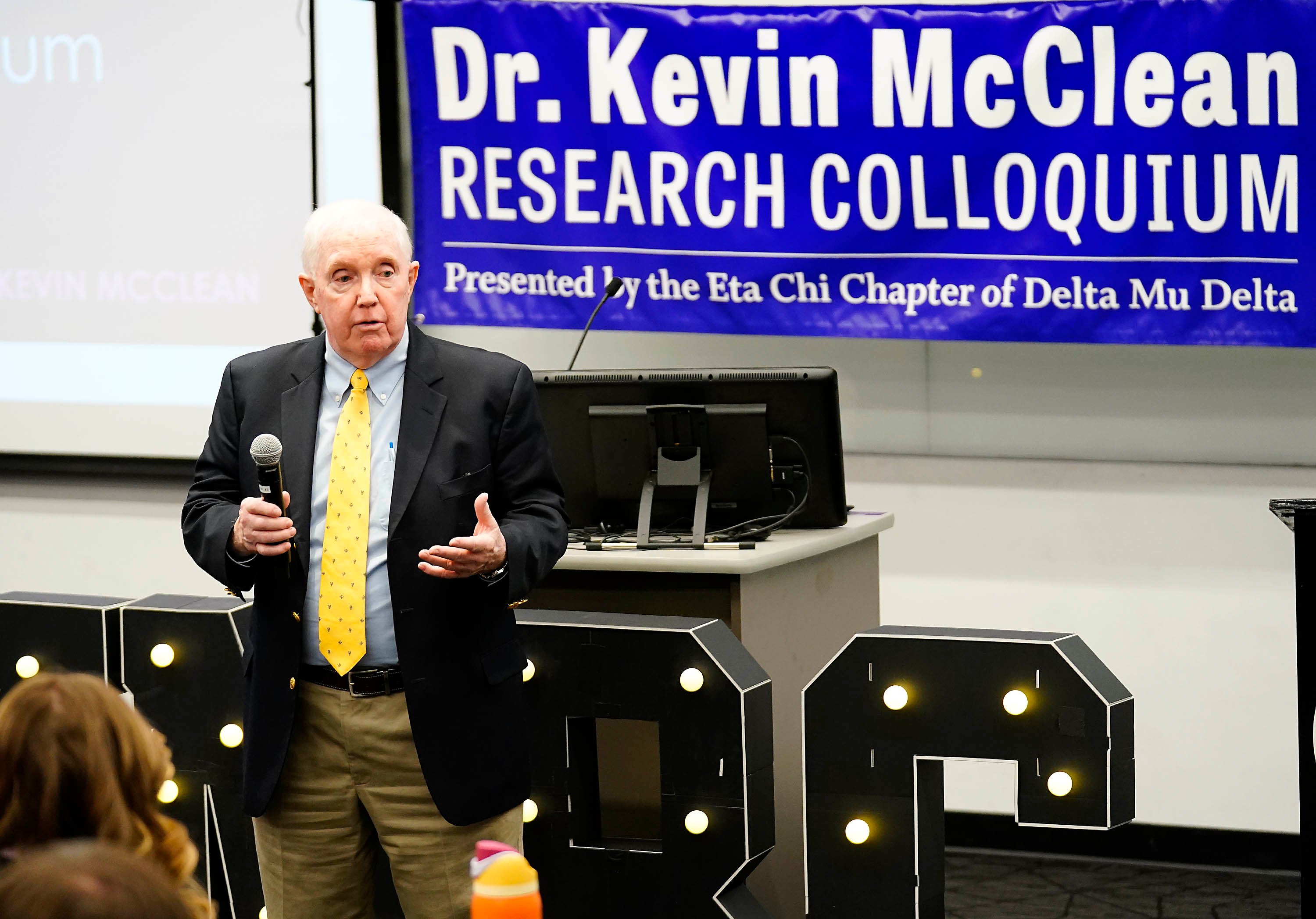
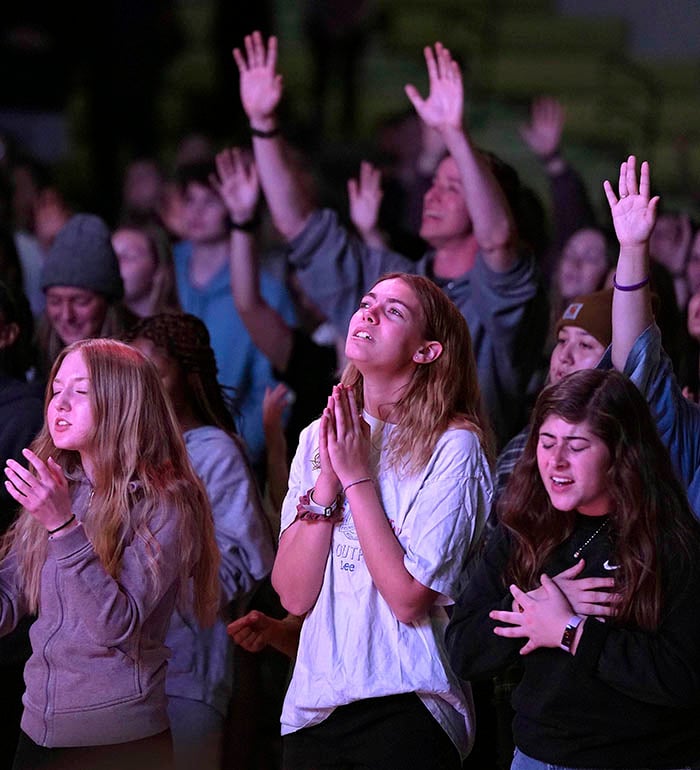
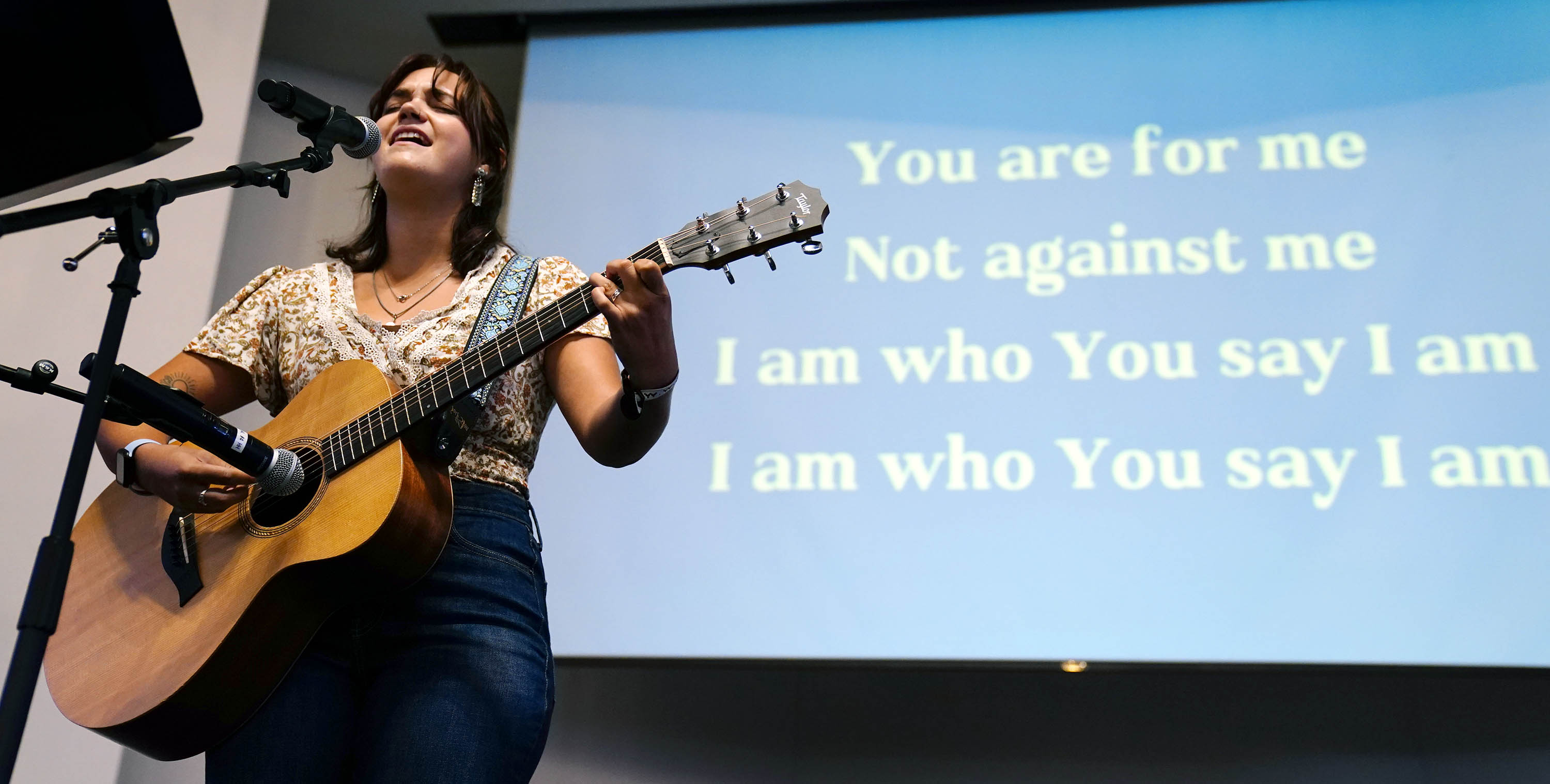
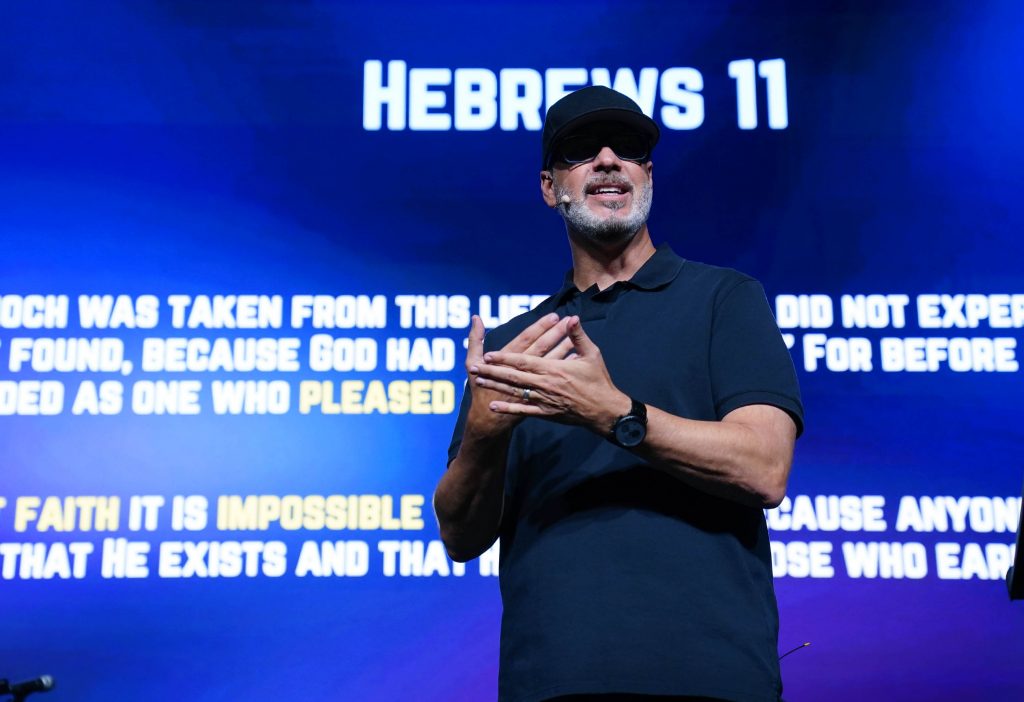
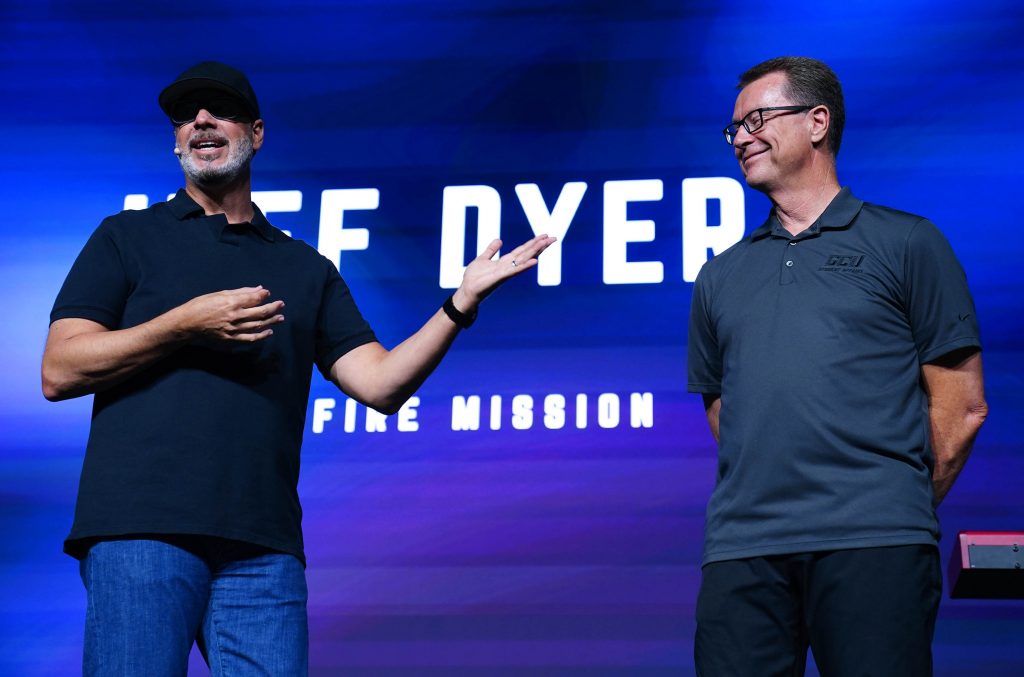
Dr. Jeff Dyer of Heartfire Missions challenged Grand Canyon University students during Chapel on Monday.
“How many believe that everything is for Christ – every ounce of your energy, every pain of your wealth, every minute of your time, every cell of your body?” Dyer asked the Global Credit Union Arena audience.
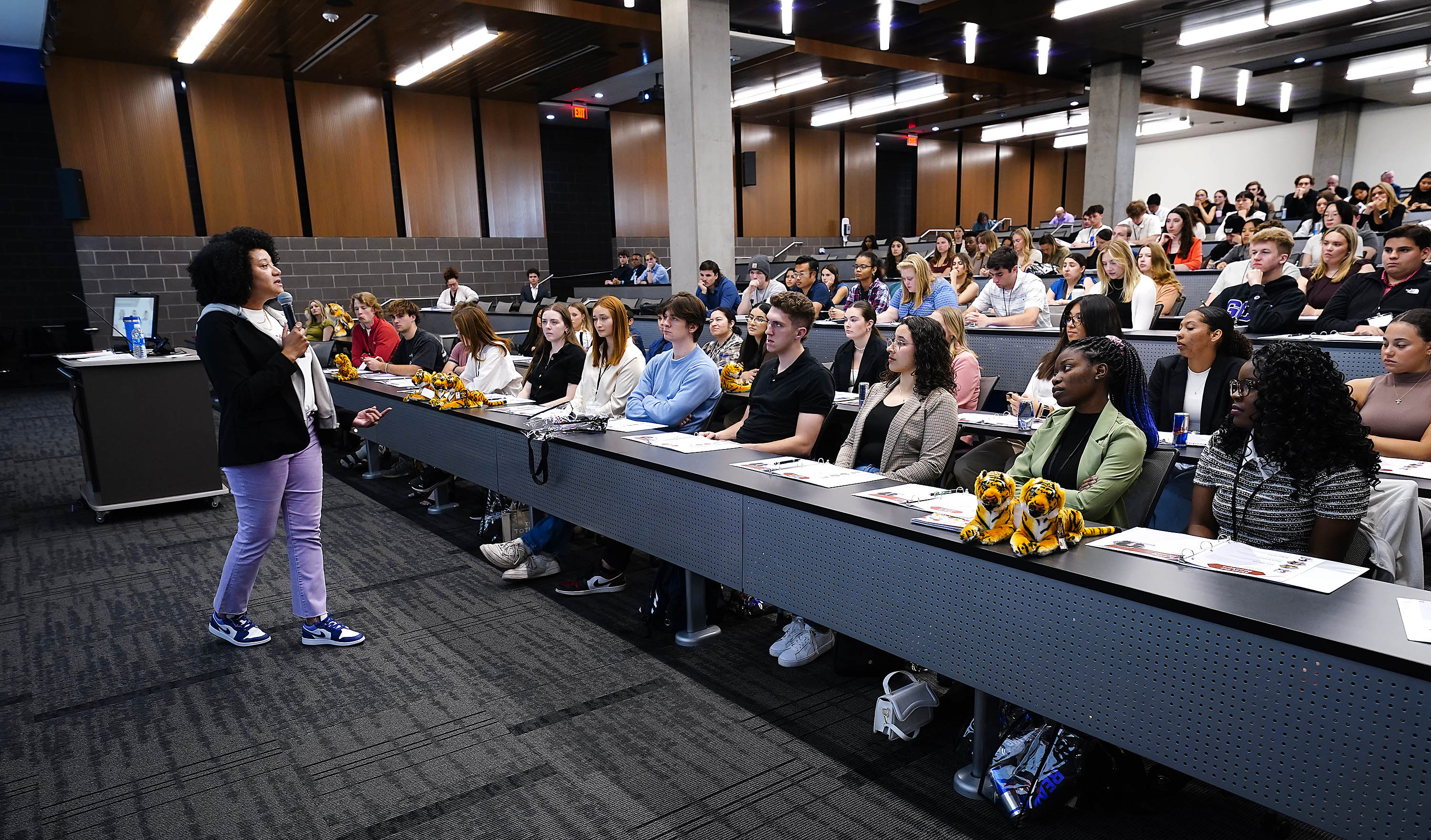
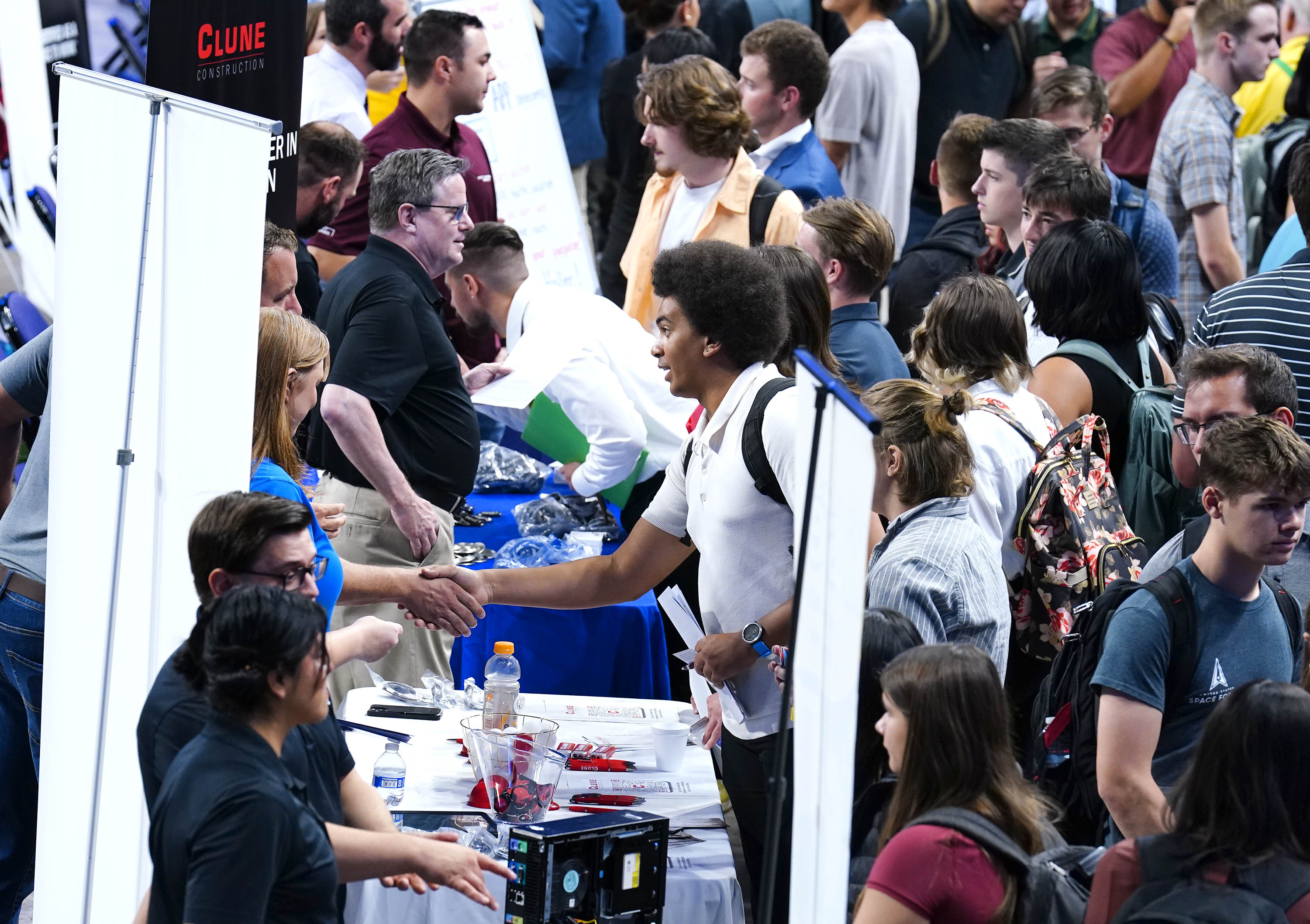
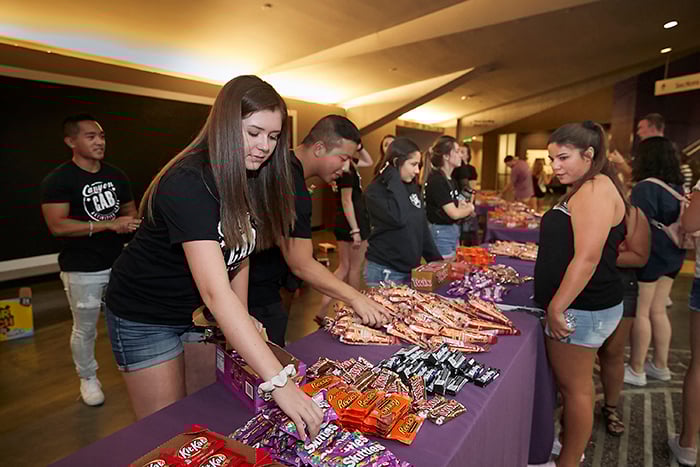
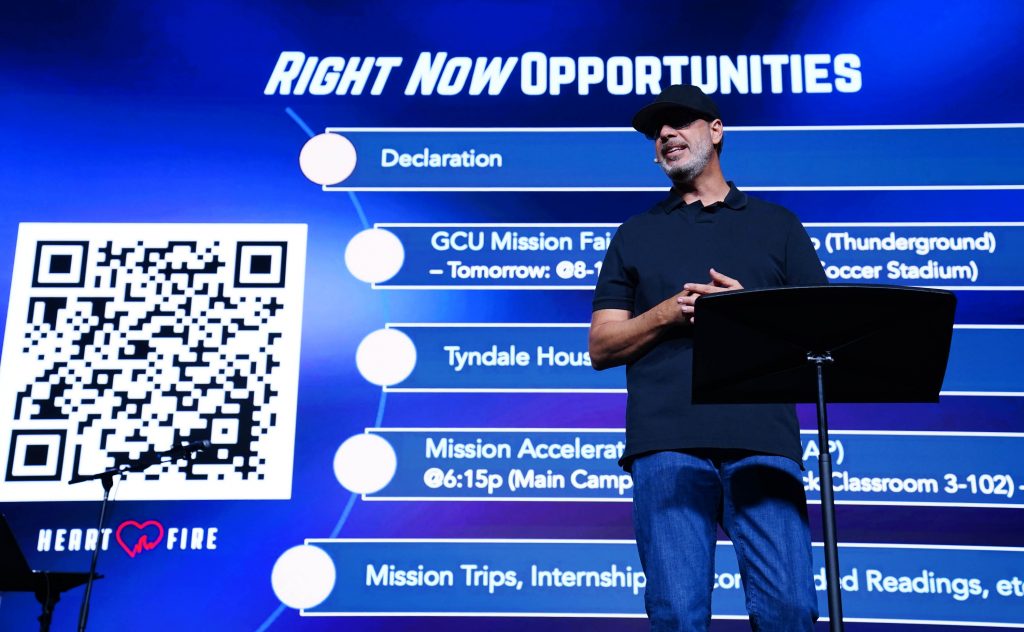
An ear, throat and nose surgeon for Heartfire, Dyer is “always profoundly moved by the miracle of hearing,” adding this is his favorite week of the year, Missions Week at GCU, which included the Thunderground Missions Fair after Chapel so students could learn about serving on short- or long-term missions. This is his favorite week, he said, because it “has the power to alter the trajectory of your life.”

“Hearing is believing,” said Dyer, referring to Acts 2 in which Peter addressed a multinational crowd on the day of the Pentecost. It was when everyone could hear Peter's words in their native language.”
Dyer added that Jesus said 16 times in the New Testament, “Whoever has ears, let them hear,” in referring to a spiritual understanding and absorbing what He was preaching.
In stressing the value of missionary work, Dyer elaborated on the life lessons of John G. Paton, the son of a Scottish sock weaver who decided at age 20 to gather poor and destitute people in towns and bring them to his church in the 1800s.
Paton became more engulfed in spreading his work after learning that fellow missionary John Williams was killed and eaten by cannibals in the New Hebrides in the South Pacific.
Dyer draws a parallel between Paton’s mission and Acts 1-8, when Jesus told His disciples that they will receive power from the Holy Spirit, and they will be His witnesses in Jerusalem before Judea and Samaria and the ends of the earth. This was Jesus’ way of having his believers spread His message.
The biggest challenge was convincing the Assyrians, who destroyed the northern kingdom of Israel by importing scholars and skilled craftsmen to Nineveh. They encouraged cross-cultural barrier marriage with other captured people into Israel to genetically dilute their enemies, increase the value of their capital and turn that region into Samaria.
Paton, who viewed the cannibals as people lacking knowledge of God, rejected pleas from his supporters to stay home. But by serving and honoring Jesus, it made no difference to Paton whether he was eaten by cannibals or worms.
“Anybody here think that way?” Dyer asked. “The Bible is filled with accounts of God asking people to go talk to people that they're not really thrilled to go talk to.”
Dyer recalled how Jonah initially ignored God’s request to talk to the Assyrians and Ninevites before agreeing after being asked again. Peter eventually addressed the Gentiles, explaining God’s life, death and resurrection and that displaying faith in Him brings forgiveness of sins.
“(It was) the first time ever that the Holy Spirit is recorded as entering the Gentiles,” Dyer said.
These examples, Dyer said, reinforced Paton’s intent to travel across the seas to share Jesus’ name to people who had never heard of Him.
“God gave His best, His Son to me, and I gave back my best, my all for Him,” Paton said.
Paton arrived on a South Pacific island – an isolated environment with no infrastructure or written language run by cannibals, virtually naked, who stood only 5 feet tall with their faces painted and ears pierced with tortoise shells.
Women were kept in cages from birth until marriage, allowed out only once a day to bathe in water and forced to be buried alive if their husbands passed away.
Paton slept with his shoes on for fear of being attacked while witnessing tribes strangling women and cooking and eating enemies for dinner.

He persevered by starting friendships, learned the language while translating Scripture and invited locals to “listen to a God who didn’t send His Son but gave His Son so they could live forever,” Dyer said.
A gradual transformation started with 120 men wearing clothes and the acquisition of an old church building.
Paton passed away in 1907 at age 82, but “he was permitted to see something that a lot of missionaries don't get to see – thousands of new believers,” Dyer said.
In a return trip to Scotland, Dyer told admirers that he felt he could have done more.
“I need to hear that,” Dyer said. “I guess you probably do, too, because there's going to be a time when we get to the end and we look back and (say), ‘Did I give every ounce of my energy, every penny of my mouth, every minute of my time?” Dyer said.
In balancing risks and recklessness, examine your motives, Dyer said. “Anybody who's considering doing something out of either ego or adventure, that is a classic recipe for recklessness.”

During a trip to the Middle East three months ago, Dyer and his group witnessed missiles flying from Iran into Israel, prompting two girls to cry.
Dyer assured them they weren’t in danger, but they replied, “We're not crying because we're afraid. We're crying because there might be people in Israel underneath where those missiles are going to land that have never heard about Jesus.
“Is there anybody here that feels that same burden?”
In continuing the Hall of Faith theme for the 2025-26 year, Dyer cited Enoch, who lived a life so righteous that God took him without experiencing death.
“And without faith, it's impossible to please Him, because anyone who comes to Him must believe that He exists and that He rewards those who earnestly seek Him,” Dyer said.
***
Next Chapel speaker: Ashley Wooldridge, Christ's Church of the Valley, 11 a.m. Monday, Global Credit Union Arena
***
Related content:
GCU News: Pastor Griffin: Trust God to carry us through challenging times
GCU News: Pastor: Don't lose sight of where faith is rooted
GCU News: Missions Trip to Nicaragua becomes artform for students