Photos by Ralph Freso
Computers are great and all, but a supercomputer?
That’s university gold, particularly when it comes to research.
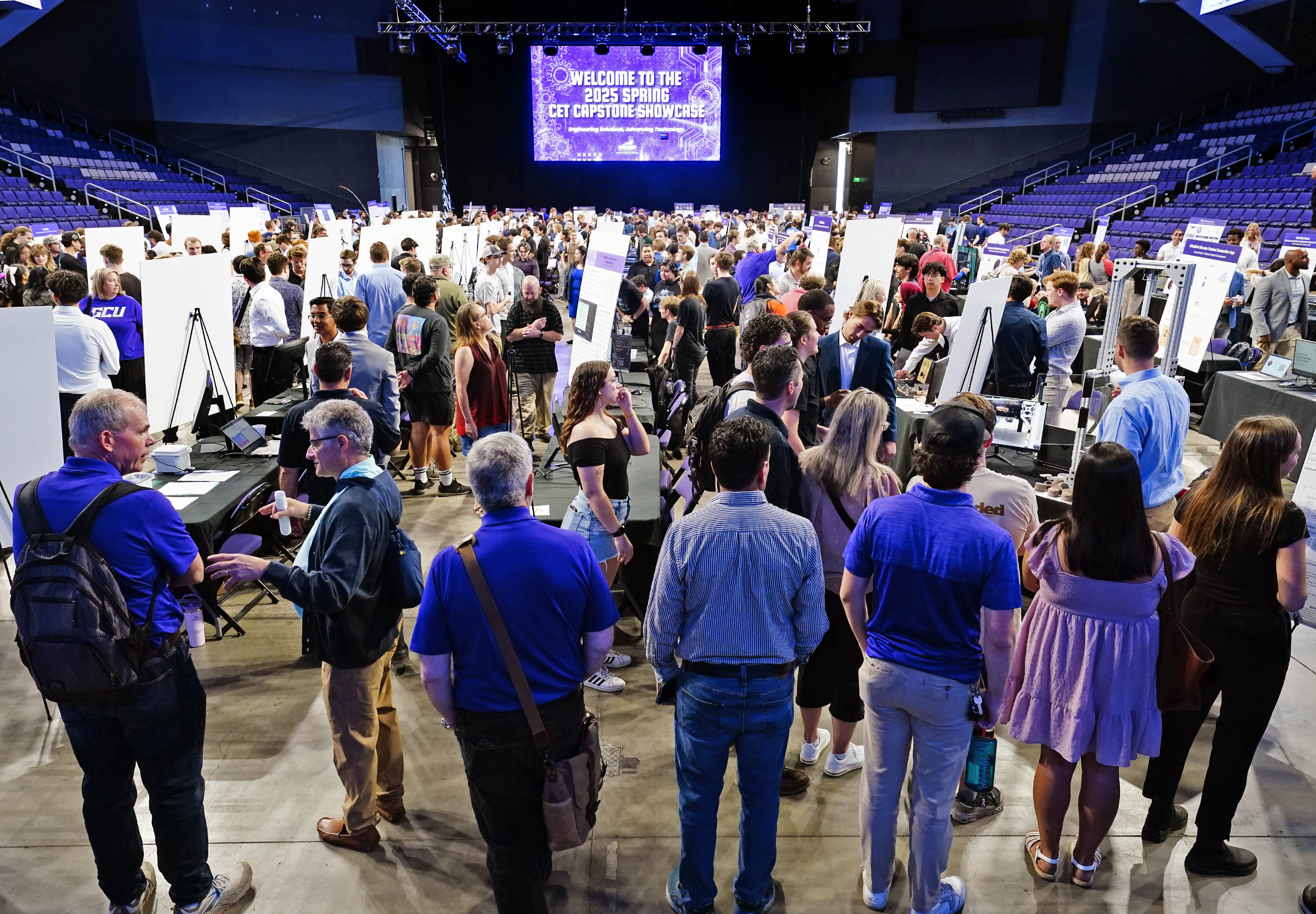
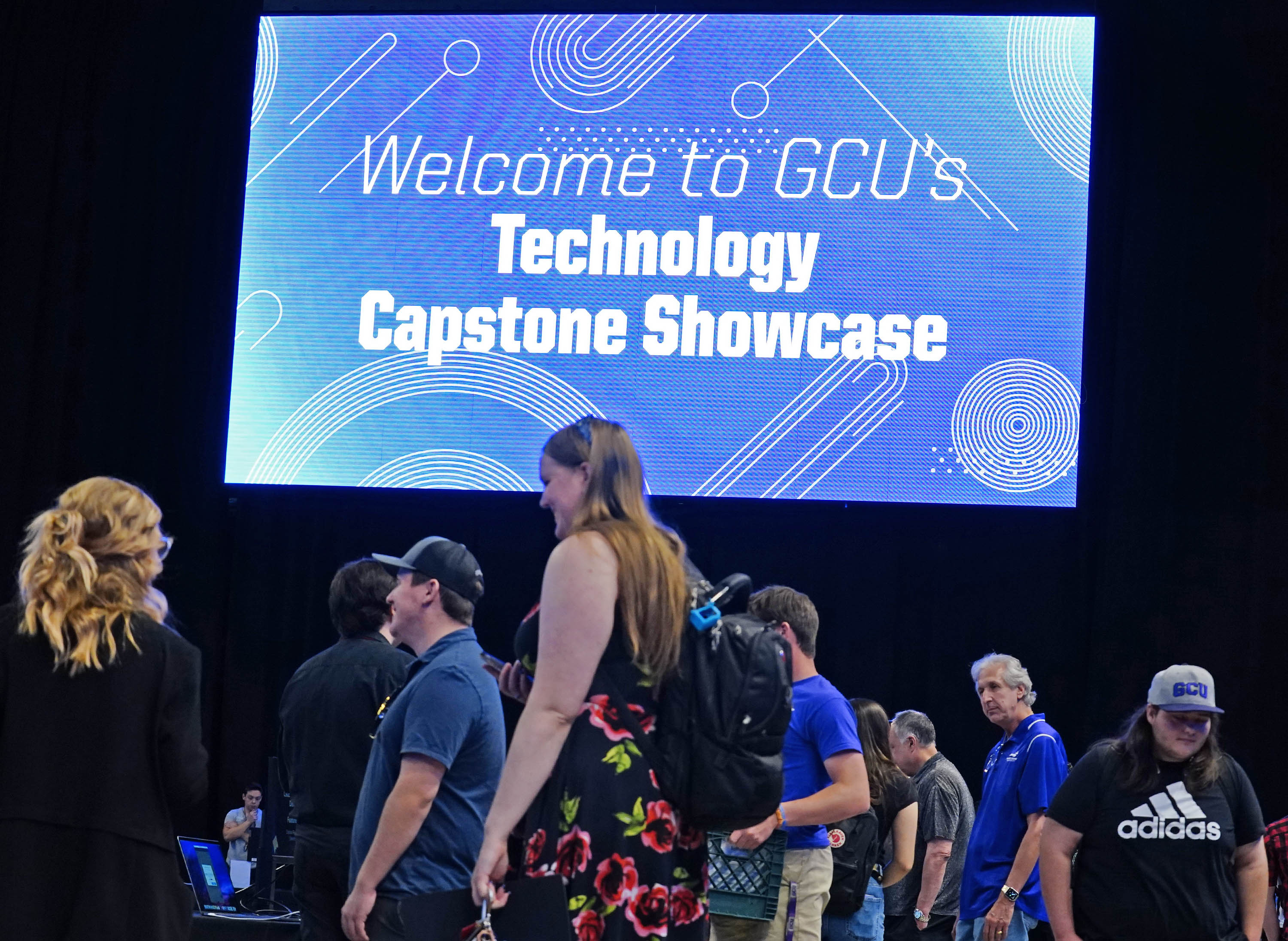
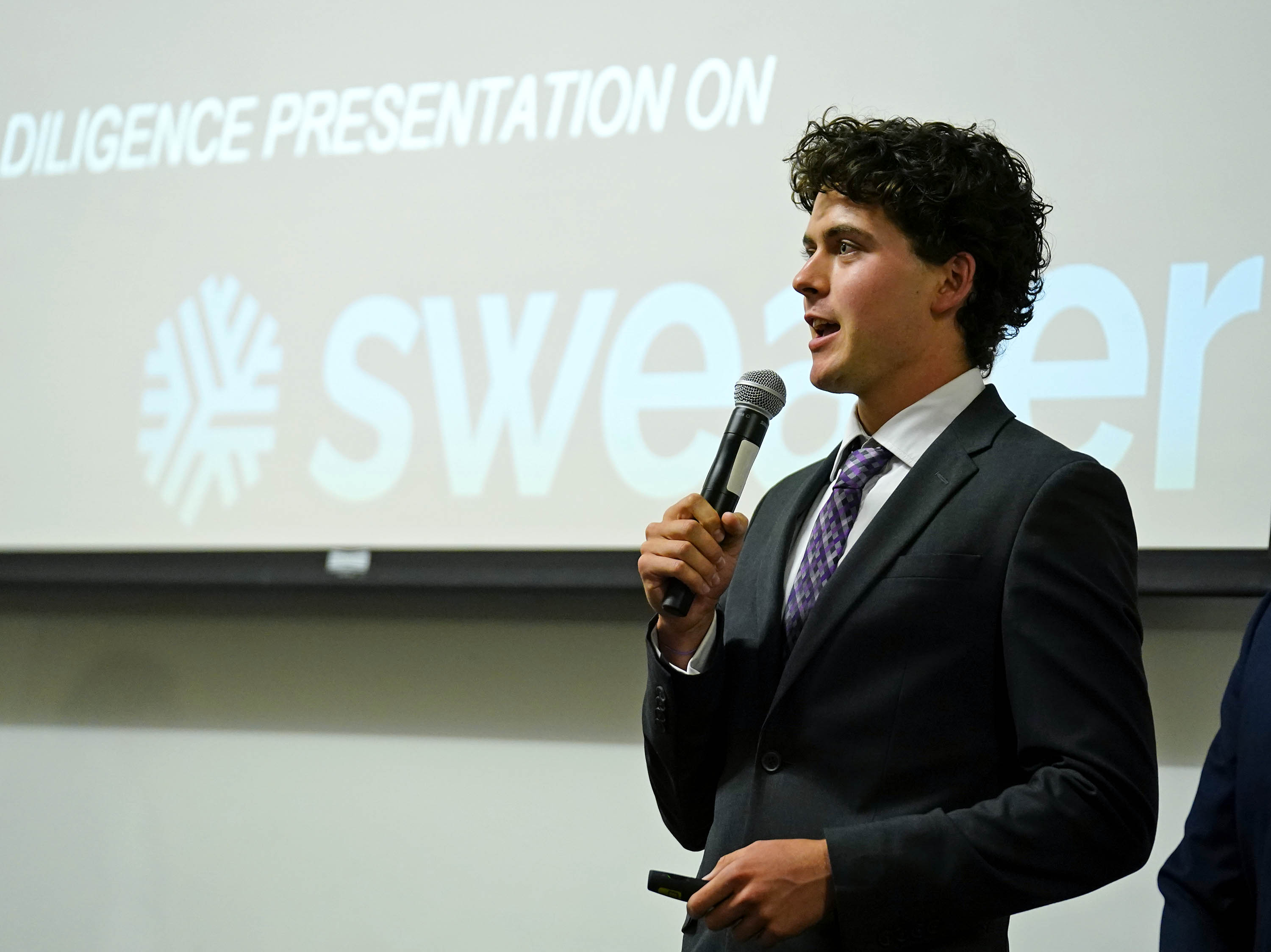
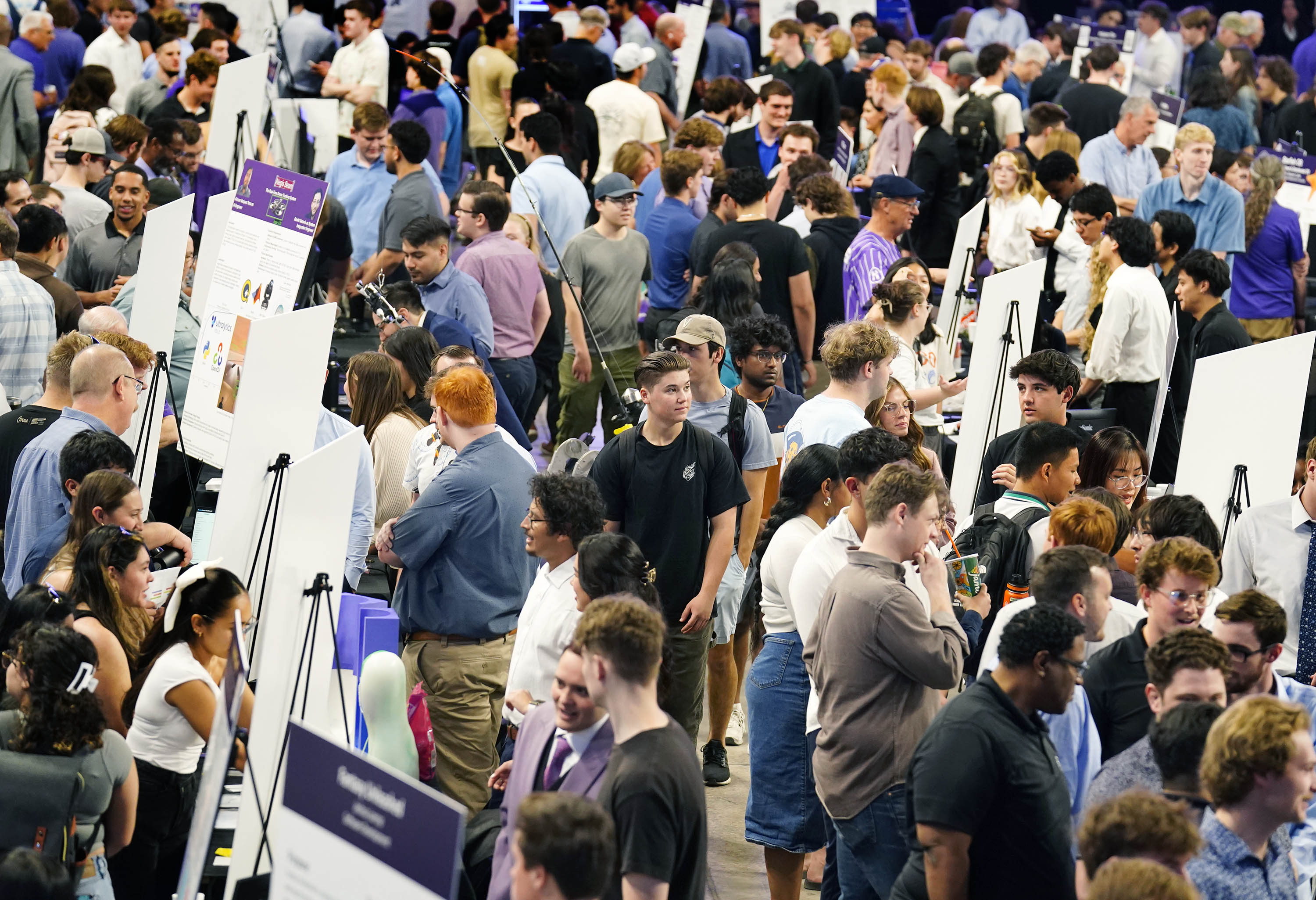
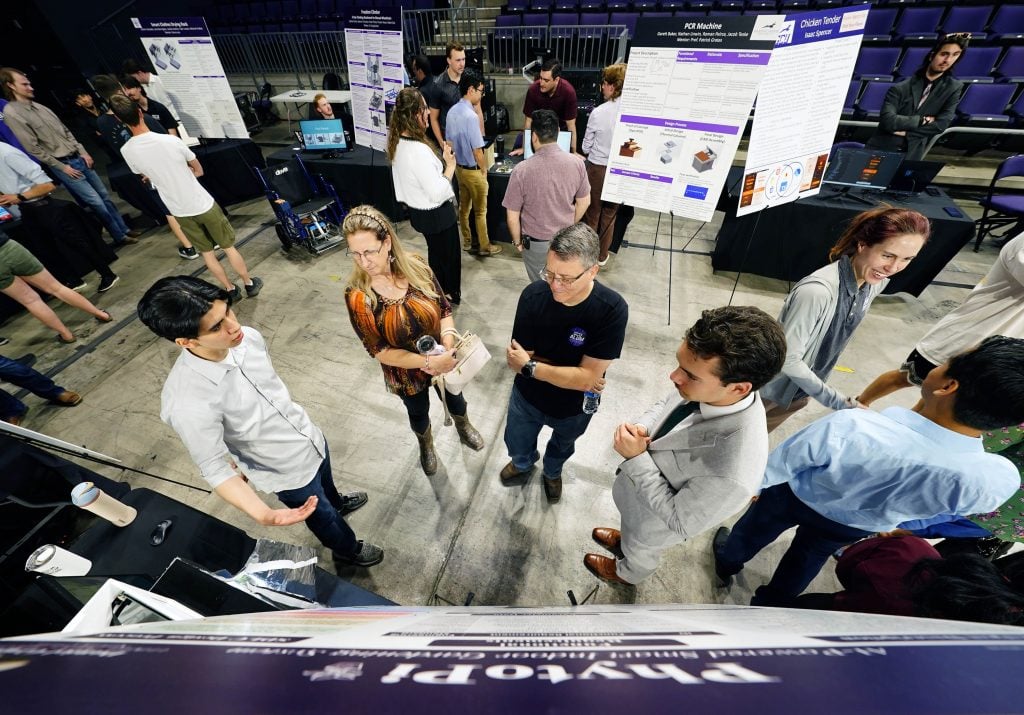
It’s what Ben Walters’ team cooked up for its capstone project, ProngHorn HPC – just one of almost 90 projects completed by 376 students for Wednesday’s Grand Canyon University Engineering and Technology Capstone Showcase.
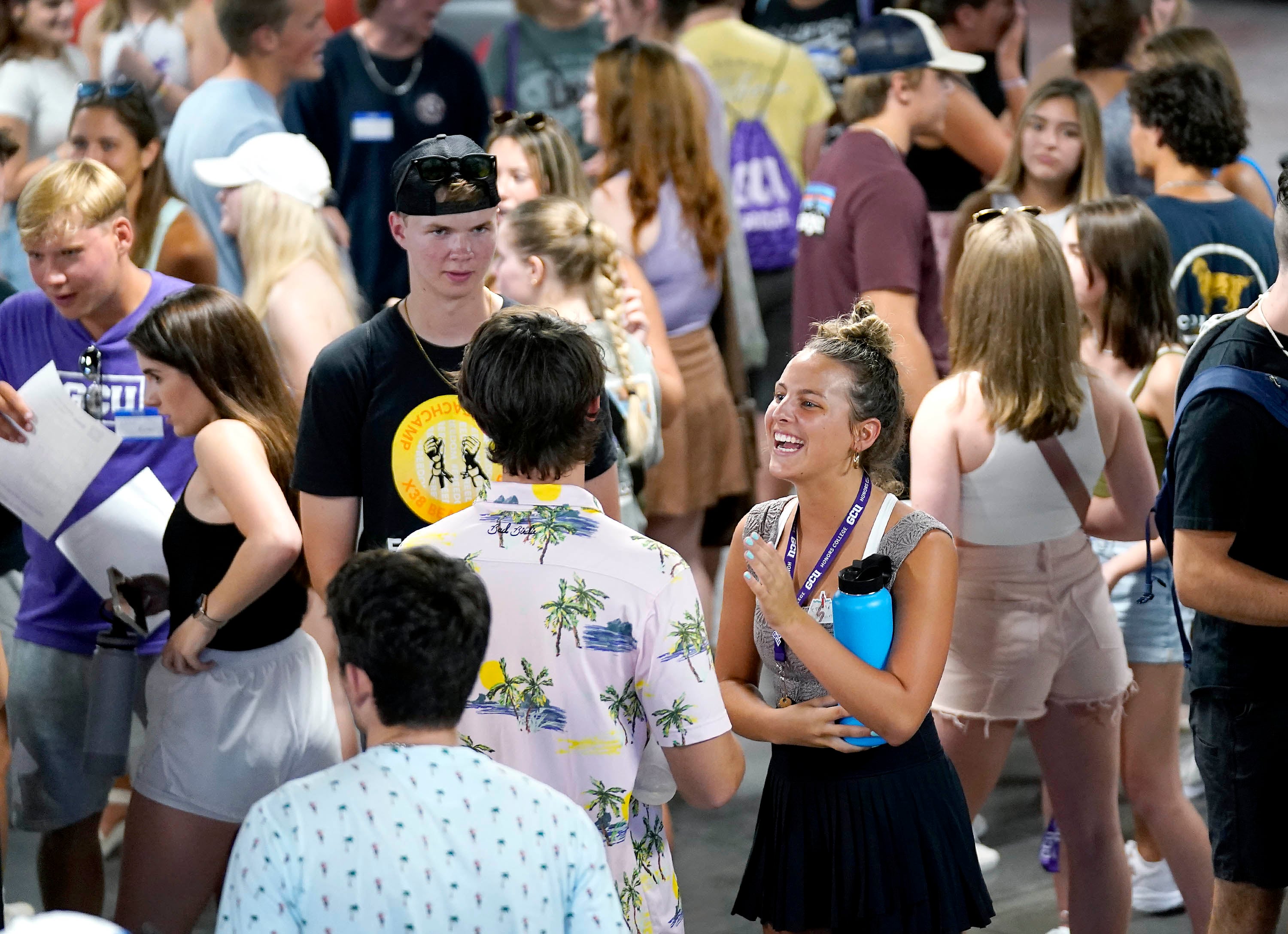
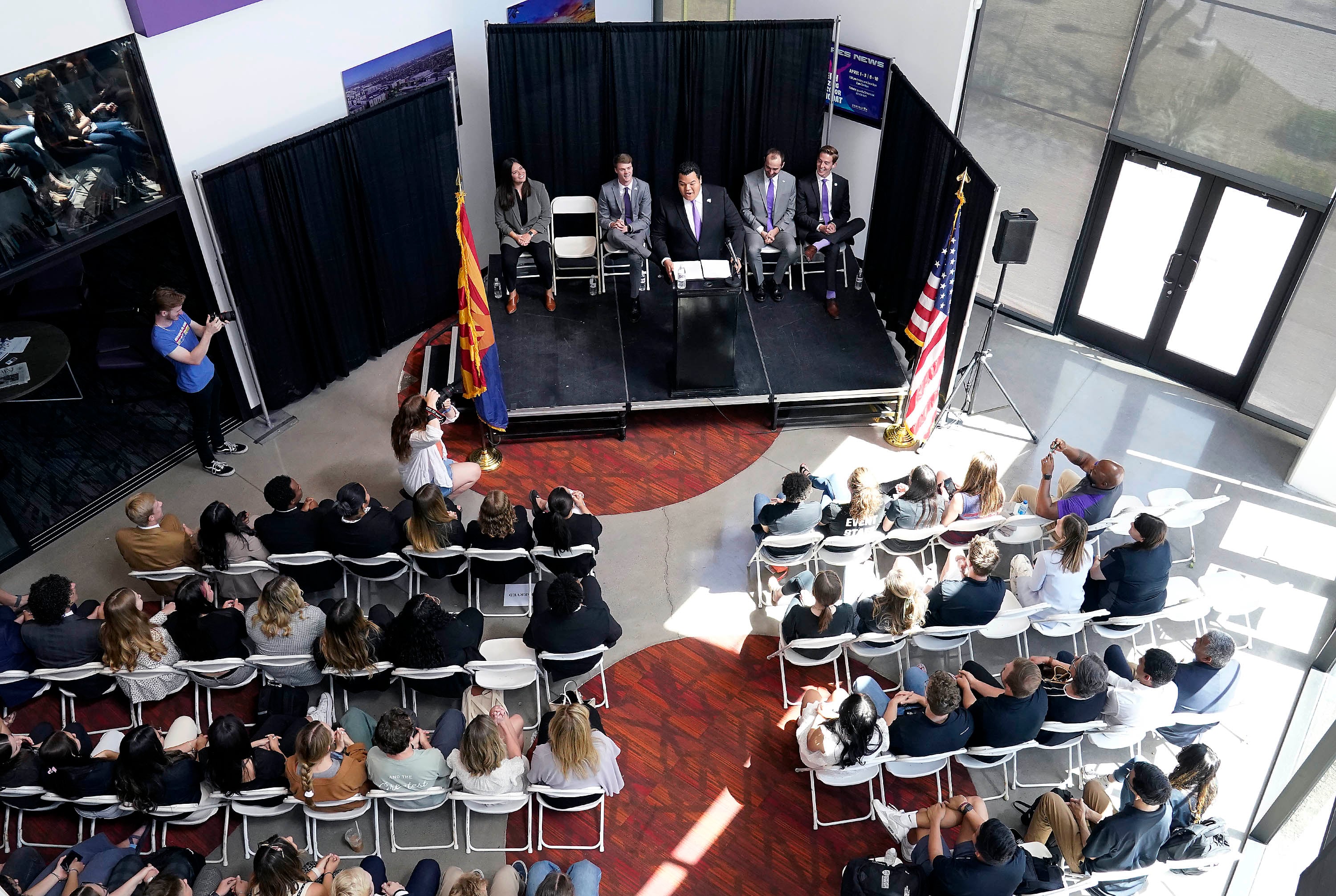
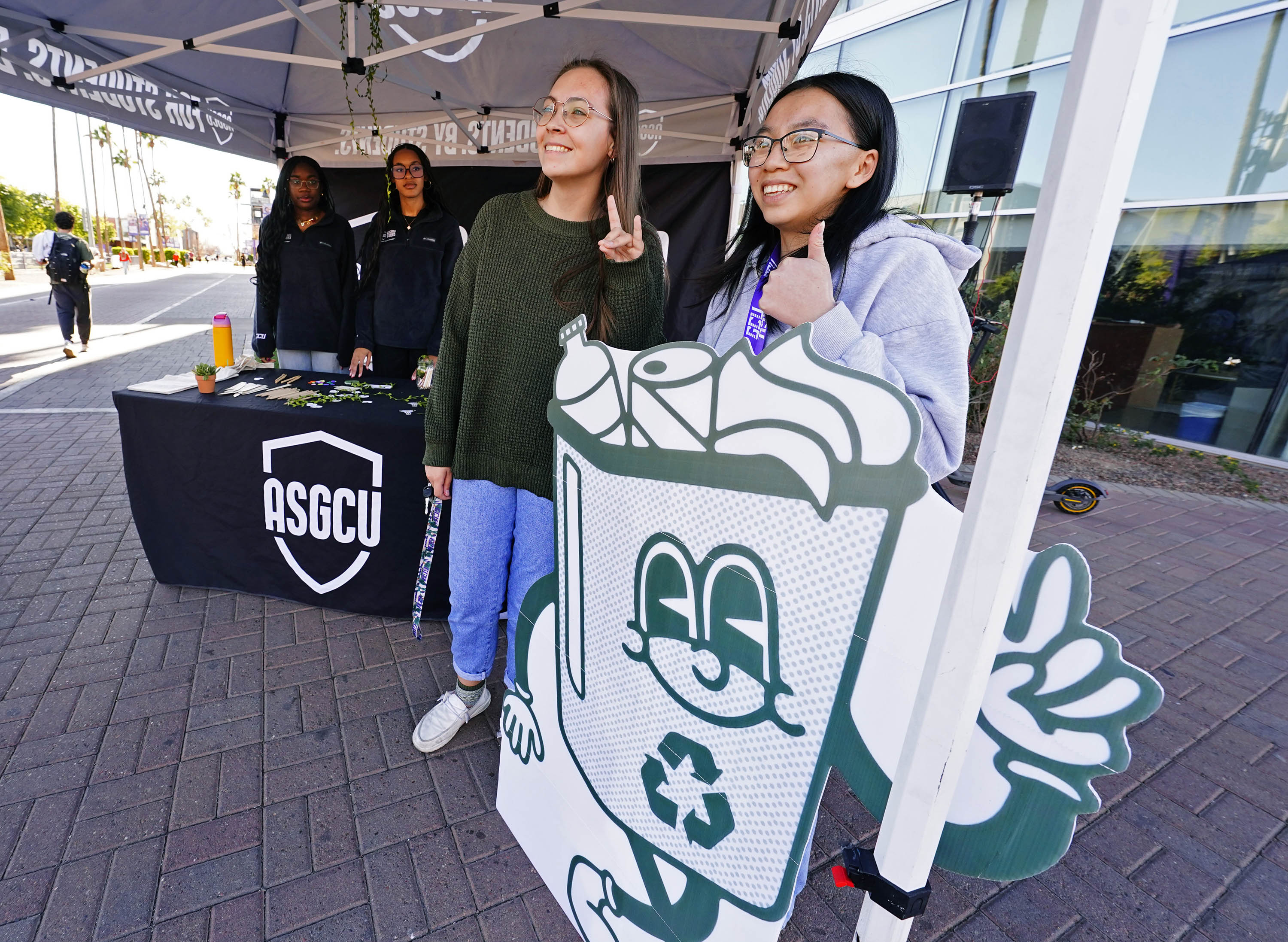
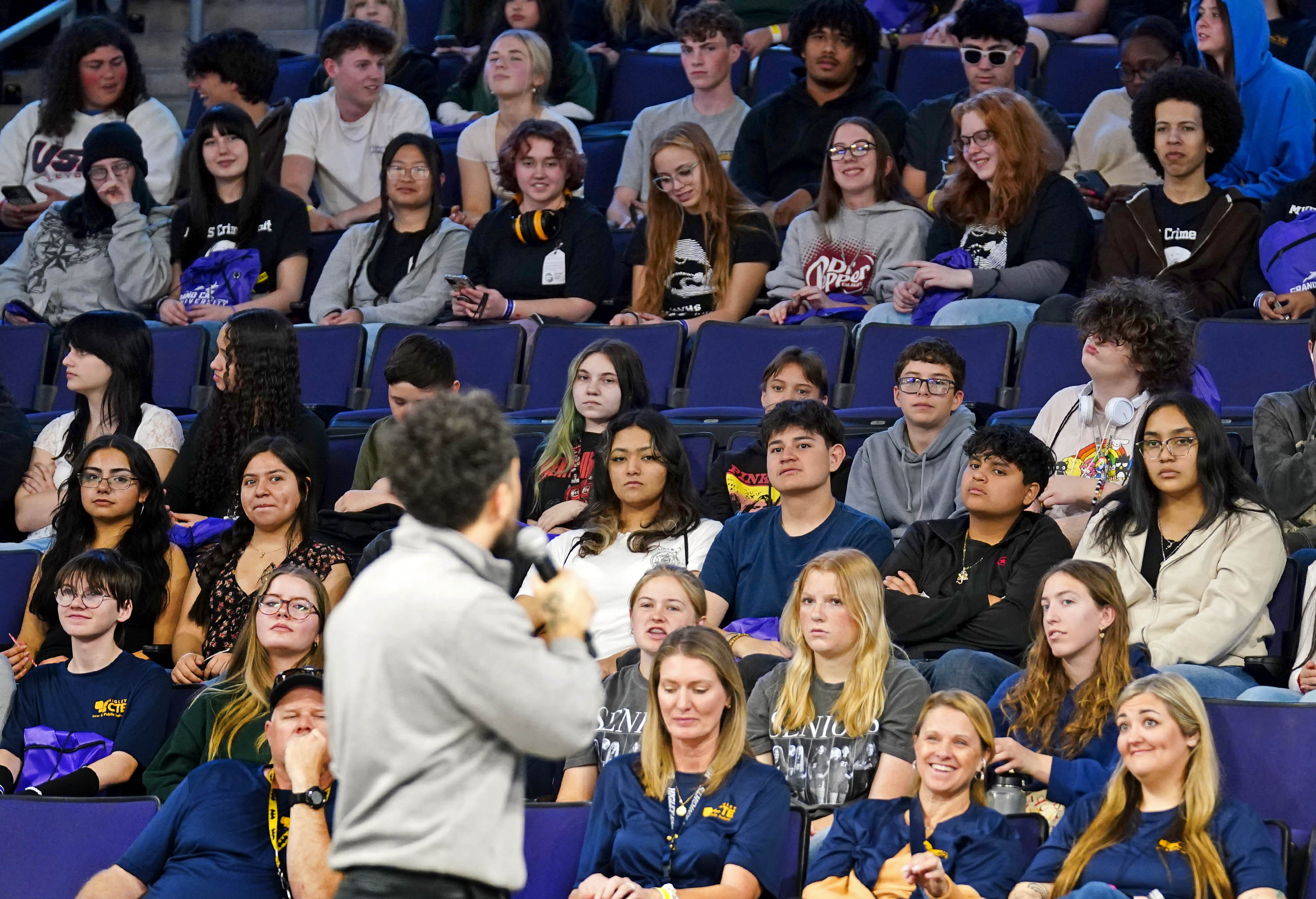
The event was so big that it packed the floor of Global Credit Union Arena and spilled outside onto the Quad.
What was impressive about this year’s showcase, said Samantha Russell, director of interdisciplinary capstones, was that two online software development students flew in to present their projects.
Also, 17 business students participated alongside engineering and technology students in the capstones this year.
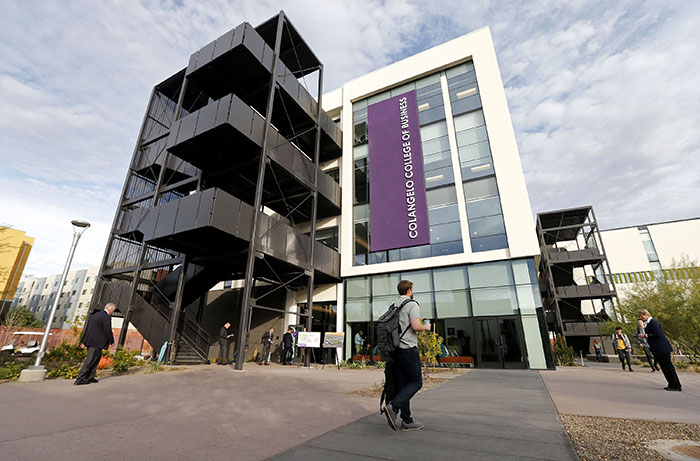
“We are looking forward to increasing our partnership with the Colangelo College of Business in future years, as well as partnering with the other colleges to increase the interdisciplinary aspects of our capstone experience,” Russell said.
A supercomputer
The students of ProngHorn HPC, which also included cyber and IT majors Zachary Scharton, Colby Collier and Mario Garcia Alvarado, built an on-campus computing platform for faculty and student research. HPC stands for high-performance computing, a technology that aggregates computing power, using clusters of powerful processors that work in parallel to process massive, multidimensional data sets and solve complex problems.
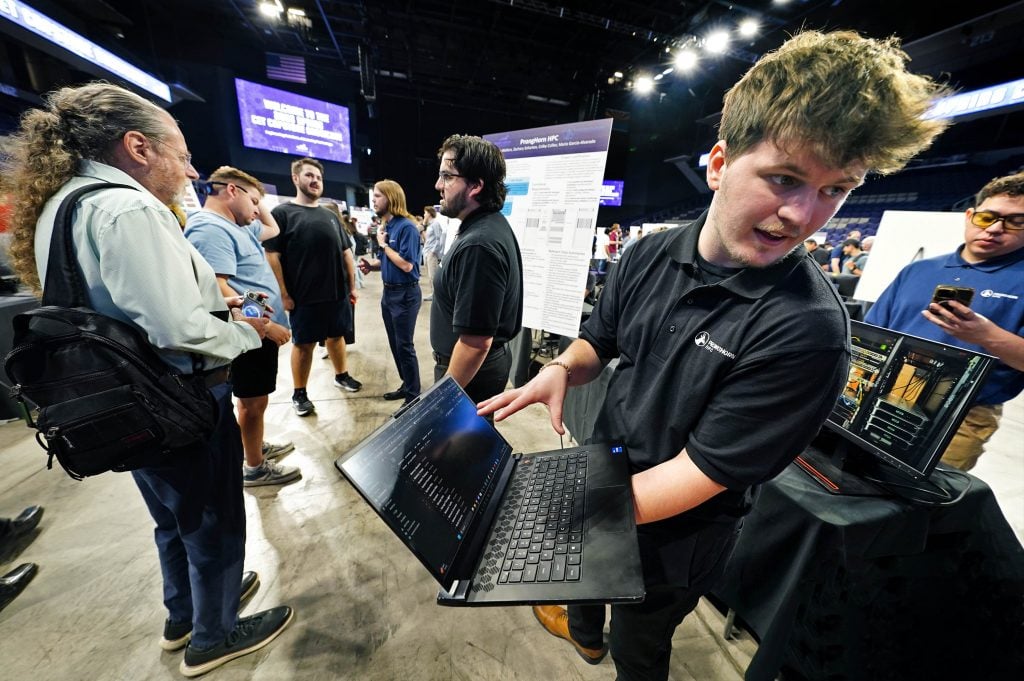
Said Walters, where it might take a typical computer an hour to solve a problem, an HPC might do it in 10 minutes.
The idea for the project came from GCU and its partner, Grand Canyon Education, to magnify the school’s research efforts. An HPC is essential for projects that might involve AI, machine learning or large-scale data analysis, and it makes the university more competitive when it comes to research grants.
ProngHorn HPC is the university’s first HPC system, and “a sizeable accomplishment,” said John Kalua, assistant vice president of campus technology.
Creating the HPC was a Herculean task, with the ProngHorn team putting in 800 combined hours just to get the open-source workload manager for Linux clusters, called Slurm (Simple Linus Utility for Resource Management), working.
“For the first three months, we just researched,” he said, as the team waited on the hardware they needed. Not only that, but “nobody had the tech expertise,” Walters said. “We had to learn everything from scratch.”
But when it came time for a test job, “We were able to smash that out of the park,” Walters said of that first successful run.
For pickleball fans
On the Quad, visitors smashed pickleballs out of the park – well, they smashed them against a pickleball paddleboard to test one engineering team’s capstone project, the PicklePod.
It’s a compact, fully automated pickleball training simulator built for solo practice.
One of the team’s members, mechanical engineering senior and entrepreneur Caleb McCandliss – he founded lip balm holder Car Chap, featured by Car and Driver magazine in fall 2023 – was approached by a pickleball business owner who wanted to fill space in a prefabricated facility.
The team came up with the PicklePod and even created an app so users can design their own training program.
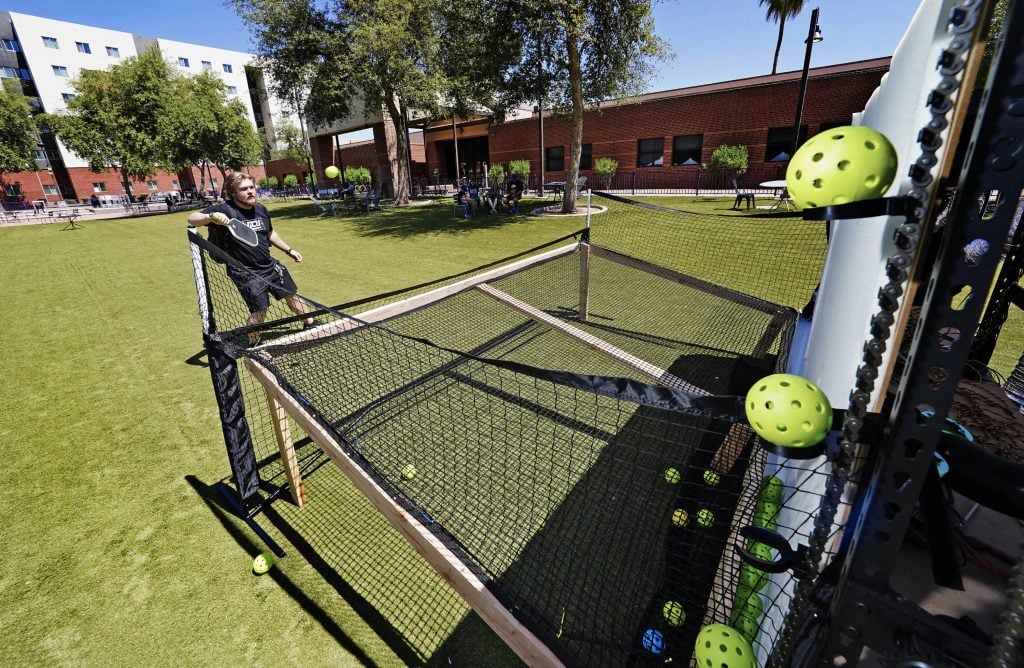
One of the challenges for the team, said senior mechanical engineering major Wyatt Johnson, is working through errors because the sensors they used aren’t the highest-performing sensors.
But, “The overall challenge that made it fun was designing our own launcher,” Johnson said. “We originally started with prebought launchers, but after tearing them apart, we had filtered out a bunch of stuff that we didn’t actually need, so we ended up going with our own launchers.
“That was a really fun process, because with launchers, compression and grip are a really big factor … so we had to iterate a bunch of our designs to get that compression and grip (right).”
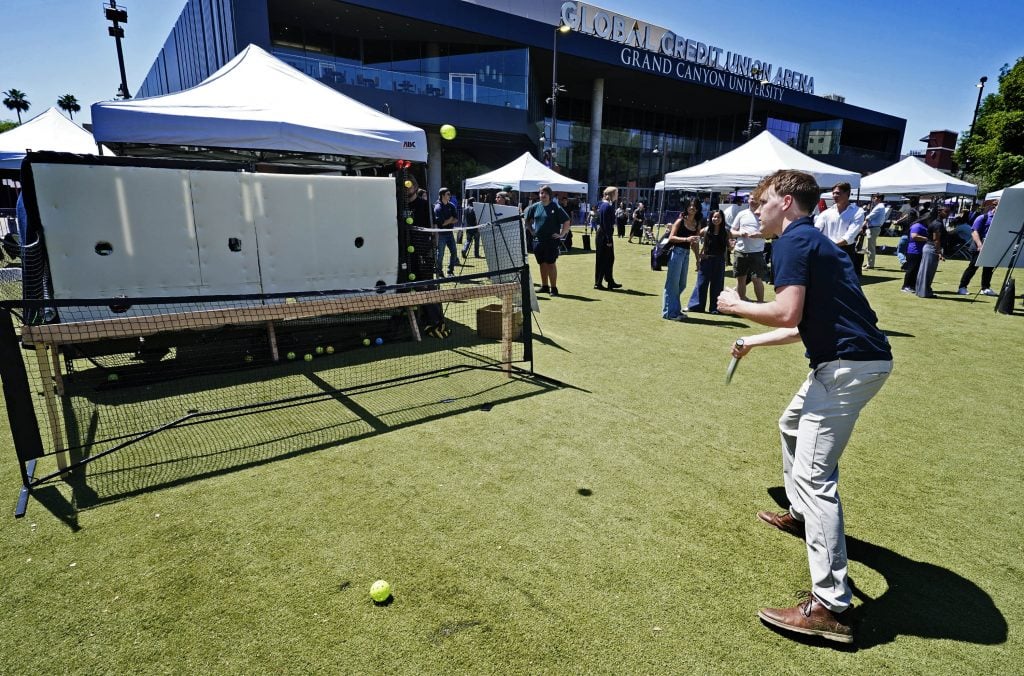
Johnson said there was a sense of accomplishment in completing this project, which also featured team members Braydon Conard, Kyler Harden and Jack James.
“It was really cool going from CAD design to computer screen to actually be able to put your hands on something. It’s a really rewarding feeling as we stood back and realized, ‘It works!’”
Grain entrapment rescue system
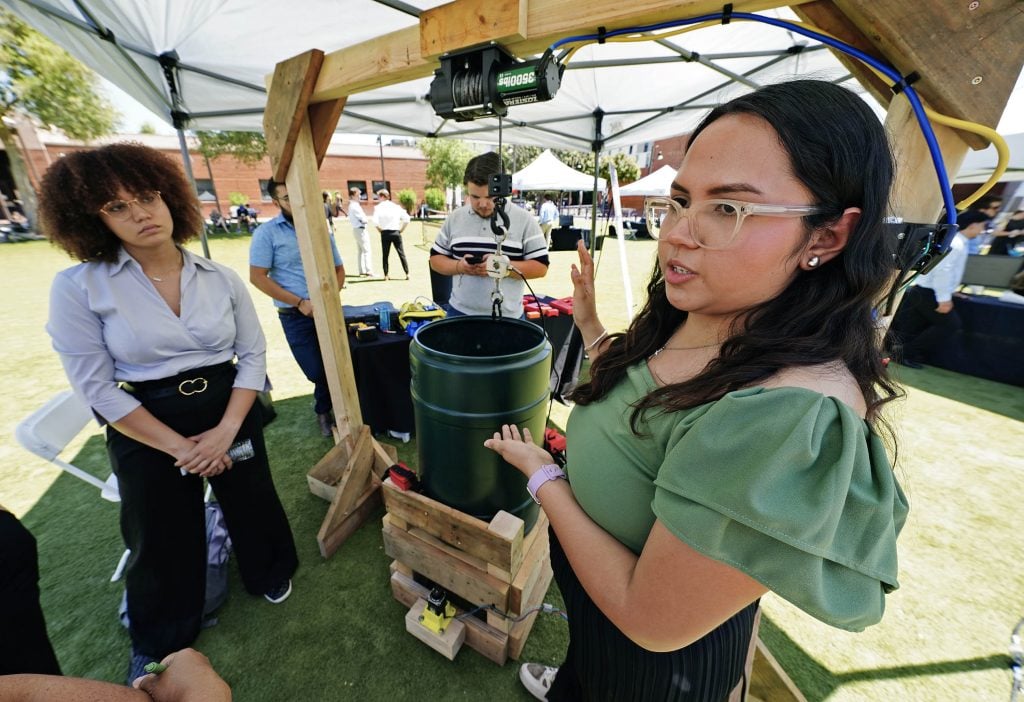
Mechanical engineering major Alejandra Pasillas and her team created an automated grain entrapment rescue system.
She was in a precapstone class in which her professor mentioned looking into rural areas, where not a lot of technology is used. Pasillas wanted to look into agriculture, “because it’s really a forgotten industry, and there’s a lot of outdated technology.”
She learned about safety problems with grain silos on smaller, family-owned farms.
In silos, grain with too much moisture develops a crust or bridging that sticks to the walls. While large companies have the equipment to remove that crust, on smaller arms, usually a worker will go into the silo and break that bridge with their own body weight to get grain flowing again.
But then the bridges collapse and the worker is engulfed by flowing grain.
Grain bin entrapments are a leading cause of agricultural fatalities, resulting in more than two dozen deaths annually in the United States. Because rural farms are often far from emergency responders, by the time help arrives, it’s often too late.
The team’s system combines calf-mounted pressure sensors, a wearable harness and an automated winch that activates when sinking and grain entrapment is detected.
Students on the team heard several stories about grain entrapments while working on their project, like someone who came through the capstone showcase who said their father got stuck in a grain silo but, thankfully, the family was able to get rope to pull him out.
“The fact that there’s still fatalities due to entrapment, it’s kind of concerning,” said Pasillas, who worked with teammates Sofia Mayberry, Michael Podlesnik and Dalton Miller, along with Colangelo College of Business partner Emily Coyle. “It’s been happening for so many years and there’s nothing to prevent it other than not putting the person in the silo.”
A smart pillow
Inside the arena, mechanical engineering student Madeline Hammond and her team showcased their Vitals Pillow, a nondiagnostic wellness monitoring system that transmits physiological data for heart rate, respiratory rate, peripheral oxygen saturation (SpO2), temperature and blood pressure
The idea, a project dreamed up by GCU professors, was to streamline how to get data for those five critical vital signs through a smart pillow.
But the team found it couldn’t risk placing the necessary sensors inside a pillow without injuring the patient.
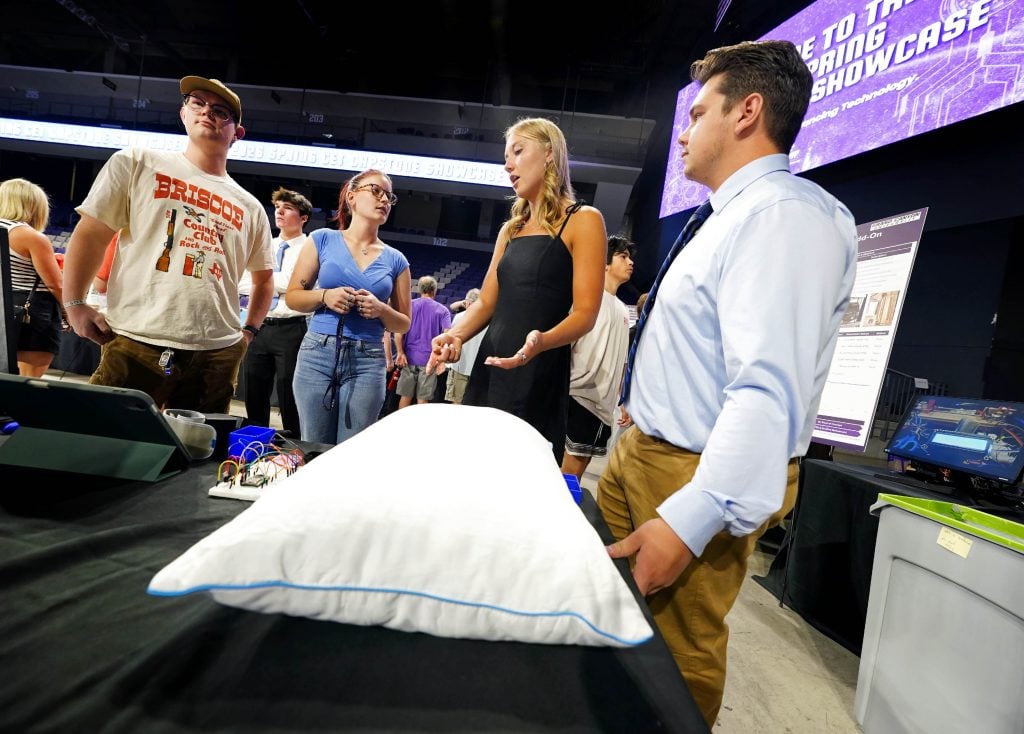
“You can’t get accurate vital signs really above your shoulders or from the pillow. The only thing you could get accurate would be SpO2 and heart rate, which would be like from having a clip on your ear, which you can’t really do with a pillow, anyway,” Hammond said.
So the team pivoted and created a wearable strap with a temperature and respiratory rate sensor and a glove with an oxygen saturation clip and heart rate clip that the patient wears.
The team incorporated the pillow as the communications hub or brain of the system. The students used an Arduino cloud server that could transmit data to any mobile device.
“We have four of our five vital signs that are almost reaching clinical accuracy,” Hammond said. “ … A lot them are lot better than those wearables, like an Apple Watch, Oura Ring, Fitbit, those kinds of things.
The team, which also included Landon Scott, Jose Castro and David Rodriguez, partnered with GCU nursing to verify the accuracy of the data using their clinically accurate equipment to test their results.
The beauty of the system, said Hammond, is “if you’ve got a family member and she’s back from the hospital, you can check in on them and check their vital signs at work or if you’re away from home.”
Hammond added that what she valued from doing this project was “learning a lot more about the biomedical side … and collaborating with my teammates to figure out the best solution.”
Hope for black thumbs
Team PhytoPi embarked on a project to give black thumbs hope of keeping their plants alive.
They created an automated indoor gardening system to monitor and optimize plant growth using sensors, AI-powered analytics and smart environmental control. The system monitors temperature, humidity, air quality, soil moisture and water level.
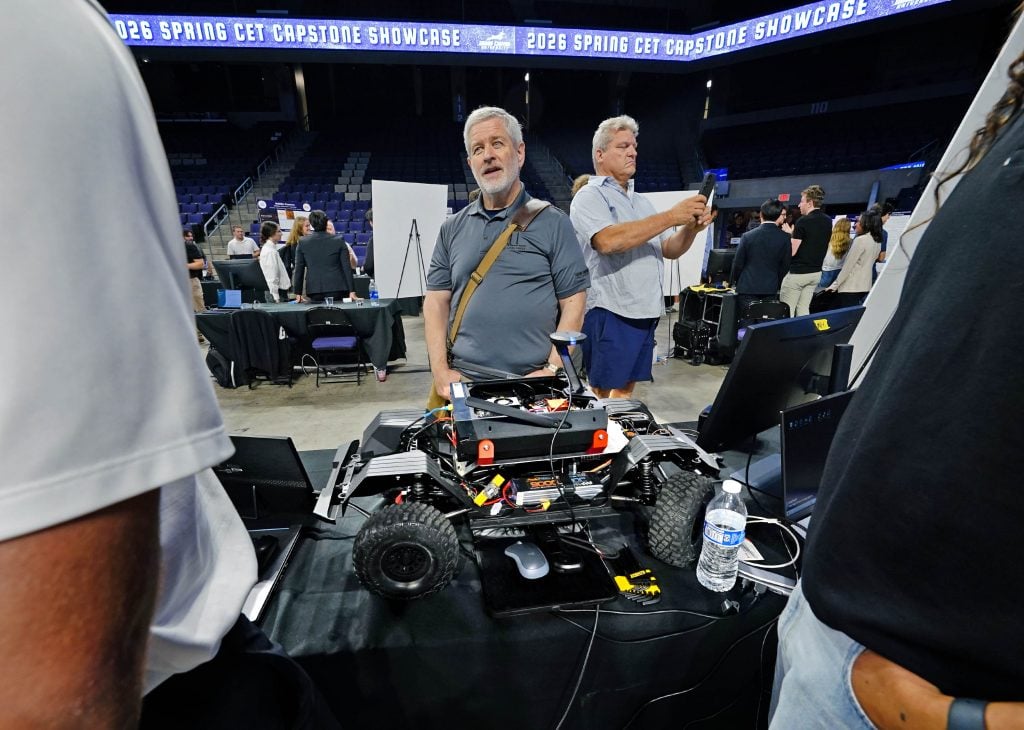
“That’s the only thing the user would have to do is add more water,” said Daniel Grijalva. “Other than that, it takes care of ventilation, the lighting, the watering, the most important parts for the plant.”
Nolan Tuttle said it was his mom who prompted the project.
“She’s very interested in home gardening,” Tuttle said. “I consulted her a lot for the design of everything, because she does a lot of grow-light work, and I thought this would be perfect for anybody doing this as a hobby. We could make a more affordable tent-grow solution.”
Grow tents online can cost $500, he said.
One challenge of this project was finding the right plant for testing.
But after just one failed attempt, the two software engineering majors successfully kept a basil plant alive.
Mom would be proud.
Manager of Internal Communications Lana Sweeten-Shults can be reached at [email protected].