
Photos by Ralph Freso / Slideshow / Livestream
Everyone longs to be blessed by a greater somebody.
But pastor Chad Moore of Sun Valley Community Church warns that seizing power, possessions and prestige do not assure that you'll be blessed.
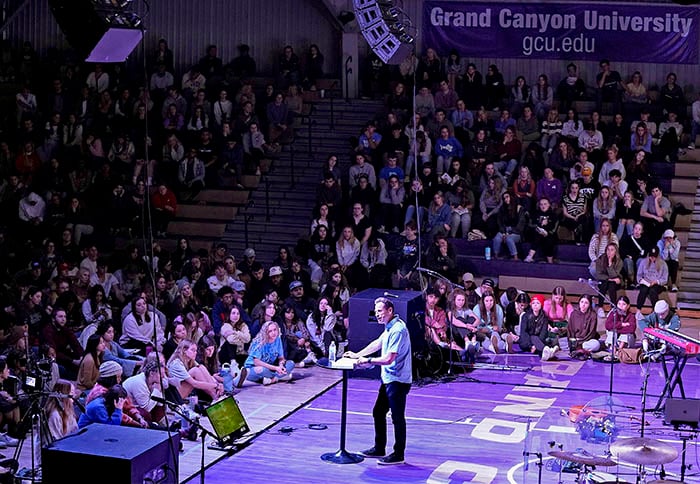
“The posture of receiving is because everything that God wants to do to you in life is a result of His grace,” Moore told Grand Canyon University students while asking them to extend their palms during an opening prayer. “You don’t earn it. You can’t achieve it. All you can do is receive it.”
Continuing the Chapel theme of Hall of Faith during Chapel on Monday at Global Credit Union Arena, Moore highlighted Jacob, who overcame his ruthless mission to be blessed over his older twin brother, Esau, and later fought a man believed to be God. Jacob would injure his hip, which would lead to his transformation.
“So many people equate self-worth to net worth, and it’s fleeting,” Moore said. “… I talked to people with money and fame, and they’re deeply disillusioned because our souls are created for something more. Your soul was created for God to know Him, love Him, to receive love from Him. Your relationship with God, all of it, is receiving His blessing in your life.
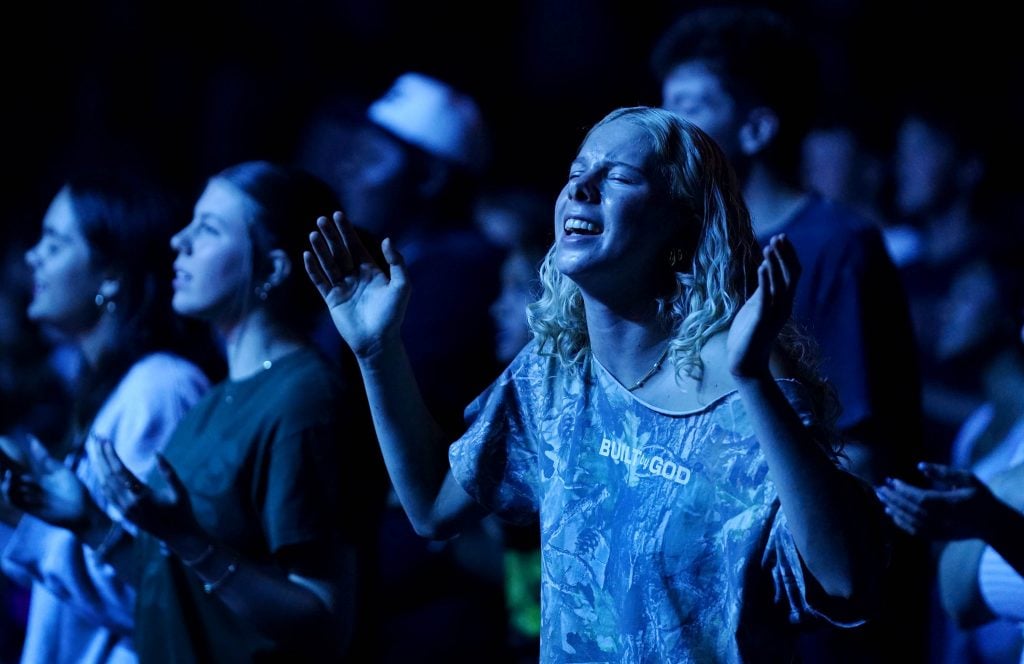
“This is why you were born. This is why you were breathing in and out, to know God, to walk with God.”
In the case of Jacob, he was aligned more with his mother, Rebekah, while older twin brother Esau connected with his father, Isaac, regarding hunting and fishing. Jacob knew that tradition allowed for the older son to receive favored status from the father, accompanied by possessions, power and prestige.
In Genesis 27, a jealous Jacob and his mother, each aware that Isaac – now blind – is ready to anoint Esau as his favorite, devise a scheme in which Jacob dresses like Esau to receive the blessing. Jacob puts goat skin on his neck to resemble Esau’s hairy neck, while Esau is hunting for his father’s dinner.
Jacob – wearing his brother’s clothes – tells his father he is ready for the blessing. Isaac hugs Jacob and feels his hairy skin, which convinces him to give the blessing to the disguised Jacob.
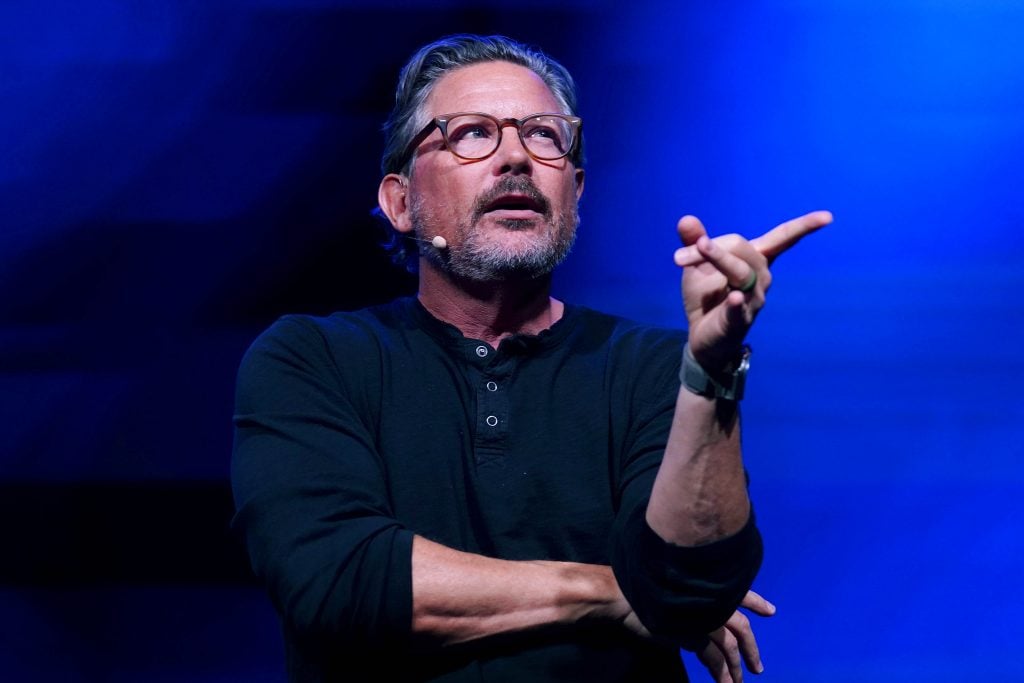
“(Jacob) wants the formal blessings,” said Moore, referring to power, possessions and prestige that accompany the blessing. “But what he’s really after is for his dad to say, ‘I’m so proud of you. I’m so glad you belong to me. I love you the way you are. I don’t care if you don’t like to hunt and fish.’”
Moore is baffled that Jacob would go to great extremes to get his dad’s blessing.
“Are we in the major we’re in because that’s what we love or because we want someone to say, ‘Good job, you belong, you’re special.' We don’t want to be involved in that field but (are) doing it so someone will bless us?” Moore asked.
“Don’t we pretend to be different people in different environments? One person here, one person there. We’re pretending, just like Jacob, to get blessed in different environments because everyone wants to be blessed by a greater somebody. We’re all looking for the blessing.”

After Esau returned from his hunting trip with the expectation of being blessed, Isaac discovered that Jacob has tricked him.
Jacob runs out of town to work for his uncle, Laban. Jacob falls in love with Laban’s daughter Rachel (described in the Bible as lovely in form and beautiful) but must work for Laban for seven years before marrying her.
Laban tricks Jacob into marrying Leah (described with possessing “tender eyes”) and tells him he must work another seven years before marrying Rachel.
“Are you looking for the blessing in a relationship?” Moore asks students. “Are you dating somebody that you’re faking a lot? Do you pretend to be somebody you’re not? Everyone wants to be blessed by whom we assume is a greater somebody.”
Jacob gains women, work and wealth but is still longing to be loved. He takes Rachel, Leah, servants and wealth as he runs away from Laban en route to his homeland.
Jacob finds out Esau is looking for him and decides to split his servants and cattle, believing that only half of his possessions will be wiped out if Esau attacks.
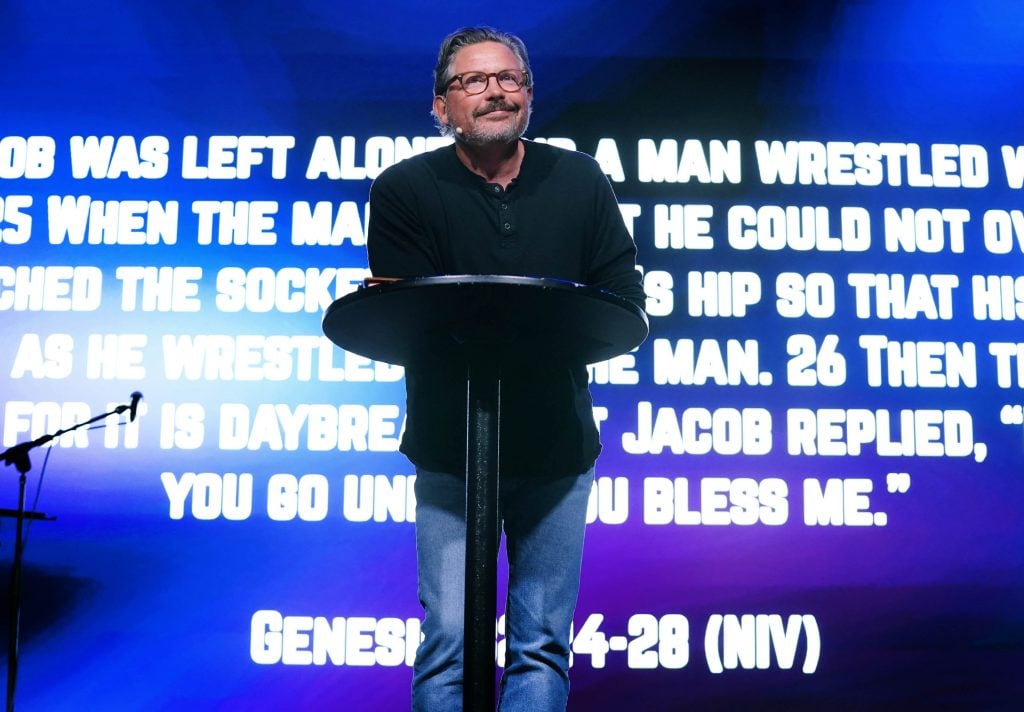
In Genesis 32:24-32, Jacob wrestles with a man believed to be God. The man couldn’t not overpower Jacob but touches his hip socket and dislocates his hip. The man asked to be let go since it is daybreak, but Jacob replied, “I will not let you go until you bless me.”
“Lean in,” Moore tells students. “… We’re all looking for it. All of Jacob’s life, he’s been looking for love in all the wrong places, looking for blessing in all the wrong spaces, because all of us want to say, ‘I'm beloved, I’m loved, I’m special.' ”
The man tells Jacob his name will now become Israel, “because you have struggled with God and with humans and have overcome.”
Jacob asks for the man’s identity, and the man said, “You know who I am,” before leaving.
“God changes his name, God changes his life, changes his legacy,” Moore said. “God blesses him and says, ‘You belong. You are loved, and you are special.”

Moore said he is approached by young adults asking how they can grow in their faith, adding that they spend time worshiping God, remain consistent in their faith and meet in small groups.
“Don’t worry, you will,” Moore said. “You will when pain comes into your life. When pain comes into your life, you will apply what you know. And that’s the only way to grow.”
Moore finished with one fatherly piece of advice to the students:
“Find your identity and worth in God, and when life is good and hard, follow Him, and He will grow you up in his grace. And sometimes you will wrestle and walk your life with a limp.
“But the most content people, joy-filled people, have wrestled with God. They walk with a limp and find their identity and love in worth in Him. And there’s nothing greater this side of heaven.”
Next at Chapel: Final Chapel, 11 a.m., April 6, Global Credit Union Arena
GCU News senior writer Mark Gonzales can be reached at [email protected]
***
Related content: