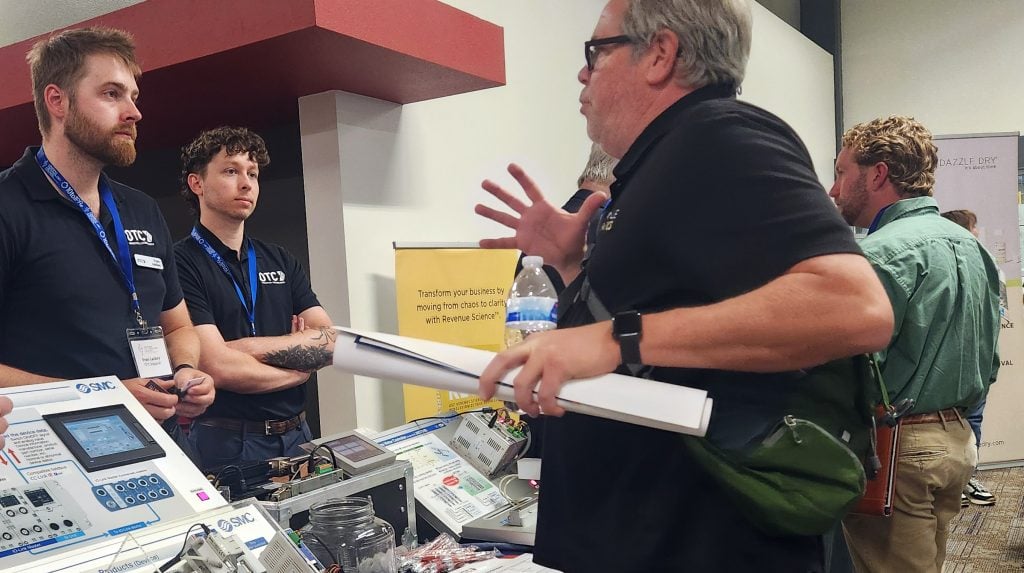
President Brian Mueller shares university's vision to be manufacturing hub
It began with a longboard and a dream for Weston Smith, who would watch his fellow students at Grand Canyon University hoof it to class across the sprawling campus as it was experiencing explosive growth.
That gave him the idea nine years ago to start building electric longboards.
As it turns out, that would be a jumping board to a new venture – manufacturing parts for the aerospace, medical and defense industries at his new-fangled, 30,000-square-foot machine shop, Lux Precision Manufacturing, a showcase space in GCU’s Building 66. It’s where Smith also partners with GCU to educate and train computer numerical control machinists.
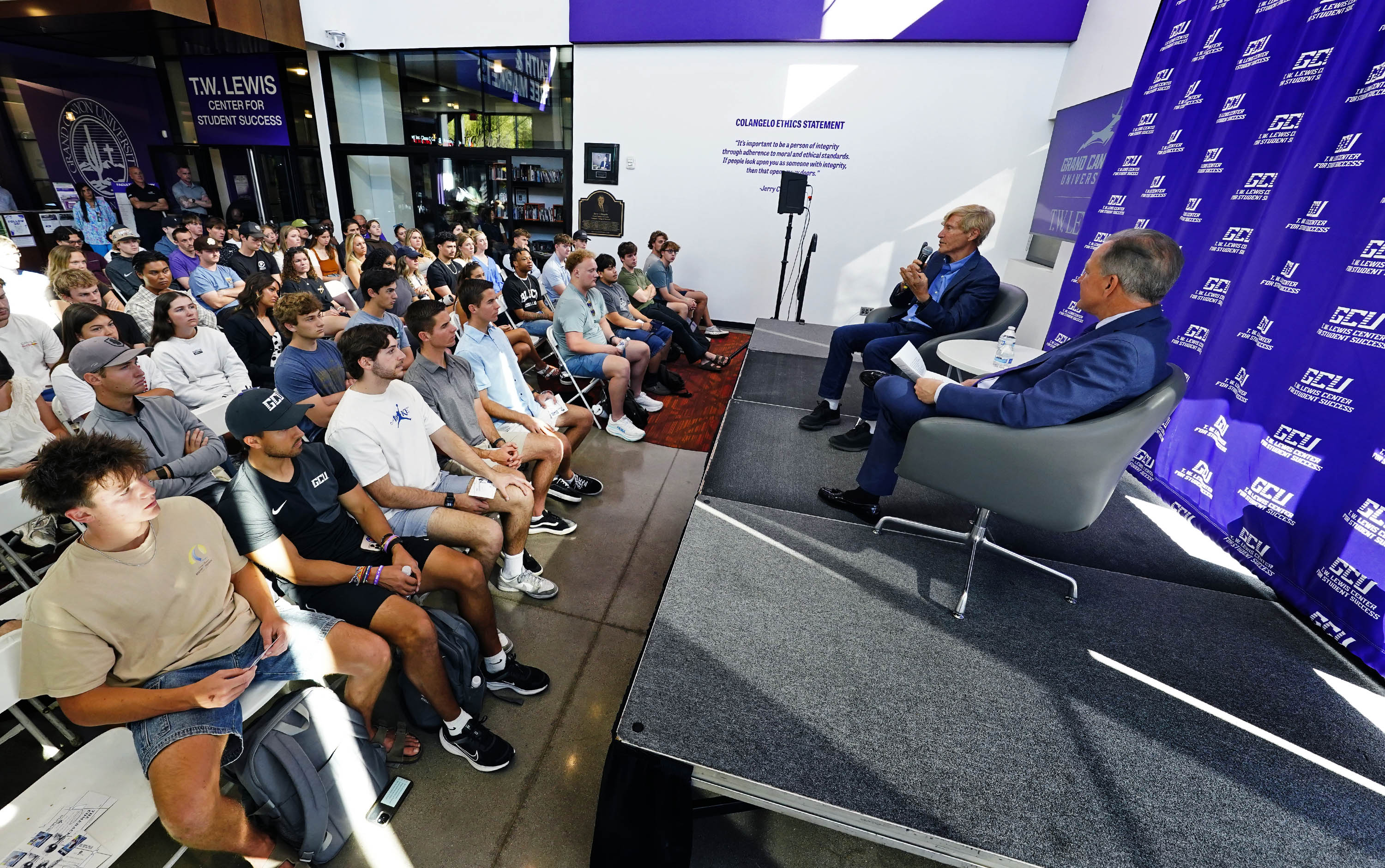
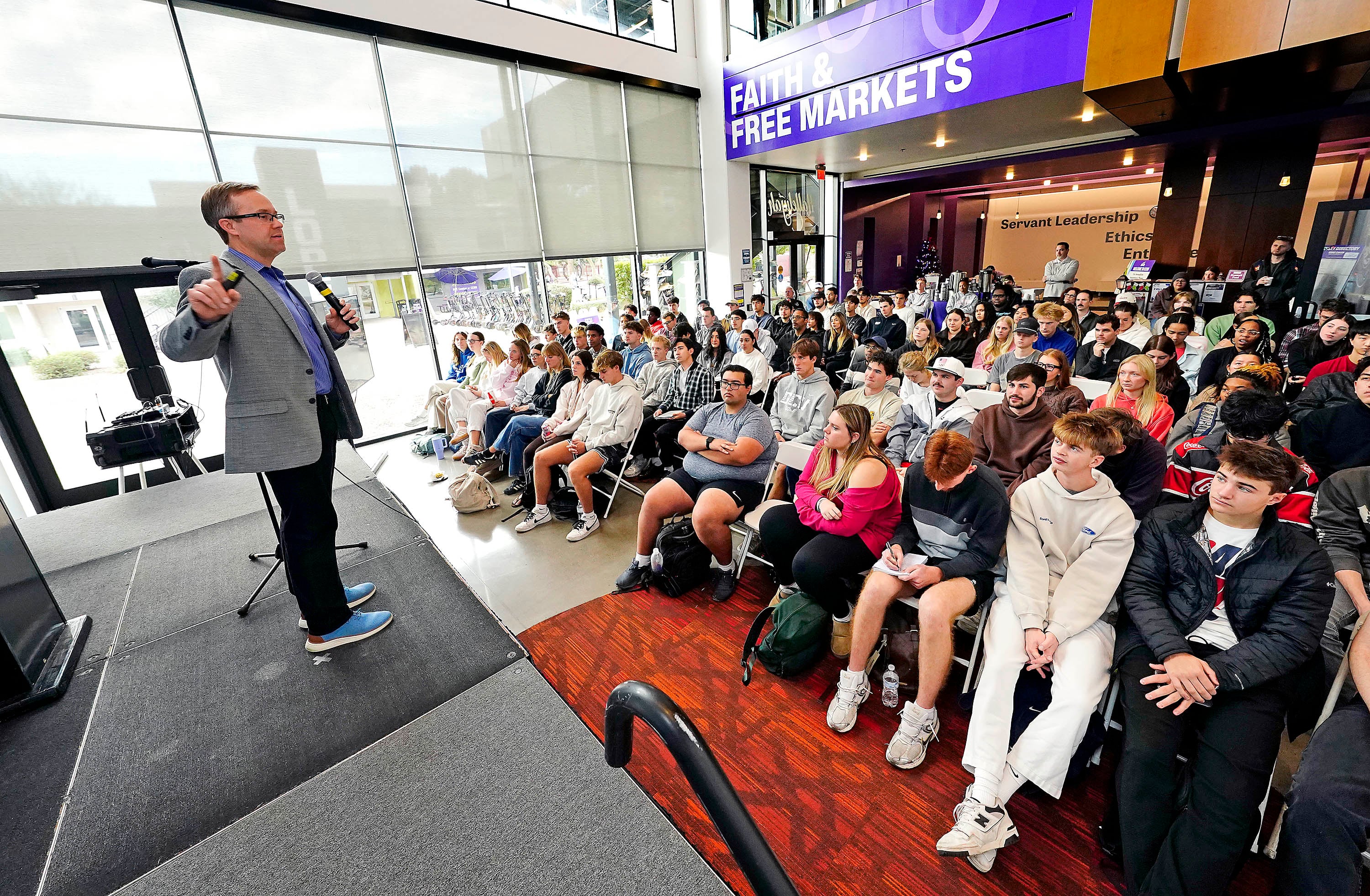
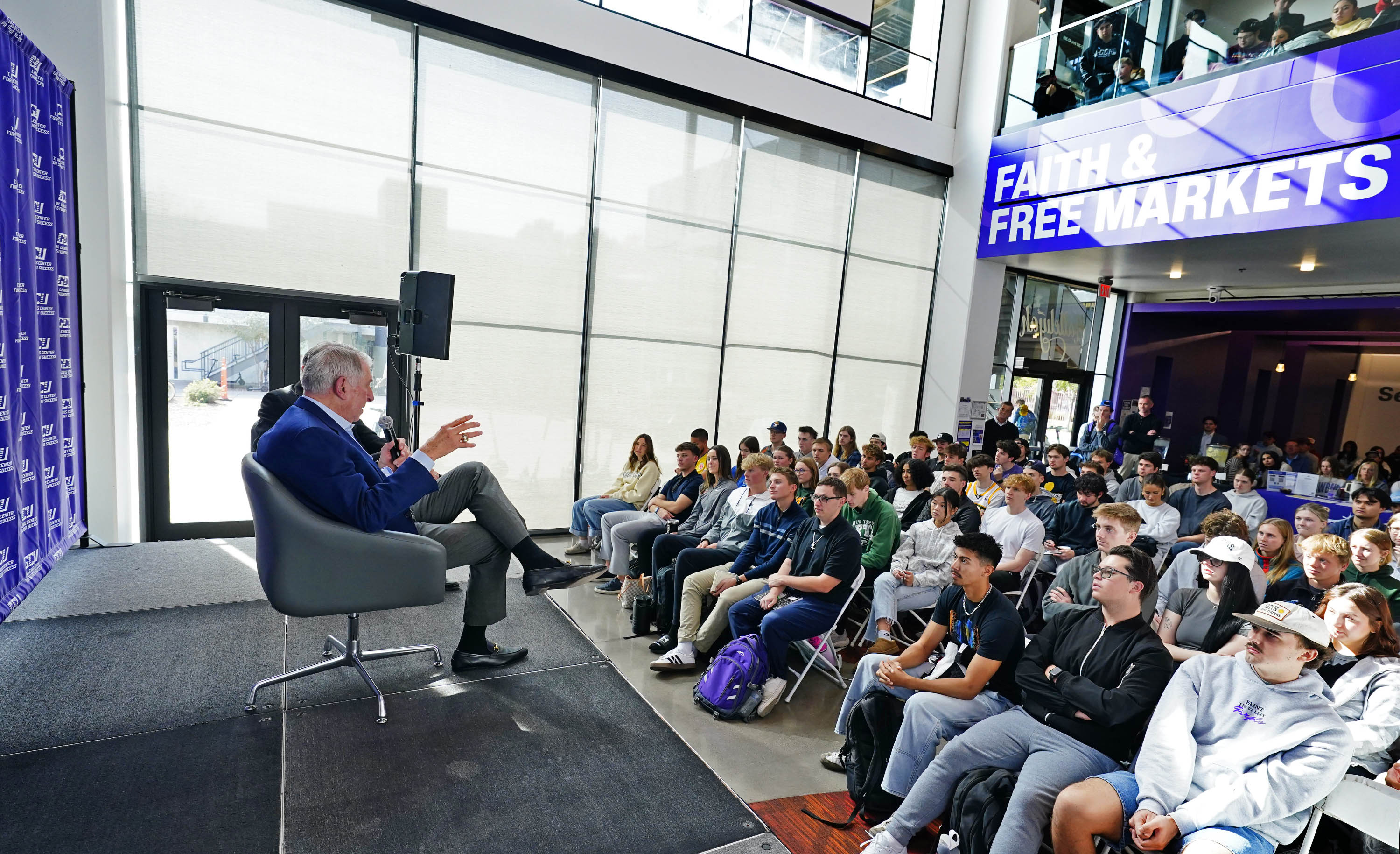
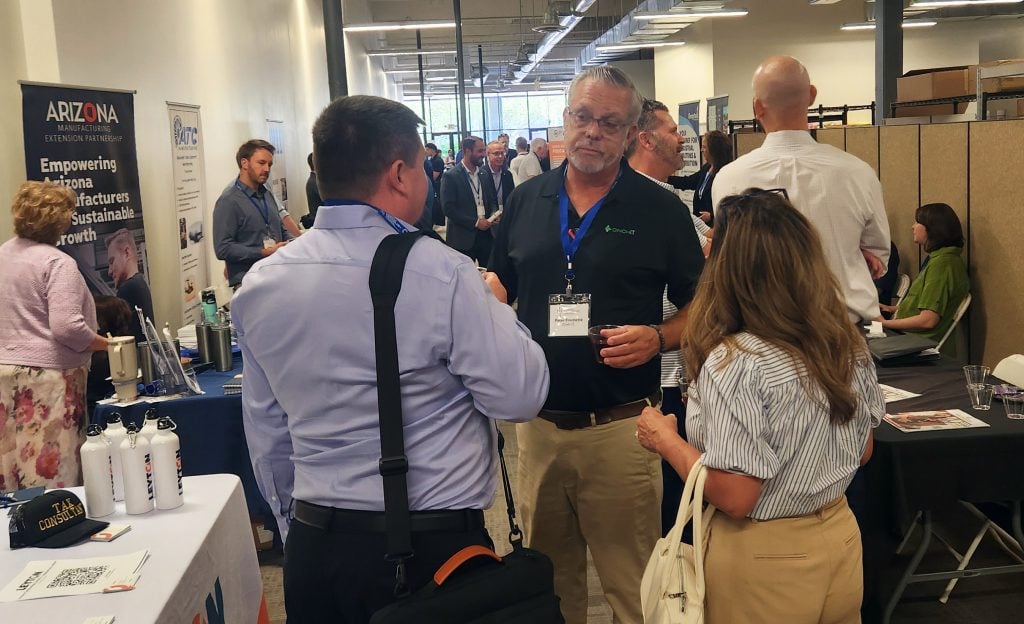
University President Brian Mueller conveyed an even bigger dream at Wednesday’s Arizona Manufacturing Showcase, hosted by the Arizona Manufacturing Council on the GCU campus.
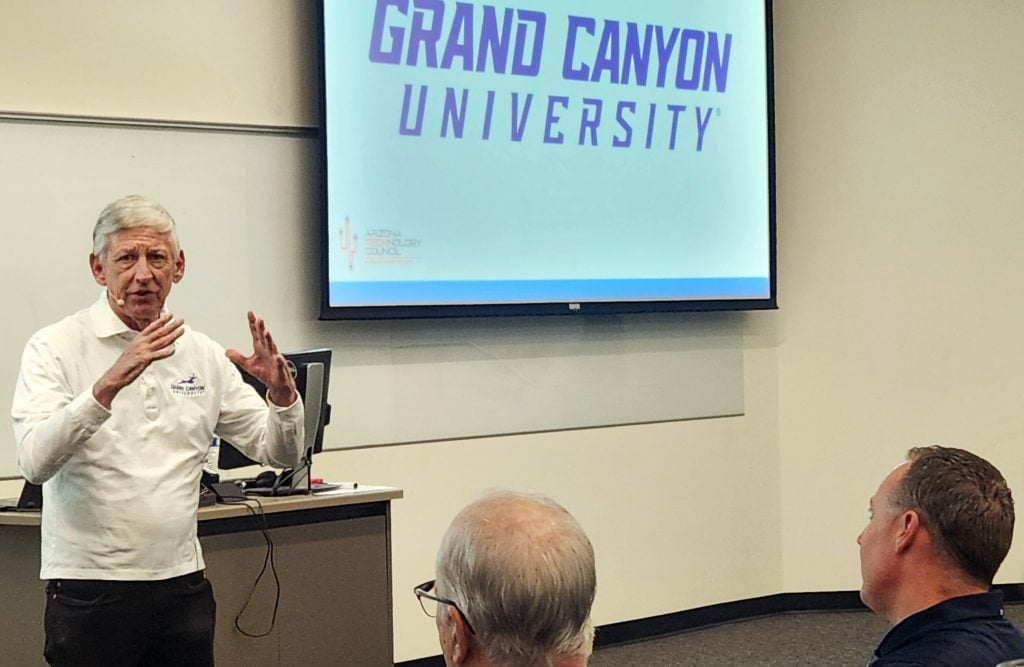
“What we’d like to do is bring in eight or nine companies that want to share this facility with Wes,” said Mueller of the university’s education complex on 27th Avenue and Camelback Road, just a few blocks from GCU’s main entryway. “ … We’ve got the ability to, No. 1, bring in partners that want a great space … and want to be in the middle of what we hope will become a manufacturing hub for all of Arizona and all of the Southwest.”
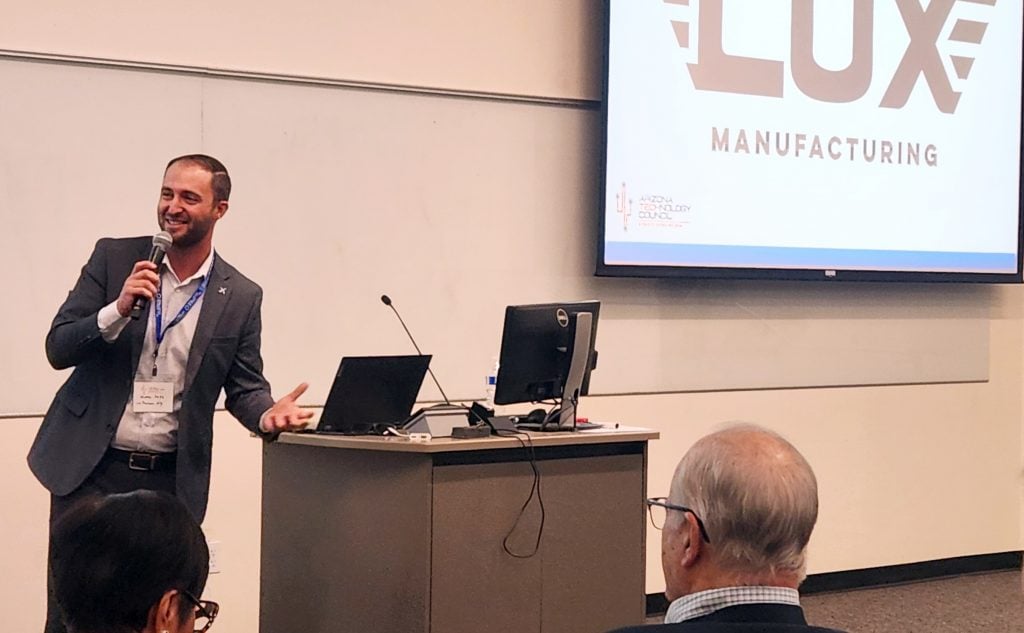
Mueller said GCU wants companies complementary to Lux “that want to become part of an ecosystem that creates middle-class jobs for westside kids. That’s what we want to do.
“We want the kids that grow up in this neighborhood, that are educated in this neighborhood, to get into a skilled trade, step into a middle-class job, have that become an upper-class job and then stay right in this neighborhood to work and buy a house,” Mueller said. “That’s how you transform a neighborhood.”
The Arizona Manufacturing Showcase was the perfect place to share that vision.
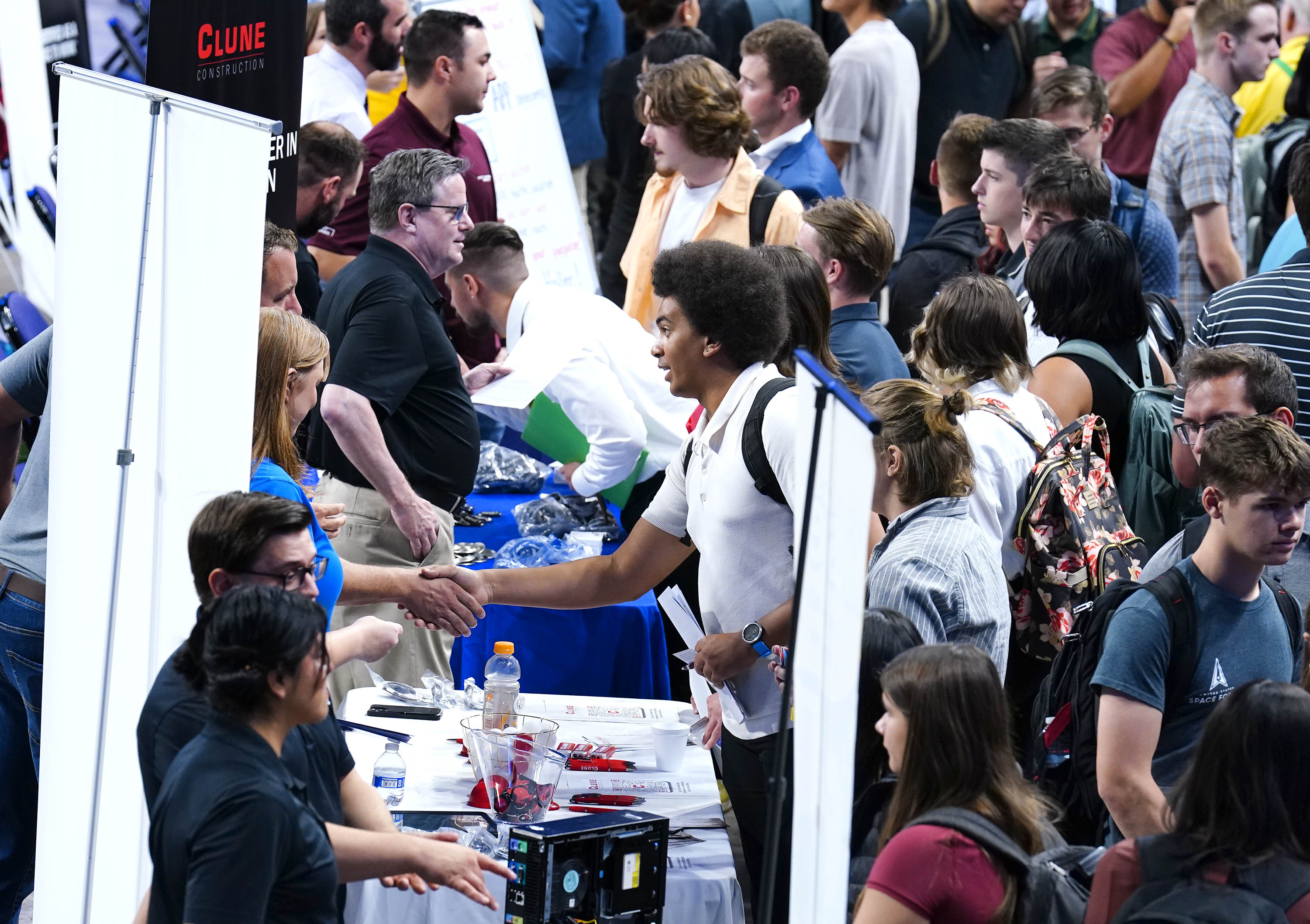
The inaugural event brought 225-plus Arizona manufacturing company contacts to the university. Many of those contacts are members of the Arizona Technology Council, a trade association for science and technology companies.
Those businesses weren’t there to sell their products but to sell Arizona as a good place to be for manufacturing.
“It’s about connections,” said Latham Industries Founder and CEO Tracey Latham, co-chair of the Arizona Manufacturing Catalyst Committee. “We have a lot of amazing companies here in Arizona, and a lot of us don’t even know who’s here. So this committee is bringing people together.”
Eric Miller, Latham’s co-chair and principal/co-owner of PADT (Phoenix Analysis and Design Technologies Inc.), emphasized how this event is different in that it’s “not to hear us talk, not to hear us sell, but to get to know people and create relationships. … Let’s build an ecosystem where we’re actually doing work together.”
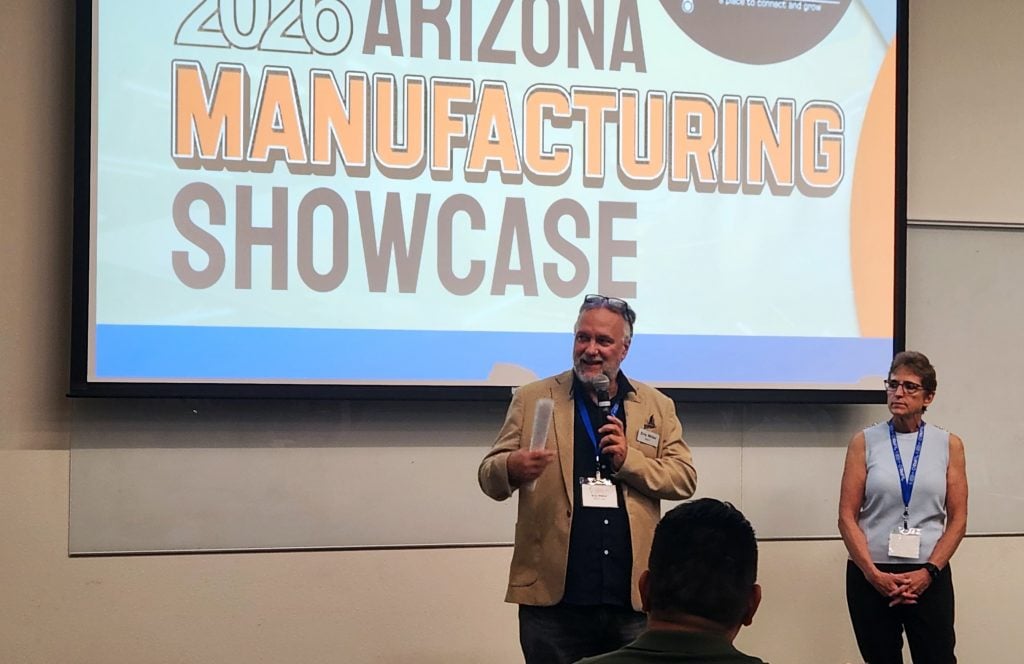
Miller expressed his nostalgia about being back at GCU, years after he came to the campus as it was starting its engineering program. He was asked by people he knew from Honeywell to advise the university.
“We sat in some old building … Brian laid out the vision and everything, so I’m a little teary-eyed to see this,” Miller said. “I don’t know how many years it’s been, but it’s pretty amazing to see this program grow to what it is today, and most importantly to see these students out there in industry now.”
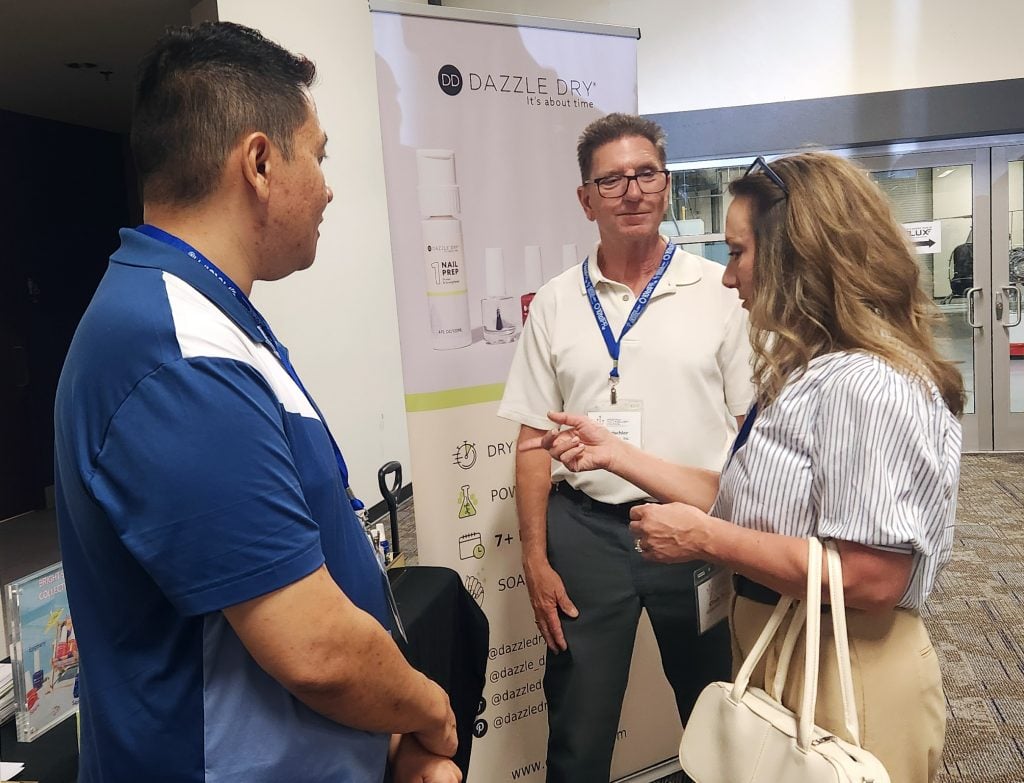
Building 66 was packed with companies such as Chandler-based VB Cosmetics, which is innovating in the beauty industry. President and Founder Dr. Vivian Valenty engineered the company’s premier product, Dazzle Dry nail polish, which dries in just 5 minutes and is hypoallergenic and vegan.
A beauty company in the manufacturing space?
Absolutely, said Valenty’s husband and business partner, Steve.
The company, which touts 100 employees and is one of the fastest growing cosmetic brands in the country, creates coatings, maybe not for a manufactured part for a plane or car, but for a different surface – the human fingernail.
“How do you dry a coating on a human finger in 7 minutes or less without light or toxic chemicals?” he asked.
Also at the event: GenTech, whose Phoenix store specializes in repairing technology.
“Any device, any question. If you want your Apple phone to work with your Android, whatever it is, we can do it,” GenTech’s Dalton Abbitt said.
The company also runs youth technology camps.
“We do drones, crazy computer builds. We do Game-On, which is game design. We do battle bots. … Anything tech. It’s a ton of fun,” Abbitt said.
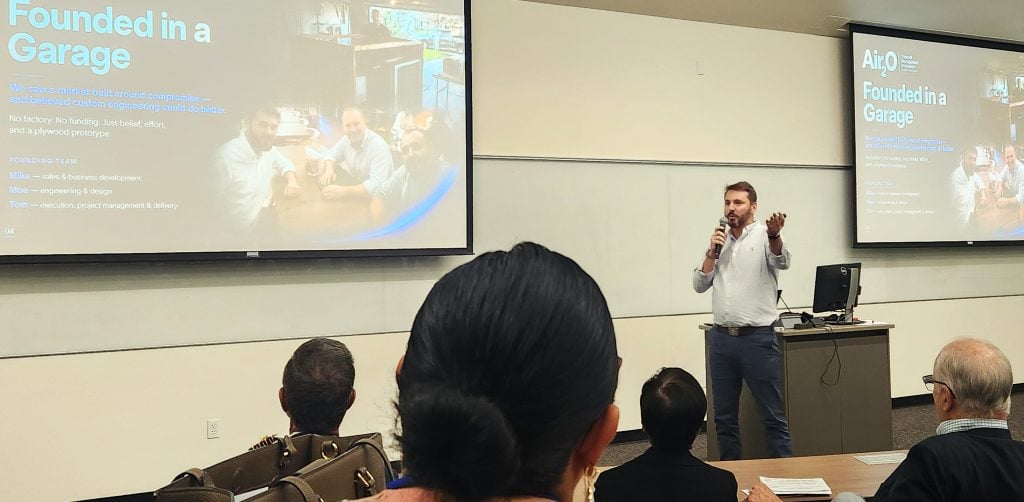
You could find a little of everything, not just nail polish innovation and tech repair, but companies such as Graybar Industries, which provides electrical supply, datacom and industrial equipment, and Scottsdale-based Air2O Thermal Management Innovation. Air2O designs and manufactures custom heating, ventilation, air conditioning and dehumidification solutions for large-scale facilities.
“We’re here to promote Arizona,” said Tom Sullivan, Air2O CEO. “We can only have growth through collaboration.”
The event was an opportunity for GCU to connect with the companies that are shaping Arizona’s advanced manufacturing ecosystem, Lux's Smith said.
He was excited to showcase GCU and what it’s doing to support Arizona’s manufacturing ecosystem.
“We’ve attended a lot of the Arizona Technology Council events,” Smith said. It’s where he has made industry connections and built business partnerships. “It’s an extraordinary group – manufacturers, people that are creating really cool technology, so to be able to host this at GCU? It’s just amazing to be able to show the incredible ecosystem we have at the university. I think people are noticing how we’re becoming prominent in the manufacturing space.”
Lux has grown from three CNC vertical milling machines in 2022 to, now, 35 CNC machines and is projecting a revenue of $10 million in 2026.
Smith especially wanted people to see “the unique model we have at GCU,” an ecosystem in Building 66 where engineering intersects with technology and the trades, specifically manufacturing.
Lux operates on campus as a real, working machine shop. But it’s also a hands-on educational and training facility for both engineering students and trades students enrolled in the university’s trades division, the Center for Workforce Development.
At the center, which is part of the College of Engineering and Technology, trades students earn course completion certificates before moving on to apprenticeships and the like to become electricians, machinists, semiconductor technicians and to work in general construction.
“We’ve already put 1,000 people through the electricians program, the technicians program, the machinists program,” Mueller said. “Our goal is to put 10,000 people through these programs.
“They (Smith, College of Engineering and Technology Dean Paul Lambertson, Provost Dr. Randy Gibb and other campus leaders) have absolutely proven they can provide a workforce … and we are willing to expand into any area that will create a middle-class job and opportunity for kids in this neighborhood.”
Attendees at the event also toured Lux’s space in Building 66, a showcase touring facility where visitors can view the factory floor from a platform above, see the activity in the machine shop through its glass walls and stop by to view a helicopter in one corner. It's a space to inspire the next generation, Smith said.
While he was thrilled to share GCU’s initiatives and vision when it comes to manufacturing, he also was excited to walk alongside companies in the bigger Arizona manufacturing space.
“For GCU, this is exactly the type of room we want to be in,” he said.
GCU manager of internal communications Lana Sweeten-Shults can be reached at [email protected].