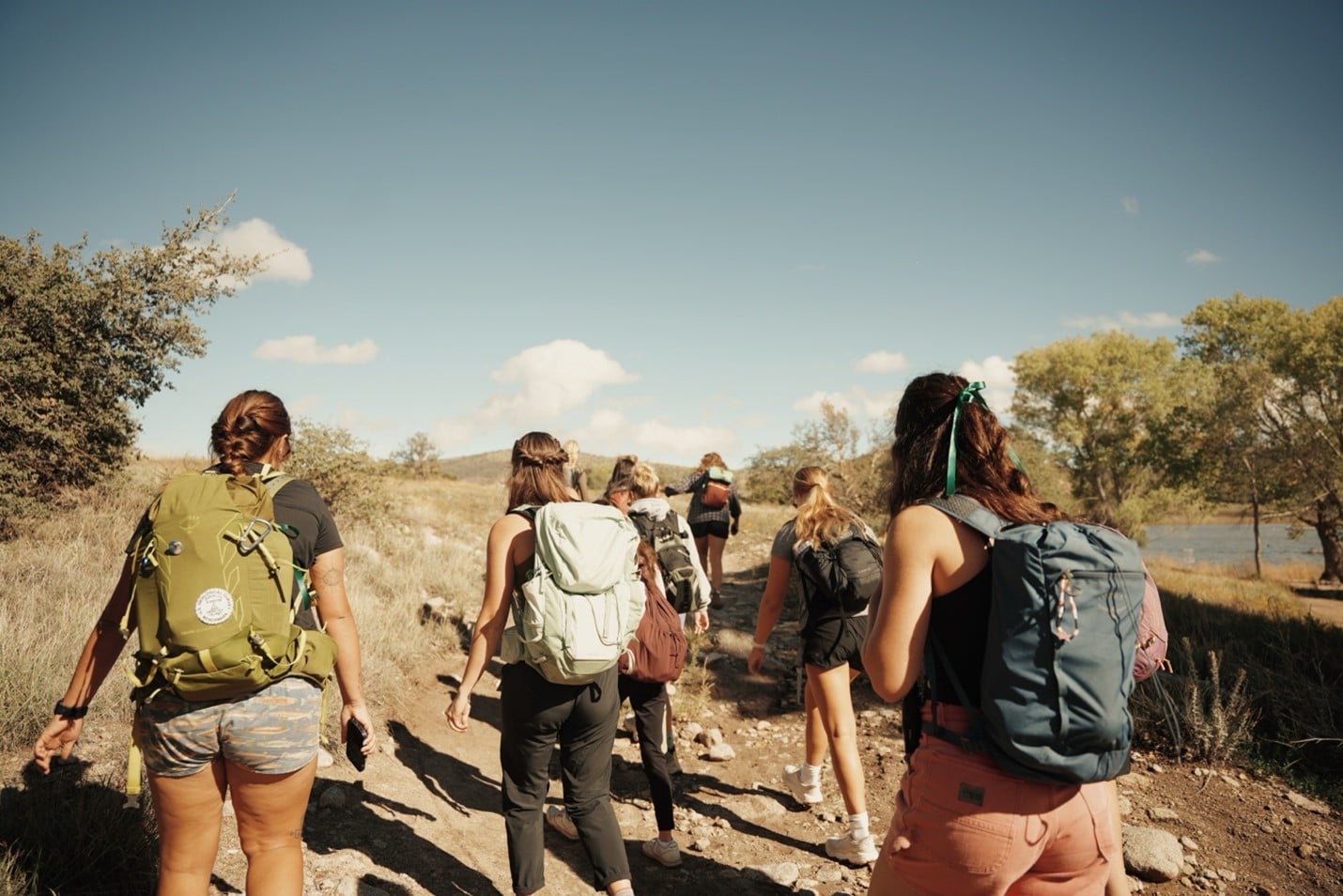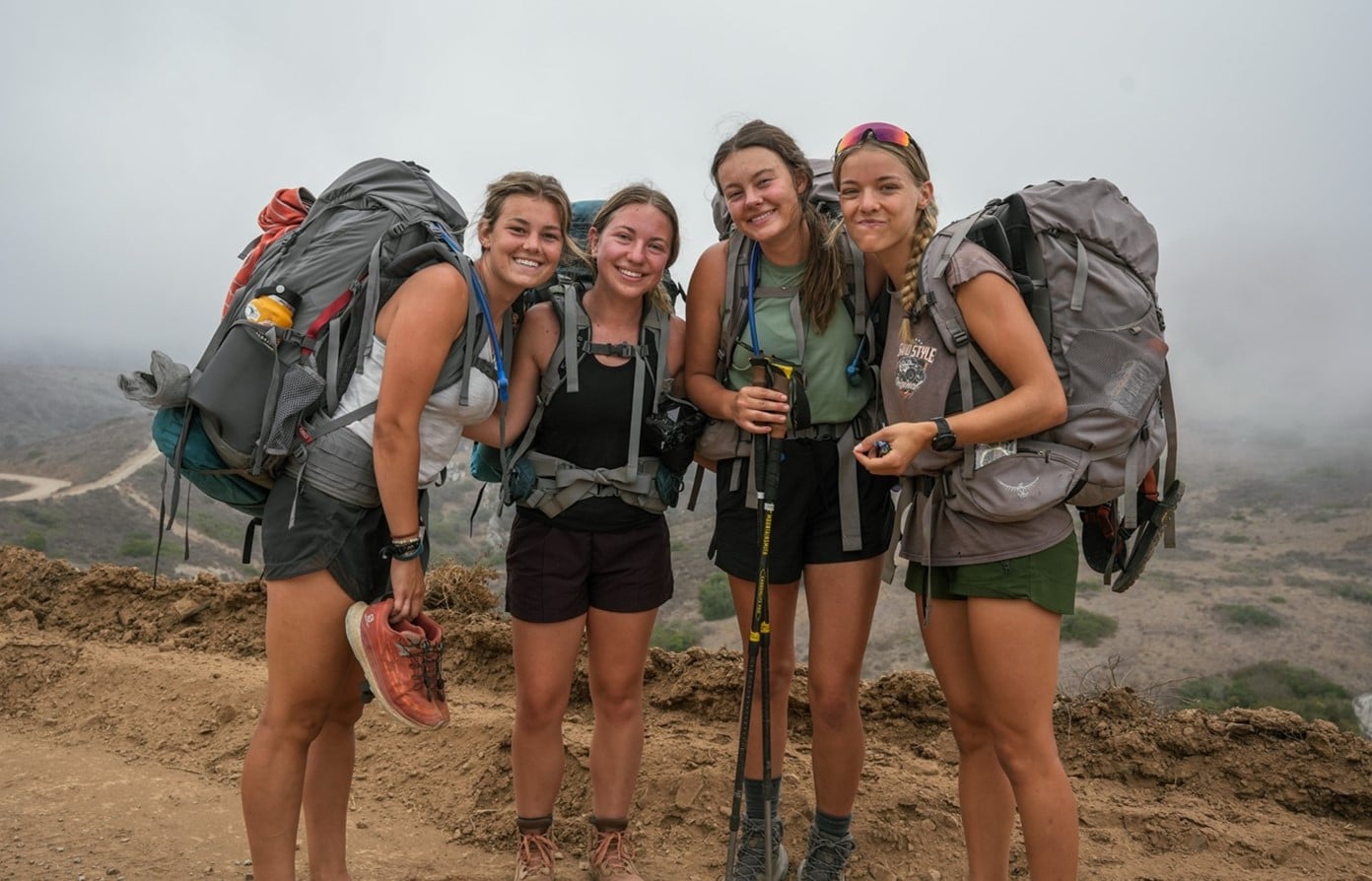
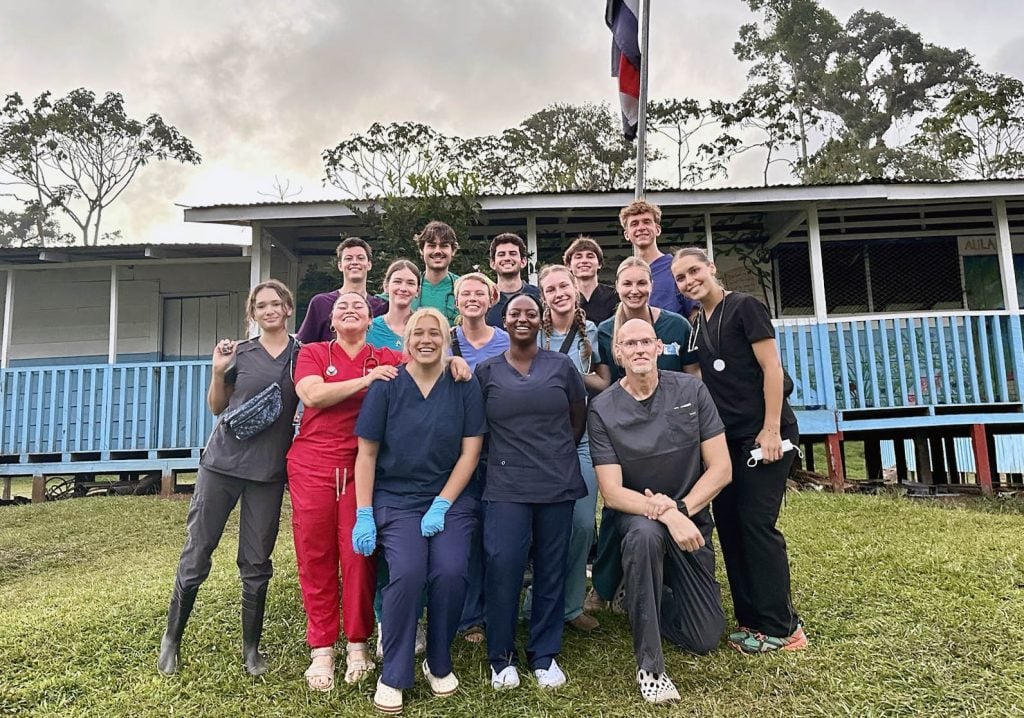
They ascended 2,000 feet over 5 miles, from Grano de Oro, at the base of Costa Rica’s Talamanca Mountains, to reach the cloud forest of Alto Almirante.
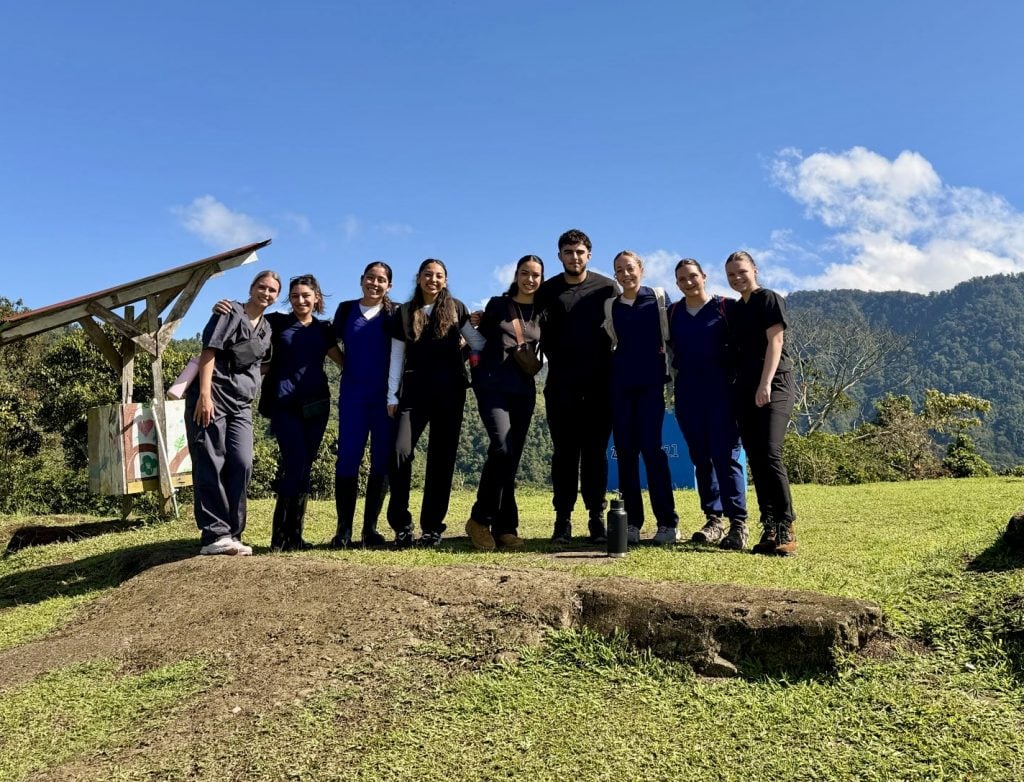
The remote indigenous settlement of Alto Almirante was one of two base camps for the important work almost two dozen Grand Canyon University pre-health students, two GCU parents and College of Natural Sciences professor Dr. Mark Wireman immersed themselves in over nine days as part of Hike for Humanity.
Seventeen made the strenuous hike up the mountains on the medical mission trip with Well Child International, while a second team of nine remained at the foothills of the Talamanca, in Grano de Oro, to serve the residents there.
Two teams “to serve more people,” said Wireman, who organized the GCU team that would traverse the rugged, untouched terrain of remote Costa Rica.
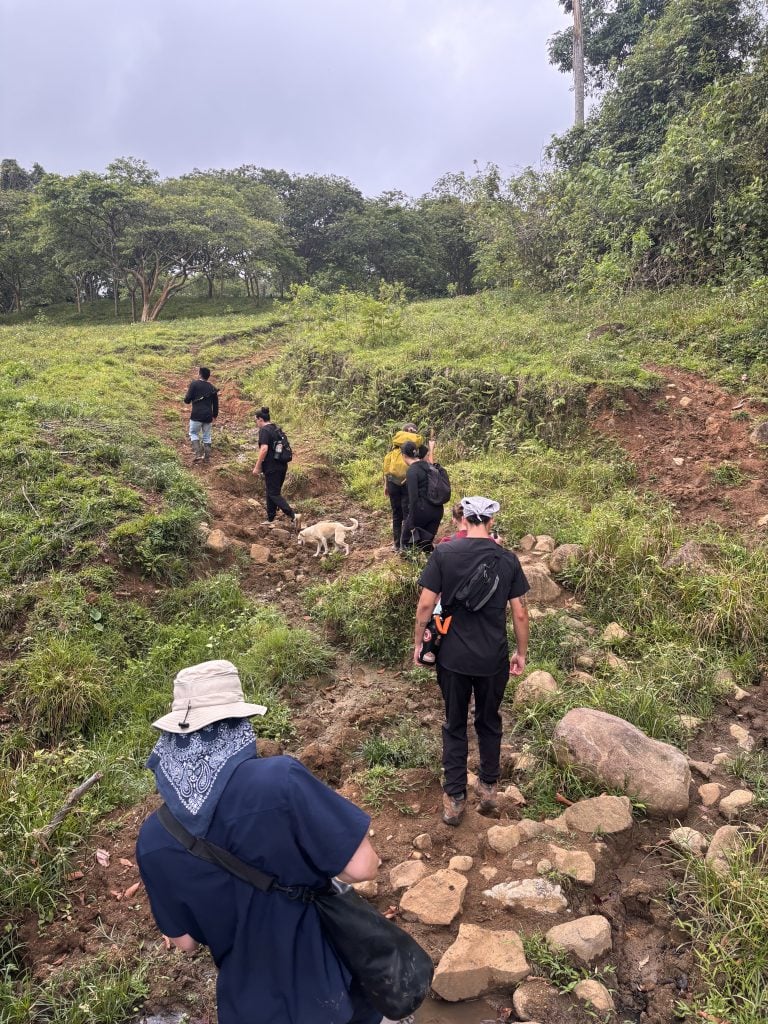
Then there were the day hikes from Alto Almirante to even more remote settlements, through “shin-high mud on narrow trails surrounded by plantain plants,” Wireman said.
“We hiked through the mountains, I believe it was 8 to 10 kilometers – I think that’s around 6 miles,” said recent GCU biology/pre-physician assistant graduate Connor Akin of the walk to get to Alto Almirante, and that doesn’t count the day trips. “ … We hiked for four hours one day (on a day trip) and just got appointments for everybody. That hike was probably the hardest thing I pushed my body to do. It was muddy, and you’re carrying a 40-pound backpack on your back.
“But it was so beautiful up there – the hikes and the people.”
Those 40-pound backpacks were loaded down with not just the medical team’s clothes and sleeping bags but as many medical supplies and donated items as they could carry.
The team had to hike up with everything they needed to places that had nothing.
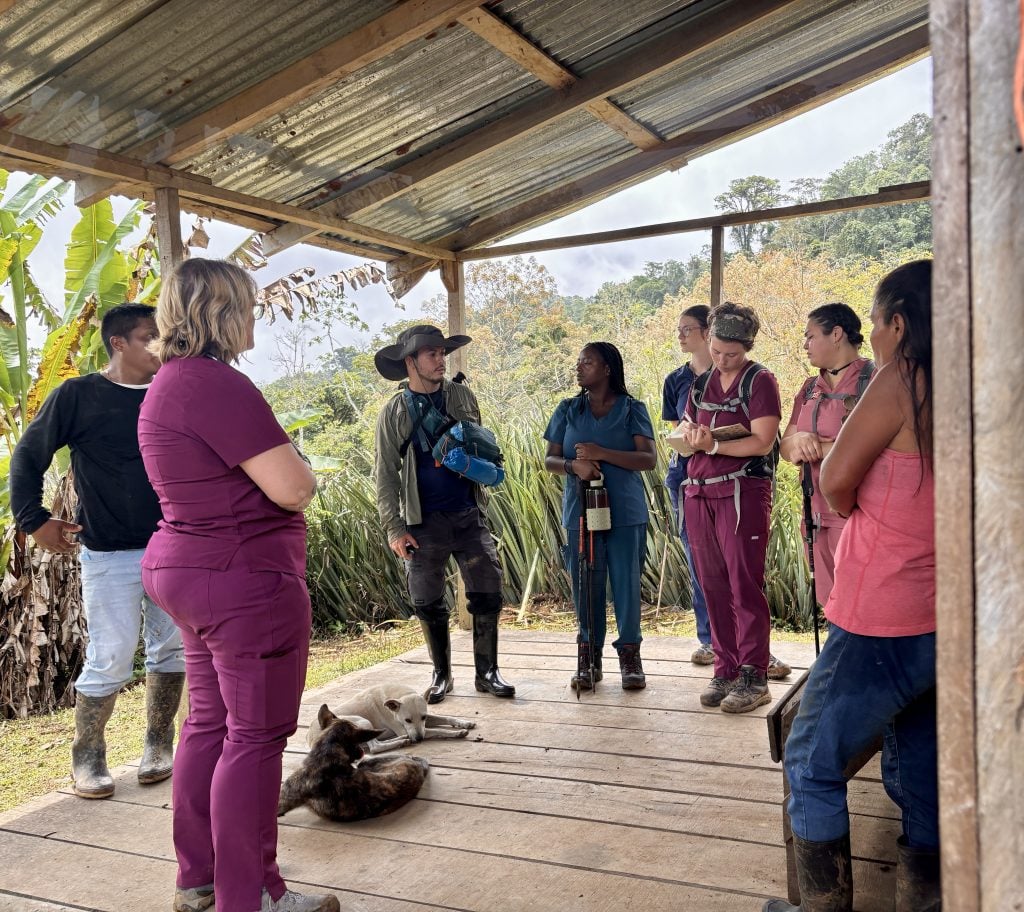
Maiya Swanson, who’s also studying to be a physician assistant, said, “It was extremely remote. We had to backpack basically just a straight incline the entire time.”
They saw “hundreds and hundreds of different insects” and endless waterfalls.
They saw a cobra.
And they saw their lives change.
Those grueling hikes, Akin and Swanson said, were worth it.
The medical mission trip took the GCU team to indigenous Cabécar settlements that aren’t easily accessible to outsiders, and not just because of the thick, unforgiving rainforest terrain.
“Nobody is allowed on their land unless there’s approval of it,” said Swanson, who came to GCU from Denver.
The team’s indigenous guide, a pastor named Simeon, worked with the Cabécar people to gain access to those settlements.
The GCU team assigned to Alto Almirante stayed at a school there, then would take day hikes to meet the indigenous people at their homes in remote areas for precursory visits. Some would be invited to a clinic at the end of the week for a more thorough evaluation and treatment.
The GCU team worked with a local Costa Rican medical team on those clinic days.
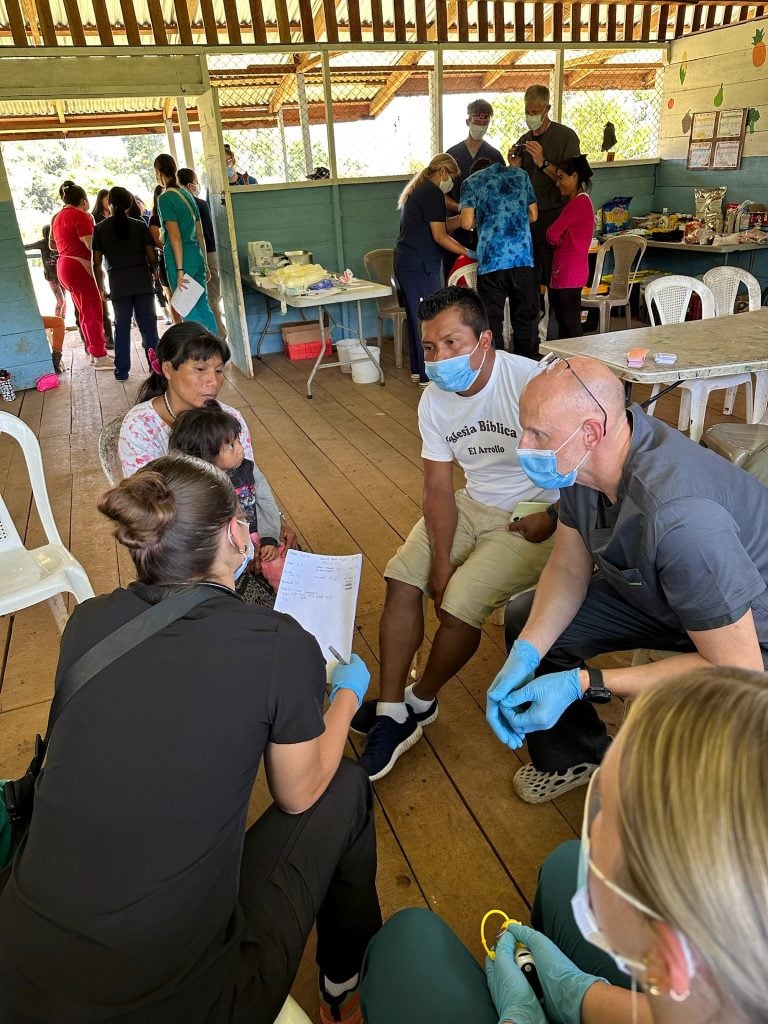
Swanson remembers one man who had sliced his arm with a machete. He had been treated previously, but the skin didn’t heal properly. The man, luckily, spoke not just his native Cabécar language, but Spanish, too, and was able to communicate how desperate his situation was to Swanson, who’s fluent in Spanish.
“He was waitlisted, basically, because he didn’t have an appointment, and he was like, ‘I really need to be seen today.’
“The pain in his eyes. I told him, ‘I will make sure we see you today.’ I fit him in, so we were able to see him.”
Swanson also said the team saw a woman who had been living with a fractured wrist for years, and another woman who had tuberculosis and whose right lung had died.
But for Swanson, “The saddest thing was these young girls,” she said of many of the indigenous women who marry at 12 or 13 years old and already had been “exposed to so much.”
The team treated many urinary tract infections.
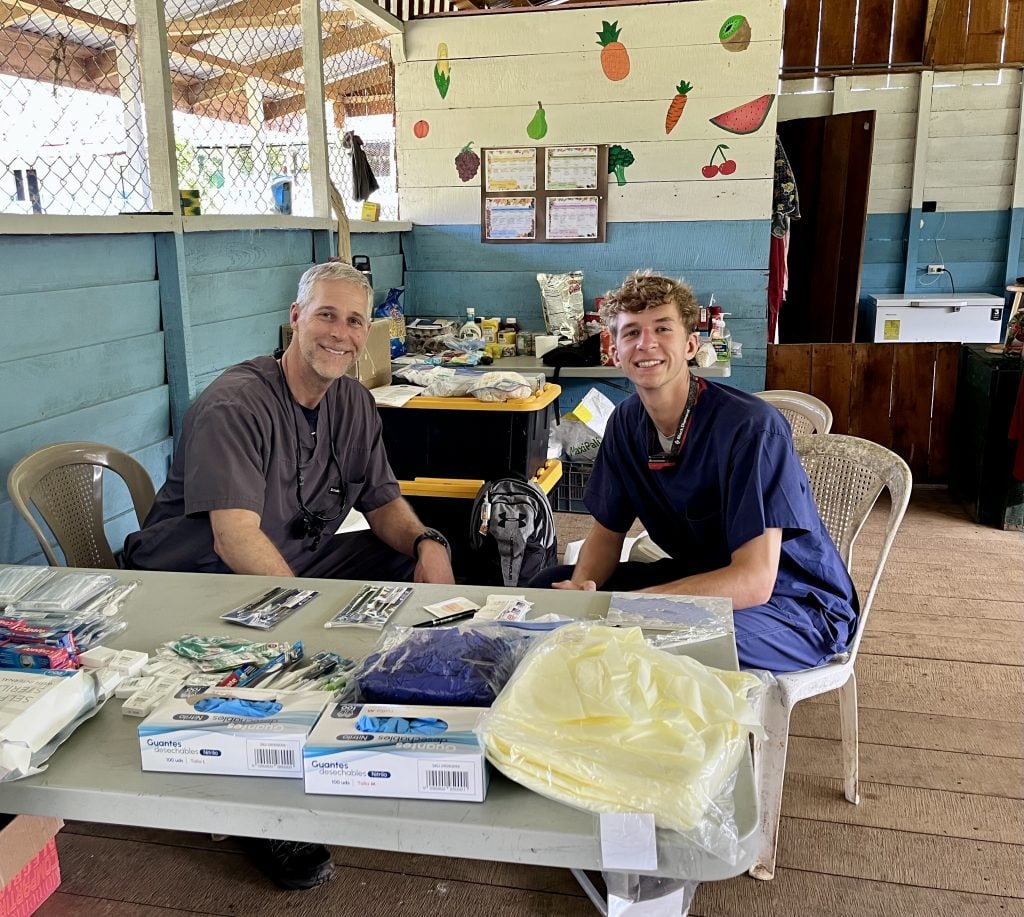
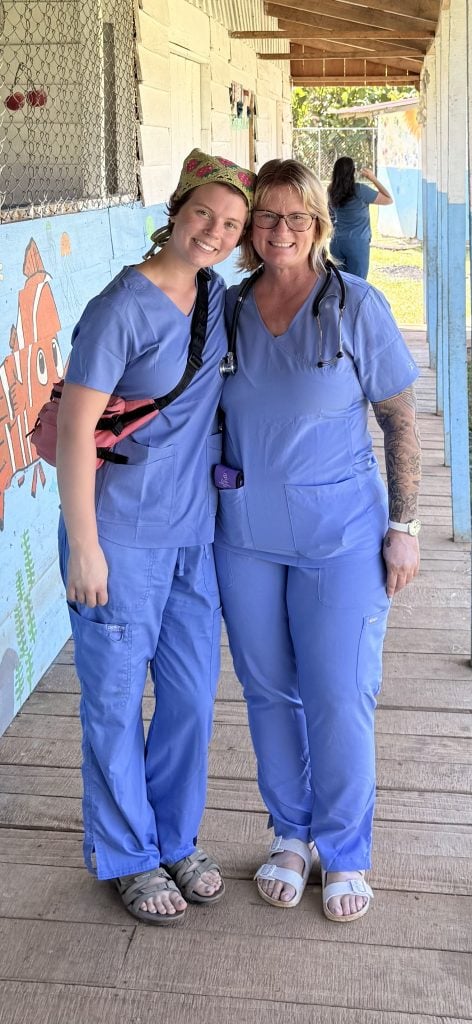
What was unique about this trip, said Wireman, is that two parents of GCU students also joined the team, including Dr. Chad Sheron. His son, Carter, is now a junior biology major with an emphasis in pre-dentistry. Also part of the team was Kellie Enderson, a family nurse practitioner who traveled to Costa Rica alongside daughter Aliyah Fortner, a pre-med student.
It was Dr. Chad Sheron’s first mission trip, one that took him far from home in Vancouver, Washington.
“They had never done any dental on these trips,” he said. “We pretty much had to hike in with whatever gear you needed.”
He toted in supplies so he could do exams, screenings and basic cleanings; anything surgical wasn’t an option at such a remote location.
He spent a lot of time assessing patients and letting them know if they might need to travel to the nearest clinic for more involved procedures.
He also educated the indigenous people on how to take care of their teeth, “so their permanents can come in healthy,” he said, “because there was quite a bit of infection and decay and other issues going on.”
Initially, Sheron said, he thought this trip was a week to spend with his son and experience Costa Rica together.
“It was nice to be able to unplug. There’s no internet up there, so you were in the moment,” Sheron said.
But those nine days in Costa Rica would come to mean more.
“It is inspiring to see these people who really have nothing, but they’re so happy, so engaging.”
Not only did he get to treat people, “but spread the Gospel message, too.”
Akin, who had gone on mission trips when he was younger and jumped at the chance to go on a medical mission trip, said the wide swath of medical cases will stay with him – the fungal infections, chicken pox, shingles and fetal alcohol syndrome.
He learned that many of the cases of fetal alcohol syndrome come from the fathers, many of whom make their own alcohol but don’t filter out the methanol properly.
But it’s also the simpler things Akin said he’ll remember.
“I didn’t know a single person … but by the end of the trip, we were all best friends,” he said of bonding with his fellow GCU students.
“It was incredible to watch the GCU students grow together with the common goal of serving others,” Wireman said. “Seeing their confidence build through patient interactions, taking vitals, and helping with preliminary diagnoses was especially rewarding. This experience will stay with them and continue to shape their future careers in meaningful ways.”
Akin spoke about playing soccer with the indigenous children, too, and how this trip changed how he sees the world. In the two weeks he’s been home from Costa Rica, he said he’s still processing everything.
“It broke me in a way, but in a good way. It broke how I saw things, like my perspective, my emotions and the way I thought I was understanding the world and how people live and what they believe and how they just live their daily lives.” Akin said. “This trip, it was really powerful to serve with an open heart.”
He added, “I feel like they (the Cabécar people) helped me more than I helped them.”
What Swanson will remember, she said, is the story Pastor Simeon told her of one of his family members.
He told her that among the Cabécar, it is part of the culture for women to give birth in the rainforest, then remain there in a private area in solitude for eight days. They can take one person with them to help them in the birth.
His family member went into the rainforest at 2 a.m., alone, and passed away before anyone could find her in time.
Pastor Simeon told Swanson that she reminded him of her; they share the same first name.
She also learned to appreciate what she has, because people in places like Alto Almirante don’t have those things, whether it’s electricity, a bathroom or even a sticker.
“The kids were so excited for a singular sticker,” she said. “Perspective is everything … the smallest things we take for granted. So I think my biggest takeaway was changing my perspective on life and being so grateful for the tiniest of things.”
Manager of Internal Communications Lana Sweeten-Shults can be reached at [email protected]
***
Related content:
GCU News: Professor honored for counseling efforts in Zambia
GCU News: Students experience breathtaking mission trip to Kenya