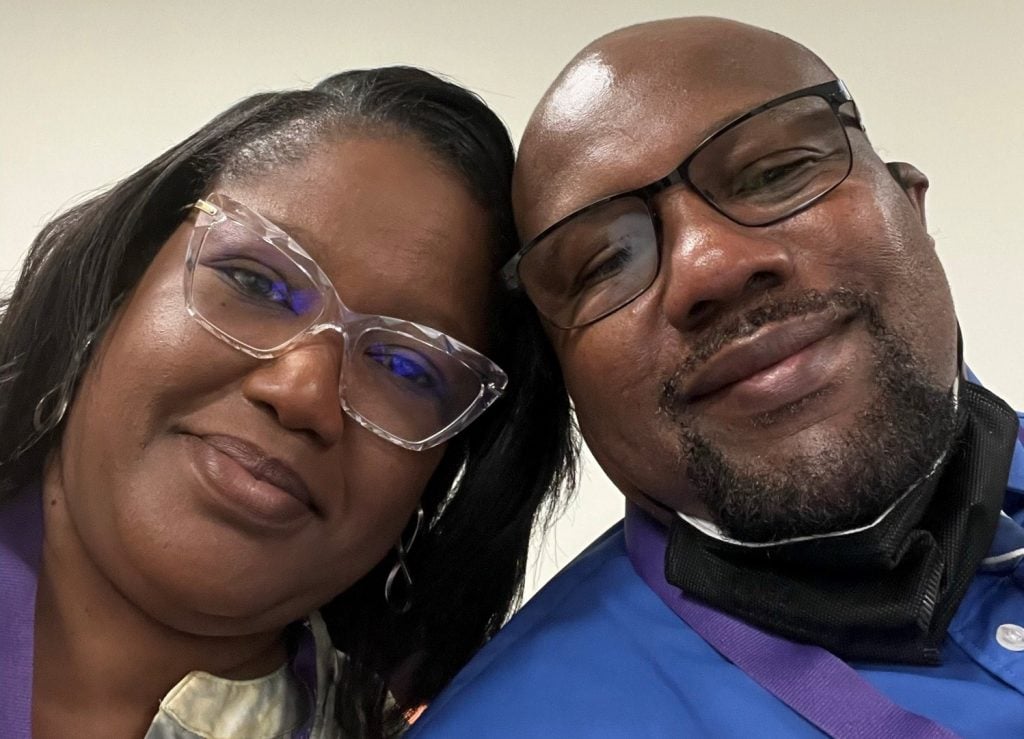
One benefit Abdul and Carmela Shabazz saw in pursuing their doctoral degrees simultaneously from Grand Canyon University: “There’s strength in numbers,” said Abdul, one of 13 children who grew up in Brooklyn, New York.
And for Carmela, who cleaned the stockroom at her father’s auto mechanic shop in nearby Queens and was raised by her parents in church, leading groups in various professions was an assignment she relished.
Embarking on their respective doctorates presented its share of challenges, but never was the outcome so great as when they successfully defended their dissertations on the same day – Oct. 15, 2025.
“We started this journey together on the same day (in 2019),” said Carmela, vice president of operations for the Biomedical Research Alliance of New York. “We didn't know we were going to be defending on the same day. At some points, Abdul was ahead of me. At other points, I was ahead of Abdul. So it was just touch and go there. We didn't know how everything would end up, but we were always there to support each other and just get through the process.
“It was stressful at times – time management, as far as doing things for our family.”
They started their journey a year before the COVID-19 pandemic while trying to get their teenage daughter through high school and prepare her for college. They attended their first residency in Chandler shortly after the program reopened.
“It was a struggle there for a while, but we made it,” Carmela said.
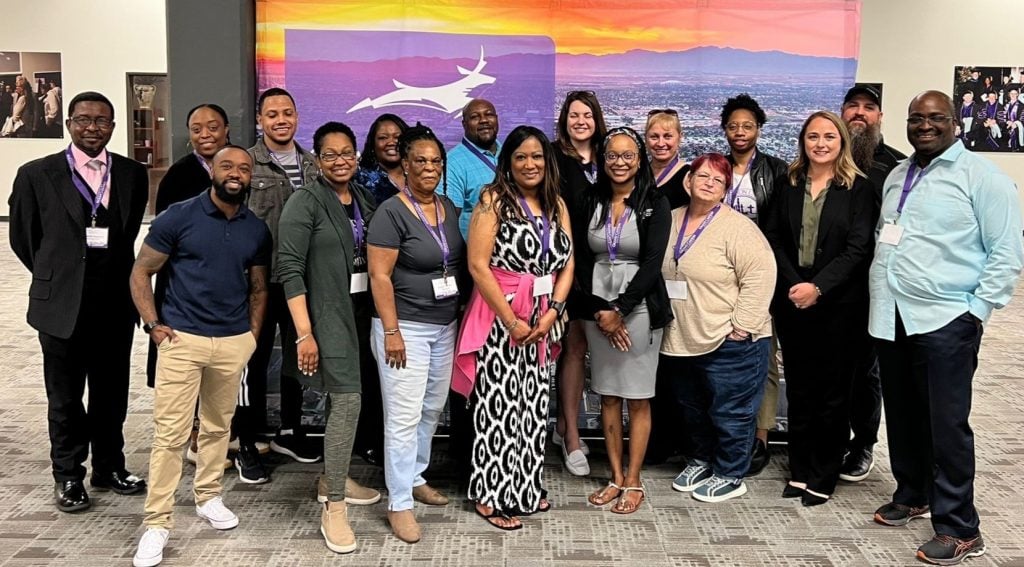
Abdul believed that each could have earned their doctorates at separate times, but it wouldn’t have had the same gusto.
They traded off on long nights of studying and sacrificing sleep, occasionally giving themselves grace if there was no time to wash the dishes, or ordering food instead of preparing home-cooked meals.
They also knew of the challenges of sending their daughter to Clark Atlanta University, as well as fulfilling their duties at their respective jobs.
“We were partners in all that,” said Abdul, director of youth services for the Northwest Regional Workforce Investment Board. “It was a blessing to share all this with (Carmela). She was always the one who kept us even-keeled.”
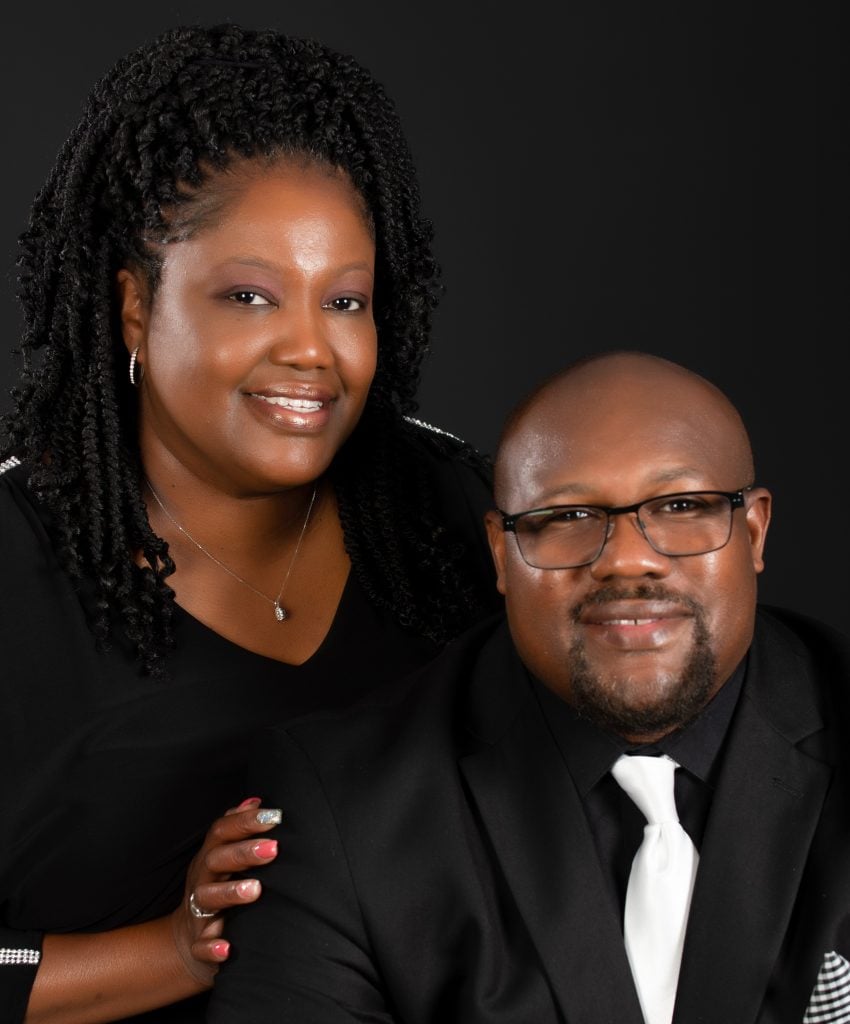
Dr. Barrett Mincey, Carmela’s dissertation chair, marveled at her leadership skills during his community cohort groups – even making presentations on how she navigated through the process and lent insight on what fellow learners should expect. And Abdul attended at least a few of these sessions, Mincey said.
“I would describe her core qualities as collegial, kind, hard-working and resilient,” Mincey said.
Coincidentally, Carmela completed her final course on the same day she defended her dissertation, titled “Counsel Supervisor Perspectives of Telesupervision as a Result of COVID-19 Pandemic Restrictions," two hours after Abdul defended his dissertation, titled: “How Counseling Leadership Incorporates Spirituality Within the Counseling Session in the United States.”
Carmela displayed a passion for leadership while spending more than 20 years in the biomedical profession. The topic for her dissertation stemmed from her situation during the pandemic, when she split her time between working remotely at her Connecticut home and commuting to New York twice a week before the company became exclusively a remote operation once the pandemic ended.
“It just became a natural topic, and because our focus is behavioral health, organizational leadership, that’s why I chose to (focus on) counsel supervisors,” Carmela said.
Abdul’s spiritual upbringing kept him and his siblings grounded while witnessing a lack of resources in helping people understand each other. That led to a career in counseling and later discovering “the code of ethics was only followed based on what I believed, not based on what was actually scholarly found to be – an ethical guide for us to do great work.”
Earning the doctorate “allowed me to move from being an experienced practitioner to becoming a practitioner scholar,” Abdul said. “And I wanted the ability to produce rigorous research that strengthened counseling leadership and improve supervision, and ultimately, support better outcomes for clients and communities.”
”… My passion is always trying to help all of us get through all the nuances and challenges in life so that we could do better. Be better neighbors, be better brothers, better sisters, co-founders or co-workers, or, just partnerships and marriage – just better in everything. It's a step, it's a process. I want to see us all be able to get along.”
Ironically, Dr. Dolores Kelly, Abdul’s chair, did not realize he and his wife were studying for doctoral degrees at the same time until Abdul questioned why one of Carmela’s papers was analyzed while he was still waiting. The couple had different methodologists who worked at different paces, and different committees analyzed papers at a pace predicated on their workload, thus leaving the Shabazzes on a different pace until the end of their dissertation process.
Abdul “was passionate about what he was doing,” Kelly said. “He was a good student ... When you have a job you enjoy, it’s not work. He had an insight of what that person or who he was speaking to, needed to do. It worked out, and I’m sure he was a mentor to a lot of people who needed his background, knowledge and understanding.
“I wish I had more students like him.”
GCU News senior writer Mark Gonzales can be reached at [email protected]
***
Related content:
GCU News: Fortune 500 exec-turned-life coach embraces the 'why' behind her Ph.D.
GCU News: Degrees of excellence: Senior enlisted leader didn't stop at one doctorate