Photos by Ralph Freso
Lead by listening.
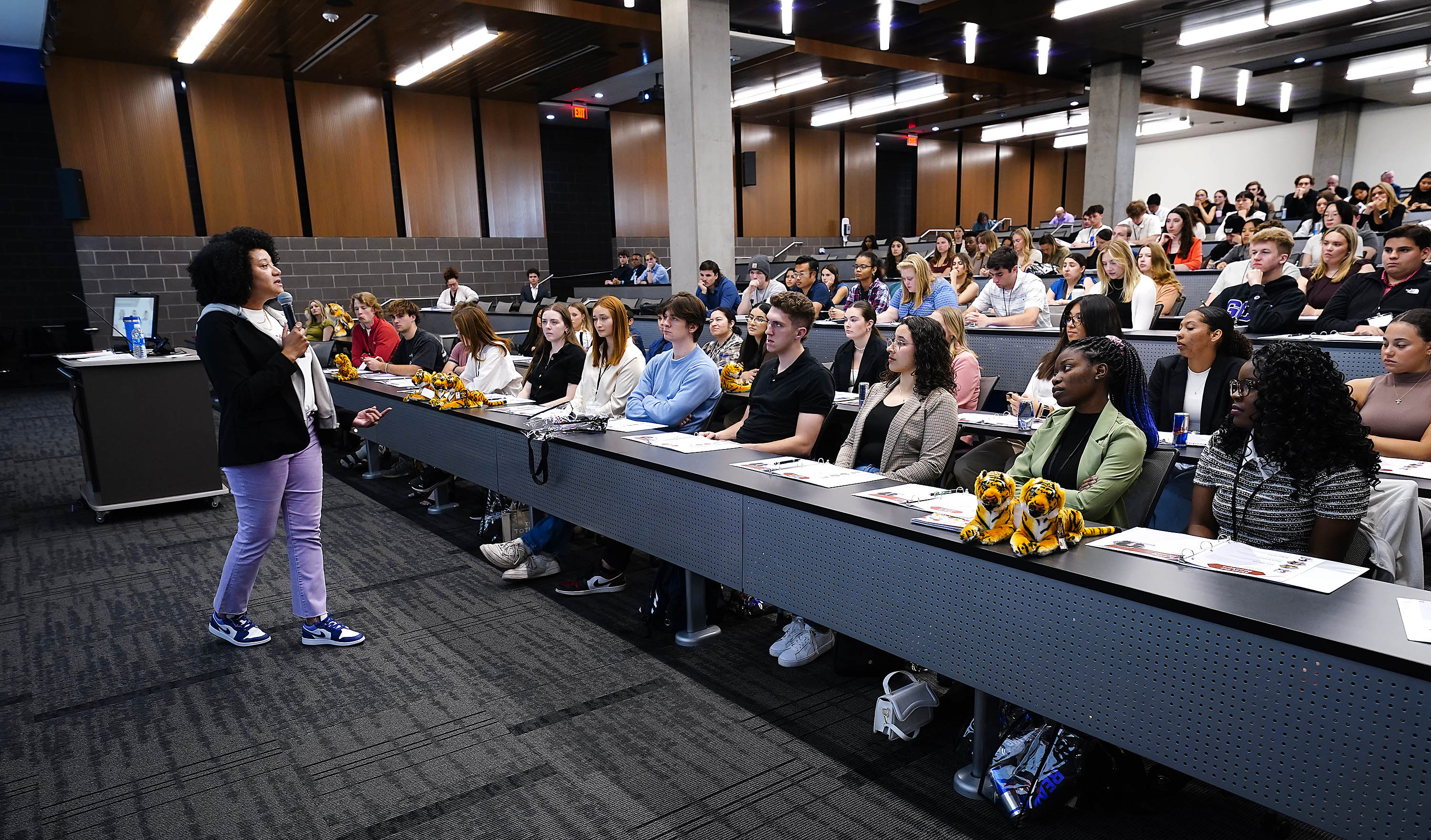
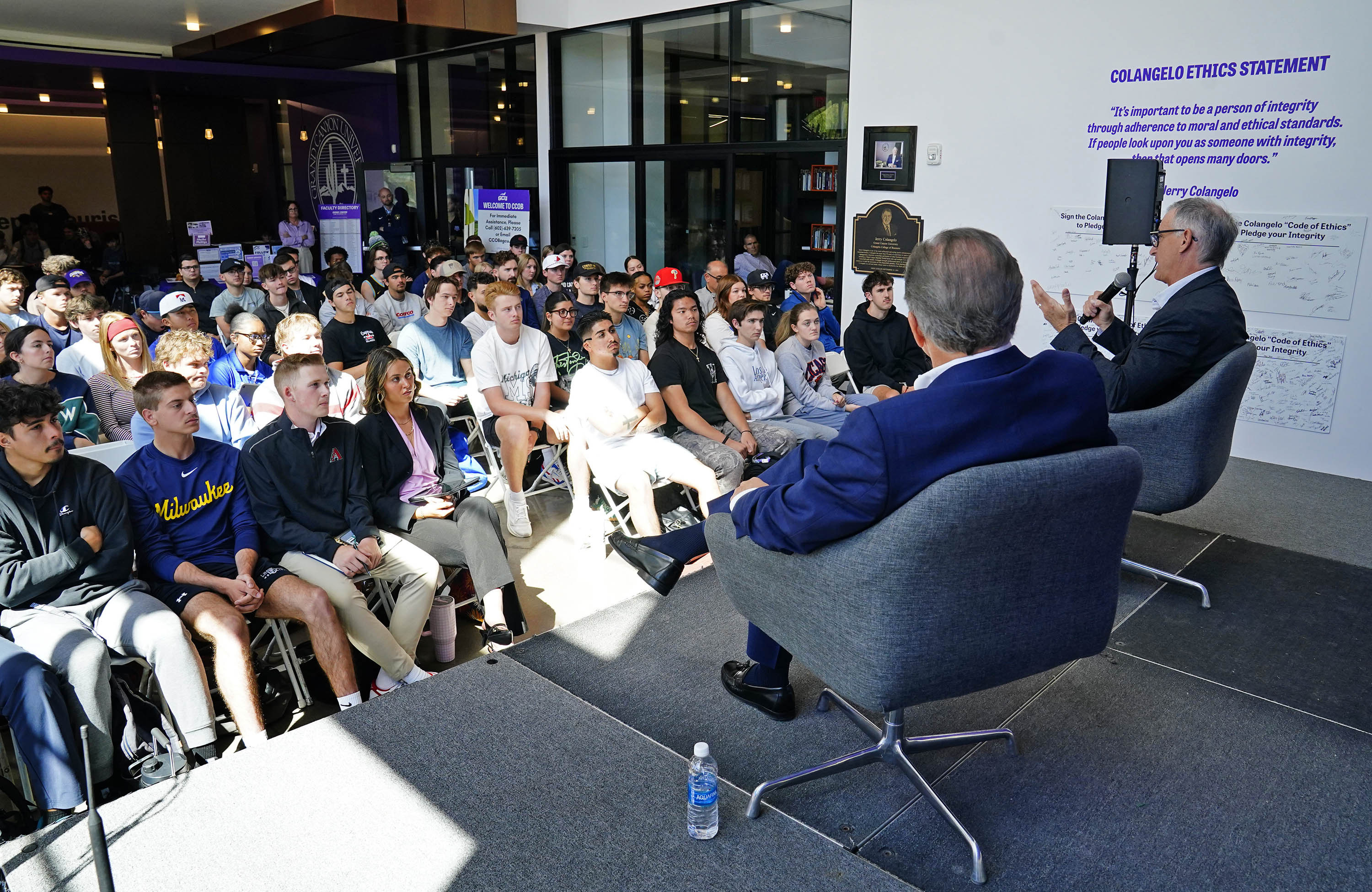
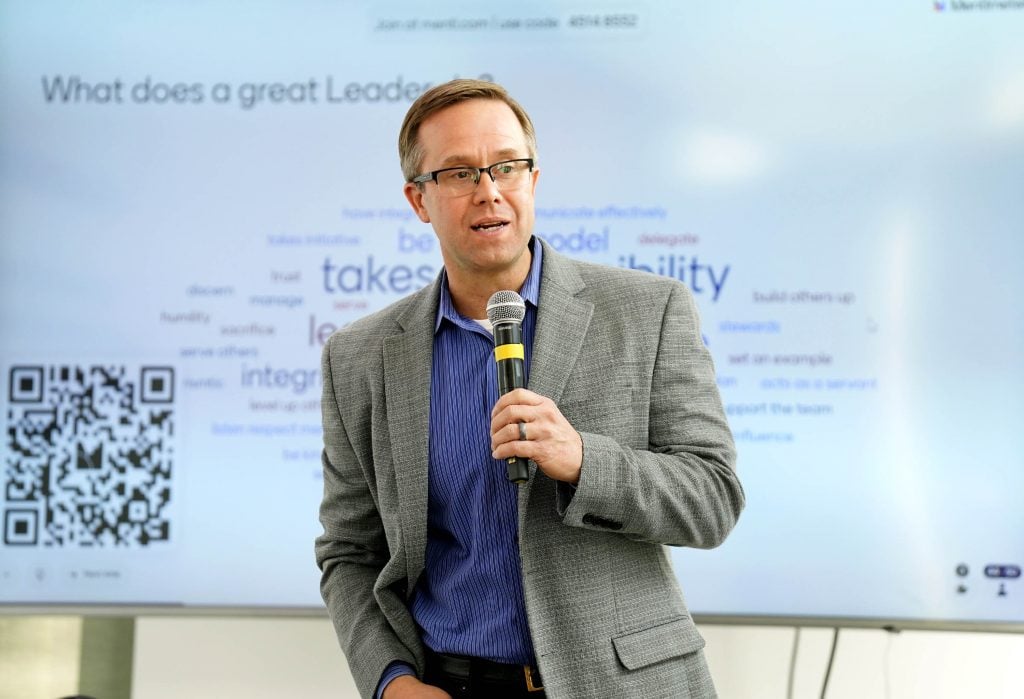
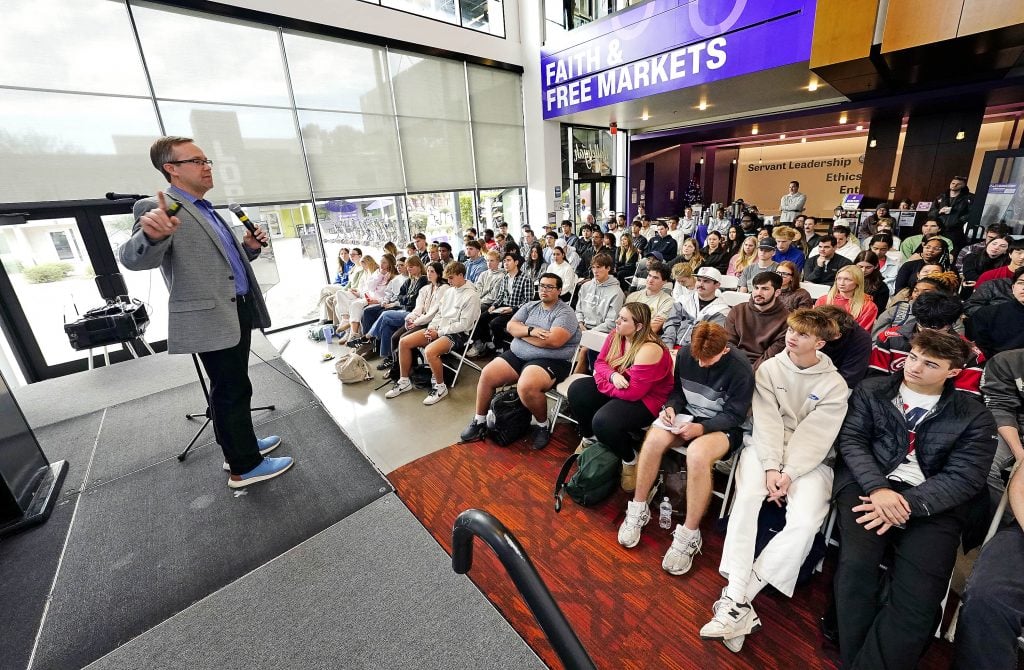
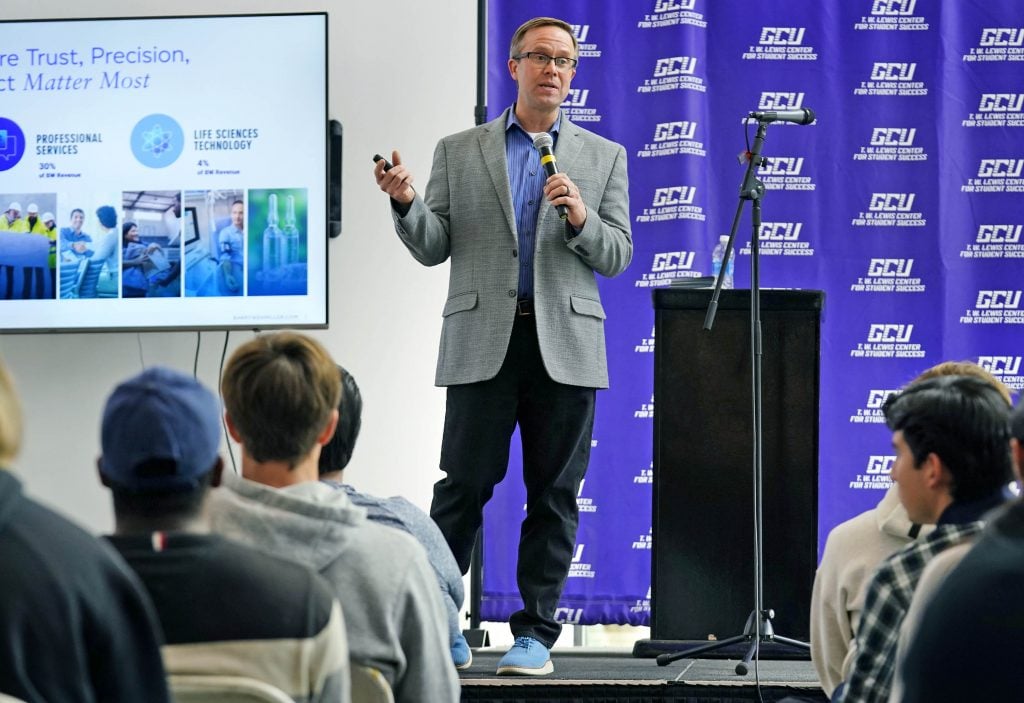
It is a concept Brian Wellinghoff stressed before putting Grand Canyon University students to the test during his T.W. Lewis Speaker Series talk recently at the Colangelo College of Business lobby.
Wellinghoff, senior director of leadership and outreach for Barry-Wehmiller, highlighted the value of listening to others – regardless of their stature in business, school or life – as part of his discussion on purpose-driven leadership and organizational growth.
Wellinghoff’s theme meshed with servant leadership – one of the college's three pillars.
“Some people wish things were different,” said Wellinghoff, a former engineer with a business degree who worked in the church for a year before joining Barry-Wehmiller, a global provider of highly engineered capital equipment and professional services.
“Listen to them. Everybody matters. Show them.”

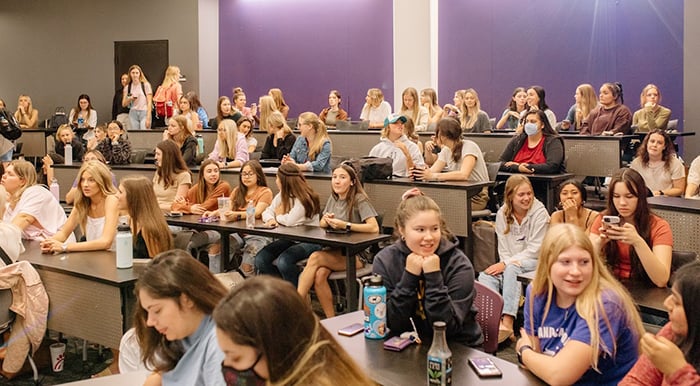
To illustrate the importance of listening and caring for others, he asked students to work in pairs, with one person talking about a challenge in life and the other person showing no interest.
Several minutes later, the roles were changed so that the disinterested party was now listening and applying the following five empathetic listening skills:
- Being fully present, such as displaying eye contact.
- Acknowledgements, or staying tuned in by nodding your head or displaying expressive eyes.
- Door openers, such as asking someone to elaborate.
- Silence, as in quelling your own thoughts and letting the other person talk
- Convey that you understand
“Too often leaders think they understand the problem,’’ he said.
Wellinghoff was not a big fan of employee-of-the-month honors.
“Make sure recognition is coming in a proper way,” Wellinghoff said. “… Recognition never gets old when it is genuine, proportional and timely.”
He referenced “Everybody Matters,” a book co-authored by Barry-Wehmiller CEO Bob Chapman and Raj Sisodia, co-founder of Conscious Capitalism Inc.
Chapman spoke to GCU students three years ago, stressing that, through his experiences, business can be the most powerful force for good in the world “if we simply cared for the people we lead and send them home each night knowing what they do matters.”
Chapman, whose company is projected to generate $3.6 million in revenue in 2025, stressed in his book that everyone wants to do better, so trust them. People achieve good things, big and small, every day, so celebrate them.
Everybody matters, so show them.
Integrity, sacrifice and values are three ingredients for business serving as a powerful force for good.
On the flip side, Wellinghoff cited “Dying for a Paycheck,” authored by Stanford professor Jeffrey Pfeffer, on the perils of a toxic work environment that disclosed that excess deaths from exposure to workplace stress costs about 120,000 lives a year, that three of four employees feel disengaged, and that seven of eight believe their company does care.
In addition, 74% state work is a leading cause of stress and that there is a 20% increase in Monday morning heart attacks – with the most frequent time around 5:30 a.m. when people are waking up or dealing with stress.
Wellinghoff, who has taught leadership classes in India and Italy with religious leaders, as well as the U.S. and Mexico, believes a business that serves as a powerful force for good could translate to wealth and more economic opportunity.

It could also serve as a life-changing moment for families who could live in vibrancy. It also would allow more people to be tied to their faith and purpose in life rather than feel drained from their job.
And a good day at the office could translate to becoming a good listener, rather than possessing a short attention span because of a rough workday.
As a leader, Wellinghoff emphasized the importance of being honest and transparent. There’s the tooth fairy approach of positive reinforcement, such as giving a pet a treat for good behavior.
And there’s the consequences approach of threats, such as firing, demotions or salary cut.
“There’s a huge opportunity in the middle for us to inspire people, to work with them, give feedback, and hope they’ll do better,” Wellinghoff said.
That balance also applies to leaders to inspire, engage and coach.“But it’s also important for leaders to try not to make someone else be just like them," he said.
At the end of the session, Wellinghoff asked each student to write a message to someone in the room with emotion, adding that he hoped students would find a company following graduation with a sense of purpose.
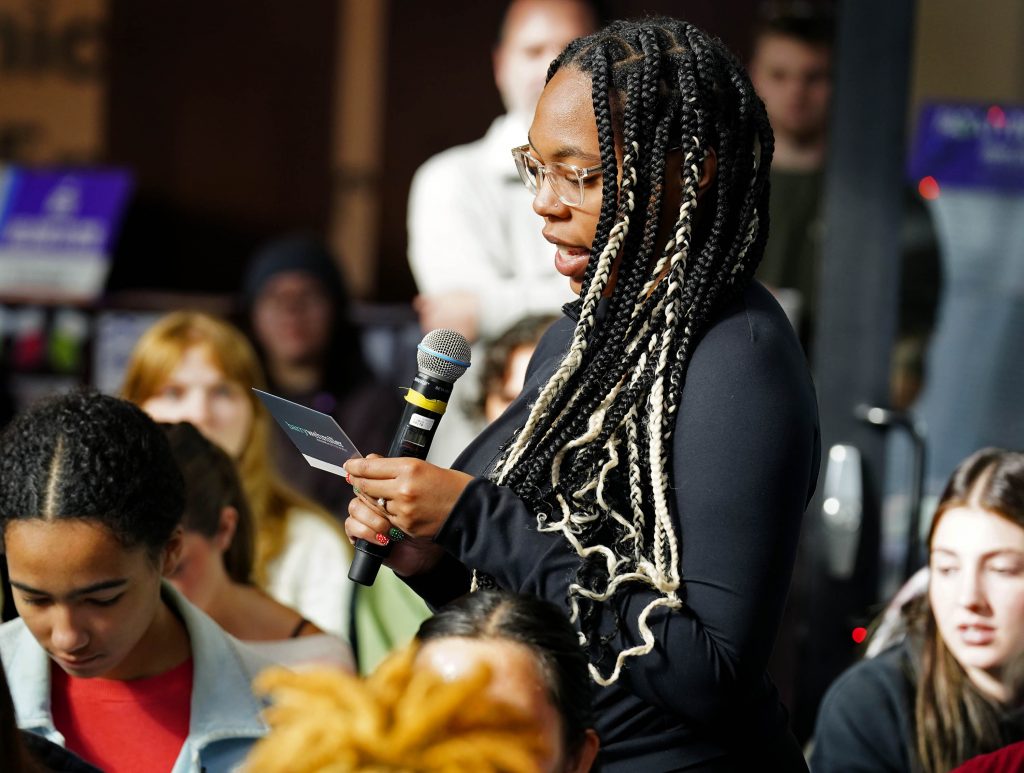
Latavia Mixon, a junior hospitality major, found Wellinghoff’s talk effective while learning how to stay focused during a conversation.
“He was doing things during his presentation that kept us really engaged, helped us make new friends and learn new things about our friends that we already didn’t know and get out of our shells, for sure.
“Everyone needs to improve, even leaders. Everyone is learning and dealing with things you might not think people are dealing with, but they are.”
GCU News senior writer Mark Gonzales can be reached at [email protected]
***
Related content:
GCU News: From a podcast room to career office, T.W. Lewis Center aims for student success
GCU News: T.W. Lewis speaker raves about rewards of redemptive real estate