Photos by Ralph Freso
Grand Canyon University students are eager to learn and use AI.
But can they advance from AI user to AI auditor, someone who evaluates AI models for accuracy, fairness, safety and regulatory compliance?
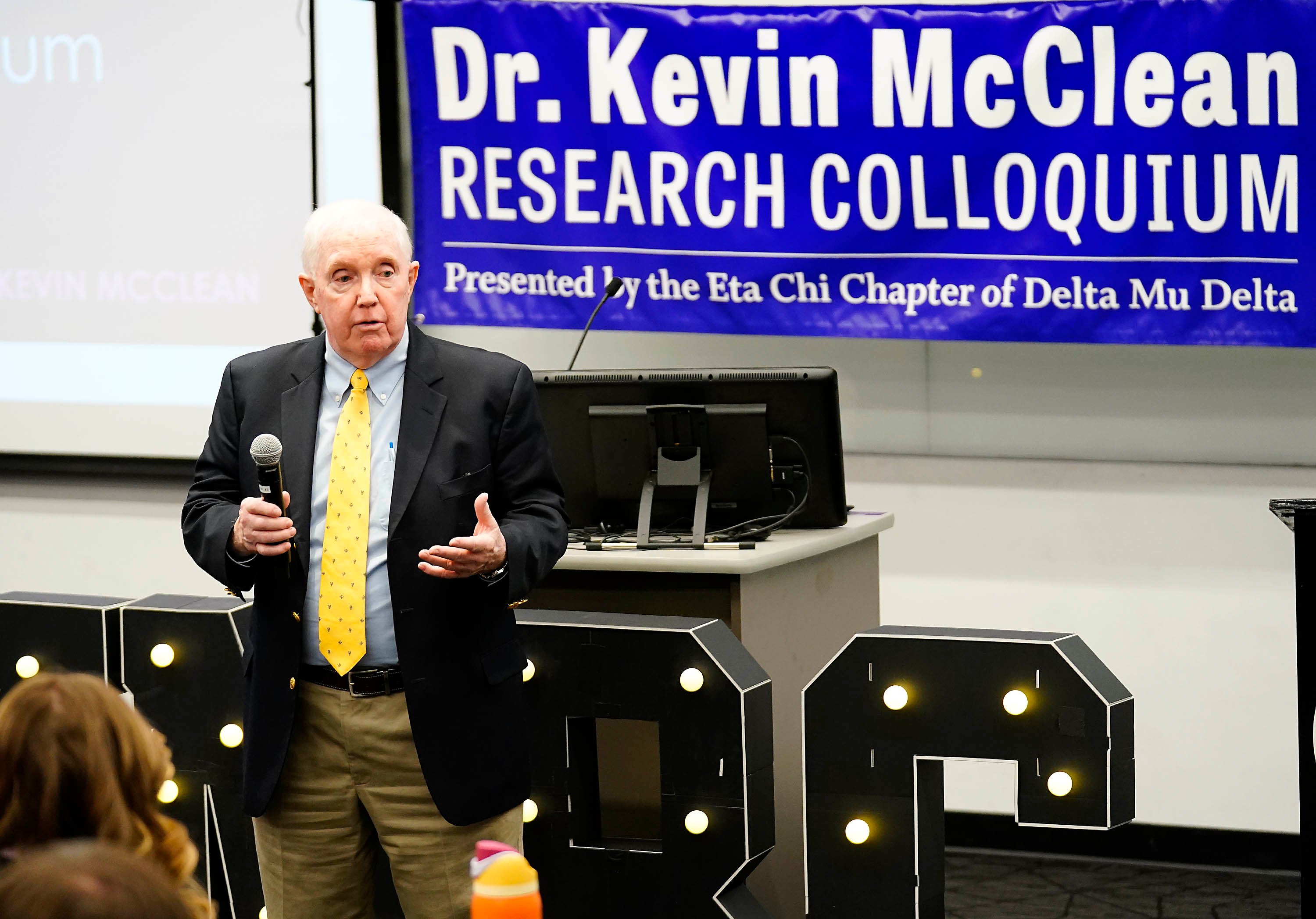
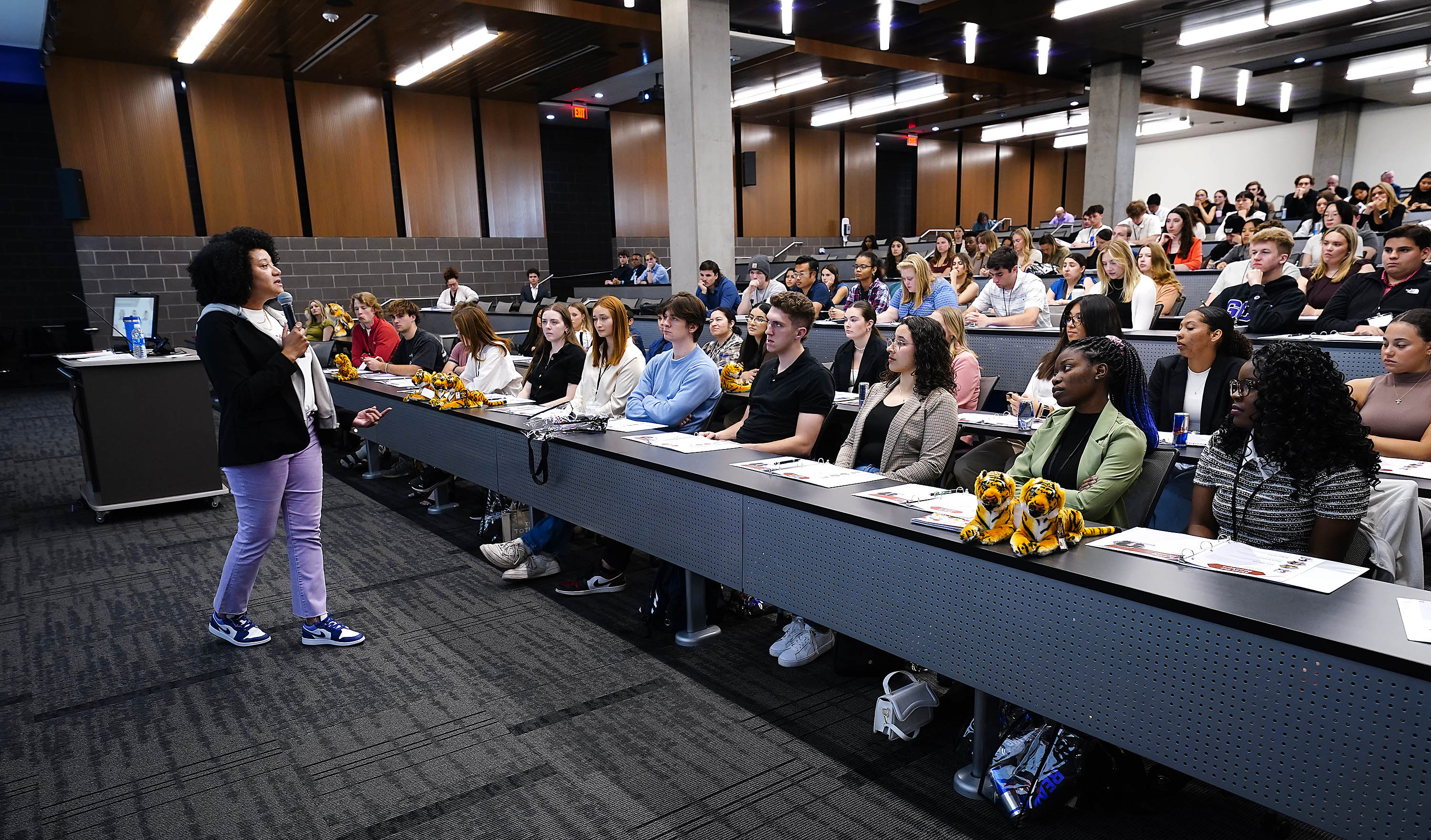
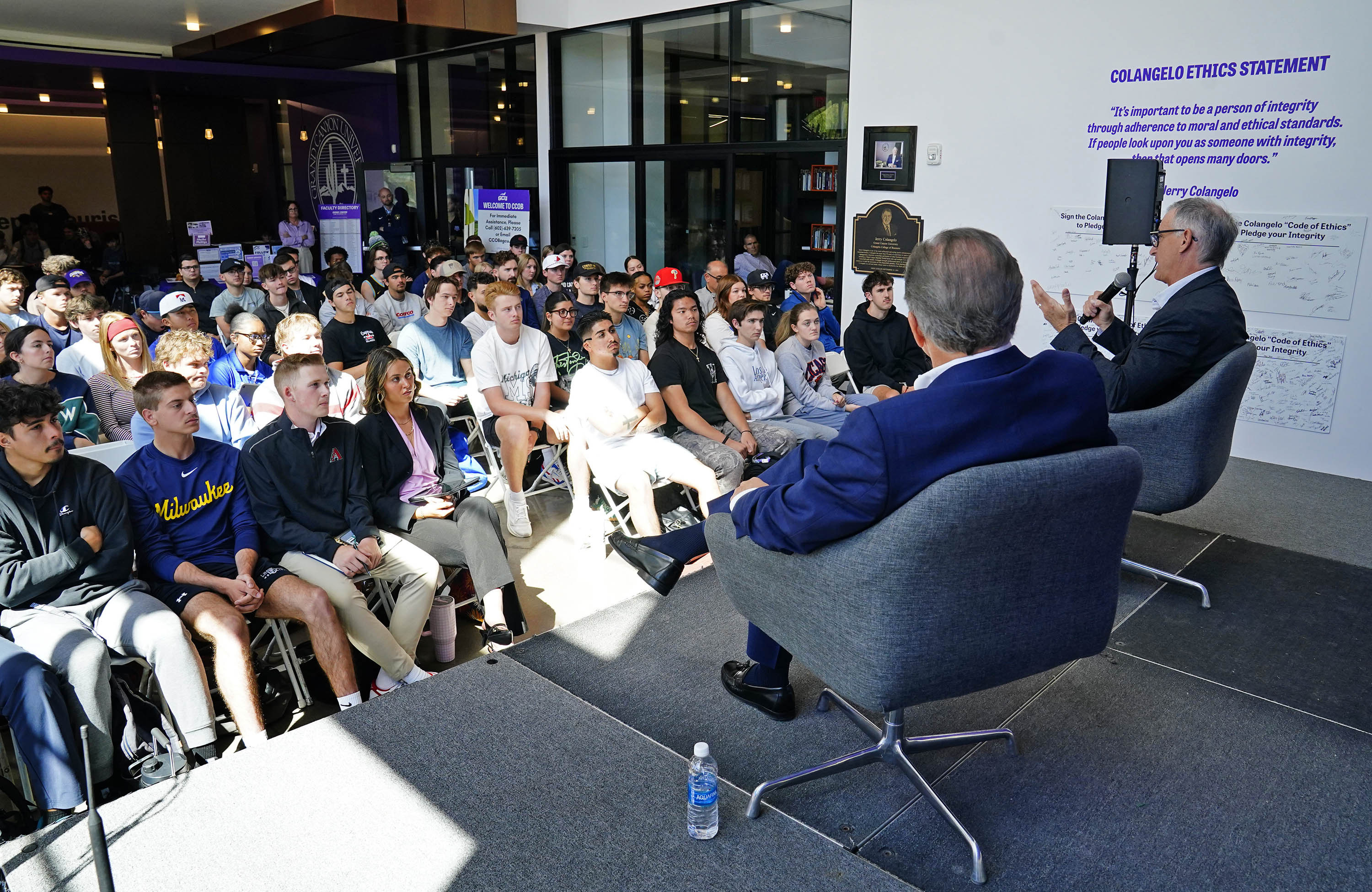
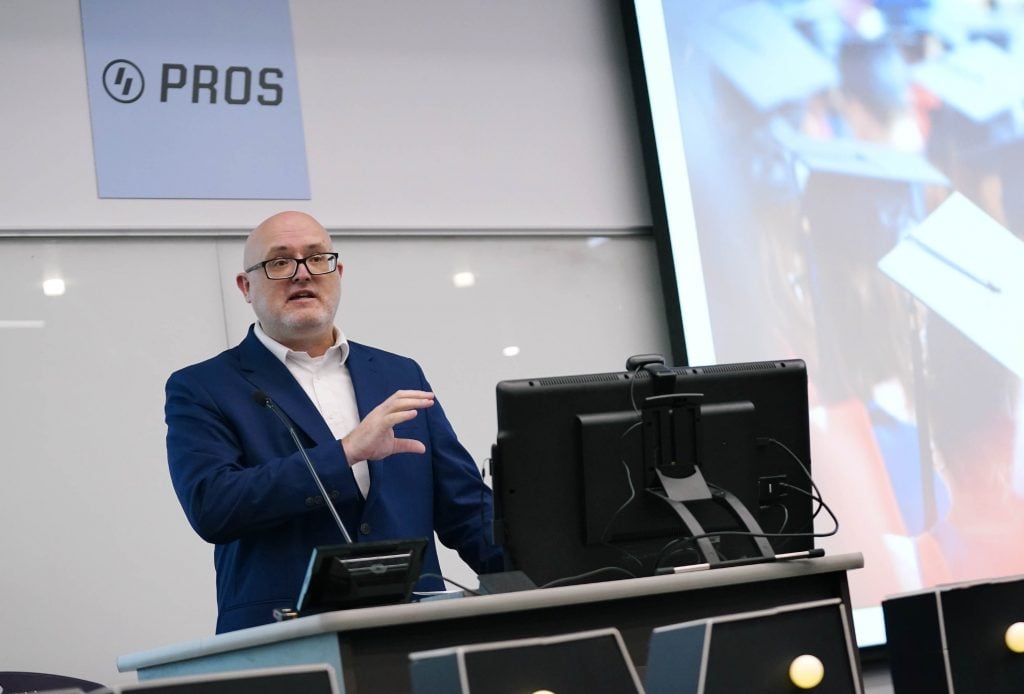
It's what Greg Lucas, faculty chair for the Colangelo College of Business, asked in “From User to Auditor: Embedding AI De-biasing and Ethical Fluency in the First-Year Business Curriculum." His talk was part of the ninth annual Kevin McClean Research Colloquium.
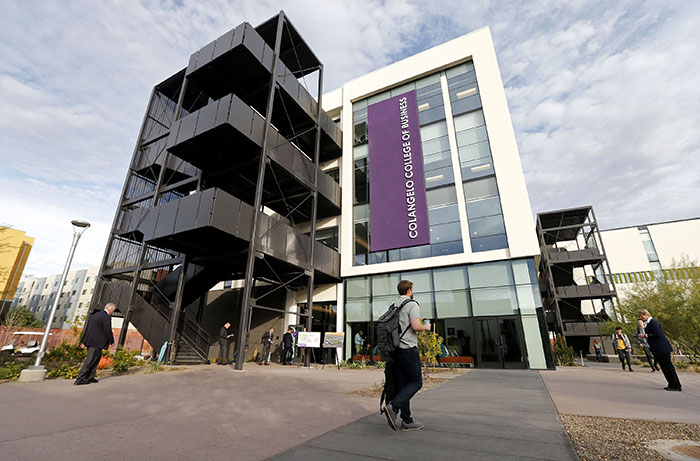
“The problem or concern is many of my students are using AI as objective truth and not as a probabilistic response, believing everything AI gives out is 100% true,” Lucas said at the event, held Monday in the business college.
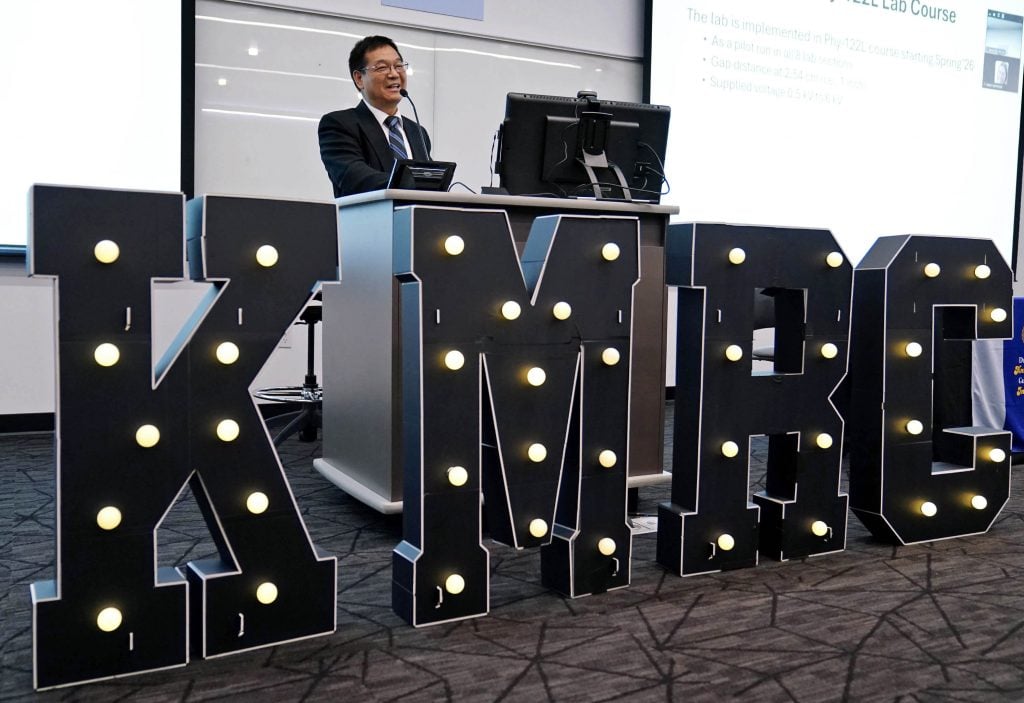
He presented his scholarly research findings in person – his was one of five in-person presentations – as part of the annual scholarly research event, presented by the Eta Chi Chapter of international business society Delta Mu Delta. They were in addition to 20 presentations made virtually, 13 asynchronous and seven synchronous.
Each presenter had a seven-minute limit, followed by a three-minute question-and-answer session.
In Lucas’ introduction to computer technology class, students delve into 15 weeks of hands-on activities and explore potential biases and inaccuracies that AI may output.
“In talking to business leaders, they’re meeting graduates who not only know how to use AI but know how to supervise AI systems in their company,” Lucas said. “The central question related to the research is, how do we teach students to audit AI, not just to use it?”
The fear is that students see AI as an answer engine, such as Google, and don't question bias or accuracy.
In one exercise, students interact with two competing customer service chatbots. The students ask identical questions and compare the chatbots' accuracy, escalation and overall customer experience to see which AI is more trustworthy. They also explore how AI impacts brand perception.
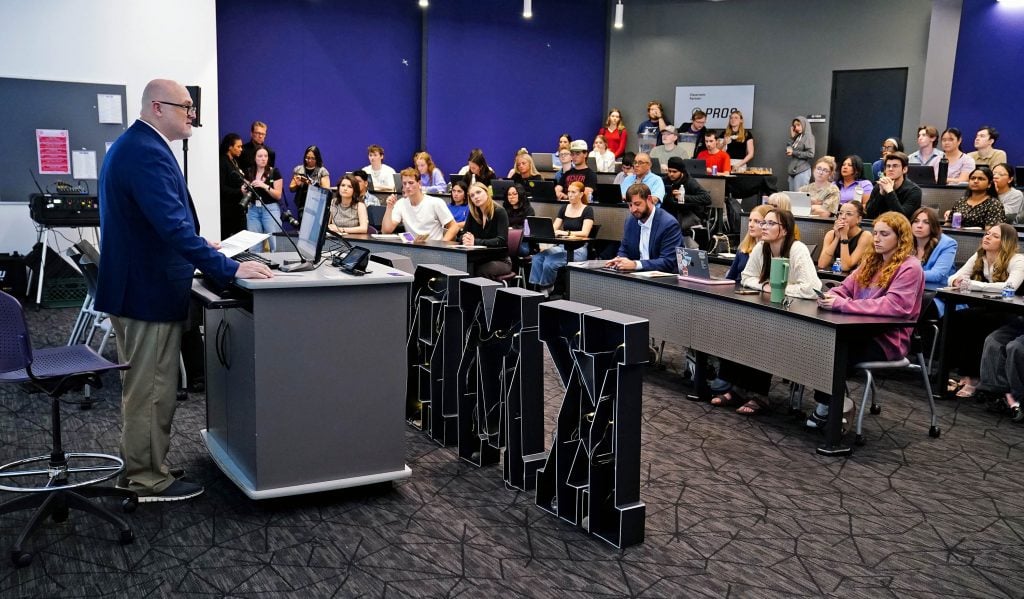
Lucas referred often to “ah-ha” moments, especially in this case, when students connect AI performance to customer trust and brand reputation.
“Are we just letting AI control our brand voice, or are we having some type of insight and oversight on that as well?” Lucas asked.
Students also tested three samples – a human written test, an AI-generated test and a hybrid test, and all three were put into an AI detection tool.
“The magic comes out when there’s true conflict, when one tool says this is true and one tool says this is false,” Lucas said. “That’s when students look at governance, which always requires human judgment.
“We need to not just use AI but also audit AI as well,” Lucas said.
This outcome, he related, could pay off handsomely for students looking for work.
“Not only do you know how to use AI, do you know how to oversee AI?” Lucas said. “That’s what employers are looking for right now.
“If students only learn to generate AI outputs, we graduate users. If students learn to question AI outputs, then we’re graduating AI leaders.”
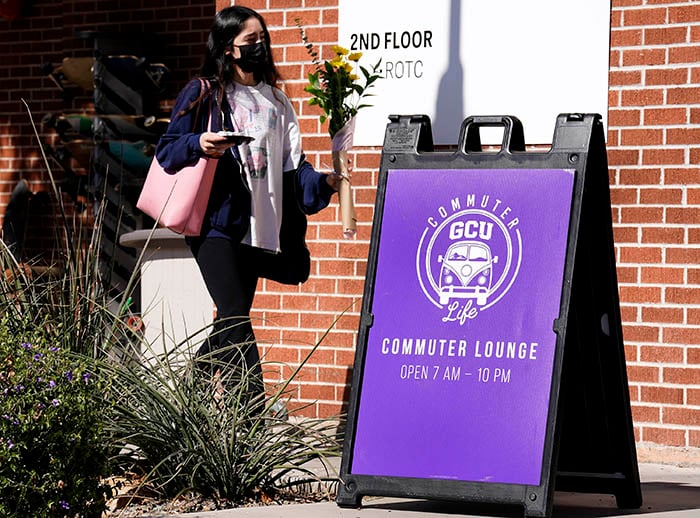
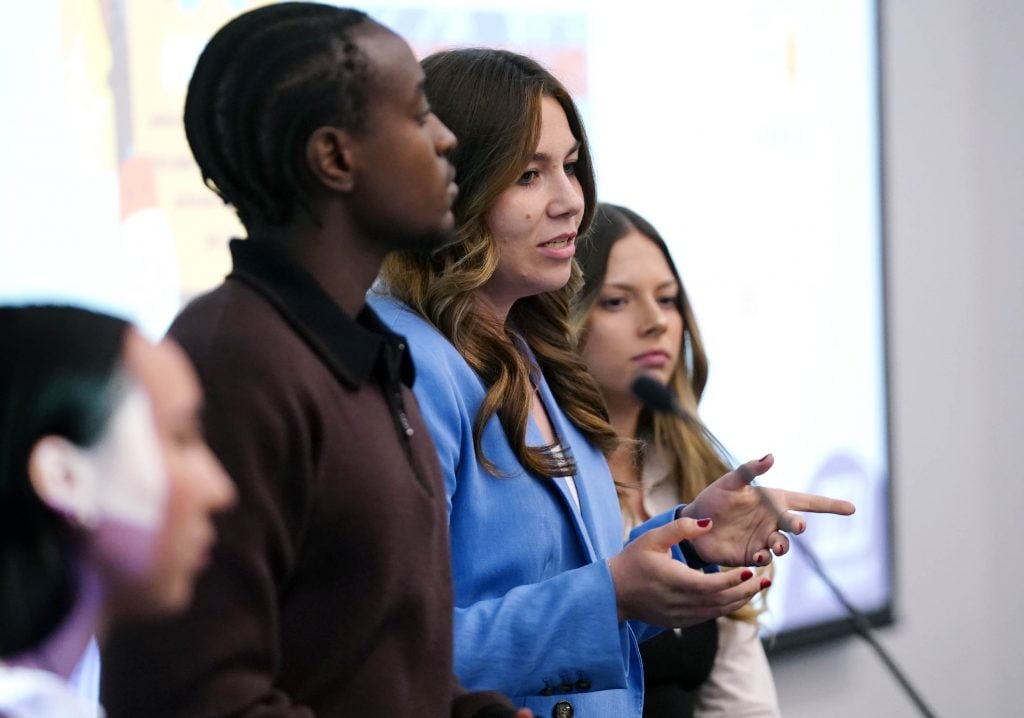
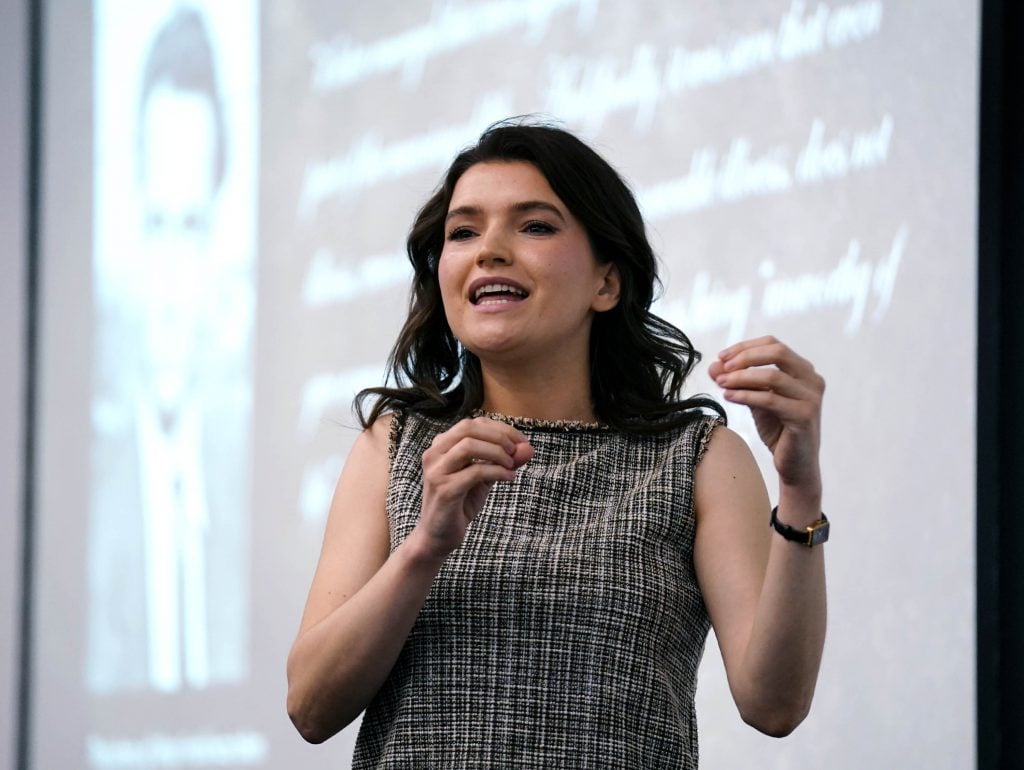
Students Kylee Carpenter, Sean Robinson, Katie Wolff, Sydney Cox and Matilda Erickson addressed barriers encountered by commuter students in “Student Leaders Driving Innovation, From Survey Data to Campus Solutions.”
The group targeted commuters exclusively because they believed they were the most underrepresented group on campus. Their 15-question survey, distributed over two weeks, received 666 responses, nearly double their projected target of 365.
The survey covered issues such as accessibility and convenience, emotional well-being and mental health, physical safety on campus, barriers to academic performance, physical health and fitness resources.
The two barriers commuters faced that impacted academic performance the most were time management and transportation delays. The group worked with GCU Public Safety, posted public safety posters in commuter hotspot areas, participated in events relating to physical health and fitness, and reached out through social media, experiencing a 550% increase on social media from 2024-25.
“Awareness doesn’t start with information, it starts with a connection,” Robinson said.
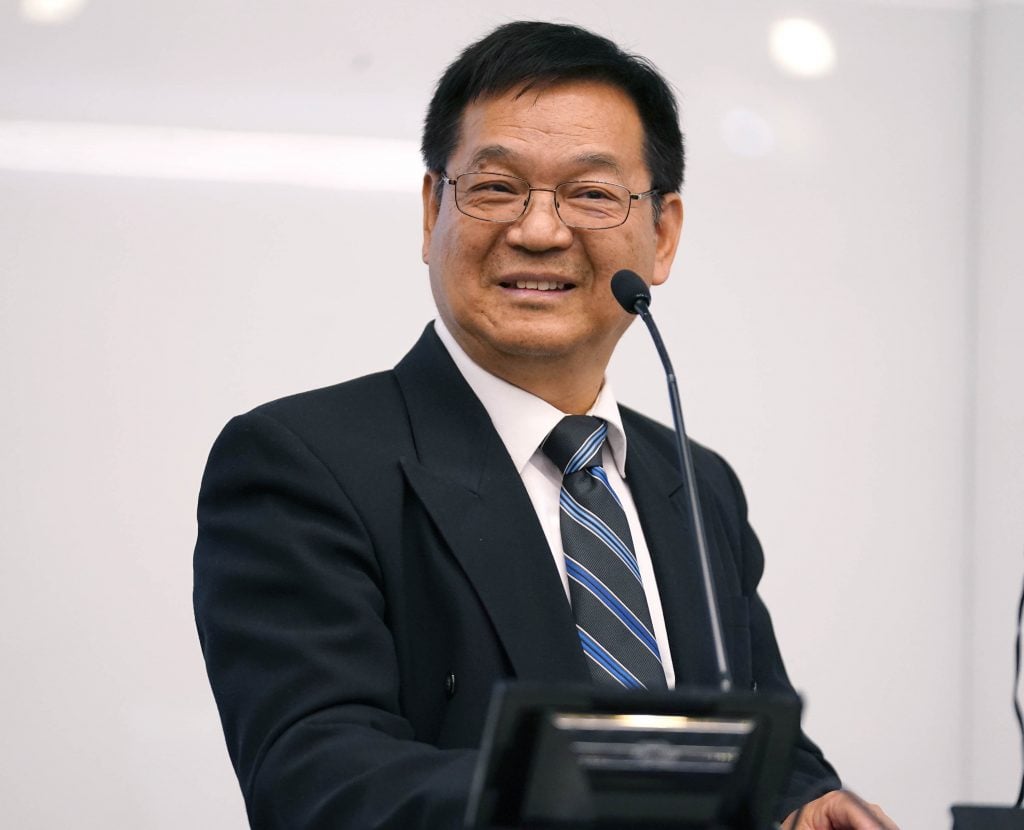
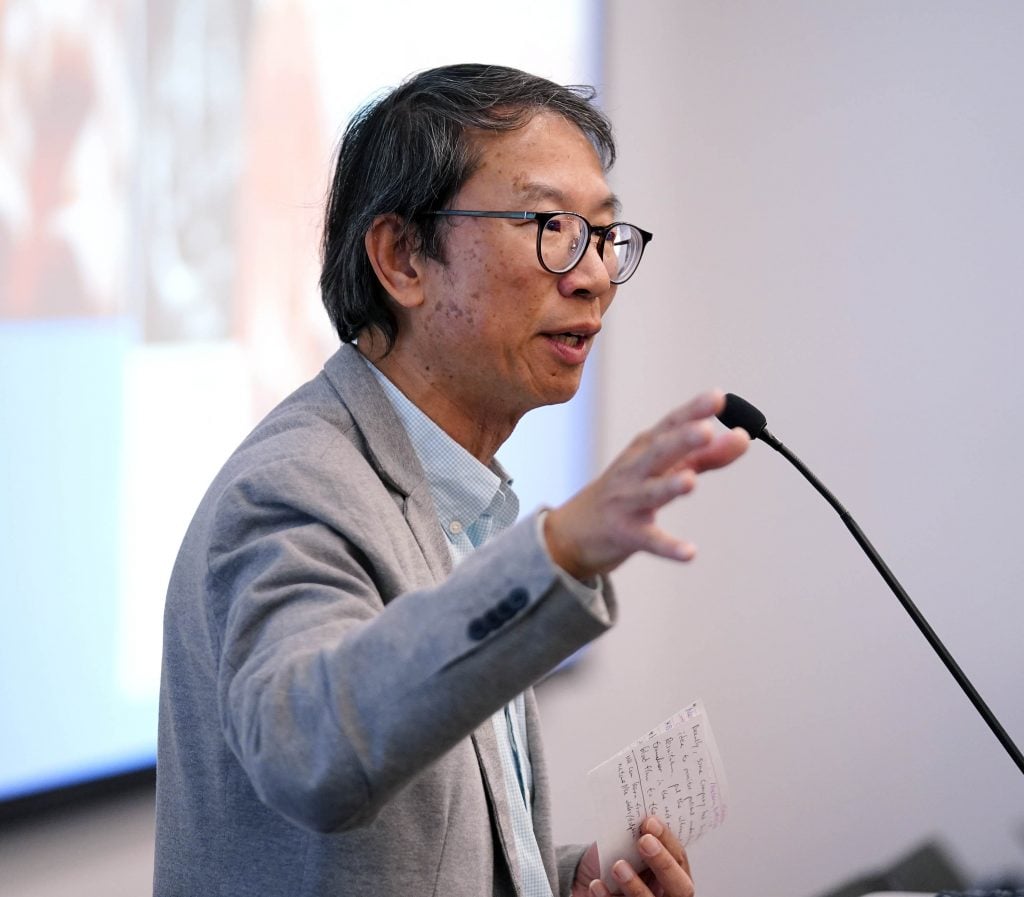
Dr. Gary Cao, College of Natural Sciences professor, presented “New Physics Lab Design on Observable Coulomb Force."
Dr. Alan Tai, who earned a graduate certificate in biblical foundations from GCU, presented “Ultrasound Development in Medical vs. Ultrasound in Nature.”
And Jessica Neamtu, a molecular and cellular biology major at GCU, presented “Euthanasia: How Safe are our Safeguards?”
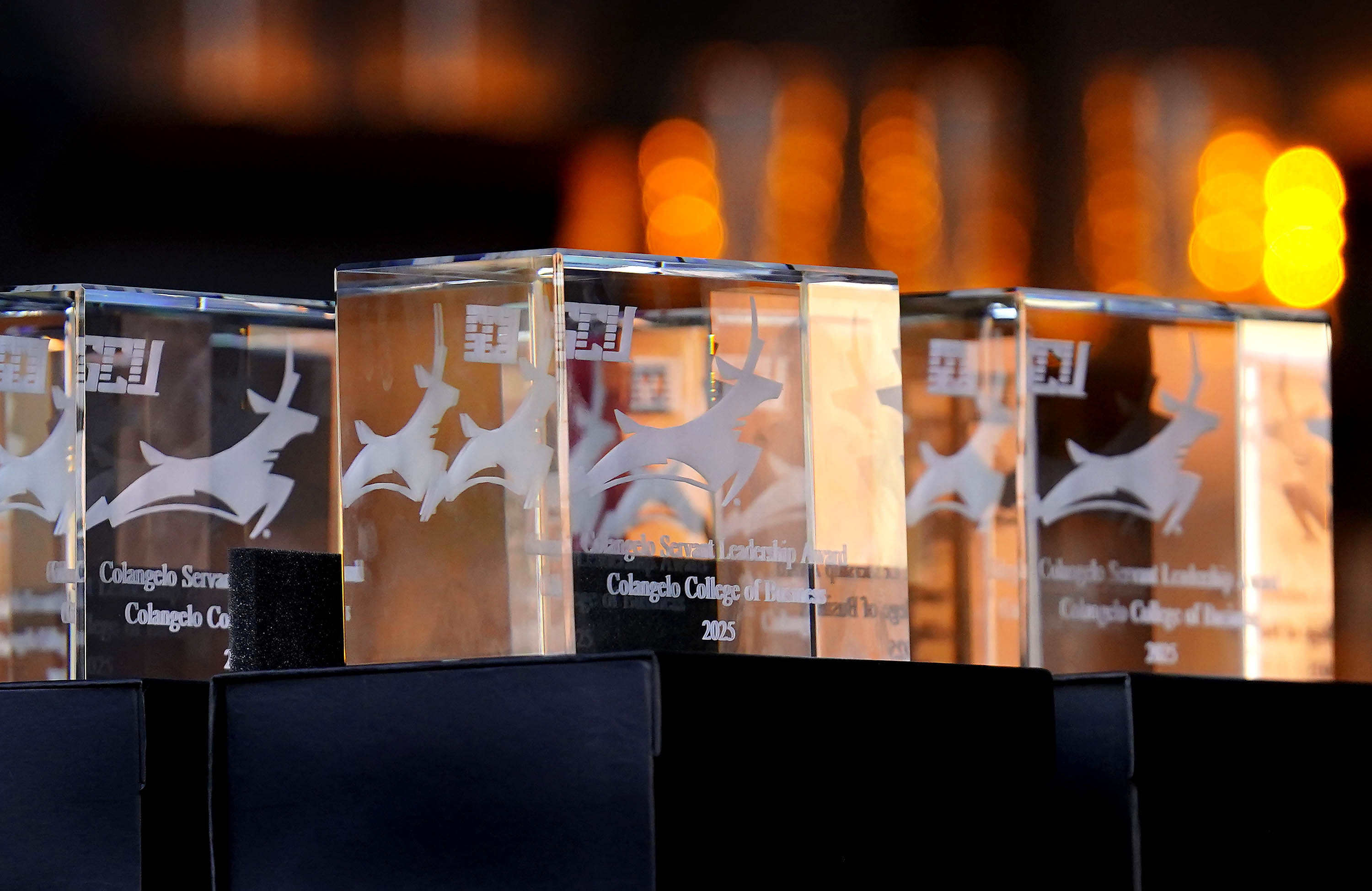
Awards also were given to: Dr. Kathy Archer, Outstanding Mentorship of Student Research; Dr. Zachary Zeigler, Outstanding Faculty Research; and Dr. Jeffrey Cranmore, Outstanding Contributor as Peer Reviewer.
GCU News senior writer Mark Gonzales can be reached at [email protected]
***
Related content:
GCU News: Kevin McClean Research Colloquium displays appetite for research
GCU News: GCU's Eta Chi named outstanding chapter of the year
GCU News: Symposium shines a light on undergraduate research